
2026 Best Dimmable High Bay Lights for Warehouses?
Table of Contents
Warehouse lighting has to do more than make a space look bright. It must help workers read labels, move goods, and spot hazards across aisles, loading areas, and high racks. A Dimmable High Bay Light can adjust output as daylight, activity, or occupancy changes. That flexibility may reduce wasted light, but results depend on the fixture, controls, and layout.
This guide to the 2026 best dimmable high bay lights for warehouses focuses on the details buyers can verify: lumen output, efficacy, beam angle, dimming compatibility, sensor options, mounting height, and warranty terms. We’ll also consider practical trade-offs. A high lumen rating alone does not guarantee even coverage, and a dimmer may not work smoothly with every control system. Small details matter.
Look beyond the product photo. Check the specification sheet, confirm the dimming method with the supplier, and compare recommendations with your ceiling height and aisle spacing. Where possible, review independent testing or request a sample before outfitting a large area. Real installations can reveal glare, uneven light, or control delays that a catalog cannot show. No single fixture fits every warehouse. Even careful comparisons leave some uncertainty, so treat advertised performance as a starting point—not a promise.
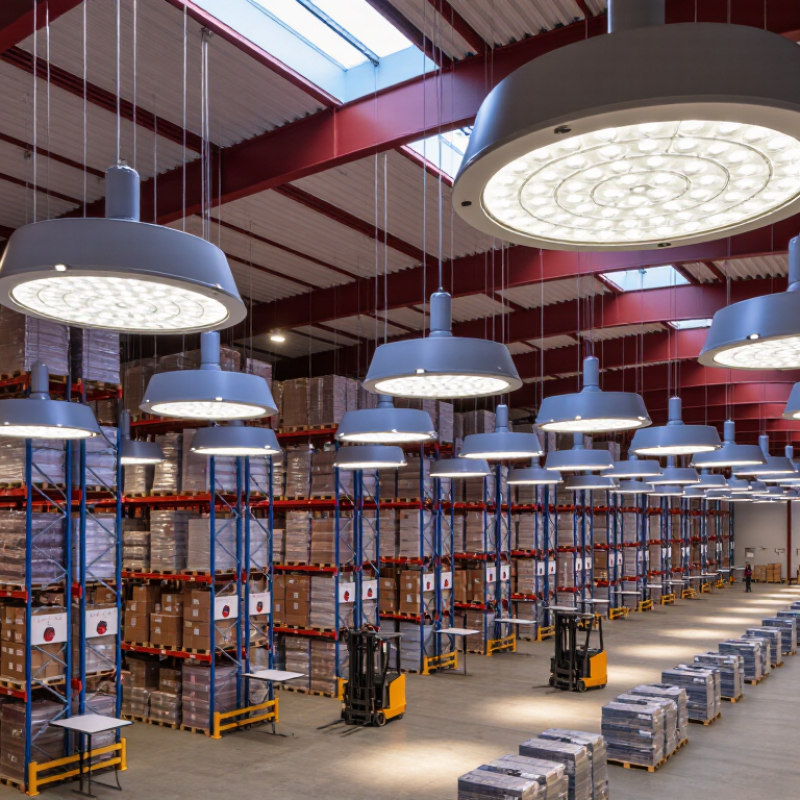
How Dimmable High Bay Lights Work in Warehouses
In a warehouse, a dimmable high bay works when its LED driver can respond to a control signal. Common systems use 0–10V wiring, digital controls, or compatible wireless controllers. The controller lowers the driver’s output, reducing light and usually power use. It is not simply an on/off switch. The fixture, control method, and sensor must match.
A practical setup divides the floor into zones, such as rack aisles, packing benches, and loading doors. Occupancy sensors can raise light when workers enter an aisle, then dim it after a suitable delay. Daylight sensors near skylights can trim output as sunlight changes.
Set a minimum level that keeps labels and floor markings readable. Test it slowly. A sensor may miss a worker behind tall pallets, and reflective packaging can confuse readings. That happens.
Dimming also does not fix poor beam placement or dark rack faces. Measure light at working height, check for flicker at low settings, and adjust controls after staff use the space. The first setting is rarely perfect.
Key Specifications for Comparing Warehouse High Bay Lights
2026 Best Dimmable High Bay Lights for Warehouses?
Key Specifications for Comparing Warehouse High Bay Lights
Compare useful light, not wattage alone. Check delivered lumens and efficacy in lumens per watt, then match output to mounting height, aisle width, and rack layout.
The IEA estimates that lighting accounts for around 15% of global electricity consumption, making efficiency a meaningful warehouse operating factor. Still, a high efficacy figure cannot tell you whether the floor or upper shelves will be evenly lit.
Review photometric files and verify proposed layouts against the Illuminating Engineering Society’s industrial lighting recommendations. A neat datasheet can still mislead.
For dimming, confirm the control method, dimming range, and compatibility with sensors or building controls. Ask for flicker data at low output; workers may notice a poor match, especially during long shifts.
Compare correlated color temperature and color rendering index for the tasks performed, plus rated life and warranty conditions. Check ambient-temperature limits and ingress protection where dust or moisture is present. Small details matter.
The U.S. Department of Energy’s solid-state lighting research tracks efficiency and performance improvements, but laboratory ratings do not replace site testing. Measure light levels after installation, and be willing to revise the layout. That step is often skipped.
Dimming Methods, Controls, and Compatibility
For a warehouse, dimming is useful only when the light, driver, and control system speak the same language. Many high bay fixtures support 0–10V dimming, using a separate low-voltage control pair. Confirm that the driver accepts the controller’s output range and that the wiring plan matches the installation. Simple, but easy to overlook.
DALI systems allow individual or grouped fixture control, which can help when aisles need different light levels. Occupancy sensors can reduce output in quiet zones, while daylight sensors respond near skylights or loading doors. Check sensor placement carefully. Tall racks, moving equipment, and uneven daylight can affect readings. A sensor that works well in an open aisle may perform poorly behind shelving.
Before choosing controls, verify the fixture’s minimum dimming level, compatible control signal, and behavior when power returns. Some systems dim smoothly; others may flicker or switch off near their lower limit. Test a sample fixture with the intended controller, especially when mixing control types. It takes time. But it can reveal wiring or compatibility issues before dozens of fixtures are installed. Record the final settings, too; warehouse layouts change, and yesterday’s control zones may not suit tomorrow’s workflow.
High Bay Light Types and Features to Evaluate in 2026
For 2026 warehouse upgrades, compare three common formats: round UFO fixtures for open bays, linear high bays for long aisles, and retrofit kits for existing housings. Match the beam angle to rack spacing; a narrow optic can leave dark shelf edges, while a wide optic may waste light above the racks. Check the aisle first. Then verify mounting height, glare, color rendering, and the fixture’s operating temperature range. Dusty or humid areas also need suitable ingress protection.
Dimming matters only when the driver, controls, and sensors work together. Confirm whether the fixture supports 0–10 V dimming, and test the full range for flicker or sudden shutoff. Occupancy sensors can reduce output in quiet zones, while daylight controls may help near skylights.
The International Energy Agency’s Energy Efficiency 2023 report estimates that lighting uses about 15% of global electricity, but that broad figure does not predict savings at a specific warehouse. The U.S. Department of Energy’s Energy Saver guidance says LEDs can use up to 90% less energy than incandescent lighting; that is not a fair direct comparison with existing high-bay equipment. Measure current power and light levels before selecting replacements.
One detail is easy to miss: dimming compatibility on a specification sheet does not guarantee smooth performance after installation.
How to Choose and Install the Right Warehouse Lighting
Choosing a dimmable high bay starts with the work below it, not the fixture’s advertised wattage. Measure the mounting height and aisle width, then consider shelving, ceiling color, and the tasks workers perform. Measure before buying. A lighting plan should estimate maintained light levels, since dust and aging can reduce output over time. Check the beam pattern, too; narrow beams may create bright patches between dark shelves. Small gaps matter. Confirm that the fixture and dimming control are compatible, and decide whether workers need simple zone control or gradual adjustment.
During installation, mark fixture positions against the actual rack layout. Keep light centered over aisles where practical, and check for shadows from tall loads or overhead equipment. Even a tidy plan can disappoint once the shelves are full. That is worth checking before every fixture is mounted. Follow the fixture’s installation instructions, secure it to suitable structure, and have a qualified electrician handle wiring and circuit checks. Test dimming at low and high settings after installation. Watch for flicker, uneven brightness, or controls that respond poorly. If those appear, pause and correct the setup rather than accepting a nearly right result.
FAQS
Its LED driver responds to a control signal and lowers light output. Power use usually falls too. It is not just an on-off switch.
Common options include 0–10V wiring, digital controls, and compatible wireless controllers. Check that the fixture, driver, and controller use matching signals.
Group areas by task, such as rack aisles, packing benches, and loading doors. Different zones may need different light levels. Layouts change.
Yes. Occupancy sensors can raise output when workers enter an aisle, then dim it after a delay. Daylight sensors can reduce output near skylights.
Tall pallets may hide workers from an occupancy sensor. Reflective packaging or uneven daylight can also confuse readings. Test sensor placement.
Confirm the driver’s control signal, minimum dimming level, and behavior after power returns. Test a sample fixture with the intended controller. It takes time.
Measure mounting height and aisle width, then consider shelving and worker tasks. Center fixtures over aisles where practical. Dark rack faces still need checking.
Test low and high settings. Watch for flicker, uneven brightness, or slow control response. Measure light at working height and adjust the settings. The first setting may be wrong.
Conclusion
This guide explores how a Dimmable High Bay Light can support efficient, comfortable warehouse lighting by adjusting brightness to match different tasks, operating hours, and daylight conditions. It explains the key specifications to compare, including light output, efficacy, color quality, beam angle, mounting height, and environmental durability. It also outlines common dimming methods and control options, such as wired or wireless systems, occupancy sensors, and daylight-responsive controls, while highlighting the importance of checking compatibility between fixtures, drivers, and controls.
Readers will learn how to evaluate high bay light types and useful features for 2026, then apply those considerations when selecting and installing a warehouse lighting system. The guide emphasizes assessing the space layout, ceiling height, work areas, and existing electrical setup before choosing fixture placement and settings. Careful planning can help deliver consistent illumination, reduce wasted energy, and create a safer, more adaptable environment for warehouse staff.
Blog Tags: