High-Performance Mobile Light Towers & Extreme Environment Lighting
Explore our flagship engineered mobile light towers, high-temperature LED floodlights, and heavy-duty industrial luminaires manufactured for mission-critical deployments.
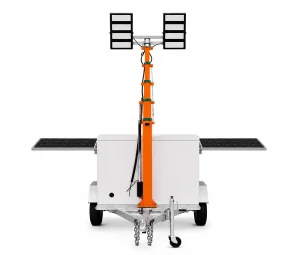
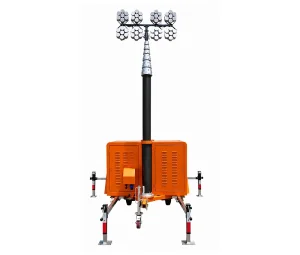
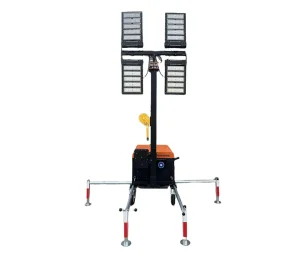
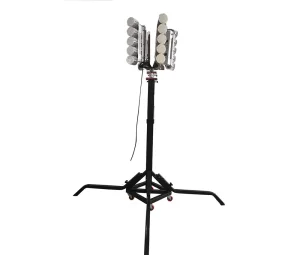
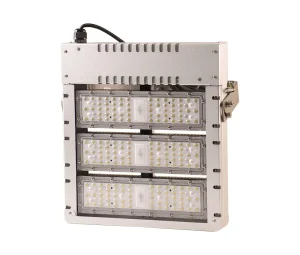
Global Commercial & Industrial State of Mobile Illumination
Analyzing the macro trends, operational mandates, and Total Cost of Ownership (TCO) driving the global shift toward next-generation mobile light towers.
Decarbonization & ESG Mandates in Fleet Capital Expenditure
Global industrial sectors—spanning infrastructure construction, surface mining, offshore energy, and municipal emergency management—are undergoing a massive energy transition. Traditional diesel-only light towers, long criticized for continuous greenhouse gas emissions, high fuel consumption, and acoustic pollution, are rapidly being phased out in favor of solar-hydraulic hybrids and pure battery-electric units.
Tier-1 contractors across North America, the European Union, Australia, and the Middle East now enforce strict Scope 1 and Scope 2 emission reduction goals. Light tower manufacturers are forced to rethink structural efficiency, transitioning from low-efficiency metal halide fixtures to high-efficacy LED arrays that consume up to 70% less energy per lumen produced.
Total Cost of Ownership (TCO) Shift in the Equipment Rental Sector
Over 65% of global light tower deployments occur via equipment rental outfits (such as United Rentals, Sunbelt, and Loxam). For rental fleet managers, the primary metric of purchasing evaluation has shifted from initial purchase price (CapEx) to lifetime operational expenditure (OpEx).
Modern LED light towers integrated with LiFePO4 battery banks and high-efficiency diesel engines drastically extend maintenance intervals from 250 hours to over 1,000 hours. This dramatic reduction in filter swaps, oil changes, engine wear, and site refueling runs delivers an unparalleled ROI, enabling full equipment payback within 14 to 18 months of active deployment.
Localized Application Scenarios & Operational Engineering
Mobile light towers must withstand diverse microclimates, mechanical shocks, and demanding optical requirements across varied geographic deployments.
Surface Mining & Quarry Extraction
Operational Challenges: Extreme particulate loading, heavy chassis vibration from blasting, and continuous 24/7 operating cycles in remote environments.
Engineering Solution: Heavy-duty, skid-mounted or off-road dual-axle trailers equipped with 9-meter to 12-meter heavy-gauge galvanized steel vertical masts. Fixtures feature IP67/IP69K ingress protection with specialized silicone gaskets and optical polycarbonate lenses engineered to withstand flying debris, high-pressure washes, and seismic vibrations.
Urban Civil Engineering & Roadworks
Operational Challenges: Strict municipal noise pollution caps (<60 dBA at 7 meters), light trespass restrictions into residential structures, and space-constrained transport footprints.
Engineering Solution: Zero-emission solar-battery light towers or ultra-silent hybrid units with sound-attenuated acoustic enclosures. Asymmetric optical beam shaping (e.g., 30° x 90° directional optics) projects crisp, glare-free light precisely onto construction lanes while preventing light spill into oncoming traffic.
Emergency First Response & Disaster Relief
Operational Challenges: Rapid deployment needs within minutes of critical infrastructure failure, flooding, or seismic events without grid connectivity.
Engineering Solution: Lightweight 4m to 7m fast-deploy telescoping towers featuring manual or pneumatic winches. Integrated multi-voltage auxiliary power output (110V-240V AC) allows the light tower to double as a field generator for powering emergency medical gear, communications nodes, and heavy rescue tools.
Technology Roadmap & Future Outlook (2025–2030)
The next decade of mobile lighting engineering is defined by autonomous operations, smart cloud telematics, solid-state efficacy gains, and advanced energy storage.
1. High-Efficacy Solid-State Photometrics & Smart Dimming
Next-generation light towers utilize customized LED module arrays utilizing top-tier LED chips (such as Cree, Lumileds, or OSRAM) reaching system-level efficacy exceeding 190 lm/W. Coupled with integrated daylight sensors (photocells) and automated astronomical clock timers, luminaires dynamically adjust lumen output based on ambient light conditions, preserving battery energy without compromising site safety.
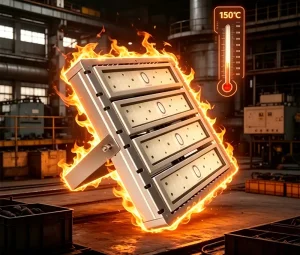
Furthermore, optical innovation is shifting from standard symmetric lenses to micro-prismatic, high-transmittance silicon optics. These optics resist thermal degradation up to 150°C and maintain optical clarity without yellowing over 10-year operational lifetimes in UV-intense desert deployments.
2. IoT Telematics, Autonomous Mast Safety & Remote Maintenance
Future-ready mobile light towers are transformed into intelligent IoT edge nodes. Integrated cellular/satellite telematics modules allow fleet managers to remotely monitor battery State of Charge (SoC), solar energy harvesting yield, engine telemetry, fuel levels, and GPS geolocation via centralized cloud dashboards.
Safety automation includes dual-axis inclination sensors and automated wind-speed anemometers. If wind gusts exceed safe operational limits (e.g., 80 km/h), the automated hydraulic mast lowers automatically to prevent tip-over accidents, signaling an instant alert to site superintendents.
Technical Architecture Comparison: Traditional vs. Hybrid vs. Pure Solar Towers
| Technical Dimension | Standard Diesel Light Tower | Hybrid Light Tower (Solar-Diesel) | Pure Solar-Electric Light Tower |
|---|---|---|---|
| Primary Energy Source | Internal Combustion Engine (Diesel) | Mono-Crystalline Solar + Diesel GenSet | High-Efficiency Solar Array + Battery |
| Average Fuel Consumption | 1.5 – 2.5 Liters / Hour | 0.3 – 0.6 Liters / Hour | 0.00 Liters / Hour (Zero Fuel) |
| Maintenance Interval | Every 250 – 500 Hours | Every 1,000 – 1,500 Hours | Zero Engine Maintenance |
| Acoustic Noise Level | 68 – 75 dBA at 7 meters | <58 dBA (Battery Mode) | 0 dBA (Completely Silent) |
| Carbon Footprint (CO2/yr) | High (~8.5 Metric Tons) | Low (~1.8 Metric Tons) | Zero Direct Emissions |
| Best Fit Environment | Continuous high-wattage heavy mining | Variable weather, continuous work sites | Urban projects, desert sites, events |
China Supply Chain Resilience & Manufacturing Superiority
Unpacking the structural, economic, and technological advantages of China's advanced manufacturing clusters for global B2B procurement partners.
1. Fully Integrated Industrial Ecosystem
The concentration of advanced manufacturing in regions such as Shenzhen and Guangdong creates unprecedented supply chain velocity. From precision sheet-metal laser cutting and automated robotic chassis welding to LED surface-mount technology (SMT) lines and custom optical mold fabrication, every component is sourced within a 50-kilometer radius.
This localized supply density reduces production lead times for custom OEM/ODM light tower configurations from industry averages of 12 weeks down to just 2 to 3 weeks.
2. Rigorous End-to-End QA/QC Protocols
China's premier light tower manufacturers enforce strict quality assurance procedures exceeding international standards. Every unit undergoes multi-stage validation prior to export:
- Thermal Stress Testing: Operating luminaires in burn-in environmental chambers up to 80°C / 150°C.
- IPX6/IPX8 Water Ingress Testing: High-pressure deluge testing to guarantee waterproof sealing.
- Vibration & Structural Integrity: Simulating off-road towing conditions on multi-axis shake tables.
3. Flexible OEM / ODM Customization Agility
Unlike Western OEMs constrained by standardized mass-production models, Chinese manufacturing facilities excel in custom engineering tailoring. Global buyers can specify custom mast heights (4m to 12m), power plant brands (Kubota, Perkins, Yanmar, or Kohler), specialized trailer hitches (ball, ring, or pintle), and custom powder-coat corporate colors with low Minimum Order Quantities (MOQs).
Localization Support, Regulatory Compliance & Engineering Standards
Ensuring seamlessly integrated hardware compliance, regional electrical compatibility, and long-term after-sales reliability worldwide.
International Regulatory Certifications
Navigating international trade and site deployment requires strict adherence to regional safety and environmental legislation. Leading mobile light tower systems engineered for export comply with:
- CE Mark (European Union): Directives covering Electromagnetic Compatibility (EMC 2014/30/EU), Low Voltage (LVD 2014/35/EU), and Machinery Safety (2006/42/EC).
- UL / CSA Standards (North America): Luminaires and electrical enclosures compliant with UL 1598, CSA C22.2, and National Electrical Code (NEC) requirements.
- Emission Compliance: Diesel-powered hybrid models feature EU Stage V and US EPA Tier 4 Final compliant engines, permitting deployment in low-emission urban zones.
Regional Electrical & Mechanical Adaptability
Global deployment demands adaptability across local electrical grids and environmental extremes. Equipment is pre-configured with multi-tap auxiliary power sockets (110V 60Hz NEMA for USA, 230V 50Hz CEE for Europe, 240V AS/NZS for Australia).
Chassis corrosion protection utilizes hot-dip galvanization combined with electrostatically applied outdoor architectural-grade powder coatings. This dual-layer surface treatment withstands 1,000+ hours of continuous salt spray testing per ASTM B117, making equipment ideal for harsh coastal and marine applications.
Frequently Asked Questions (FAQ) for Procurement & Project Engineers
Addressing core technical, operational, and procurement queries regarding light tower selection, deployment, and custom engineering.
What is the key difference between hydraulic, pneumatic, and manual winched light tower masts?
Manual Winch Masts: Utilize hand-cranked steel cables. Cost-effective, simple, and ideal for basic, low-frequency setup scenarios (4m to 7m height).
Pneumatic Masts: Elevate using air pressure provided by an internal compressor. Highly suitable for rapid emergency deployment and lightweight lighting head configurations.
Hydraulic Masts: Push-button automated elevation powered by heavy-duty hydraulic rams. Designed for heavy industrial mining, 9m to 12m masts, high wind stability (up to 100 km/h), and continuous rugged site deployments.
How many lux / foot-candles are required for typical construction and industrial work sites?
Lighting requirements depend on OSHA (USA) and EN 12464-2 (EU) site safety standards:
- General Site Infrastructure & Excavation (Level I): 50 Lux (5 Foot-Candles).
- Active Construction Equipment Work & Concrete Pouring (Level II): 100 Lux (10 Foot-Candles).
- Fine Detail Task Work, Electrical Wiring & Precision Maintenance (Level III): 200–300 Lux (20–30 Foot-Candles).
Our engineering team provides custom Dialux photometric simulations to calculate the exact light tower quantity and mast height required for your project ground area.
How do solar light towers perform during prolonged cloudy or rainy weather?
Professional solar mobile light towers are engineered with a Days of Autonomy (DoA) buffer ratio, typically 3 to 5 nights of continuous 10-hour operation without solar recharge. Systems combine high-capacity Deep-Cycle LiFePO4 battery storage with ultra-efficient dimmable LED fixtures (e.g., auto-dimming to 30% when motion is absent).
For regions with severe winter weather, hybrid units integrate an ultra-quiet backup diesel generator that automatically starts to recharge the battery bank when voltage drops below 20%, ensuring continuous operational uptime.
What thermal protection measures are implemented in high-temperature industrial LED fixtures?
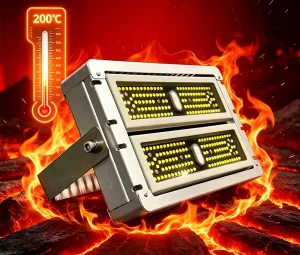
Our specialized high-temperature LED luminaires (rated for 80°C, 100°C, 150°C, and custom builds up to 300°C ambient temperatures) incorporate advanced thermal engineering: phase-change heat pipes, cold-forged 1070 pure aluminum heat sinks, remote-mounted LED drivers positioned outside heat zones, and high-temp silicone seals with Teflon cabling.
What is the expected lifespan of LiFePO4 batteries vs. traditional Lead-Acid / AGM in solar towers?
LiFePO4 (Lithium Iron Phosphate) battery chemistry provides over 3,500 to 5,000 charge cycles at 80% Depth of Discharge (DoD), yielding an operational service life of 8 to 10 years. In contrast, traditional AGM/Lead-Acid batteries fail after 500 to 800 cycles (1.5 to 2 years) under harsh outdoor temperature swings. LiFePO4 also delivers 50% weight reduction and superior thermal stability.
Explore Additional High-Bay, Explosion-Proof & Marine Lighting Solutions
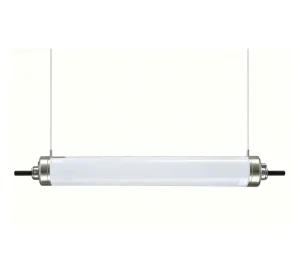
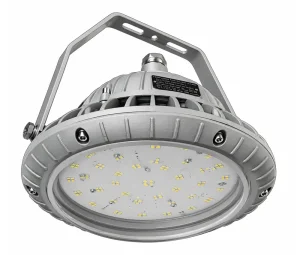
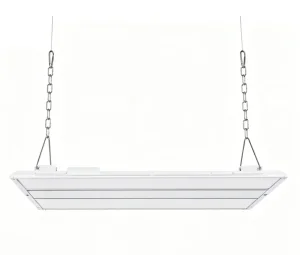
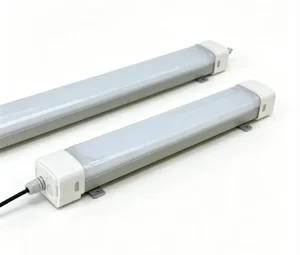
Complete your facility lighting retrofit with our specialized range of IP68 marine, IP69K tri-proof, explosion-proof, and extreme-temperature industrial LED fixtures.