
Engineered Luminaires for Hostile Environments
Field-proven industrial lighting fixtures designed to withstand critical thermal boundaries, high-pressure ingress, hazardous atmospheric gases, and dynamic broadcast requirements.
The Global Commercial and Industrial Lighting Landscape
Examining operational vulnerabilities, lifecycle economics, and why conventional solid-state lighting catastrophic failure rates spike in mission-critical manufacturing facilities.
Thermal Degradation & Arrhenius Kinetics
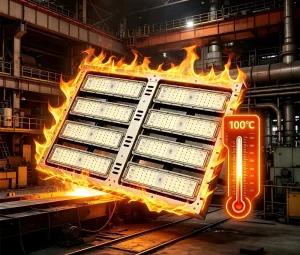
Standard industrial LED luminaires suffer an exponential loss of operational longevity when operated outside nominal ambient ceilings (25°C to 40°C). In steel fabrication facilities, smelters, and hot rolling mills, junction temperatures exceed 125°C within minutes. Under the Arrhenius reaction rate theorem, every 10°C rise in LED junction temperature ($T_j$) doubles the rate of phosphor degradation and epoxy yellowing, cutting MTBF (Mean Time Between Failures) by more than 50% without engineered heat dissipation.
The Total Cost of Ownership (TCO) Paradox
While low-tier luminaires present low initial procurement expenditure, their lifecycle maintenance cost in complex facilities is catastrophic. Deploying motorized boom lifts, halting automated overhead cranes, and dispatching high-voltage electrical crews to replace high-bay fixtures over continuous furnace lines costs an average of 4 to 12 times the initial cost of the luminaire itself. High-temperature engineering completely shifts the paradigm toward zero-maintenance reliability.
Severe Chemical & Ingress Stresses
Industrial applications frequently combine thermal stress with aggressive corrosive vectors: sulfuric vapor in battery production, airborne saline mist in maritime crane terminals, and pressurized hot-caustic cleaning cycles in food processing. Standard IP65 ratings fail because rubber gaskets dry out, embrittle, and allow corrosive vapor intrusion, resulting in galvanic destruction of the MCPCB circuitry and electrical shorting.
Emerging Technological Trends in Heavy-Duty Solid-State Lighting
How cutting-edge thermal transfer physics, wide-bandgap semiconductors, and computational optical optimization are redefining industrial illumination standards.
GaN & SiC Power Topologies
Transitioning from silicon MOSFETs to Gallium Nitride (GaN) and Silicon Carbide (SiC) drivers allows power supplies to sustain switching efficiencies >96% even at ambient temperatures exceeding 80°C. This drastically reduces the waste heat generated inside driver cavities.
Phase-Change Superconducting Tubes
Pioneering phase-change heat pipes bonded directly to ceramic substrate LEDs transfer thermal energy away from diodes with a thermal conductivity exceeding 10,000 W/m·K—nearly 25 times that of pure copper—neutralizing localized thermal concentrations instantly.
Multi-Faceted Freeform Optics
Utilizing high-purity optical borosilicate glass instead of degradation-prone PMMA or polycarbonate polymers. Borosilicate eliminates chromatic aberration and yellowing under intense UV, heat, and chemical washdown, retaining 98% light transmission across decades.
Predictive IoT & DALI-2 Telemetry
Integrated micro-sensors monitor board operating temperature, cumulative thermal shock index, forward current drift, and voltage spikes in real time. Dynamic auto-throttling prevents component destruction during catastrophic plant overheating incidents.
Heavy-Duty Application Profiles & Technical Benchmarks
Detailed performance parameters for industrial installations where fixture failure triggers production halts, severe safety risks, or immense regulatory fines.
| Operating Sector | Environmental Challenges | Required Engineering Spec | Recommended Fixture Architecture | Regulatory Standard |
|---|---|---|---|---|
| Steel Mills & Foundries | Ambient air up to 100°C–300°C, abrasive metal dust, severe vibration | Active/passive separated thermal layout, remotely mounted driver racks | High-Temp Tailored Series | ISO 8995-1 / EN 12464-1 |
| Container Terminals & Offshore | Constant saline spray, C5-M marine corrosion, hurricane gusts (60m/s) | Marine-grade 6063-T6 aluminum, electrophoretic coating, IP68 immersion | Artemis IP67/IP68 Series | IEC 60068-2-11 Salt Mist |
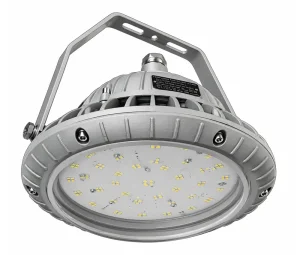
| Petrochemical Refineries | Explosive hydrocarbons, flammable dust (Zone 1/21, Class I Div 1) | Flameproof enclosures, copper-free aluminum, tempered glass diffusers | Explosion-Proof LED Array | ATEX / IECEx / UL 844 |
| Food & Beverage Processing | 1500 PSI high-pressure sanitizing washdowns at 80°C, chemical detergents | Crevice-free cylindrical design, smooth non-toxic finish, IP69K sealed | IP69K Tri-Proof Luminaire | NSF / FDA Washdown Compliant |
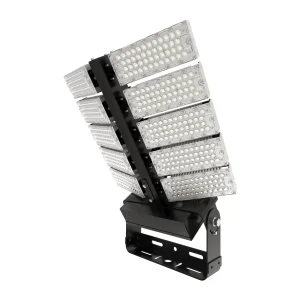
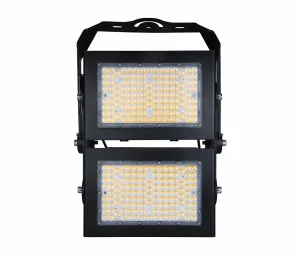
| Broadcast Stadium Arenas | Ultra-high-definition 4K/8K slow-motion filming, extreme throw distances | Flicker rate <0.2%, TLCI >95, CRI >90, precision asymmetric beam control | Vega / Articulating Sports Light | FIFA / UEFA / NCAA TV Spec |
Technology Roadmap: Solid-State Lighting (2025–2032)
A strategic projection of breakthroughs in photonics, thermal containment, and architectural controls driving industrial decarbonization.
Phase 1: Ultra-Efficacy Phosphor Architectures
Achieving true lab-to-production conversion rates exceeding 210 lm/W at full operational load. By utilizing multi-quantum-well (MQW) active structures and zero-Stokes-loss crystal quantum dots, fixtures minimize heat emission per lumen by up to 35% compared to legacy phosphor coatings.
Phase 2: Closed-Loop Micro-Channel Cooling
Integrating autonomous closed-circuit evaporative micro-fluidic chambers directly into the LED baseplate. This active-passive hybrid system eliminates cooling fans—the primary point of mechanical failure—while dissipating heat loads up to 400 W/cm² in furnace-adjacent installations.
Phase 3: AI-Driven Spectral Optimization
Embedded edge-computing chips that dynamically alter spectral emission curves based on real-time task categorization. From penetrating smoke, heavy fog, and steam layers in foundries to rendering high-contrast wavelengths for AI robotic vision in dark factories, smart photonics are transforming lighting into automated spatial intelligence.
Enterprise Sourcing & Lighting Engineering Framework
A rigorous five-stage deployment methodology guaranteeing optical precision, electrical compliance, and thermal reliability before mass fabrication.
1. Photometric Spatial Simulation
Every industrial project begins with native DIALux evo or AGi32 photometric simulations. Our engineers model spatial reflectance, obstruction shadowing, and fixture mounting heights to achieve exact lux targets and glare ratings ($UGR < 19$) before component selection.
2. Computational CFD Heat Modeling
Advanced computational fluid dynamics (CFD) simulates natural and forced convection currents across heat sinks. By testing thermal dissipation under worst-case static ambient conditions, we guarantee junction temperatures stay well beneath factory limits.
3. Harmonic & Grid Safeguards
Heavy plants with arc furnaces, CNC machine lines, and heavy motors experience catastrophic transient surges and harmonic distortion. Our drivers feature 10kV–20kV surge protection, Total Harmonic Distortion (THD) <10%, and active power factor correction ($PF > 0.98$).
4. Accelerated Burn-in Validation
Production runs undergo rigorous 100% full-load thermal stress burn-in testing inside isolated environmental chambers. Fixtures are cycled repeatedly between -40°C and peak rated operating thresholds to eliminate premature component mortality before dispatch.
Frequently Asked Questions: High-Performance Industrial Lighting
Expert answers addressing the critical mechanical, thermal, optical, and logistical criteria essential for project engineers and procurement heads.
Extended Industrial & Infrastructure Portfolio
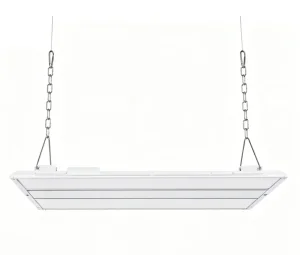
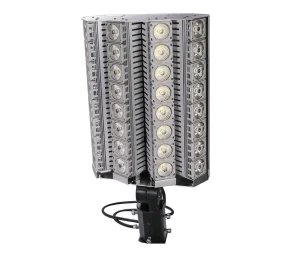
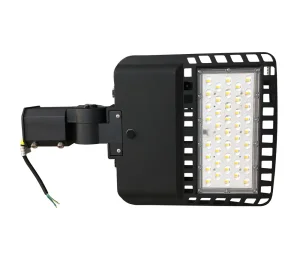
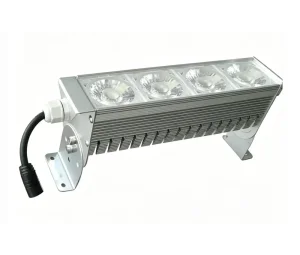
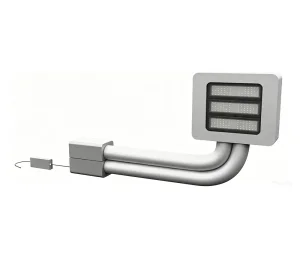
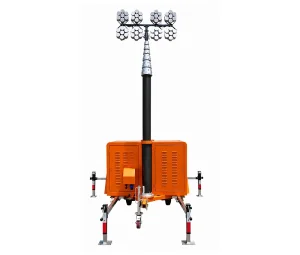
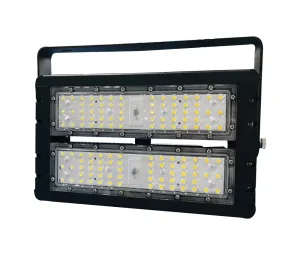
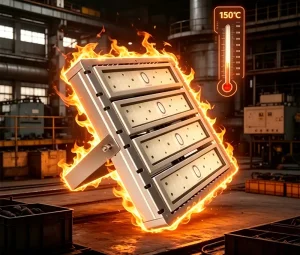
From smart linear high bays to mobile lighting towers and extreme 300°C furnace-rated units, inspect our full spectrum of specialized manufacturing solutions.
Initiate a Custom Photometric or High-Temp Lighting Study
Connect with our senior illumination engineers to evaluate spatial lux requirements, obtain Dialux simulation models, or design tailored fixtures for hostile operating sites.