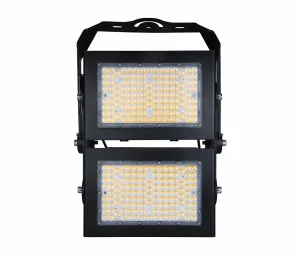
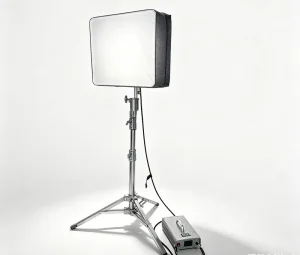
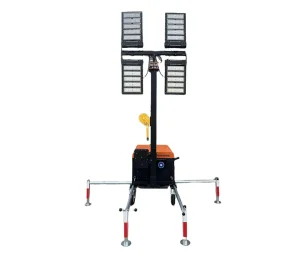
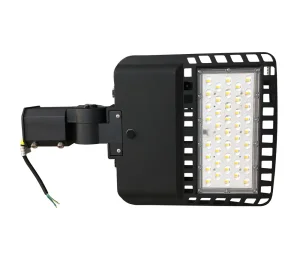
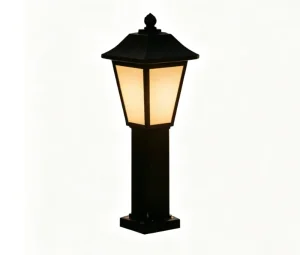
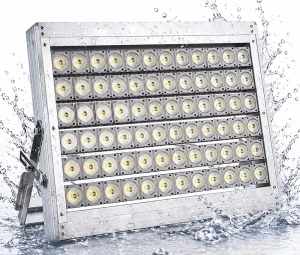
High-Temperature Industrial Product Portfolio
Heavy-duty, thermal-engineered LED luminaires designed for extreme ambient temperatures, heavy dust, and corrosive industrial settings.
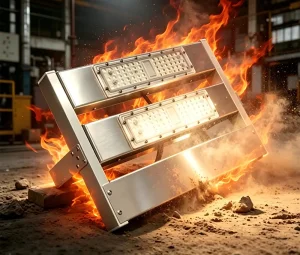
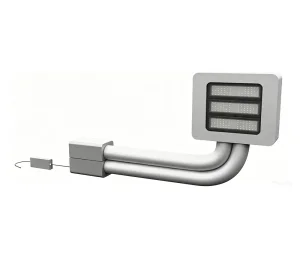
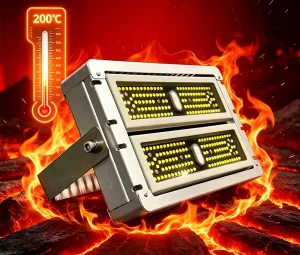
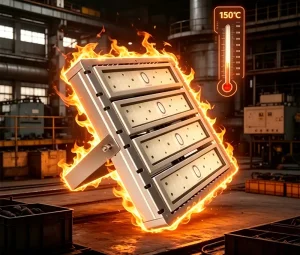
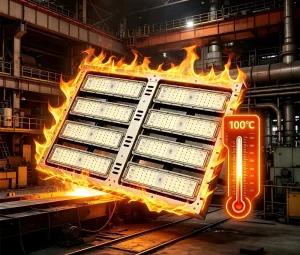
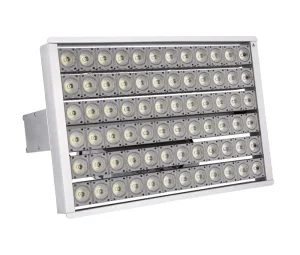
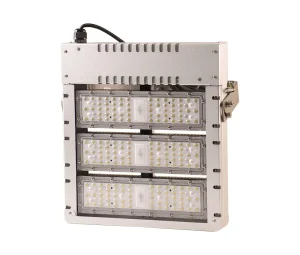
Macro Industry Status & Thermal Degradation Physics
An Engineering Deep-Dive into Solid-State Lighting Operation within Continuous Thermal Stress Environments
In modern industrial facilities such as metal casting foundries, hot strip steel rolling mills, glass container manufacturing plants, and chemical processing facilities, ambient temperatures near ceiling trusses and process equipment regularly exceed 80°C to 150°C, with localized hot spots climbing toward 300°C (572°F). Standard industrial LED fixtures installed in these zones routinely fail within weeks—not because of LED chip degradation alone, but due to rapid driver power supply breakdown, solder joint embrittlement, optical lens yellowing, and thermal runaway.
According to the Arrhenius equation applied to electronics failure mechanisms, every 10°C increase in semiconductor junction temperature ($T_j$) doubles the rate of chemical and mechanical degradation. When standard LEDs (rated for 40°C ambient) operate at 100°C ambient, their operational lifespan drops from 50,000 hours to under 2,000 hours. Specialized high-temperature LED lights bypass this limitation using isolated driver architectures and active/passive phase-change cooling structures.
Thermal Management Architecture: Active vs. Passive Dissipation
Achieving stable photometrics and operational integrity at ambient temperatures exceeding 100°C requires a fundamental redesign of traditional luminaire thermodynamics. Industrial light manufacturers employ three distinct tier levels of thermal management depending on the operational profile:
Class A: 80°C - 100°C
Uses high thermal conductivity copper-core Printed Circuit Boards (MCPCB) combined with extruded ADC12 heavy-duty aluminum heat sinks treated with ceramic coating for maximum radiant emissivity.
Class B: 150°C - 200°C
Employs remote-mounted LED drivers placed in cooler ambient zones (up to 50 meters away) paired with high-purity 3D phase-change vapor chamber heat pipes that draw thermal energy away from the diode array.
Class C: Up to 300°C
Integrates active pneumatic vortex cooling or liquid cooling distribution jackets surrounding gold-wire bonded GaN-on-SiC LED dies, delivering unprecedented thermal stability under direct furnace exposure.
Technical Matrix & Material Specification Benchmark
Detailed architectural comparisons across high-temperature LED fixture classes
| Parameter / Feature | Standard High Bay | High-Temp 100°C Class | Ultra High-Temp 200°C Class | Extreme Temp 300°C Class |
|---|---|---|---|---|
| Max Operating Temp | 45°C (113°F) | 100°C (212°F) | 200°C (392°F) | 300°C (572°F) |
| Driver Placement | Integrated on Body | Thermic-Isolated Housing | Remote Control Enclosure | Remote / Active Liquid Cooled |
| Substrate Material | Standard FR4 / FR2 | 2.0W/m·K Aluminum MCPCB | Copper Substrate + Ceramic | Direct Bonded Copper (DBC) AlN |
| Optical Lens Type | Polycarbonate (PC) / Acrylic | Borosilicate Tempered Glass | Fused Quartz Glass Optical Lens | High-Purity Quartz Lens Array |
| Gasket / Seal System | Standard NBR Rubber | High-Temp EPDM Silicone | Fluorocarbon (FKM / Viton) | Stainless Steel Encapsulated Metallic |
| Ingress Rating | IP65 | IP66 / IP68 | IP68 Waterproof | IP68 Waterproof & Dustproof |
Localized Application Scenarios & Global Field Deployments
Solving Operational Lighting Challenges Across Key High-Heat Industrial Sectors
1. Metallurgical Steel Mills & Foundries
In hot-strip rolling mills, blast furnace melt shops, and continuous casting bays, radiant heat off molten steel (1,500°C) elevates crane bays and high-ceiling structures to ambient levels between 90°C and 130°C. Heavy airborne iron oxide dust quickly settles on optical surfaces, creating thermal insulation layers that cook normal lights. Customized dustproof, vibration-resistant 150°C and 200°C LED luminaires with non-stick fluoropolymer outer coatings maintain lumen output and prevent dust-induced thermal breakdown.
2. Glass Manufacturing & Annealing Lehrs
Glass forming machines and annealing lehrs produce extreme radiant energy. Maintenance teams require crisp, high-CRI (>80) lighting to spot hairline surface defects, cracks, and mold alignment errors in real-time. Standard lights fail almost continuously due to thermal shock from open flames and radiant heat. Installing active thermal management LED lights rated up to 300°C above container glass machinery increases operational safety while slashing maintenance downtime by over 85%.
3. Cement Kilns, Power Plants & Pulp Facilities
Preheater towers in cement facilities, boiler rooms in coal and biomass power plants, and chemical recovery boiler rooms in pulp mills present a dangerous combination of high ambient temperatures (70°C to 110°C), sulfur oxide vapor corrosion, and continuous structural vibration. Deploying IP68 rated 100°C - 150°C high-temperature floodlights with corrosion-resistant anodized housings ensures long-term continuous illumination across critical inspection walkways.
4. Petrochemical Refineries & Processing Lines
High-temperature processing columns and asphalt processing units require luminaires that are both explosion-proof (ATEX / IECEx certified) and capable of operating reliably at elevated temperatures without derating luminaire brightness. Specialized OEM high-temperature explosion-proof floodlights engineered with dual-chamber explosion protection ensure safety compliance without compromising lumen output in thermal cracking zones.
Local Compliance, Certification & Quality Assurance
Ensuring International Regulatory Adherence and Seamless On-Site Integration
Procuring industrial lighting for hazardous high-heat zones requires strict alignment with regional regulatory frameworks, electrical safety mandates, and environmental standards. As an expert OEM/ODM high-temperature lighting manufacturer, our production and testing workflows comply with global benchmarks:
- IEC/EN 60598-1 & IEC/EN 60598-2-5: Rigorous testing for thermal stress resilience, electrical insulation resistance, and mechanical impact resistance (IK10 rated housings).
- UL 1598 & UL 8750 Compliance: Complete validation of LED equipment for use in non-hazardous and hazardous industrial locations in North America, ensuring compliance with National Electrical Code (NEC) thermal limits.
- ATEX / IECEx Certifications: Compliance for Zone 1, Zone 21, Zone 2, and Zone 22 high-temperature explosive dust and gas atmospheres.
- IP68 / IP69K Ingress Protection: Ingress testing guarantees seal integrity during high-pressure thermal washdowns and fine ceramic dust exposure.
- HALT (Highly Accelerated Life Testing): Fixtures undergo extreme multi-axis thermal shock (−40°C to +180°C rapid cycling) to eliminate early mortality failures before factory dispatch.
Technology Roadmap & Future Outlook (2025–2030)
Next-Generation Solid-State Innovations Shaping Thermal Resistance Electronics
The industrial LED lighting industry is undergoing a paradigm shift driven by wide-bandgap semiconductors, digital twin thermal modeling, and advanced nanomaterials. Future high-temperature lighting architectures are moving toward unprecedented efficiency and endurance levels:
GaN-On-Silicon Power Supplies
Gallium Nitride (GaN) power components operate with 98%+ efficiency at significantly higher temperature thresholds than standard silicon MOSFETs. GaN drivers enable ultra-compact, high-density power units that survive inside 100°C ambient zones without requiring external remote housing.
AI Thermal Throttling Control
Embedded microcontrollers running real-time thermal predictive algorithms monitor die temperatures and dynamically modulate drive currents during unexpected process temperature spikes, preserving LED life without abrupt shutoffs.
Graphene Thermal Coatings
Integrating monolayer graphene coatings on aluminum heat dissipation structures increases thermal conductivity by up to 30%, allowing lighter fixture profiles to dissipate heat rapidly into turbulent, hot ambient air.
Frequently Asked Questions (FAQ)
Technical and procurement insights for facility managers, electrical engineers, and industrial buyers
Specialized Industrial & Multi-Scene Product Catalog
Explore our broader engineering capabilities across marine, stadium, mobile light towers, and heavy commercial solutions.