
Engineered Municipal & Industrial Lighting Systems
Explore heavy-duty luminaires designed to withstand harsh outdoor weathering, high wind loads, corrosive coastal atmospheres, and demanding municipal arterial conditions.
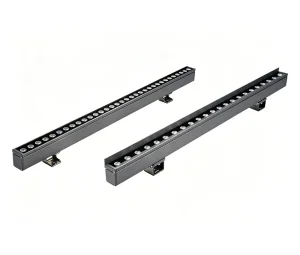
Best RGB Wall Washer – Effortless Commercial Decoration with Linear Precision
View Product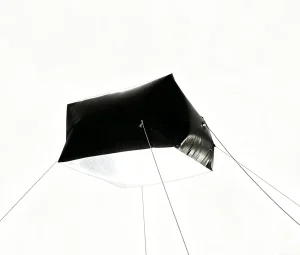
High-Quality Helium Balloon LED Light - Truss-Free Aerial Illumination
View Product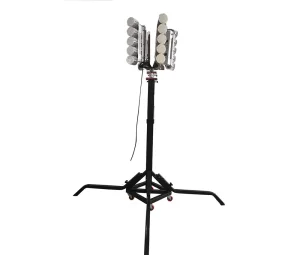
OEM Economic 4m Mobile Light Tower Factory, Manufacturer
View Product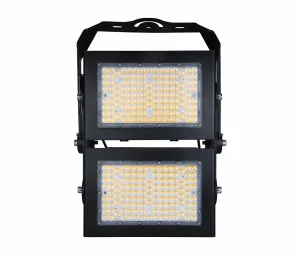
OEM Vega LED Sports Field Light - Robust Design, Adjustable Optics
View Product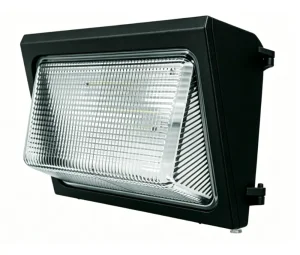
Best Wall Pack LED Light – Secure & Efficient Exterior Building Lighting
View Product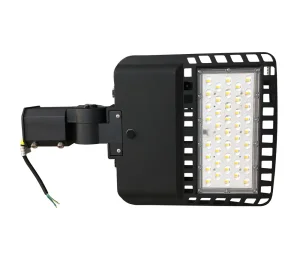
OEM LS-L Series Shoebox Street Light for Urban & Area Lighting
View Product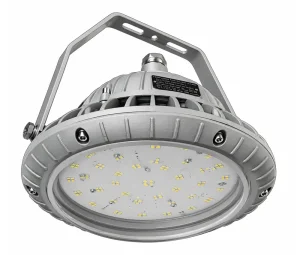
Best Explosion proof LED Light – Safe, Durable, Industrial Illumination
View Product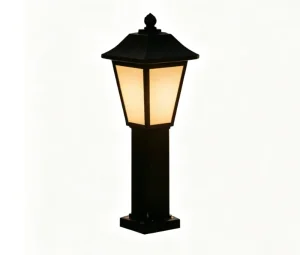
OEM Garden LED Light – Elegant, Durable Landscape & Pathway Lighting
View Product1. The 100W LED Road Light Industrial Landscape & Market Evolution
Why the 100-watt class has emerged as the definitive global sweet spot for secondary arterials, urban ring corridors, industrial parks, and smart city infrastructure conversions.
In municipal illumination and highway engineering, the 100W LED road light occupies the most critical tier in lighting class topologies (governed by EN 13201 classes M2 to M4 and IESNA RP-8-18). Historically, urban municipalities relied heavily on legacy 250W High-Pressure Sodium (HPS) or 400W Metal Halide (MH) luminaires to achieve average road luminance levels between 0.75 and 1.5 cd/m². The advent of high-flux optical-grade packaging—specifically utilizing multi-junction flip-chip CSP (Chip Scale Packaging) and high-power 5050/3030 SMD matrices—has fundamentally rewritten the energy equation. Today, a precision-engineered 100W LED road light comfortably delivers 16,000 to 19,500 lumens at system level, directly displacing 250W–400W HID systems while cutting electrical loads by 62% to 75%.
However, the modern road lighting procurement landscape extends far beyond raw lumen substitution. Today’s international municipal tenders demand sophisticated photonic delivery, intelligent mesh connectivity, and extreme mechanical durability. As cities transition toward Net-Zero emissions targets, roadway luminaires are scrutinized under Total Cost of Ownership (TCO) paradigms, factoring in maintenance dispatch costs, spectral blue-light hazard mitigation (CCT 2700K–3000K Dark Sky compliance), and continuous operational availability over a 15-to-20-year service life.
System Efficacy Parity (>180 lm/W)
By pairing high-bin Lumileds or Osram 5050 LEDs with optical-grade PMMA bat-wing lenses (>95% transmittance), modern 100W fixtures achieve an ultra-high luminous efficiency that drastically lowers municipal substation feeder requirements.
Smart IoT Zhaga / NEMA 7-Pin Sockets
Standardized integration of top-mounted NEMA ANSI C136.41 and bottom/top Zhaga Book 18 receptacles enables plug-and-play field upgrades to smart city CMS systems, radar traffic motion sensors, and central NB-IoT/LoRaWAN controllers.
Dark Sky & Ecological Preservation
Strict cutoff profiles (BUG Rating U0, Uplight = 0) combined with warm CCT spectrums (2200K–3000K) eliminate nocturnal skyglow, mitigate urban light pollution, and safeguard avian migratory routes in accordance with International Dark-Sky Association (IDA) guidelines.
Modular Tool-less Serviceability
Double-buckle quick-release housings with integrated power-cut knife switches guarantee that maintenance personnel can replace LED optical engines or constant-current drivers on-pole within 3 minutes without specialized hand tools.
2. Global Enterprise Procurement Criteria & TCO Lifecycle Modeling
A rigorous breakdown of the parameters Tier-1 EPC contractors, municipal highway authorities, and port operators evaluate when auditing 100W road light manufacturers.
When engineering procurement teams evaluate bids from Chinese and international road light manufacturers, reliance on superficial specification sheets frequently results in early catastrophic field failures. The electrical conditions on utility grids—particularly in emerging markets or peripheral industrial corridors—are characterized by persistent harmonic distortion, voltage sags, lightning-induced transient surges, and severe ambient thermal spikes. A resilient 100W road light must be engineered from the perspective of mean time between failures (MTBF > 300,000 hours).
| Evaluation Parameter | Commercial Grade (Low Spec) | Tier-1 Municipal Spec (Standard) | Industrial Engineered Spec (Lsledsus Grade) |
|---|---|---|---|
| LED Package & Drive Current | Generic 2835 SMD driven at >120mA | Bridgelux / Epistar 3030 SMD driven at 100mA | Lumileds 5050 / Osram Square driven at conservative <65mA |
| Luminous Efficacy | 110 – 130 lm/W | 140 – 160 lm/W | 175 – 195 lm/W (System Net Output) |
| Thermal Junction Temp (Tj) | Tj > 85°C at 35°C ambient | Tj < 75°C at 35°C ambient | Tj < 60°C via ADC12 multi-finned convection channels |
| Surge Suppression (SPD) | Basic 4kV / 2kA Driver internal | External 10kV / 10kA Class I / II | Dual-stage 20kV / 10kA (1.2/50μs & 8/20μs combo) |
| Corrosion Resistance | Powder coat <240h Salt Spray | AkzoNobel powder <500h Salt Spray | C5-M Marine Grade (ISO 12944) >1000h ASTM B117 |
| Control Interface | Fixed Output / 1-10V Analog | NEMA 3-Pin / 5-Pin Photocell | Zhaga Book 18 + D4i / DALI-2 Driver Telemetry |
Engineering Rule of Thumb for TCO Auditing: For every 10°C reduction in LED junction temperature ($T_j$), the operational lifespan of the GaN semiconductor chip doubles (Arrhenius Equation). A fixture engineered with superior thermal conduction costing 15% more upfront delivers a 300% reduction in bucket-truck maintenance dispatches over 10 years.
3. Macro Industry Engineering: Optical Distribution & Thermal Dissipation
Mastering the physical interaction between secondary refraction optics, bat-wing photometric curves, and thermodynamic conduction geometries.
Roadway lighting design is governed by strict photometrics. Illuminating an 8-to-12-meter wide dual-carriageway from an 8-meter mounting height requires asymmetric light projection that stretches luminance horizontally along the driving axis while restricting light behind the pole (house-side) and eliminating high-angle glare that impairs motorist vision.
IESNA Type II Medium (Type II-M)
Optimized for two-lane collectors, local distributor roads, and multi-lane industrial avenues where the pole setback is close to the curb. Features a lateral distribution width of 1.75 times the mounting height, providing exceptional longitudinal uniformity (Ul ≥ 0.7) and zero zebra-striping artifacts.
IESNA Type III Medium (Type III-M)
Engineered for high-traffic multi-lane arterials, expressways, and wide intersection layouts. Features an aggressive forward-throw angle (60° to 65° peak intensity), ensuring adequate illumination across three driving lanes without requiring mast arm tilting that causes glare.
ADC12 Cold-Flow Thermal Chassis
Manufactured using high-pressure die-cast ADC12 aluminum alloys featuring integrated aerodynamic convection chimneys. The natural laminar airflow cleans debris accumulation during rain events and maintains thermal resistance below 0.18°C/W between the PCB and heat sink.
4. Global Compliance, Environmental Validation & Localized Warranty Engineering
How top-tier suppliers satisfy municipal contract specifications through independent laboratory certifications, accelerated aging tests, and localized technical field support.
A global manufacturer must satisfy a matrix of international standards before a single luminaire can be installed on state-managed highways. Beyond CE and RoHS directives, municipal infrastructure tenders enforce rigorous validation protocols:
IES LM-79, LM-80 & TM-21-19
Complete photometric integrating sphere and goniophotometer verification (LM-79), accompanied by 10,000+ hours of continuous chip degradation data (LM-80). Mathematical extrapolations under TM-21 protocols authenticate our calculated L90B10 ratings surpassing 102,000 operating hours.
ENEC & CB Scheme Certification
Independent European laboratory testing verifies electrical safety under EN 60598-1 and EN 60598-2-3 (luminaires for road and street lighting), EMC electromagnetic compliance under EN 55015, and photobiological eye safety under IEC 62471 (RG0/RG1 classification).
C5-M Heavy Marine Anti-Corrosion
For installations along coastal highways, bridge decks, and ocean harbor perimeters, housings undergo multi-stage chromate conversion pretreatment followed by electrostatic thermosetting AkzoNobel architectural polyester powder coating, passing 1,000+ hours of ASTM B117 salt fog exposure.
Localized Spares & Rapid Field SLA
Tier-1 manufacturers back international deployments with regional component consignment warehouses, providing 48-hour RMA dispatch for isolated driver modules, surge protectors, and pre-calibrated optical light engines across North America, Europe, and the Middle East.
5. Technical Roadmap (2025–2030): AI Dynamic Dimming & D4i Mesh Telemetry
The transition of the 100W roadway fixture from an isolated photon generator into an intelligent, data-harvesting smart city sensor node.
The ongoing deployment of 5G microcells, intelligent transportation systems (ITS), and municipal IoT grids is rapidly transforming urban road poles into multi-functional service assets. The street light of the near future does not simply burn at 100% capacity from dusk until dawn; it actively interacts with vehicle flow, pedestrian density, meteorological conditions, and grid demand-response signals.
D4i (DALI for IoT) Architecture
D4i intelligent drivers store real-time asset data (luminaire serial, power consumption, running hours, operating temperature, and diagnostics) directly within the fixture. Zhaga Book 18 nodes extract telemetry without requiring manual field audits, delivering automated work-order generation upon component anomaly detection.
AI-Powered Adaptive Traffic Dimming
By connecting with roadside radar speed sensors and municipal AI camera feeds, dynamic 100W luminaires automatically step down to 30W (30% flux) during midnight periods of zero vehicular presence, instantly leaping to 100% output within 200ms when approaching traffic is detected 150 meters upstream.
Hybrid Microgrid & DC Bus Readiness
Future iterations of municipal road lights are adopting native DC-input driver architectures (48V–380V DC). This enables direct, ultra-efficient coupling with pole-mounted photovoltaic panels, localized battery energy storage systems (BESS), and EV charging curbside infrastructure with zero AC-DC conversion losses.
6. Engineering & Procurement FAQ: 100W LED Road Light Solutions
In-depth technical answers addressing common field questions encountered by electrical contractors, consulting engineers, and municipal lighting directors.
What legacy HID wattage does a 100W LED road light replace in standard municipal designs?
What are the recommended mounting heights and pole spacing for a 100W LED road light?
How does transient surge protection (SPD) prevent field failures during lightning storms?
What is the difference between NEMA 7-Pin and Zhaga Book 18 smart sockets?
Why is Color Rendering Index (CRI) and Correlated Color Temperature (CCT) critical in roadway safety?
How does tool-less maintenance design impact long-term municipal operational costs?
Specialized Harsh-Environment Luminaire Range
Engineered for high-temperature smelting bays, deep-sea marine applications, coastal stadiums, and heavy-duty industrial processing installations.
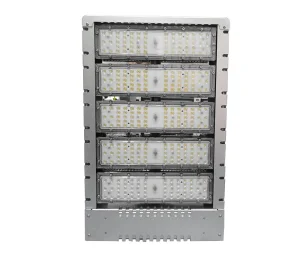
Best Artemis LED Stadium Light - IP67 Durability and Ultra-Light Design
View Product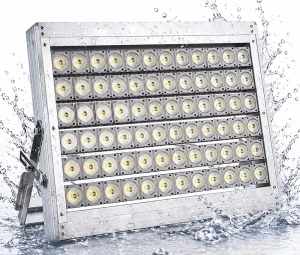
High-Quality LS-FLN Titans Series LED Marine Light for Deep Sea Applications
View Product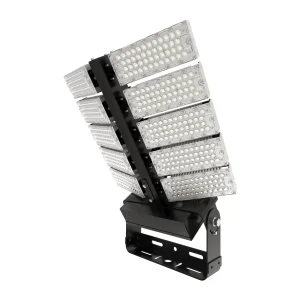
High-Quality Flex LED Flood Light - Independently Articulating Modules
View Product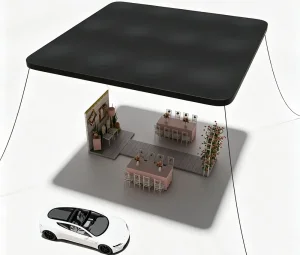
OEM Easy-Setup Helium Balloon Sun Shade - Truss-Free Overhead Diffusion
View Product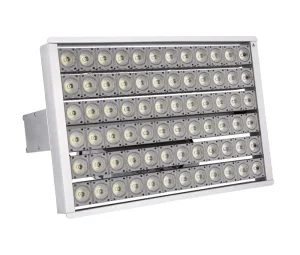
High-Quality High Temperature LED Light Rated 90°C(194°F)
View Product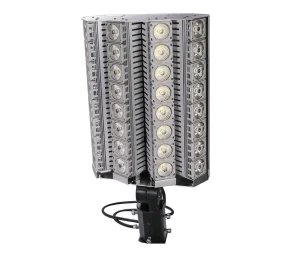
Best LS-STN Series Asymmetric LED Street Light for Roadway Applications
View Product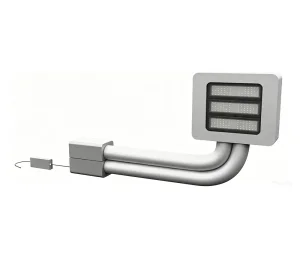
High-Quality Tailored High Temperature LED Light Rated 300°C (572°F)
View Product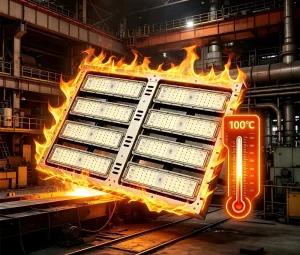
High-Quality High Temperature LED Light Rated 100°C(212°F), IP68 Waterproof
View ProductRequest a Complete Dialux Photometric Simulation & B2B Price Matrix
Planning a municipal roadway upgrade, highway expansion, or industrial compound overhaul? Submit your road profile parameters, pole heights, and target illumination standards for a bespoke engineering audit within 24 hours.