Industrial Showcase 01
Specialized Heavy-Duty Lighting Fixtures & Arrays
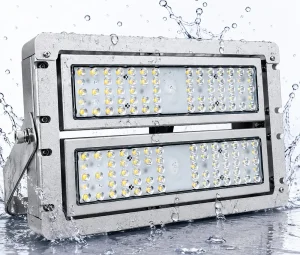
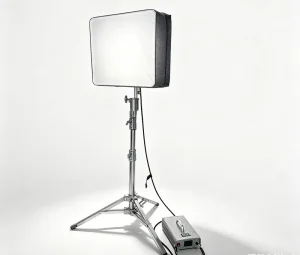
Explore our primary array of high-temperature luminaires, precision flexible mats, asymmetric road lights, and off-grid flood fixtures designed for extreme uptime.
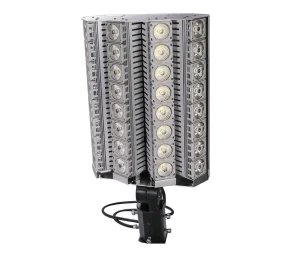
LS-STN Series Asymmetric LED Street Roadway Light
View Specifications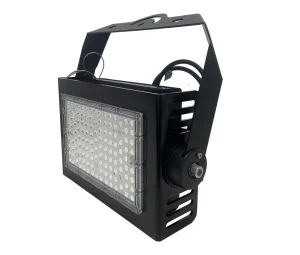
OEM 48V DC Flood Light for Mobile Light Towers
View Specifications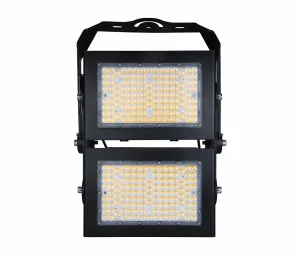
OEM Vega LED Sports Field & High-Mast Light
View Specifications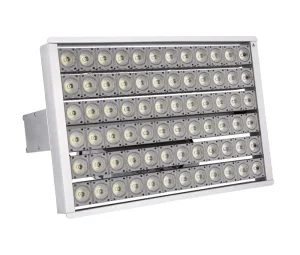
High Temperature LED Light Rated 90°C (194°F)
View Specifications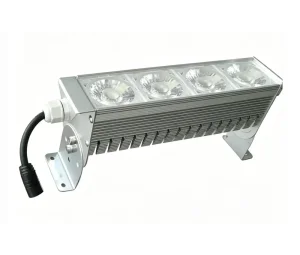
LED Linear Strip Light - Heavy Commercial/Industrial
View Specifications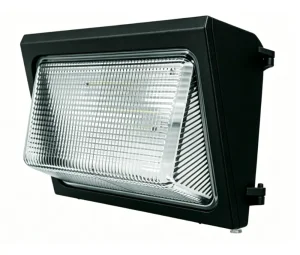
Wall Pack LED Light – Secure Perimeter Building Illumination
View Specifications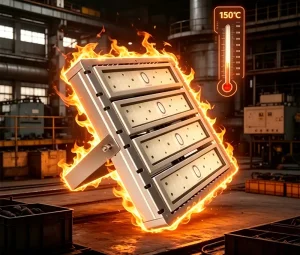
Extreme High-Temp Light - Rated 150°C (302°F) IP68
View Specifications
Thermal Physics & E-E-A-T Excellence
Engineering LED Longevity Beyond 80°C (176°F) Ambient
In typical commercial high bay luminaires, junction temperatures ($T_j$) surge beyond 105°C when exposed to ceiling heat pockets above 45°C, resulting in exponential phosphor degradation and early catastrophic capacitor failure. As an engineering manufacturer, Lsledsus solves thermal decay through segregated thermodynamic topologies.
Remote Driver Separation
Electrolytic capacitors are the Achilles' heel of industrial lighting in elevated ambient zones. We decouple the electronic ballast, housing it either in an air-isolated chimney cavity or up to 50 meters away in ambient-controlled rooms.
Pure 1070 Forged Cold Aluminum
Die-cast alloys (ADC12) offer thermal conductivity of barely 96 W/m·K. Lsledsus implements cold-forged 1070 pure aluminum fins reaching 226 W/m·K, quadrupling heat dissipation speed away from LED dies.
Non-Yellowing Optical Borosilicate
Standard Polycarbonate (PC) and PMMA lenses cloud, warp, and yellow rapidly when sustained temperatures pass 65°C. We integrate optical-grade tempered borosilicate lenses rated for continuous operation at 300°C without luminous degradation.
Market Evolution
176°F+ High-Temperature LED Market Evolution & Dynamics
Heavy heavy-industry manufacturing sectors are shifting away from inefficient High-Pressure Sodium (HPS) and Metal Halide (MH) systems to intelligent, extreme-heat-rated solid-state luminaires.
Decarbonization Mandates
With corporate ESG standards and ISO 50001 energy audits expanding across global foundries and mills, replacing 1000W HID systems with 250W 176°F-rated LEDs reduces lighting electrical consumption by over 75%, generating verified carbon offsets.
Maintenance Zero-Tolerance
Changing high bay fixtures suspended 30 meters above active blast furnaces or molten ladle runways requires halting production lines at thousands of dollars per minute. Industrial plants require fit-and-forget lighting with zero unplanned downtime.
Automated AI Sensing Integration
Modern smart factories require luminaires to communicate through robust DALI-2, Zigbee, or industrial mesh protocols, resisting both extreme electromagnetic interference (EMI) and convective thermal currents without dropping control signals.
Engineering Matrix
Global EPC & Enterprise Procurement Requirements
Plant engineers, procurement managers, and mechanical consultants should benchmark industrial lighting against quantifiable ambient thermal thresholds rather than generic factory claims.
| Thermal Class Rating | Core Application Environments | Crucial Mechanical Criteria | Electronic Architecture |
|---|---|---|---|
| 80°C / 176°F | Industrial baking facilities, tire vulcanization, forging halls, boiler rooms | Dual-chamber cold-forged AL1070 fins, silicone fluorosilicone seals | Integrated driver with dynamic thermal throttling fallback |
| 100°C / 212°F | Steel billet continuous casting, hot rolling mills, glass annealing lehrs | Borosilicate glass lens, copper-core heat pipes, IP66 enclosure | High-temp electrolytic-free driver or remote-mounted enclosure |
| 150°C / 302°F | Above electric arc furnaces, smelting pots, coke quenching batteries | Ceramic PCB substrate (AlN), stainless 316 hardware, IP68 rated | Mandatory segregated remote power unit positioned 15–30m away |
| Up to 300°C / 572°F | Direct furnace peek ports, metallurgical kiln mouths, incinerator bays | Custom active cooling loops, vortex tubes, aerogel thermal shields | Custom low-voltage isolated solid-state engines with optical conduits |
Turnkey Field Blueprints
Macro-Industry Engineering Solutions
Proven operational configurations designed for sectors with zero tolerance for illumination downtime.
Steel Mills & Smelters
Engineered for high radiant heat zones above continuous casters and slag skimmers. Combined with air-purging lens collars to prevent airborne iron dust from baking onto optical surfaces.
Glass & Ceramic Kilns
Designed for annealing lehrs where ambient roof temperatures remain constantly at 70°C–85°C. Features high-CRI (90+) color reproduction to verify molten glass clarity and bubble defects.
Paper Pulp & Drying Tunnels
Withstands chemical caustic fumes, 100% relative humidity, and 80°C hot air impingement. IP69K silicone hermetic gasketing prevents moisture ingress and corrosion.
Quality Assurance & E-E-A-T
Factory Verification, Compliance & Local Support
Every high-temperature fixture undergoes rigorous environmental screening inside our Shenzhen R&D thermal validation facilities before international dispatch.
72-Hour Burn-In Thermal Testing
100% of manufactured production units run continuously at rated ambient temperature in our closed industrial heat chambers to weed out early infant mortality in semiconductors.
CE, RoHS, UL, and ATEX Compliance
Certified to international safety norms with full LM-79, LM-80, and TM-21 photometric reports to ensure complete legal compliance and smooth clearance across North America, Europe, and Asia.
Photometric DIALux Support
Our Shenzhen application engineers generate complete 3D photometrics, glare rating (UGR) calculations, and exact lux distributions tailored to your facility blueprints before any purchase order.
Component Ecosystem
Cooperative Partners & Tier-1 Supply Chain
Reliability in high temperatures requires uncompromising component selection: genuine high-temp Cree, Osram, and Lumileds chips paired with robust Mean Well, Inventronics, and SOSEN driver architectures.









Future Outlook
Technology Roadmap: High-Temperature Solid-State Lighting
Lsledsus continues to push the boundary of solid-state lighting physics through next-generation semiconductor substrates and advanced passive heat dissipation.
PHASE 01
Gallium Nitride on Silicon (GaN-on-Si)
Developing driverless AC direct-drive modules using high-voltage GaN IC switches to completely eliminate life-limiting electrolytic capacitors.
PHASE 02
Graphene Aerogel Coatings
Applying nanoscale graphene emissivity coatings across aluminum fins to increase infrared radiation transfer efficiency by up to 28% in unventilated ceiling areas.
PHASE 03
IoT Predictive Health Telemetry
Integrating temperature and current sensors inside light fixtures to monitor operating conditions and warn facility teams before failures occur.
PHASE 04
Ultra-High 350°C Passive Optics
Collaborating with university laboratories on ceramic phosphors and sapphire window substrates capable of withstanding molten steel splash zones.
Direct Consultation & Answers
Frequently Asked Questions for Project Engineers
Answers to key questions from plant engineers, electrical contractors, and OEM buyers regarding thermal performance and installation.
What ambient temperatures can Lsledsus high-temperature LED lights withstand?
Our standard line of high-temperature luminaires is engineered for continuous operation at 80°C (176°F), 100°C (212°F), and 150°C (302°F). For specialized installations near blast furnaces, sintering beds, or rotary kilns, we engineer custom fixtures rated up to 300°C (572°F) using remote drivers and ceramic cooling.
Why do standard high-bay LEDs fail prematurely in 60°C–80°C ambient areas?
Conventional high bays are designed for ambient ceilings of 40°C to 50°C. Above 60°C, driver electrolytic paste dries out, triggering premature failure. Concurrently, LED junction temperatures exceed 110°C, accelerating phosphor carbonization, severe lumen depreciation, and color shifting.
Can you customize LED fixtures for a specific project?
Yes. Every fixture can be tailored: wattage, optics and beam angle, color temperature, housing material, mounting, and for light towers the mast height, power source, and mobility configuration. Share your site conditions and our engineering team will propose a matching solution.
Do you provide lighting layouts and photometric analysis?
Yes. Our in-house engineering team prepares bespoke DIALux lighting layouts and photometric analysis so you can verify illuminance levels, uniformity, and glare ratings before placing your order.
What makes your marine lights suitable for ports, ships, and shipyards?
Our marine lights use marine-grade anodized aluminum (A6063/die-cast with electrophoresis & powder coating), IP67 to IP68 waterproof ratings, 316 stainless brackets, and corrosion-resistant construction tested for 2,500 hours of salt spray and constant crane vibration.
Which sports venues do your stadium lights cover?
Our LED stadium lights reach up to 3000W per fixture with flicker-free operation (<0.2% TLCI >90) designed for recreational sports fields up to FIFA, Olympic, and professional HDTV 4K/8K broadcast-ready arenas.
How do I get product specifications, IES files, or a complete catalog?
Visit our Request a Catalog page, or contact our engineering team directly via email at [email protected] or WhatsApp +86 138 0885 6867 with your site drawings and environmental parameters.
What is the typical lead time for custom engineered OEM/ODM orders?
Standard high-temperature units ship within 7–12 business days. Customized heatsink extrusions, unique mounting brackets, or specialized optical lens assemblies typically require 3 to 4 weeks, including thermal chamber burn-in testing.
Industrial Showcase 02
Comprehensive Extreme Environment Catalog
Explore our specialized heavy-duty solutions, including IP69K washdown tri-proofs, mobile mining towers, explosion-proof units, and offshore marine floods.
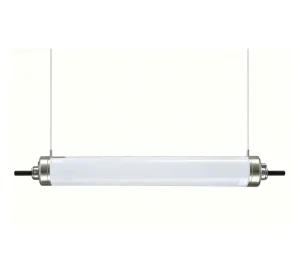
IP69K Tri-proof Light for Extreme Chemical Environments
View Specifications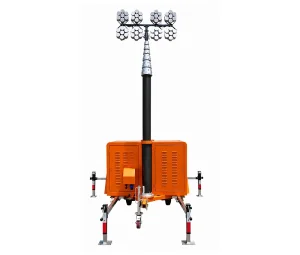
High-Brightness 12m Mobile Light Tower for Mining
View Specifications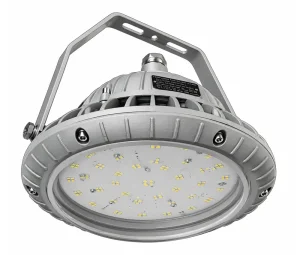
Explosion Proof LED Light – Hazardous Location Fixture
View Specifications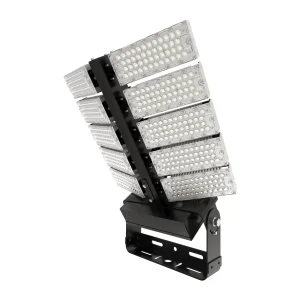
Flex LED Flood Light with Articulating Modules
View Specifications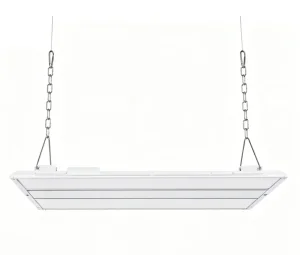
Linear High Bay LED – Smart Warehouse & Plant Bay
View Specifications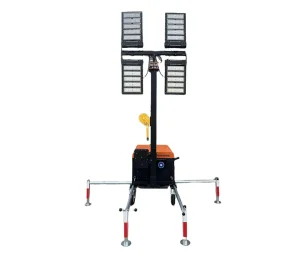
Wholesale 6m Mobile Light Tower – Field Workstation
View Specifications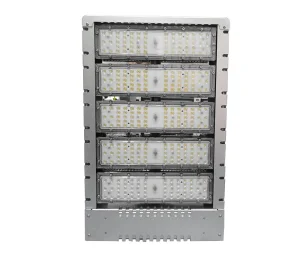
Artemis LED Stadium Light - IP67 Coastal Aerodynamic
View Specifications