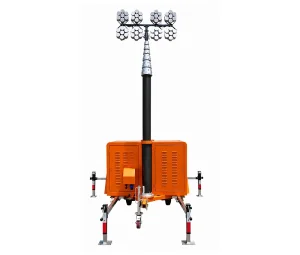
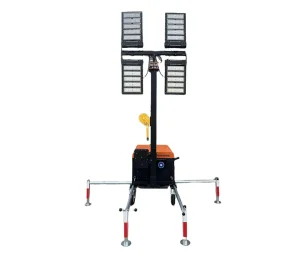
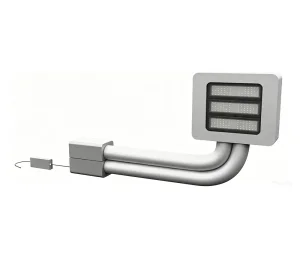
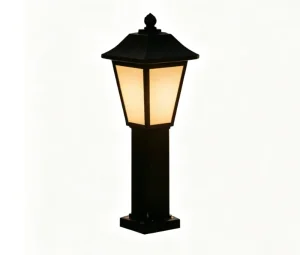
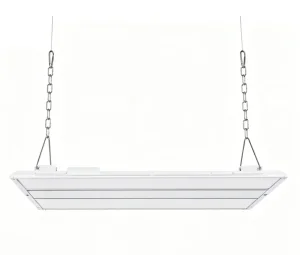
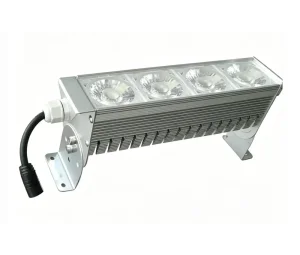
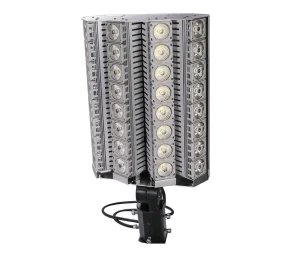
High-Performance Extreme Environment Series
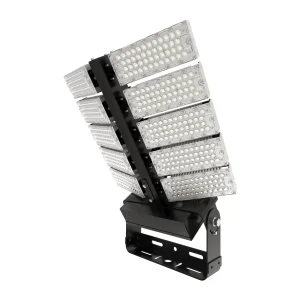
Explore our heavy-duty commercial, marine-grade, articulating flood, and thermal-rated lighting luminaires, directly developed and fabricated at our Shenzhen manufacturing center.
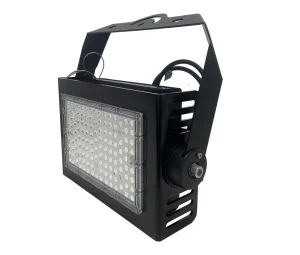
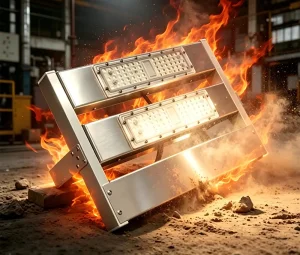
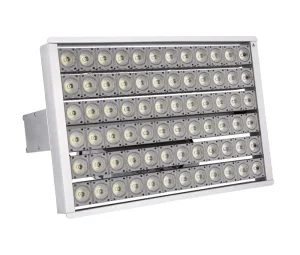
The Global Challenge of Industrial High-Heat Illumination
Why conventional commercial luminaires catastrophic failure rates reach 85% within six months in metallurgical, power generation, and glass annealing environments.
In modern metallurgical refineries, hot-rolling mills, aluminum smelting cells, and glass furnace corridors, the ceiling boundary layer experiences sustained, unyielding convective and radiant ambient temperatures hovering between 140°F (60°C) and 302°F (150°C). For decades, global heavy industry relied on Legacy Metal Halide (MH) and High-Pressure Sodium (HPS) luminaires. While these high-intensity discharge lamps generate light via heated plasma arcs that tolerate extreme environments, their catastrophic energy consumption (over 1000W per drop), excessive re-strike delays (15–20 minutes), fragile quartz envelopes, and rampant mercury content present acute fire and occupational safety hazards.
However, replacing legacy HID systems with standard off-the-shelf LED high-bays has historically introduced severe premature failure. Standard commercial LED fixtures are engineered strictly for nominal operating ambients of 25°C to 40°C (77°F to 104°F). When installed in a 302°F (150°C) ambient zone, semiconductor physics dictates disastrous consequences:
Thermal Runaway at Junction ($T_j$)
Standard GaN LED dies experience non-radiative recombination exponential jumps when the thermal threshold is crossed. Internal quantum efficiency (IQE) crashes, generating localized cascading heat that melts internal gold wire interconnects.
Physics DegradationElectrolytic Capacitor Desiccation
Integrated standard drivers contain wet liquid electrolyte capacitors rated to 105°C maximum. In a 302°F (150°C) ambient, Arrhenius equation modeling dictates complete dielectric fluid boiling within 180 hours of continuous burn time.
Driver Failure PointPolymer Carbonization & Shift
Standard PMMA and Polycarbonate lenses and silicone encapsulants undergo rapid thermal carbonization and photochemical yellowing. Transmittance collapses by over 60%, shifting high-CRI illumination into an uncalibrated amber haze.
Optics DeteriorationEngineering Anatomy of an Authentic 302°F Industrial Luminaire
A masterclass in conduction, convection, and radiation: how Lsledsus achieves unconditional reliability where standard aluminum dies turn into thermal traps.
| Engineering Parameter | Commercial Grade High-Bay | Generic High-Temp (80°C Rated) | Lsledsus 302°F (150°C) Extreme Series |
|---|---|---|---|
| Maximum Ambient Rating ($T_a$) | 40°C / 104°F | 80°C / 176°F | 150°C / 302°F (300°C Custom) |
| Driver Topology & Physical Location | Internal onboard (hot cavity) | Attached external bracket | Remote IP67 Driver Vault (>50m separation) |
| Substrate Technology | Standard FR4 / 1.0W/m·K MCPCB | 2.0W/m·K Aluminum MCPCB | Direct Plated Copper (DPC) Ceramic AlN (180W/m·K) |
| Optical Medium & Reflector | Polycarbonate / Acrylic (PMMA) | Tempered glass cover + plastic TIR | Borosilicate 3.3 Glass + 99.85% Miro Silver Optics |
| Thermal Interface Material (TIM) | Silicone grease (0.8 W/m·K) | Standard thermal pad (2.5 W/m·K) | Indium / Gallium Phase-Change Sheet (>8.5 W/m·K) |
| Housing Alloy & Aerodynamics | Die-cast ADC12 recycled aluminum | Extruded 6063 Aluminum | Marine-Grade Low-Copper 6063-T6 Chimney Heat Sinks |
1. The Three-Chamber Isolated Thermodynamic Architecture
Lsledsus has patented an architectural decoupling method that completely eliminates conductive cross-talk between the optical engine and the driver electronics. In an ambient of 302°F (150°C), traditional integrated housings become isothermal ovens: the heat generated by the LED semiconductor junction ($P_{th} \approx 65\% \text{ of electrical power}$) cannot escape because the surrounding air is already near the junction's thermal threshold ($150^\circ\text{C}$).
Our solution utilizes a split-core design: the Remote Solid-State Vault houses custom GaN switching stages, ultra-high-temperature film capacitors, and aerospace-grade line filters positioned in ambient utility sub-zones, connected via high-temperature silicone-insulated, multi-core nickel-clad cabling rated to withstand continuous 482°F (250°C) exposure.
2. Ceramic Aluminum Nitride (AlN) Substrate vs. Standard MCPCB
Metal Core PCBs (MCPCBs) rely on a thin polymer dielectric bonding layer between the copper traces and the aluminum base plate. Under prolonged thermal exposure at 150°C, these organic dielectrics undergo glass transition, micro-cracking, and dramatic thermal resistivity spikes. Lsledsus incorporates Direct Plated Copper (DPC) Ceramic Aluminum Nitride (AlN) substrates, boasting an intrinsic thermal conductivity of 180 W/m·K—nearly 90 times higher than generic organic dielectrics. This minimizes the junction-to-heatsink thermal impedance ($R_{th, j-s}$ down to <0.08°C/W), ensuring the GaN junction never exceeds its critical threshold.
3. Fluid Dynamics: Natural Convective Chimney Fin Design
In foundries and steel mills, high ambient heat is almost invariably accompanied by airborne conductive particulate—ferrous dust, soot, oil mist, and chemical fumes. Traditional horizontal fins collect heavy particulate blankets that act as thermal insulation, causing secondary overheating. Lsledsus luminaires feature vertically aligned, fluid-optimized aerodynamic chimney columns. Using the natural buoyancy of heated air (Rayleigh-Bénard convection), our cooling fins accelerate vertical laminar airflow, continually shedding dust deposits while maximizing convective heat transfer coefficients ($h_c$).
Mission-Critical Applications Where Failure Means Downtime
Engineered precisely for hostile environments across global metallurgical, energy, chemical, and heavy manufacturing sectors.
Steel Mills & Basic Oxygen Furnaces
Direct exposure above continuous casters, ladle treatment facilities, and electric arc furnaces (EAF). Fixtures withstand ferocious radiant spikes, massive magnetic fields, and pervasive metallic slag dust.
Metallurgical TierGlass Annealing Lehr Corridors
Positioned immediately along float glass drawing canals where ambient thermal drafts easily reach 130°C–150°C. Delivers high-CRI (>85) flicker-free illumination critical for robotic and manual ribbon surface inspection.
Precision OpticsAutomotive Paint Curing Ovens
Engineered for high-bake paint drying and e-coat polymer polymerization zones. Absolutely zero silicone off-gassing formulation prevents "fish-eye" paint finish defects while operating in continuous 140°C air.
Chemical IntegrityThermal Power Plants & Gas Turbines
Installed around gas turbine hoods, boiler penthouses, superheater headers, and biomass incinerators where extreme heat, turbine vibration, and acoustic resonance destroy conventional luminaires.
Heavy UtilitiesWhy Shenzhen Engineering Direct Yields Superior Industrial Fixtures
How our vertically integrated ecosystem in Shenzhen delivers unrivaled component-level control, faster prototyping, and uncompromising metallurgical resilience.
In the high-reliability industrial lighting industry, assembly without metallurgical and electronic control is a recipe for failure. As a premier direct manufacturer based in Longhua District, Shenzhen—the global epicenter of advanced optoelectronic engineering—Lsledsus controls every node of the value chain. From raw A380/6063 ingot foundry extrusion to computerized CNC machining, cleanroom ceramic substrate die-bonding, and automated environmental stress screening (ESS), we provide an end-to-end quality feedback loop unmatched by Western assemblers who outsource fabrication.
Tier-1 Component Partnerships
Longstanding direct partnerships with Osram Opto, Nichia, Lumileds, and Mean Well allow us to source high-bin LED chips with customized silicone-free eutectic gold-tin (AuSn) die bonding, guaranteeing absolute batch uniformity and zero batch defect rate.
Direct PartnershipsRapid Custom Prototyping (7–14 Days)
Our in-house 5-axis CNC machining, thermal wind tunnel testing facilities, and localized tooling lines let us customize mounting brackets, photometric beam distributions, and driver configurations for unique industrial retrofits in days rather than quarters.
Turnaround Speed100% Thermal HALT & HASS Testing
Every single high-temperature luminaire undergoes Highly Accelerated Life Testing (HALT) and burn-in inside environmental test chambers calibrated to 150°C and 95% RH for a continuous 72 hours before shipping, ensuring zero field defects on arrival.
Zero-Defect QAThe Next Frontier in Extreme Solid-State Illumination
How emerging wide-bandgap semiconductors, phase-change matrices, and optical metamaterials will redefine industrial lighting boundaries up to 400°C.
As global industries decarbonize and transition toward hydrogen blast furnaces, advanced nuclear micro-reactors, and high-temperature solar molten salt receivers, process equipment environments are growing hotter and more chemically corrosive. Lsledsus is pioneering three cutting-edge technological pillars to spearhead the future of ultra-high-temperature illumination:
1. Gallium Nitride (GaN) and Silicon Carbide (SiC) Power Switching
Standard silicon MOSFETs experience severe leakage currents and thermal drift above 125°C. Lsledsus R&D is implementing monolithic Gallium Nitride (GaN-on-Si) and Silicon Carbide (SiC) power switching modules directly inside industrial drivers. These wide-bandgap architectures operate flawlessly at junction temperatures exceeding 200°C with virtually zero switching losses, paving the way for integrated high-temperature luminaires that eliminate remote driver installations entirely.
2. Micro-Loop Heat Pipes (MLHP) with Graphene Nano-Fluids
To disperse concentrated heat flux away from ultra-high-output LED engines (500W to 1500W), our advanced thermodynamics lab is integrating sintered micro-loop two-phase heat pipes containing vacuum-sealed graphene nano-fluids. These phase-change loops achieve effective thermal conductivities exceeding 10,000 W/m·K—transporting heat from the fixture core to external convection sinks at velocities approaching the speed of sound.
3. Real-Time Optical & Thermal Telemetry via Wireless Mesh
Future iterations of our extreme luminaires incorporate sapphire-encapsulated micro-thermocouples and spectral monitoring diodes. Using high-temperature resistant sub-GHz wireless mesh telemetry, each luminaire continuously streams real-time junction temperature ($T_j$), lumen depreciation vectors, and incoming line quality directly to the central factory DCS or plant SCADA network, enabling true condition-based predictive maintenance.
Full-Spectrum Global Compliance & Photometric Verification
From complete DIALux simulations to international explosion-proof and electrical certifications, we guarantee seamless engineering approval.
Comprehensive DIALux / Relux Layouts
Before issuing quotes or cutting metal, our senior optical engineers prepare comprehensive DIALux photometric calculations. We model exact mounting elevations, crane line obstructions, ambient reflection factors, and maintain stringent lux levels and uniformity metrics ($U_0 \ge 0.6$).
Photometric CertaintyGlobal Safety & Ingress Certifications
Lsledsus products meet and exceed the most demanding international standards: UL 1598, UL 8750, CE (LVD/EMC), RoHS, REACH, and select Class I, Div 2 / ATEX Zone 2 explosion-proof standards for hazardous volatile vapor environments.
Certified Integrity5-Year High-Ambient Replacement Warranty
Unlike commercial suppliers whose warranties void the moment ambient temperature crosses 40°C, Lsledsus provides a comprehensive 5-year full replacement warranty guaranteed for continuous 302°F (150°C) operations without fine-print caveats.
Ironclad GuaranteeFrequently Asked Technical Questions by Global Specifiers
In-depth, direct answers covering electrical topology, cabling constraints, optical degradation, and custom mounting.
High-Temperature, Mobile & Industrial Infrastructure
Explore our heavy-duty mobile lighting towers, high-bay lines, specialized 572°F tailored luminaires, and precision roadway optics.