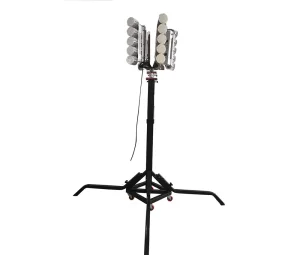
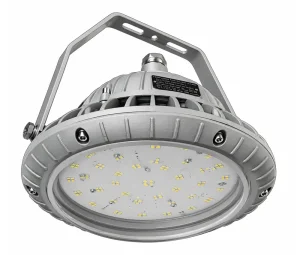
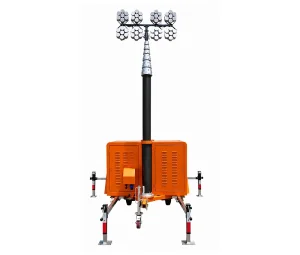
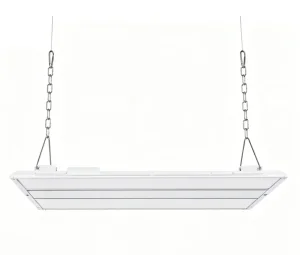
High-Performance Extreme Environment Series
Verified solutions for metallurgy, industrial processing, ports, and outdoor sports venues. Explore tested models designed to perform where conventional industrial luminaires degrade.
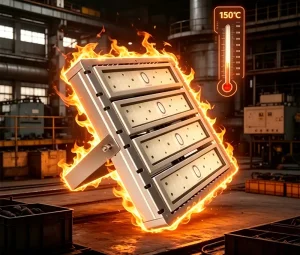
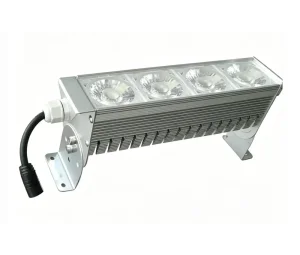
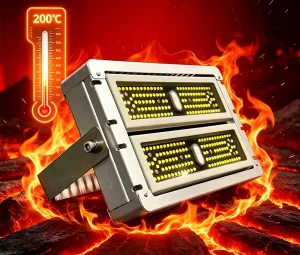
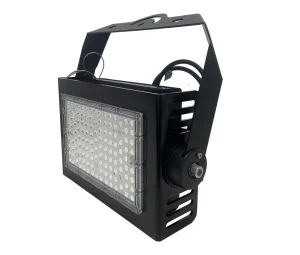
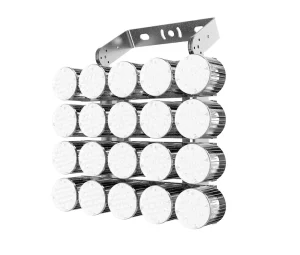
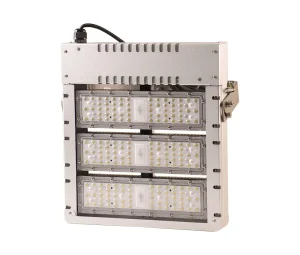
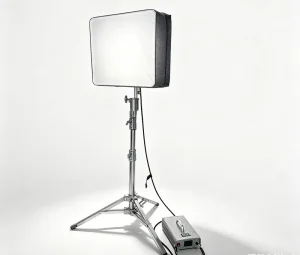
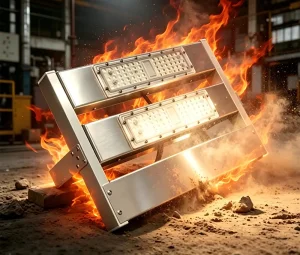
The 572°F (300°C) Challenge: Solving Industrial Thermal Runaway
Traditional high bay lights fail rapidly in environments exceeding 140°F (60°C). Our whitepaper breaks down how operating at 572°F demands an entirely re-engineered electronic and mechanical architecture.
GaN on SiC Semi-Conductor Die
Standard LED phosphors and silicone encapsulants burn out above 120°C junction temperatures. Our 300°C solutions implement Gallium Nitride emitters with ceramic sub-mounts and specialized inorganic phosphors that maintain chromaticity and prevent thermal decay.
Phase-Change Thermal Superconductors
Utilizing micro-grooved sintered copper heat pipes and vapor chamber technology, thermal resistance from junction to heatsink is reduced below 0.05°C/W. Heat is channeled rapidly toward aerodynamically spaced aluminum extrusions resistant to particulate buildup.
Remote-Mount Driver Isolation (RDI)
Electrolytic capacitors are the primary failure point in thermal lighting. LSLEDSUS separates the smart driver module from the luminaire head, allowing power management units to operate in controlled zones up to 100 meters away, extending MTBF past 100,000 hours.
High-Temperature Performance Architecture
Comprehensive technical specifications designed for industrial EPC contractors, maintenance directors, and procurement leaders.
| Thermal Tier | Operating Ambient | Recommended Applications | Chassis & Optic Construction | Driver Topology |
|---|---|---|---|---|
| Class A+ (Custom) | Up to 300°C / 572°F | Electric Arc Furnaces, Coke Ovens, Glass Annealing Lehrs | Titanium-stabilized Aluminum, Fused Quartz Glass Lens | Remote Isolated Driver (Up to 100m distance) |
| Class A (Extreme) | Up to 200°C / 392°F | Continuous Casting Bays, Forging Workshops, Smelters | Anodized ADC12 Die-Cast Alloy, High-Borosilicate Lens | Separated Heavy-Duty Module with High-Temp Bus |
| Class B (Severe) | Up to 150°C / 302°F | Rolling Mills, Foundry Ceilings, Boiler Rooms | Powder-Coated Marine-Grade Aluminum, Silicone Gaskets | Thermal Derating Auto-Sensing Driver Architecture |
| Class C (Elevated) | Up to 100°C / 212°F | Paint Curing Tunnels, Paper Mills, Chemical Processing | Vibration-proof Extruded Fin Radiator, Tempered Glass | Integrated High-Ambient Industrial Power Supply |
Macro-Industry Lighting Solutions for Global Operations
Solving illumination, worker safety, and regulatory compliance across high-stress enterprise installations worldwide.
Steel Mills & Foundries
Continuous vibration, radiative furnace heat, and particulate loading destroy typical lights. Our high-bay fixtures feature smooth non-stick fins and vibration damping to ensure uninterrupted mill operation.
Chemical & Smelting Plants
Airborne sulfur, corrosive vapors, and extreme flue temperatures require C5-M rated coatings and hermetically sealed IP68 optical enclosures to stop toxic gas ingress and chemical erosion.
Power Plants & Boilers
Turbine halls and waste-to-energy incineration facilities require high mounting heights with targeted distribution lenses, reducing glare while maintaining OSHA 30-footcandle requirements on the floor.
Pulp, Paper & Glass Plants
High humidity combined with massive ambient heat degrades normal electronics. Our dual-chamber pressure balanced venting blocks moisture intake during thermal expansion cycles.
Compliance, Localized Support & Technology Roadmap
Reliable operations backed by global testing standards, regional engineering hubs, and ongoing thermal innovation.
Standardized Certification
Every industrial luminaire adheres to CE, RoHS, UL 1598, UL 844 hazardous location certifications, and ATEX/IECEx compliance requirements. Certified LM-79, LM-80, and TM-21 test data ensure predictable investment returns.
Localized Engineering Support
With distribution partners across North America, Europe, the Middle East, and Southeast Asia, we provide rapid Dialux photometric simulation, on-site thermal mapping, and guaranteed OEM replacement component supply.
Next-Gen Optical Roadmap
We are currently validating Silicon Carbide (SiC) direct-drive semiconductors and carbon-nanotube heat spreaders aiming for stable continuous 350°C (662°F) operation, pushing industrial limits for heavy engineering.
Frequently Asked Questions: High-Temperature LED Sourcing
Crucial considerations for mechanical engineers, electrical contractors, and plant procurement managers.
How can an LED fixture realistically withstand 572°F (300°C)?
No standard commercial LED can survive 300°C ambient temperatures. We achieve this rating via three architectural innovations: (1) Remote Driver Isolation placing sensitive driver capacitors away from the heat source; (2) High-purity sintered copper heat pipes and vapor chambers; and (3) Inorganic phosphor LEDs encased on ceramic substrates, paired with quartz glass optics.
Why do standard high-bay LEDs fail prematurely in furnace areas?
Most commercial high-bay lights are rated for 40°C to 50°C (104°F to 122°F). In furnace rooms and forge lines, ceiling temperatures easily exceed 70°C to 120°C due to rising convection. This boils liquid electrolyte in drivers, yellows optical plastic lenses, and accelerates catastrophic lumen decay.
Can high-temperature lights withstand corrosive acid or alkaline vapors?
Yes. Our fixtures engineered for severe processing bays use copper-free marine-grade ADC12 aluminum with electrostatic thermoset powder coatings rated to ASTM B117 salt spray tests (>2000 hours), alongside fluorocarbon elastomer O-rings resistant to acid gases.
What documentation and simulation files do you supply before purchase?
We provide full IES and LDT photometric files, Dialux lighting calculations showing lux levels and uniformity on the floor, detailed dimensional drawings, thermal simulation reports, and product data sheets for engineering approval.
Specialized Industrial & Field Illumination Solutions
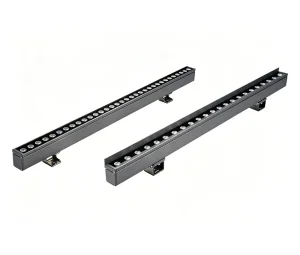
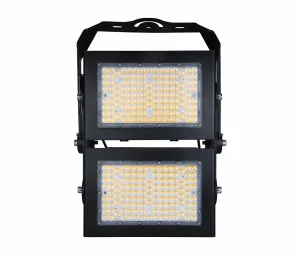
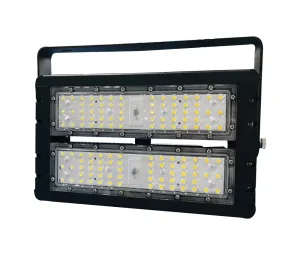
Review our heavy-duty lighting inventory. Each product is engineered to reduce facility downtime, lower energy consumption, and simplify installation in high-demand environments.