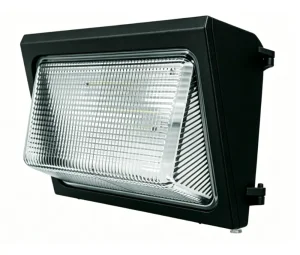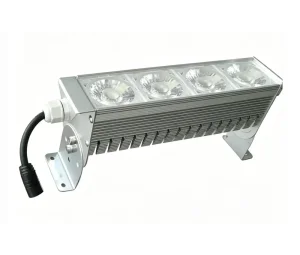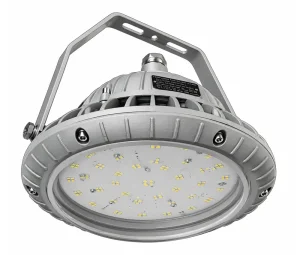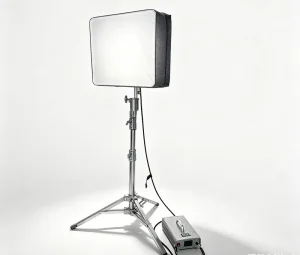
High-Performance Optical Luminaires & Severe Environment Solutions
Explore our precision-engineered exterior floodlights, articulating multi-cell luminaires, and extreme-heat high bay systems deployed worldwide.
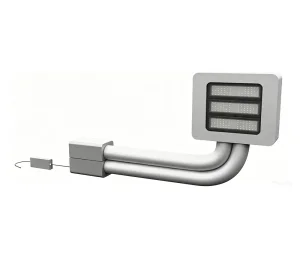
The Paradigm Shift in Commercial Floodlighting: Photometric Precision & Thermal Physics
In industrial logistics, petrochemical operations, intermodal shipping terminals, and heavy metallurgical fabrication facilities, illumination is neither an aesthetic luxury nor a secondary utility. Commercial floodlights operate at the critical intersection of functional workforce safety, automated machine vision integrity, strict photobiological compliance, and lifetime asset economics (L90B10 metric).
As an established OEM and ODM commercial flood lights supplier and manufacturer with over two decades of applied optoelectronic engineering in Shenzhen, Lsledsus re-engineers outdoor lighting through the lens of extreme thermal survival and precise light delivery. Historically, broad illumination projects across commercial yards, aviation aprons, and multi-acre logistics hubs relied on brute-force High-Intensity Discharge (HID), Metal Halide (MH), and High-Pressure Sodium (HPS) fixtures. These legacy light sources suffered from excessive system loss (typically converting less than 35% of electrical energy into usable target lumens), aggressive lumen depreciation within 6,000 burning hours, and uncontrolled spill light that degraded neighboring environments.
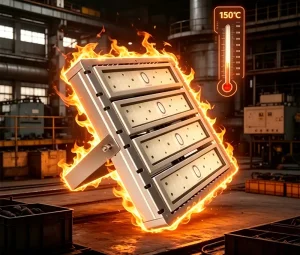
The contemporary solid-state lighting ecosystem demands a systemic leap beyond simple emitter replacements. Modern high-power commercial floodlights engineered by Lsledsus utilize high-efficacy ceramic-substrate LEDs (yielding up to 180-210 lm/W at junction equilibrium), combined with computerized optical-grade PMMA/PC collimators and multi-channel programmable constant-current drivers. By decoupling the mechanical heat sink from the thermal boundary layer and utilizing computational fluid dynamics (CFD) modeling, our commercial floodlighting platforms maintain stable diode junction temperatures ($T_j < 68^\circ\text{C}$) even under blistering ambient field environments exceeding 60°C to 150°C.
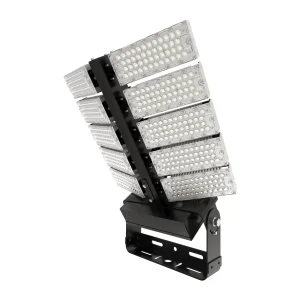
Multi-Module Articulated Optics
Independently orientable optic clusters permit simultaneous narrow-angle vertical throw and wide-angle ground field bathing, eliminating dark pockets and hot spots across deep commercial yards.
Transient Voltage & THD Suppression
Integrated 10kV/20kA surge protection suppresses utility switching spikes, lightening strikes, and inductive load surges common across heavy industrial power grids, keeping THD below 8%.
Corrosion-Resistant Metallurgies
Constructed with low-copper A380 die-cast aluminum alloys treated with electrophoretic primers and electrostatically sprayed architectural TGIC powder coating to survive 1,000-hour ASTM B117 salt spray tests.
Enterprise Sourcing Trends: Total Cost of Ownership (TCO) & Specifiers' Matrix
How institutional procurement managers, EPC contractors, and infrastructure developers evaluate industrial solid-state luminaires beyond nominal wattage.
Corporate sustainability mandates, decarbonization agendas, and rigorous workplace illumination regulations (such as OSHA 1926.56, EN 12464-2, and CIE 154:2003) have fundamentally altered the evaluation metrics for commercial flood lighting systems. When international EPC contractors and commercial facility owners evaluate tier-1 manufacturing partners, unit purchasing cost accounts for merely 12% to 15% of the 10-year lifecycle cost. The overwhelming bulk of financial exposure stems from electrical parasitic drag, maintenance hoisting equipment hire, bucket truck lane closures, and operational disruption during fixture replacements.
Consequently, procurement engineers prioritize four decisive technical vectors when qualifying a commercial flood light manufacturer:
| Evaluation Parameter | Standard Commercial Grade | Lsledsus Heavy-Industrial Grade | Engineering Benefit & ROI Impact |
|---|---|---|---|
| Thermal Interface Material (TIM) | Generic silicone grease (<1.5 W/m-K) | Phase-change metallic foil (>6.0 W/m-K) | Prevents Thermal Breakdown Prevents junction burnout at peak load |
| Lumen Maintenance (TM-21) | L70 @ 50,000 hours (25°C) | L90B10 > 100,000 hours (55°C) | Zero Hoist Maintenance 11.4 years of 24/7 maintenance-free burn |
| Optic Collimation Quality | Molded clear acrylic (yellows under UV) | Boro-float glass + UV-stabilized optical PC | Consistent Field Uniformity Retains >96% transmittance over 10 years |
| Ingress & Venting Tech | Glued perimeter gaskets, IP65 | Continuous silicone O-rings + Gore breathers, IP68/IP69K | Zero Condensation Eliminates internal moisture suction during cycling |
| Control Protocol Support | Fixed on/off or basic 0-10V | DALI-2, Zhaga Book 18, 7-pin ANSI C136.41 NEMA | Smart Grid Readiness Real-time telemetry, automated grouping & load shaving |
Furthermore, light pollution legislation and dark-sky ordinances (such as IDA standards) strictly govern upward light output ratios (ULOR). Traditional commercial floodlights typically cast 8% to 15% of their emitted lumens into the night sky as useless glare and skyglow. Lsledsus commercial floodlights incorporate zero-uplight precision cut-off shields and asymmetrical forward-throw distribution patterns ($60^\circ \times 130^\circ$ and $30^\circ \times 90^\circ$), guaranteeing that over 95% of target illuminance lands directly within the required architectural or operational perimeter without spilling across adjacent properties.
Sector-Specific Macro Solutions: Engineered for Real-World Rigor
From metallurgical casting bays and open-pit mine haulage roads to maritime berths and professional sports stadiums.
Steel Mills, Smelters & High-Temperature Foundry Bays
Standard LED drivers deteriorate rapidly when ambient temperatures cross 45°C, resulting in capacitor dry-out and diode thermal throttling. Lsledsus high-temperature series features split-architecture housing where the primary LED optic engine is isolated from the driver compartment, utilizing high-grade ceramic emitters, pure copper vapor chambers, and heat pipe dissipation. Certified to withstand sustained ambient temperatures of 80°C, 150°C, and custom-engineered active-management builds surviving up to 300°C (572°F).
Maritime Ports, Shipyards & Offshore Exploration Vessels
Salt fog, high atmospheric humidity, and severe vibration from gantry cranes degrade inferior luminaires through galvanic corrosion and seal degradation. Our maritime commercial floodlight range uses 316 stainless steel mounting hardware, chromate-converted copper-free aluminum chassis, and IP68 hermetic sealing. Anti-corrosive multi-stage fluorocarbon coatings ensure long-term resistance to ocean spray and saltwater washdown conditions.
High-Mast Logistics Hubs, Freight Rail & Intermodal Depots
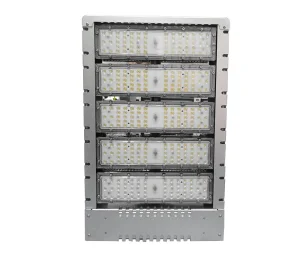
Logistics terminals require reliable, wide-angle ground illumination across vast container stacks without throwing glare into crane operator cabs or truck mirrors. Our multi-cell modular floodlights offer precise asymmetrical light cuts, flicker-free drivers (<1% ripple), and high Color Rendering Index (CRI > 80/90) options that optimize automated optical character recognition (OCR) systems used in autonomous container tracking.
Regulatory Compliance, Laboratory Validation & Global Certifications
Every commercial flood fixture leaving our manufacturing lines undergoes rigorous automated electrical safety tests, goniophotometric profiling, and environmental torture chamber stress-testing.
Navigating international regulatory frameworks requires exhaustive conformity with regional safety and electrical standards. As an audited global manufacturer, Lsledsus maintains compliant production processes aligned with ISO 9001, ISO 14001, and ISO 45001 operational frameworks. In-house testing laboratories operate in full alignment with IESNA LM-79, LM-80, and TM-21 methodologies.
Technological Horizon: The Future of High-Power Industrial Optoelectronics
A strategic overview of upcoming technological integration in commercial flood lighting platforms over the next decade.
GaN Power Conversion
Transitioning driver architectures from traditional Silicon MOSFETs to Gallium Nitride (GaN) semiconductors, reducing internal driver heat by 42% and achieving >97.5% power efficiency.
Edge-AI Edge Telemetry
Direct integration of onboard ambient sensors that report temperature fluctuations, lumen output degradation, and line voltage irregularities back to building management systems via LoRaWAN and Zigbee networks.
Micro-Phase Change Cooling
Implementing loop heat pipes (LHP) and synthetic diamond-doped thermal boundary surfaces, enabling 2000W+ floodlight packages within lightweight profiles under 14 kg.
Spectral Dynamic Tuning
Dynamic continuous CCT adaptation that adjusts from 5000K crisp daylight clarity during heavy vehicle logistics operations to 2700K amber wavelength cut-offs during fog or heavy precipitation events.
Frequently Addressed Engineering & Procurement Inquiries
Authoritative technical clarifications addressing luminaire selection, thermal durability, optics, and custom OEM manufacturing capabilities.
How do Lsledsus commercial floodlights prevent thermal runaway in high-heat industrial zones?
Unlike mass-market floodlights that rely on standard extruded fins, Lsledsus uses custom-extruded 6063-T5 aluminum cold-forged radiators combined with high-conductivity copper vapor chambers. In models engineered for 80°C, 150°C, and 300°C ambients, we decouple the driver enclosure and utilize high-purity ceramic LED chips alongside PTFE-jacketed wiring. This guarantees junction temperatures stay within safe operating margins, preventing premature diode failure or phosphorus color shift.
What photometric deliverables do you provide prior to commercial order finalization?
Our in-house optical engineering team generates complete DIALux or AGi32 photometric layout simulations tailored to your site topography, pole heights, and setback distances. Deliverables include pseudo-color false-rendering maps, point-by-point lux/footcandle grids, uniformity ratios (Emin/Eavg and Emin/Emax), glare ratings (GR < 50), and standardized IES/LDT calculation files for engineering sign-off.
How does the optical beam selection impact total fixture counts on high masts?
Precision beam angles (such as 15°, 30°, 60°, or asymmetrical forward-throw $60^\circ \times 130^\circ$) direct peak candela precisely where work occurs rather than spilling uselessly into peripheral zones. By maximizing coefficient of utilization (CU), clients routinely reduce total fixture counts by 25% to 40% compared to generic wide-beam floodlights, substantially decreasing pole windage load (EPA), structural stress, and overall electrical consumption.
What customized OEM/ODM adaptations can be engineered for harsh environments?
As a direct factory manufacturer, we engineer tailor-made configurations including custom input voltages (120-277V, 347-480V, or 12-48V DC systems), marine-grade C5-M fluorocarbon corrosion coatings, specialized brackets for extreme vibration areas, remote driver gear trays up to 50 meters away from heat sources, and integrated emergency battery backups with cold-start heating elements.
Specialized Industrial Floodlights, Mobile Towers & Architectural Systems
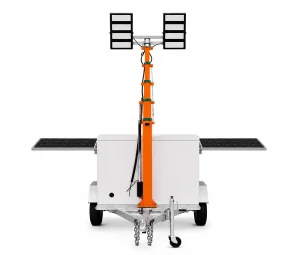
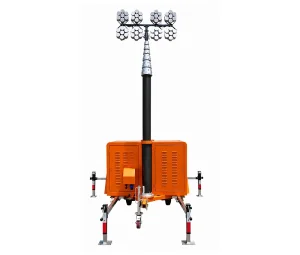
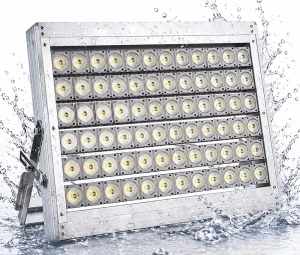
Discover our specialized commercial product line including mobile solar light towers, heavy marine luminaires, high-output stadium floodlights, and explosion-proof fixtures.