
Engineered Construction & Infrastructure Fixtures
Precision-manufactured LED solutions engineered for extreme job-site stresses, superior thermal resilience, and optimal beam distribution in high-risk environments.
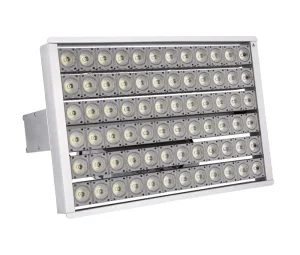
High-Quality High Temperature LED Light Rated 90°C(194°F) Suppliers, Manufacturers
Review Specifications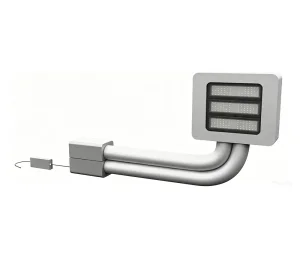
High-Quality Tailored High Temperature LED Light with Active Thermal Management- Rated 300°C (572°F) Factory, Manufacturers
Review Specifications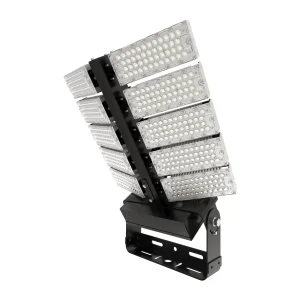
High-Quality Flex LED Flood Light - Independently Articulating Modules for Flawless Field Uniformity Factory, Supplier
Review Specifications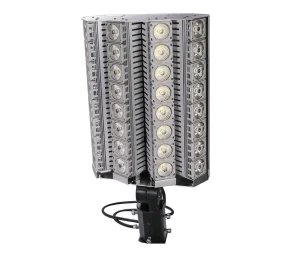
Best LS-STN Series Asymmetric LED Street Light for Roadway Applications Factories, Supplier
Review Specifications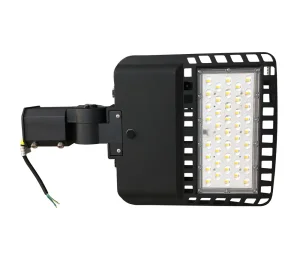
OEM LS-L Series Shoebox Street Light for Urban & Area Lighting Factories, Manufacturer
Review Specifications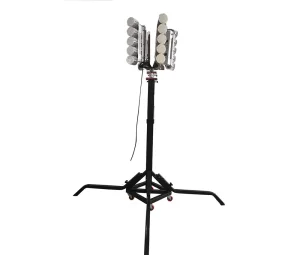
OEM Economic 4m Mobile Light Tower Factory, Manufacturer
Review Specifications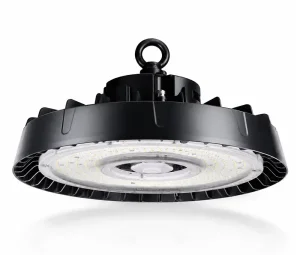
High-Quality Durable UFO High Bay LED Light – Long Lifespan & High Lumen Output Factories, Manufacturer
Review Specifications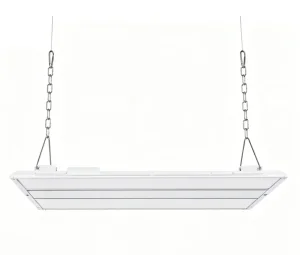
High-Quality Linear High Bay LED – Bright, Reliable, and Smart-Controlled Factory, Suppliers
Review SpecificationsGlobal Construction Lighting Industry Landscape
Evaluating structural market shifts, safety compliance paradigms, and photonic efficiency benchmarks governing international mega-projects.
The global construction lighting market has pivoted aggressively from legacy metal-halide and halogen flood units toward intelligent, solid-state LED systems. Driven by stringent workforce safety mandates—such as OSHA Standard 29 CFR 1926.56 in North America and EN 12464-2 across the European Union—procurement teams are no longer treating job-site lighting as an incidental consumable. Instead, construction illumination is recognized as a mission-critical infrastructure asset directly correlated to total project throughput, night-shift error reduction, and catastrophic accident mitigation.
Historically, temporary illumination suffered from high degradation rates, fragile filaments, and catastrophic thermal failures caused by dust-caked heat sinks and unstable generator power supplies. Modern industrial builders and engineering, procurement, and construction (EPC) conglomerates demand verified Mean Time Between Failures (MTBF) exceeding 50,000 to 100,000 operational hours under harsh environmental stresses. This operational pivot has expanded the total addressable market for heavy-duty construction luminaires past USD 5.8 billion globally, with compound annual growth rates driven largely by decentralized infrastructure, round-the-clock tunnel projects, and massive industrial plant constructions.
Emerging Technology Trends & Engineering Roadmap
Examining the converging vectors of hybrid solar-battery architecture, gallium nitride (GaN) driver topographies, and autonomous optical tracking.
Zero-Emission Hybrid Solar Towers
Eliminating diesel dependency through high-density LiFePO4 battery storage, MPPT intelligent solar charge controllers, and ultra-high lm/W LED arrays designed to sustain continuous multi-day operations under zero solar yield conditions.
Active Dynamic Beam Optic Shifting
Moving away from static symmetrical lenses to articulating, asymmetrical PMMA and silicone optical assemblies. Construction luminaires dynamically adjust beam spreads (15° spot to 120° flood) via remote DMX or integrated motor mounts to adapt to changing site topographies.
Solid-State GaN Driver Integration
Replacing bulky electrolytic capacitor drivers with monolithic Gallium Nitride power stages. This dramatically decreases luminaire physical volume by 45%, extends thermal resistance thresholds up to 90°C ambient, and shrugs off unstable site-generator harmonic distortion.
| Technology Layer | Legacy Halogen / HID Baseline | Contemporary State-of-the-Art (LED) | Next-Gen Roadmap (2025–2030) |
|---|---|---|---|
| Luminous Efficacy | 18 – 35 lm/W | 140 – 180 lm/W | 210 – 240 lm/W (GaN on SiC) |
| Thermal Operating Window | -20°C to +40°C (High failure risk) | -40°C to +90°C (Active dissipation) | -50°C to +300°C (Micro-channel phase-change cooling) |
| Power Infrastructure | Continuous high-kVA diesel generation | Hybrid diesel/low-voltage grid | Autonomous solar PV + solid-state energy storage |
| Optical Uniformity (Uo) | 0.2 – 0.35 (Severe hot spots/glare) | 0.45 – 0.65 (Engineered TIR optics) | 0.70 – 0.85 (Adaptive micro-reflector matrix) |
| Telemetry & Control | Manual circuit breaker toggling | 0-10V / DALI-2 wired protocols | Wireless Bluetooth Mesh / LoRaWAN edge computing |
Specialized Industrial & Infrastructure Applications
Evaluating luminaire physical architecture against harsh real-world stressors across varying micro-climates and site conditions.
Heavy Civil & Bridge Infrastructure
Vibration-damped structural floodlights resisting continuous harmonic shaking from pile-drivers, pneumatic equipment, and heavy earthmovers. Demands 3G/5G vibration compliance under ANSI C136.31.
Subterranean Mining & Tunneling
Explosion-proof and IP69K sealed washdown fixtures designed to repel acidic groundwater, heavy airborne silica slurry, and combustible coal dust or methane pocket atmospheres.
Marine Docks & Coastal Works
C5-M marine-grade powder-coated cast aluminium housings utilizing 316 stainless-steel hardware to halt electrochemical galvanic corrosion from salt mist, ocean spray, and high atmospheric humidity.
Thermal Metallurgical Facilities
Ultra-high temperature luminaires operating adjacent to ladles, coke ovens, and smelting furnaces where ambient roof-truss heat consistently exceeds 90°C to 150°C, requiring remote-mounted driver bays.
Turnkey Lighting Solutions & Supplier Auditing Framework
A systematic methodology for evaluating tier-1 suppliers, ensuring product compliance, photometric verifiability, and lifecycle durability.
When selecting a primary construction lighting supplier, procurement engineers must look beyond headline wattage and initial purchase price. The Total Cost of Ownership (TCO) equation is dominated by electrical consumption efficiency, unprogrammed maintenance downtime, high-reach scaffolding or bucket-truck hire for servicing, and structural asset longevity. Premium manufacturing suppliers distinguish themselves by executing exhaustive pre-production simulations, rigorous environmental testing, and vertically integrated quality control.
1. Photometric Verification
A legitimate supplier must supply accredited laboratory IES/LDT files. Demand independent DIALux or Relux point-by-point lux calculations ensuring glare rating (UGR) stays under 22 to prevent visual blinding of crane operators and heavy machinery drivers.
2. Surge & Harmonic Protection
Job-site generators frequently subject electrical lines to severe inductive voltage spikes and harmonics. Fixtures must feature integrated 10kV to 20kV surge protection devices (SPDs) and drivers capable of handling wide voltage swings (e.g., 90V–305V or 480V industrial mains).
3. Mechanical Ingress & Impact
Reject units failing to provide verified IK08 to IK10 impact protection ratings for physical projectile impacts. Enclosures must feature pure die-cast A383/ADC12 aluminium with breathing vent valves to balance internal pressure and prevent vacuum-drawn moisture leaks.
Heavy-Duty, Marine & Autonomous Site Solutions
Mission-grade illumination systems designed for off-grid mobility, maritime civil works, extreme high-temperature atmospheres, and auxiliary plant operations.
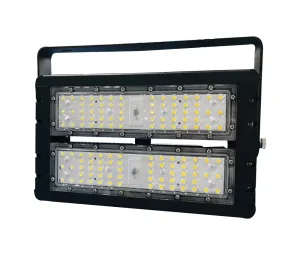
High-Quality 12V/24V DC LED Flood Light for Portable & Solar Applications Factories, Supplier
Review Specifications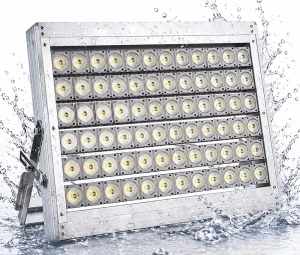
High-Quality LS-FLN Titans Series LED Marine Light for Deep Sea & Offshore Applications Factories, Manufacturers
Review Specifications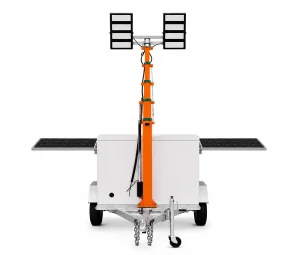
High-Quality 7M Solar Mobile Light Tower Factories, Supplier
Review Specifications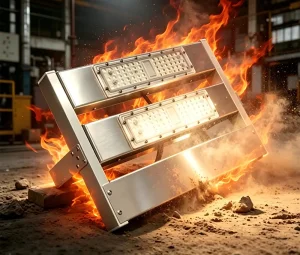
Best Tailored High Temperature LED Light with Highly Dustproof Configuration Factory, Manufacturers
Review Specifications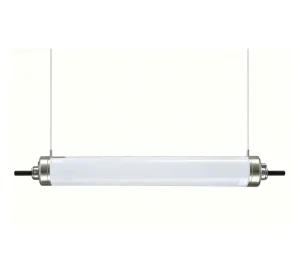
Best IP69K Tri-proof Light for Harsh Environments – High Efficacy & Reliable Performance Manufacturers, Manufacturer
Review Specifications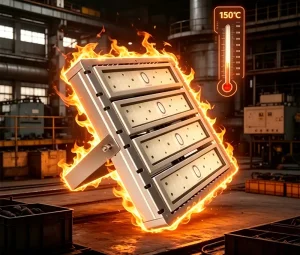
High-Quality Extreme High Temperature LED Light - Rated 150°C (302°F) with IP68 Waterproof Protection Factories, Factory
Review Specifications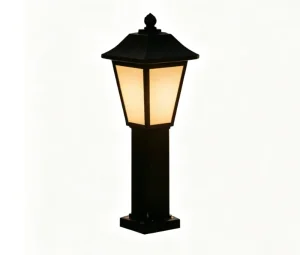
OEM Garden LED Light – Elegant, Durable Landscape & Pathway Lighting Suppliers, Manufacturers
Review Specifications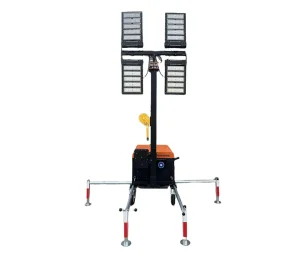
High-Quality Wholesale 6m Mobile Light Tower Factories, Factory
Review SpecificationsFrequently Asked Questions for Project Engineers & Specifiers
Authoritative, technically grounded responses addressing electrical topology, optical calculation, and mechanical durability.
LED diodes operate on electro-luminescent principles where light emission generates internal junction heat (Tj). When ambient temperatures rise above 45°C—common near foundry casting lines, boiler rooms, or beneath uninsulated metal roofs—conventional LED fixtures suffer immediate lumen depreciation and phosphorus thermal quenching. By utilizing isolated extruded-fin cold-forged aluminium heatsinks and remote driver placement, the internal junction temperature is held well below the critical 85°C threshold, preserving TM-21 calculated L70 lifetimes beyond 60,000 hours.
Standard symmetric floodlights direct photons in a conical distribution, casting high-intensity glare directly into operator sightlines and wasting light outside the target corridor. Asymmetric lenses (such as IES Type II, III, or forward-throw distributions) guide light strictly across horizontal work surfaces while cutting off upward light spill (0% uplight). This provides an optical uniformity coefficient (Uo) above 0.5 with minimal glare, fulfilling both road safety and Dark Sky environmental requirements.
Temporary generators often exhibit frequency drift, open-neutral faults, and major inductive load step spikes. Industrial-grade construction luminaires integrate multi-stage transient voltage suppressor (TVS) diodes, metal oxide varistors (MOVs), and gas discharge tubes rated for 10kV to 20kV surges. Furthermore, intelligent power supplies incorporate automatic over-voltage, short-circuit, and over-temperature shutdown protections that automatically self-reset once line voltage stabilizes.
An IP65 or IP66 rating verifies ingress protection against standard low-to-high pressure water jets. However, construction vehicles, concrete plants, and tunnel equipment undergo daily cleaning using high-pressure steam washers. IP69K testing subjects the luminaire to high-pressure washdown (100 bar / 1450 psi) at high fluid temperatures up to 80°C from four rotational angles. Fixtures holding true IP69K certification utilize dual vulcanized fluorosilicone O-rings and specialized cable glands that prevent moisture ingress during intense pressure washing.