
High-Performance Extreme Luminaires & Systems
Explore our advanced specialized solutions engineered with precision thermal dissipation and high-durability enclosures.
Engineering Corrosion-Proof LED Tri-Proof Luminaires
A rigorous metallurgical, polymeric, and optoelectronic analysis of why generic linear lighting collapses in aggressive operating environments, and how specialized manufacturing mitigates catastrophic structural degradation.
Material Chemistry: PMMA vs. Polycarbonate Under Chemical Stress
In industrial spaces rich with atmospheric ammonia (such as intensive livestock facilities), sulfur dioxide, and vaporized alkyl halides, standard Polycarbonate (PC) diffusers suffer from micro-environmental stress cracking (ESC). Over short duty cycles, PC hydrolyzes, resulting in amber discoloration, embrittlement, and internal pressure seal failure. As a leading manufacturer, our production engineering deploys chemical-grade Polymethyl Methacrylate (PMMA) and structural copolymer blends with advanced UV/chemical stabilization additives. PMMA provides supreme resistance to esters, concentrated cleaning alkalis, and ammonium salts, guaranteeing zero-degradation photometrics and structural resilience.
Where physical impact risks (IK08-IK10) intersect with chemical corrosion, we employ custom co-extrusion technology featuring a dual-barrier outer PMMA protective shell bonded seamlessly with an impact-absorbing inner polycarbonate core, paired with closed-cell fluorosilicone or ethylene propylene diene monomer (EPDM) gaskets.
Hermetic IP67/IP69K Sealing & Galvanic Passivation
Corrosion-proof lighting requires robust protection against ingress and oxidation. Continuous high-pressure caustic steam washdowns (common in food processing and slaughterhouses under IP69K protocols) exert thermal-cycling shock and mechanical jet pressure up to 100 bar at 80°C. Standard elastomeric gaskets take a compression set, drawing corrosive moisture into the internal driver cavity via internal vacuum generation.
Our factory incorporates ePTFE hydrophobic breathable membrane valves that equilibrate internal and external pressure differentials, preventing gasket vacuum compromise. Concurrently, all exterior mounting brackets and clips are stamped exclusively from austenitic AISI 316 / 316L stainless steel, pre-passivated to neutralize free iron and prevent microscopic galvanic pitting in coastal saline atmospheres.
China Factory Integration & Procurement Scale
Accelerating global procurement velocity through localized vertical manufacturing, deep metallurgical supply links, and precision quality engineering.
Vertical Tooling & In-House Extrusion
By operating our own high-precision multi-cavity rotary tooling lines, we retain absolute control over wall thickness uniformity, residual thermal stress elimination, and optical diffusion homogeneity without outsourcing markups.
Tier-1 Component Tiering
We leverage Shenzhen and Pearl River Delta component clusters, sourcing Lumileds/Osram opto-semiconductors and custom Mean Well/Inventronics driver topologies built specifically to withstand aggressive harmonic electrical distortion.
Rapid Photometric Customization
Global EPC contractors and distributors benefit from fast-turnaround optical adaptations: 30°/60°/90°/120° symmetric distributions, aisle-asymmetric corridors, microwave motion sensors, and integrated 90-minute LiFePO4 emergency units within 10 days.
Stringent Automated QA Testing
Every single manufactured lot passes through 100% automated high-voltage dielectric isolation checks, vacuum negative-pressure leak assessments, helium immersion testing, and 24-hour thermal soak cycles before outbound logistics clearance.
Specification Standards: Anti-Corrosion vs. Standard Luminaires
Direct architectural and durability comparison demonstrating operational longevity under severe atmospheric parameters.
| Evaluation Parameter | Commercial Grade Tri-Proof | Standard Industrial IP65 | Heavy-Duty Corrosion-Proof LED |
|---|---|---|---|
| Primary Housing Chemistry | Recycled ABS / Standard PC | Extruded 6063 Aluminum | Chemical PMMA / Co-Extruded Polymeric Alloy |
| Corrosion Resistance Class | C1 - C2 (Indoor General) | C3 (Urban Light Industrial) | C5-I (Heavy Industrial) / C5-M (Marine Coastal) |
| Ingress Integrity | IP65 (Water jet spray) | IP66 (Heavy Seas) | IP67 Submersible & IP69K (100-Bar 80°C Washdown) |
| Hardware & Fasteners | Zinc-Plated Carbon Steel | AISI 304 Stainless Steel | Marine-Grade Passivated AISI 316 / 316L |
| Gasket Durability | Sponge Nitrile (Drying prone) | Silicone Foam | Continuous Fluorosilicone / Anti-Ammonia EPDM |
| Internal Pressure Control | None (Internal Condensation Risk) | Occasional Plug | Dynamic ePTFE Hydrophobic Breathing Vent |
Localized Application Scenarios
Engineered for mission-critical operations where luminaire failure triggers production downtime, sanitization compliance penalties, or safety risks.
Chemical & Petrochemical Refining
Refineries and acid recovery plants harbor dense concentrations of airborne sulfuric, hydrochloric, and nitric vapors. Our fully seamless non-metallic exterior structures prevent outer oxidation from undermining structural mounting integrity.
Intensive Livestock & Poultry Agribusiness
Excrement decomposition generates extreme ambient ammonia fumes, condensing rapidly along cooling ceiling surfaces. Outfitted with chemical-pure PMMA bodies, our fixtures prevent yellowing, crazing, and chemical vapor penetration.
Commercial Food Processing & CIP Areas
Designed without external dirt-collecting cooling fins or recessed fastener voids, our ultra-smooth tubular shapes eliminate bacterial harbors, allowing straightforward cleaning during scalding chlorinated washdown cycles.
Marine Docks, Ports & Coastal Terminals
Direct oceanic contact demands full salt-spray immunity. Our luminaires withstand more than 2,000 hours of continuous ASTM B117 salt spray exposure without cosmetic corrosion or seal failure.
Regional Compliance Assurance & Engineering Support
Eliminating border friction, import hold-ups, and inspection liabilities through full international certification compliance and turnkey engineering design.
North American Compliance (UL 1598 / NSF)
Certified to UL 1598, UL 8750, and CSA C22.2 for wet location environments. We offer NSF/ANSI Splash Zone certification for North American food prep and slaughterhouse applications, including 0-10V dimming and 120-277V / 277-480V driver configurations.
European Union & UK Standards (CE / RoHS / ENEC)
Full conformance with EN 60598-1, EN 60598-2-1, EMC Directive 2014/30/EU, and D-Mark compliance (DIN EN 60598-2-24 for operating facilities with elevated combustible dust risks). Compatible with European DALI-2 building control systems.
Middle East & Oceanic Approvals (SASO / RCM)
Built for the intense ambient thermal profiles and saline coastal humidity of the GCC and Australia/New Zealand, our systems carry RCM approval, SASO certificates of conformity, and high-ambient heat ratings that prevent shutdown during peak summer operations.
Bespoke Engineering & DIALux Layouts
Every industrial project is backed by comprehensive engineering documentation: absolute photometric files (.IES / .LDT), full DIALux simulations showing real lux distributions, glare index assessments (UGR<19 options), and complete cabling schematics.
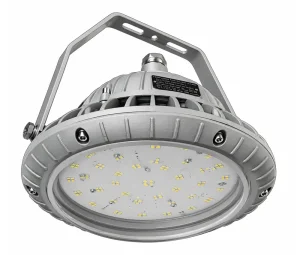
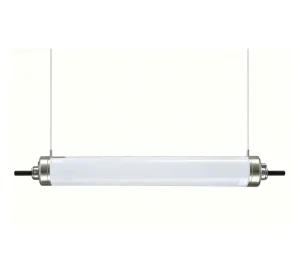
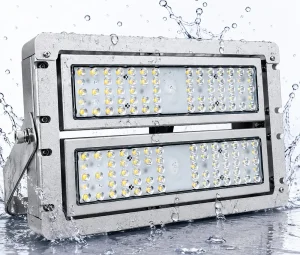
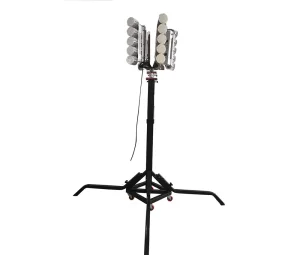
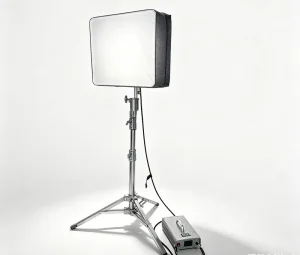
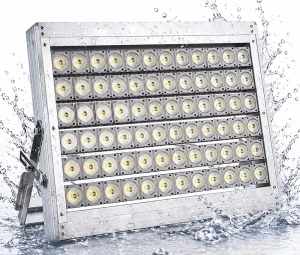
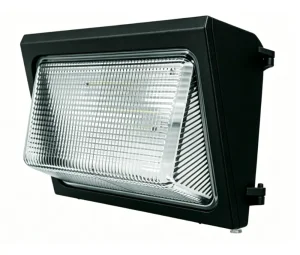
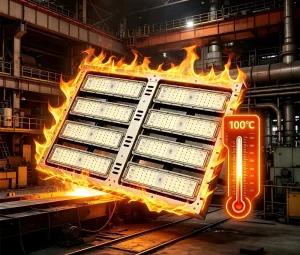
Complete Heavy-Duty Illumination Hardware
From explosion-proof floodlights to extreme high-temperature and marine LED solutions, explore our comprehensive commercial line.
Emerging Trends in Industrial Protective Illumination
How the convergence of Internet-of-Things (IoT) sensing, optical bio-optimization, and circular design principles is reshaping the next generation of corrosion-proof linear fixtures.
Hermetically Integrated IoT Mesh Sensing
Modern process plants are moving away from external add-on sensor modules, which introduce vulnerable seam lines. Next-generation tri-proof fixtures utilize internal microwave radar and Bluetooth Low Energy (BLE) mesh nodes situated entirely behind protective non-metallic lenses, enabling automated daylight harvesting and presence tracking under harsh conditions.
Dynamic Spectral Tuning for Agriculture
In high-density aquaculture and poultry operations, dynamic spectral tuning delivers measurable yield advantages. Modern installations shift smoothly between targeted calm-spectrum blue-green wavelengths (which reduce stress during physical handling) and bio-stimulating warm spectra that encourage healthy feeding patterns.
Circular Economy & Modular Serviceability
Global environmental mandates now demand luminaires engineered for disassembly. The historic approach of fully pot-glued, throwaway fixtures is giving way to toolless end-cap release mechanisms featuring replaceable driver boards and rebuildable optical engines, slashing lifecycle e-waste and lowering operational replacement costs.
Frequently Asked Questions on Corrosion-Proof LED Lighting
Direct technical answers addressing specific questions faced by project engineers, commercial distributors, and industrial safety officers.