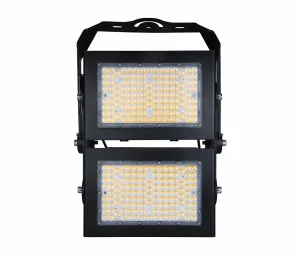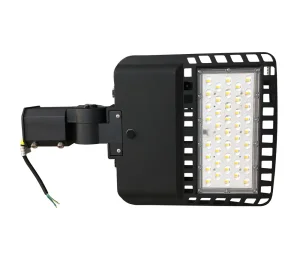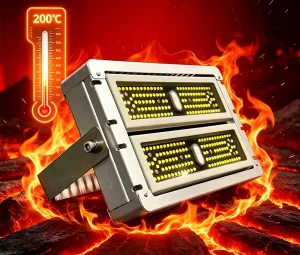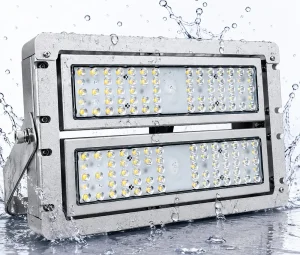
High Bay & Specialized Industrial Fixtures
Engineered for unmatched thermal endurance, optimal luminous efficacy, and multi-protocol dimming integration across demanding industrial environments.
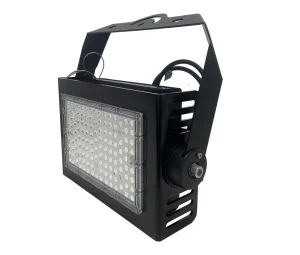
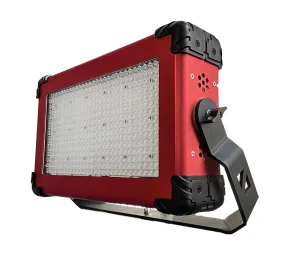
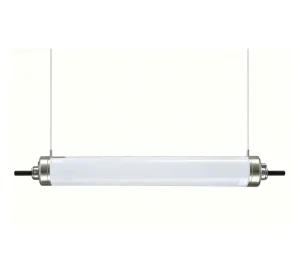
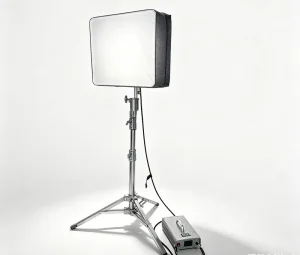
Evolution & Technological Trends in Dimmable High Bay Lighting
A rigorous examination of solid-state industrial illumination, algorithmic energy conservation, and modern photon distribution paradigms.
Continuous Dynamic Dimming & Daylight Harvesting
Modern high bay architecture is no longer static. Dimming systems integrating 0-10V, 1-10V, DALI-2, and Zigbee/Bluetooth Mesh enable facilities to dynamically scale lumen output. By pairing dimmable fixtures with ambient daylight sensors, corporate operations reduce peak energy consumption by an average of 42% without compromising OSHA surface illuminance.
IoT-Enabled Predictive Facility Telemetry
High bay lights represent the primary overhead real-estate grid in logistics and manufacturing facilities. Enterprise suppliers now embed multi-sensor modules directly into dimming drivers. These provide continuous operational metrics including LED junction temperatures, ambient humidity, real-time power draw, and automated lumen degradation compensation.
Hyper-Engineered Thermal Dissipation
Dimmable fixtures experience variable current densities, requiring resilient heat dissipation architecture. Advanced ADC12 die-cast aluminum alloys combined with phase-change heat pipes ensure drivers operate well beneath their rated Tc threshold. This guarantees fixture longevity beyond L80B10 @ 100,000 hours, even in elevated ambient workshops.
What Fortune 500 Enterprises Demand from Dimmable High Bay Suppliers
Bypassing superficial catalog claims to analyze verified physical metrics, driver electrical topologies, and true industrial reliability.
Harmonic Distortion (THD < 10%)
Poor dimming drivers cause power factor degradation and harmonic distortion back into electrical distribution systems. Industrial buyers demand Total Harmonic Distortion (THD) under 10% across the complete 10%–100% dimming spectrum to protect sensitive plant PLCs.
IEEE 1789 Flicker-Free Safety
Stroboscopic effects in manufacturing can cause fast-moving lathe spindles and circular saws to appear stationary. Premium dimmable suppliers utilize hybrid PWM/Linear current regulation to ensure zero visible or invisible flicker compliant with IEEE 1789-2015.
6kV/10kV Surge Protection
Inductive load switching from heavy machinery and overhead cranes triggers voltage spikes. Commercial grade 2kV surge immunity is insufficient; tier-1 suppliers integrate dedicated 6kV line-to-line and 10kV line-to-earth surge protection devices (SPDs).
Unified Glare Rating (UGR < 19)
High-lumen point sources produce direct visual glare, causing operator fatigue and reduced logistics throughput. Precision prismatic optics and micro-honeycomb reflectors ensure intense outputs meet stringent UGR < 19 thresholds for operator safety.
Tailored High Bay Engineering for Extreme Industrial Verticals
Providing purpose-built optical distributions, chemically inert enclosures, and thermal management architectures customized to real-world operating physics.
High-Ceiling Logistics & Cold Storage
Mounting heights exceeding 18 meters require narrow 60°/90° beam angles to penetrate narrow storage racking aisles without wasting lumens on top shelf structures. In cold chain facilities (-30°C to -40°C), silicone gaskets and vapor-sealed drivers eliminate condensation ingress while dimmable microwave sensors automatically manage inactive aisle lighting.
Steel Mills, Foundries & Kiln Operations
Where roof ceiling temperatures sustain 70°C to 150°C, traditional consumer-grade high bays suffer silicone encapsulation browning and driver capacitor blowout within weeks. We deploy split-body thermal architectures: heavy heat sink heads paired with remotely stationed driver cabinets located in cooler service galleries.
Marine, Port & Chemical Processing Facilities
Harsh atmospheric environments laden with chlorine, sulfuric vapors, or high salinity require corrosion-proof protection. Our industrial high bays feature electrostatic thermoset epoxy powder coatings, 316 stainless-steel hardware, and rigorous salt-spray ratings exceeding ISO 12944 C5-M / C5-I corrosion categories.
Comprehensive Compliance, Photometrics & Global Support
Ensuring end-to-end regulatory adherence, verified lighting simulation accuracy, and resilient lifecycle support for procurement specialists.
Complete Photometric Dialux Simulations
Eliminate project risks prior to physical capital commitment. Our in-house optical engineering team generates exhaustive DIALux evo and AGi32 photometric models. We simulate true room reflectance, machinery shadows, target foot-candles, and horizontal-to-vertical illuminance uniformity.
Worldwide Rigorous Certification Footprint
Every dimmable high bay undergoes independent third-party laboratory verification. Our fixtures conform strictly to UL 1598, CSA C22.2, CE-LVD, CE-EMC, RoHS, ATEX/IECEx hazardous environment standards, and DLC (DesignLights Consortium) Premium qualified product listings for maximal utility rebate capture.
Direct OEM/ODM Turnkey Engineering
As a seasoned manufacturer with over 20 years of solid-state innovation, we engineer custom bracketry, tailored power supplies, project-specific CCTs (from 2700K to 6500K with CRI > 90 options), and modular smart controls natively adapted to your facility's legacy automation backbone.
Industrial Lighting Roadmap: 2026 and Beyond
Strategic advancements driving the next era of energy resilience, autonomy, and optical performance in high-ceiling environments.
GaN Semiconductor Drivers
Replacing silicon MOSFETs with Gallium Nitride (GaN) driver architecture, reducing driver power loss by 35% and shrinking driver volume while boosting thermal thresholds.
Human-Centric Industrial Spectrum
Automated circadian color-tuning high bays that adjust spectral power distribution (SPD) throughout 24-hour shifts to suppress melatonin during night operations and elevate cognitive alertness.
Autonomous Mesh & Spatial LiFi
Self-healing Bluetooth Mesh networks enabling high-density asset tracking and ultra-secure optical Li-Fi wireless data transmission directly from high bay overhead luminaires to AGVs.
Cradle-to-Cradle Modular Systems
Toolless replaceable driver modules, plug-and-play LED light engines, and 100% recyclable cold-forged aluminum chassis engineered to achieve absolute net-zero embodied carbon.
Frequently Asked Questions on Dimmable High Bay Systems
Expert insights compiled by our senior optical and electrical engineering teams to resolve crucial procurement concerns.
What is the primary difference between 0-10V and DALI-2 dimming in high bay installations?
0-10V is an analog protocol where a direct DC voltage drop (between 1V minimum and 10V maximum) controls fixture brightness across all daisy-chained units simultaneously. DALI-2 (Digital Addressable Lighting Interface) is a bidirectional digital protocol where each high bay fixture possesses an individual IP/hex address. DALI-2 allows discrete fixture zoning, individual dimming scheduling, and automatic fault feedback reporting back to your BMS.
How does dimming affect the overall lifespan and luminous efficacy of industrial LEDs?
Unlike incandescent or metal halide lamps that suffer degraded lifespans or severe color shifts when dimmed, industrial LEDs benefit substantially from dimming. Lowering the drive current decreases the operating junction temperature (Tj) of the LED chips. Because lumen depreciation and silicone degradation are thermally driven, dimming a fixture to 70% can effectively double the expected lifespan of the LED package while slightly elevating overall luminous efficacy (LPW).
Can dimmable high bays operate reliably in extreme ambient environments above 65°C?
Standard commercial dimming high bays will throttle down or fail prematurely when exposed to temperatures above 50°C. For industrial environments sustaining up to 90°C, 150°C, or project-specific extremes up to 300°C, we utilize dedicated high-temperature LED chips, fluorosilicone wiring harnesses, and remotely located driver consoles placed outside the acute thermal zone.
What beam angle configurations are recommended for high-bay mounting above 12 meters?
For mounting heights between 12m and 18m, narrow to medium distribution optics (such as 60° or 90°) are strongly recommended. A wide 120° beam angle installed at high elevations causes excessive light scatter, high unified glare ratings (UGR), and inadequate lux on working task planes. For narrow warehouse aisles, an asymmetric or aisle-specific 40°x90° oval distribution maximizes vertical lux across storage faces.
High Bay, Flood, Street & Marine Project Solutions
Explore our heavy-duty industrial fixtures engineered for maritime operations, extreme municipal infrastructure, and specialized high-ambient production plants.