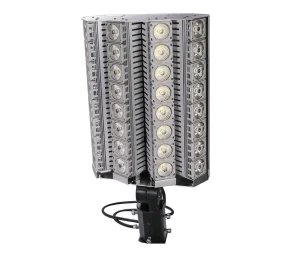
Featured Industrial Luminaires & Severe-Service Fixtures
Factory-direct specialized illumination systems certified for extreme ambient environments, severe dust ingress, marine salt corrosion, and multi-tier thermal loads.
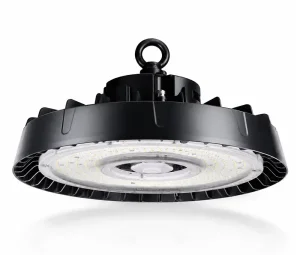
High-Quality Durable UFO High Bay LED Light – Long Lifespan & High Lumen Output Factories, Manufacturer
View Technical Specifications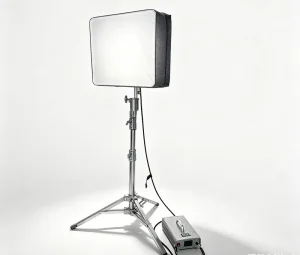
High-Quality Flexible LED Mat - Powerful, Flicker‑Free Lighting That Conforms to Any Surface Factories, Supplier
View Technical Specifications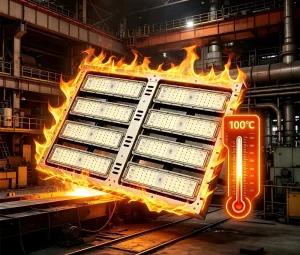
High-Quality High Temperature LED Light Rated 100°C(212°F), IP68 Waterproof Factories, Factory
View Technical Specifications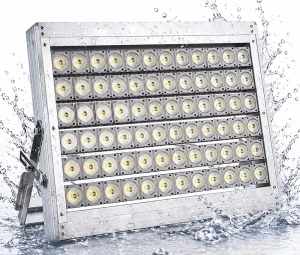
High-Quality LS-FLN Titans Series LED Marine Light for Deep Sea & Offshore Applications Factories, Manufacturers
View Technical Specifications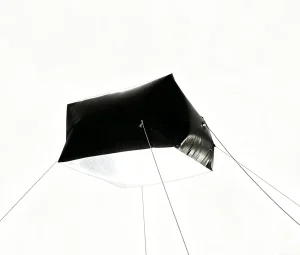
High-Quality Helium Balloon LED Light - Truss-Free Aerial Illumination with Optimized Helium Efficiency Factory, Supplier
View Technical Specifications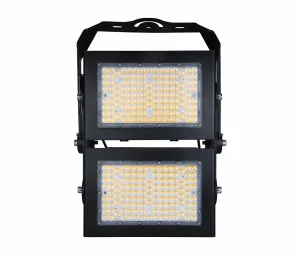
OEM Vega LED Sports Field Light-Robust Design, Adjustable Optics, Competitive Cost Supplier, Manufacturers
View Technical Specifications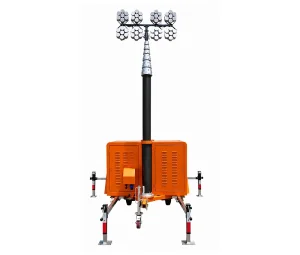
Best Portable 9m Mobile Light Tower Suppliers, Manufacturer
View Technical Specifications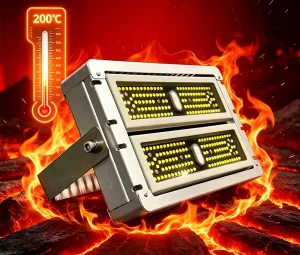
Best Ultra High Temperature LED Light - Rated 200°C (392°F) with IP68 Waterproof Protection Factory, Manufacturers
View Technical SpecificationsThermal-Particulate Dual Stressors in Global Heavy Industry
Why standard industrial fixtures suffer rapid catastrophic failure under elevated heat and particulate contamination, and how specialized dustguard engineering redefines plant safety.
Across modern heavy industry—from integrated steelworks and electric arc furnace (EAF) shops to alumina calciners, glass annealing lehrs, and cement clinker coolers—the lighting infrastructure operates in an environmental vortex defined by simultaneous thermal overloading and conductive particulate contamination. In conventional high-bay luminaires, elevated ambient temperatures ($T_a \ge 60^\circ\text{C}$) cause junction temperatures ($T_j$) inside the LED semiconductor dies to skyrocket beyond critical thresholds ($\approx 125^\circ\text{C}$), precipitating immediate quantum efficiency droop, phosphor matrix yellowing, and thermal-stress bonding wire delamination.
Simultaneously, heavy industrial manufacturing environments generate airborne micro-contaminants including conductive carbon black, iron oxide sinter particulates, silica dust, and vaporized fluxing compounds. When non-specialized luminaires undergo cyclic thermal expansion and cooling, air is drawn across microscopic gasket interfaces—a phenomenon known as atmospheric pumping. Over operating cycles, these microscopic particles settle onto electronic drivers, causing dielectric breakdown, impedance shifts, and flashover failures. On the optical plane, settled dust cakes form an insulating blanket that blocks photonic emission while trapping heat, triggering a destructive thermal-optical spiral.
Thermal Runaway Prevention
Conventional drivers utilize wet electrolytic capacitors that desiccate rapidly when ambient levels breach 50°C, lowering lifespan by 50% for every 10°C surge. High-temperature engineering incorporates remote, solid-state ceramic decoupling networks and isolated galvanically separated architectures designed for endurance at 80°C, 100°C, 150°C, and custom thresholds up to 300°C.
Static & Dust Shedding Optics
Standard polycarbonate lenses accumulate electrostatic charges that actively draw conductive fly ash and sinter particulates. Dustguard technology integrates chemically tempered borosilicate lenses coated with oleophobic, hydrophobic nanosilica compounds that prevent particulate cohesion and maintain photometric fidelity even under dense dust plumes.
Continuous Vibration Resilience
Heavy overhead bridge cranes, shaker tables, and pulverizing mills impose perpetual low-frequency and high-harmonic vibration forces. Ruggedized mounting assemblies reinforced with aircraft-grade 304/316 stainless steel brackets and multi-axis silicone dampeners ensure structural integrity under sustained mechanical acceleration up to 5G.
Engineering Taxonomy: Standard LED vs. Dustguard High-Temp Luminaire
Direct engineering comparison highlighting component selection, heat transfer physics, ingress isolation, and mean-time-between-failure (MTBF) calculations.
| Engineering Dimension | Commercial Commodity High Bay | Lsledsus Dustguard Industrial Fixture | Operational Impact & ROI |
|---|---|---|---|
| Operating Ambient ($T_a$) | -20°C to +45°C (-4°F to 113°F) | 80°C / 100°C / 150°C / ≤300°C Custom | Eliminates systematic driver burnout above blast furnaces and annealing kilns. |
| Dust & Ingress Integrity | IP65 (Porous EPDM Gaskets) | IP68 / IP69K Viton® Hermetic Dual-Channel | Absolute block against conductive carbonaceous particles, steam jets, and chemical fumes. |
| Optic Front Face | Optical PMMA / Polycarbonate | 4.0mm High-Transmittance Borosilicate Glass | Zero micro-crazing, zero yellowing under continuous thermal radiation and UV stress. |
| Thermal Interface Material | Standard Synthetic Silicone Paste | Phase-Change Metal-Matrix (12.8 W/m·K) | Maintains low contact thermal resistance across 100,000 thermal excursion cycles. |
| Driver Topology | Integrated Direct-Mount Electrolytic | Triple-Chamber Isolated or Remote Umbilical | Protects delicate silicon switching logic from ambient convective radiation pools. |
| Lumen Maintenance (TM-21) | L70 @ 25,000 Hours (Derated at 50°C) | L80B10 > 100,000 Hours @ 80°C Ambient | Drastically lowers high-bay relamping downtime, scaffolding, and crane rental overhead. |
Thermal Dissipation Physics: The Multi-Chamber Chimney Architecture
The core innovation powering the Lsledsus dustguard high-temperature platform is our proprietary Multi-Chamber Independent Convective Chimney. Traditional high bay housings feature continuous cast housings that couple the LED emitter submount directly to the power supply bay. In hot overhead industrial environments, this design causes the LED heat to directly cross-contaminate the driver circuitry.
By mechanically isolating the optical engine, driver enclosure, and wiring conduits via precision air-gaps and ceramic thermal breaks, our systems decouple conductive thermal transfer paths. Heat sinking is executed via ultra-dense 6063-T6 cold-forged aluminum fins contoured with aerodynamic vertical flutes. These flutes harness the natural upward draft of thermal air currents, rapidly drawing cooler air across the thermal boundary layer while shedding airborne dust that would otherwise settle on horizontal planes.
Localized Application Scenarios & Heavy-Duty Use Cases
Engineered specifically for hazardous operating environments where luminaire breakdown translates directly into production stoppages and elevated worker safety risks.
Steel Smelting & Casting
Installed directly over continuous casting bays, ladle metallurgical furnaces (LMF), and ingot preheat pits. Operating in ambient envelopes frequently hovering between 80°C and 150°C, these luminaires withstand severe thermal updrafts, slag splatters, and continuous iron-dust deposits without optical fogging.
Cement Rotary Kilns
Mounted along tertiary air ducts, calciner towers, and clinker discharge coolers where abrasive cement raw meal and silica fines blanket overhead fixtures. The dustguard hermetic sealing blocks fine abrasive powder from penetrating lens gaskets and shorting internal boards.
Petrochemical & Coking
Deployed across delayed coking units, sulfur recovery incinerators, and hot hydrocarbon processing skids. The dual IP68/IP69K sealing repels volatile VOC vapors, hydrogen sulfide gas concentrations, and airborne coke breeze while tolerating high-pressure washdown cycles.
Industrial Autoclaves & Kilns
Engineered for ceramic firing kilns, brick drying tunnels, and aerospace composite autoclave chambers where atmospheric humidity, saturated steam, and temperatures up to 200°C–300°C demand remote-mounted driver topologies and customized high-temperature wiring umbilicals.
Materials Science & Technological Evolution: 2026 to 2035
Examining the convergence of wide-bandgap semiconductors, vapor phase heat transport, and predictive AI telemetry in harsh-duty manufacturing.
Gallium Nitride (GaN) Drivers
Transitioning from silicon MOSFETs to Gallium Nitride (GaN) switching circuits permits power conversion efficiencies exceeding 97.5% with internal junction temperature operational ceilings above 175°C. This drastic drop in internal parasitic dissipation minimizes driver heat contribution.
Vapor Chamber Heat Pipes
Integrating flat planar copper-nickel vapor chambers with sintered composite capillary wicks enables thermal conduction speeds upwards of 5,000 W/m·K—over ten times that of pure copper. Heat is instantly shunted from ultra-high-power LED chips to peripheral radiator cooling zones.
Edge Predictive Health Diagnostics
Embedded micro-sensors capture continuous real-time telemetry: operating ambient temperature, internal semiconductor junction resistance, particulate deposition back-scatter, and power factor transients. Data is transmitted via industrial mesh networks to predict maintenance needs months ahead.
Shenzhen Precision Manufacturing & Turnkey Engineering Quality
How our 20+ year manufacturing base enforces uncompromising reliability through rigorous environmental simulation, precision photometrics, and strict material tracing.
As an authoritative leader among global Dustguard High-Temperature LED Lights factories, Lsledsus integrates complete vertical manufacturing control within our advanced Shenzhen engineering complex. Every luminaire destined for extreme thermal-particulate service undergoes automated multi-stage environmental qualification testing before dispatch. This includes 100% helium mass-spectrometer pressure tests to guarantee hermetic IP68/IP69K sealing, high-temperature soak chambers running continuously at 100°C–150°C under full electrical load, and multi-axis harmonic shake tables simulating severe overhead crane vibration.
Furthermore, our enterprise application engineering team produces end-to-end bespoke photometric layouts using Dialux Evo. By modeling exact plant geometries, mounting crane elevations, and localized atmospheric dust extinction coefficients, we calculate exact horizontal and vertical lux levels, uniformity ratios ($U_0$), and Unified Glare Ratings (UGR) to ensure complete compliance with international EN 12464-4 and OSHA industrial lighting standards.
Thermal Shock Testing
Fixtures undergo automated thermal cycling ranging from -40°C to +150°C in rapid 15-minute chamber transfers to verify metallurgical bond integrity, glass lens seal compression, and anti-corrosive powder-coat elasticity without seal fatigue.
Salt Fog & Chemical Resistance
Enclosures undergo 1,000+ hours of continuous ASTM B117 neutral salt spray and sulfur dioxide ($SO_2$) acid atmosphere testing. Marine-grade die-cast housings receive specialized fluorocarbon epoxy conversion coatings to withstand corrosive industrial environments.
Surge & Transient Protection
Industrial grid environments subject luminaires to catastrophic switching surges, back-EMF from heavy inductive arc furnaces, and lightning spikes. Our systems incorporate dual-stage 10kV/20kA metal-oxide varistor (MOV) arrestors to isolate internal electronics.
Technical & Procurement FAQ for Severe-Service Lighting
Exhaustive answers to vital specification, environmental rating, driver placement, and total cost of ownership questions asked by plant engineers and project directors.
Specialized Industrial & Infrastructure LED Catalog
Tailored high-temperature, outdoor, roadway, flood, and architectural lighting solutions engineered by a 20+ year manufacturing leader.
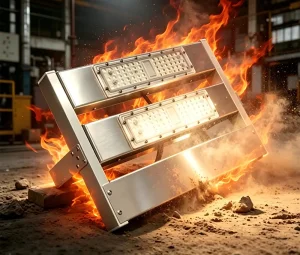
Best Tailored High Temperature LED Light with Highly Dustproof Configuration Factory, Manufacturers
View Technical Specifications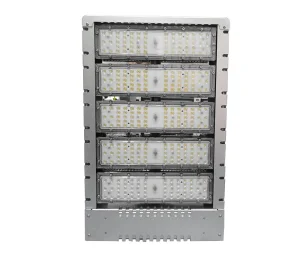
Best Artemis LED Stadium Light - IP67 Durability and Ultra-Light Design for Harsh Coastal Environments Factories, Manufacturer
View Technical Specifications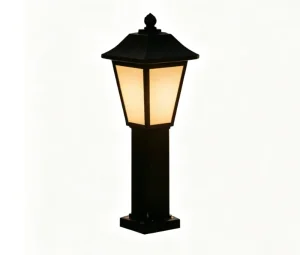
OEM Garden LED Light – Elegant, Durable Landscape & Pathway Lighting Suppliers, Manufacturers
View Technical Specifications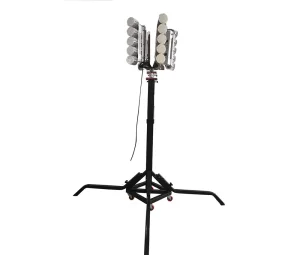
OEM Economic 4m Mobile Light Tower Factory, Manufacturer
View Technical Specifications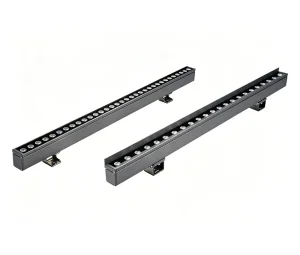
Best RGB Wall Washer – Effortless Commercial Decoration with Linear Precision Suppliers, Manufacturer
View Technical Specifications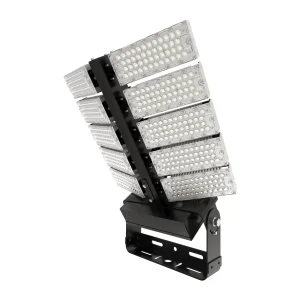
High-Quality Flex LED Flood Light - Independently Articulating Modules for Flawless Field Uniformity Factory, Supplier
View Technical Specifications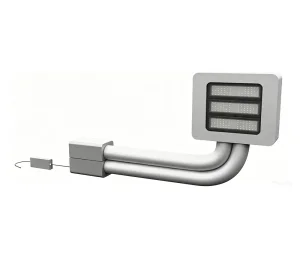
High-Quality Tailored High Temperature LED Light with Active Thermal Management- Rated 300°C (572°F) Factory, Manufacturers
View Technical Specifications