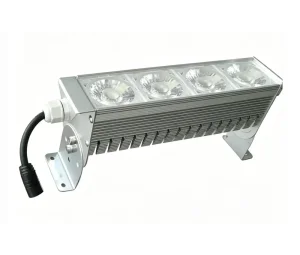
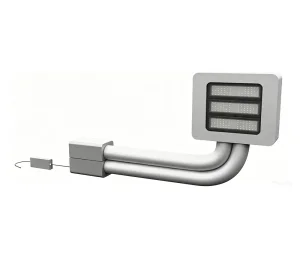
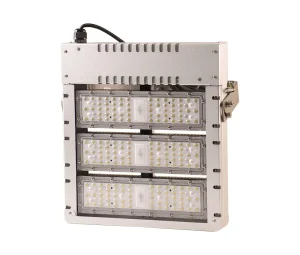
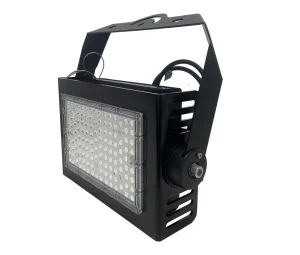
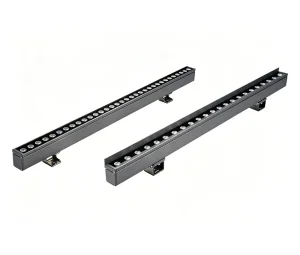
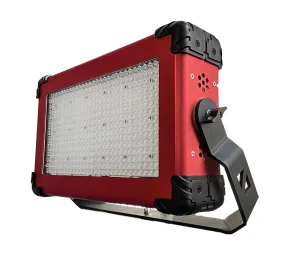
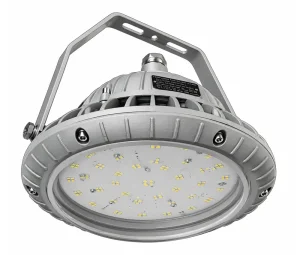
Featured Hazardous-Location & Harsh-Duty Product Series
Engineered for explosive dust environments, corrosive saltwater spray, and extreme thermal conditions. Direct-from-factory certified OEM luminaire platforms.
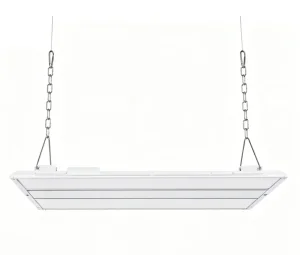
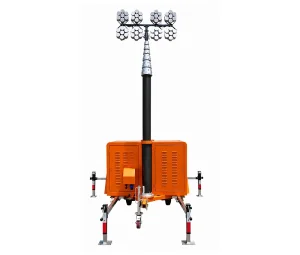
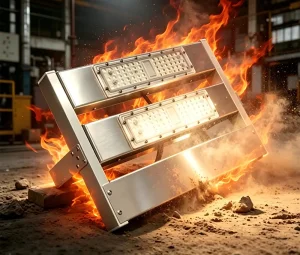
Global Commercial & Industrial Reality: Dust-Ignition Hazards
Industrial operations are moving away from passive lighting retrofits toward fully integrated, explosion-proof, and hermetically sealed solid-state platforms under stringent ATEX, IECEx, and OSHA safety mandates.
Combustible Dust Hazards
In facilities handling grain, sugar, flour, coal dust, or fine metallic powders (aluminum/magnesium), suspended particulates create explosive fuel-air mixtures. A conventional light fixture with an unsealed enclosure or hot optical faceplate can trigger catastrophic secondary explosions.
NFPA 652 / 654 ComplianceThermal Over-Saturation
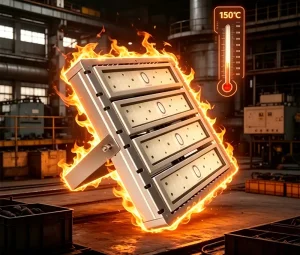
Standard LED lights fail rapidly when mounted near blast furnaces, glass lehrs, or forging bays. High ambient operating conditions cause junction temperature runaway, solder joint fatigue, and phosphor degradation unless governed by dual-chamber thermal isolation.
80°C - 300°C Extended RatingCorrosive Ingress Resistance
Chemical vapors, marine saline aerosols, and high-pressure steam washdowns deteriorate rubber gaskets and die-cast aluminum alloys. True explosion-proof luminaires demand copper-free aluminum (AL6063) housings coated with thermoset electrostatic architectural coatings.
1000-Hour Salt Spray TestingTechnical Architecture: Dust-Ignition-Proof (Ex tb) vs. Flameproof (Ex d)
Demystifying international certification protocols: Why modern manufacturing plants prioritize mechanical dust-tight sealing (IP6X) combined with internal arc suppression.
| Engineering Parameter | Dust Ignition-Proof LED (Ex tb / Zone 21) | Flameproof Enclosure LED (Ex d / Zone 1) | Standard Heavy Industrial Fixture |
|---|---|---|---|
| Target Hazard Matrix | Combustible dust, flyings, conductive fibers (Group IIIC) | Flammable gases, volatile vapors (Group IIA, IIB, IIC) | Non-hazardous particulate & general moisture |
| Surface Temperature T-Rating | Precisely restricted (T4 / T5 / T6) below dust ignition limits | Maintained below internal combustible vapor auto-ignition point | Unregulated external heatsink thermal spikes |
| Mechanical Seal Integrity | Hermetic continuous silicone/EPDM O-rings (IP66/IP67/IP68) | Precision threaded/ground flame paths designed to quench internal flames | Basic foam perimeter seal (IP54/IP65) prone to age drying |
| Driver Isolation Topology | Thermally decoupled auxiliary enclosure with remote options | Integrated heavy-wall cast chamber resisting burst pressures | Internal driver seated directly adjacent to LED PCB board |
| Impact Resistance Class | IK09 to IK10 tempered glass & polycarbonate shielding | IK10 high-strength borosilicate or chemical-strengthened glass | IK07 to IK08 molded acrylic or basic glass cover |
Localized Heavy Industry Application Scenarios
Practical deployment matrices across four of the most demanding global operating environments.
Heavy Steel Mills & Forging
Mounting heights above 12 meters along hot rolling mills and ladle stations face steady ambient heat exceeding 80°C to 150°C, paired with dense airborne iron scale and carbon dust. Tailored active and passive thermal dissipation protects solid-state electronics from sudden burnout.
Grain Elevators & Silos
Flour and grain silos present combustible dust hazards (Group IIIC, Zone 20/21). Static build-up or hot optic surfaces can spark grain-dust ignition. Luminaires require an IP6X dust-tight seal, anti-static electrostatic finishes, and low surface operating temperatures.
Offshore Rigs & Marine Ports
Corrosive marine saltwater and relentless mechanical vibration from gantry cranes degrade standard industrial light enclosures. The combination of IP68 watertight integrity and vibration-resistant mounting brackets provides sustained illumination along docklines.
Pulp, Paper & Chemical Mills
Humid, chemically saturated processing lines generate acidic moisture films alongside flammable fibers. True hermetic isolation keeps corrosive atmospheric compounds away from the internal printed circuit board arrays.
Technological Roadmap: The Future of Explosion-Proof Lighting
How pioneering manufacturers are integrating AI-driven diagnostic sensors, advanced metallurgy, and active cooling architectures into harsh-environment lighting systems.
Embedded IoT Thermistors
Dynamic auto-dimming firmware protects the LED driver and diodes during unexpected facility temperature surges, avoiding sudden failure during thermal spikes.
Graphene Heat Conductors
Deploying composite graphene coating on external thermal heat fins multiplies heat radiation efficiency while lowering total luminaire weight by over 30%.
Nano-Coated Self-Cleaning Lenses
Superhydrophobic and anti-static fluoropolymer lens coatings eliminate particulate adherence, maintaining light transmission without frequent manual cleaning in dusty areas.
Frequently Asked Questions (Engineering & Procurement FAQ)
Essential guidance for facilities engineers, safety compliance officers, and international distribution partners.
What is the difference between a dustproof luminaire (IP6X) and an explosion-proof luminaire?
An IP6X fixture prevents the entry of solid dust particles under negative pressure testing. An explosion-proof or dust ignition-proof fixture (e.g., Ex tb / Class II Div 1) adds internal containment, precise thermal surface limits (T-Ratings), and impact-resistant tempered glass to keep high surface heat or internal electrical arcs from igniting external airborne dust clouds.
How do Lsledsus high-temperature LED lights survive ambient heat up to 300°C?
For extreme ambient zones up to 300°C (572°F), we employ a separated two-component architecture: an optoelectronic head using high-temperature ceramic-packaged LEDs, combined with a remote-mounted driver located in a cooler adjacent room. Specially insulated high-temperature wiring connects the units, preventing thermal degradation of delicate driver components.
Can customized beam angles be tailored for high-bay warehouse corridors and conveyor belts?
Yes. We offer asymmetric and narrow-beam optics (15°, 25°, 60°, 90°, and 120°) along with batwing beam profiles for warehouse racks. This directs light straight down operating lanes without wasting illumination across shelving tops or causing glare.
What certifications are required for hazardous dustproof explosion-proof light deployment?
Depending on your geographic location: In North America, UL 844 (Class I Div 1/2, Class II Div 1/2) is standard. In Europe and global markets, ATEX and IECEx (Zone 1/21, Zone 2/22, Ex d, Ex tb) apply. Our engineering team assists buyers with regulatory documentation for smooth site approvals.
What OEM / ODM design parameters can be tailored for unique industrial installations?
Every element can be customized: fixture wattage, system efficacy (up to 170+ lm/W), operating voltage (100-277V, 277-480V AC, or 24-48V DC), bracket configurations, explosion-proof junction boxes, surge suppression levels (up to 20kV), and emergency battery backup systems.
Featured Industrial Products & Specialized Systems
Explore our specialized range of heavy-duty, underwater, high-ambient, and explosion-proof lighting fixtures.