
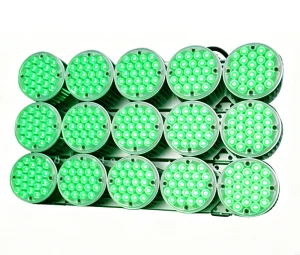
Tier-1 Equipment
Featured High-Power Flood Solutions
Explore initial core fixtures engineered by vetted global manufacturers, supporting high output, optical discipline, and resilience across heavy industries.
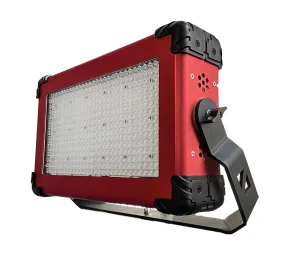
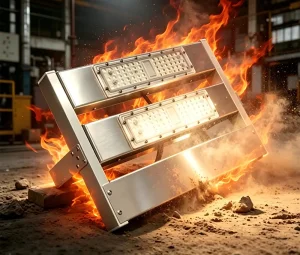
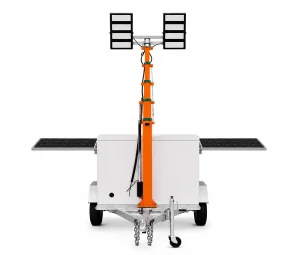
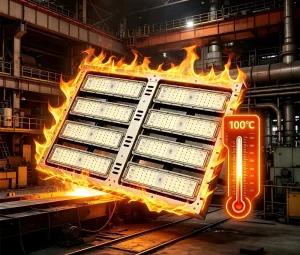
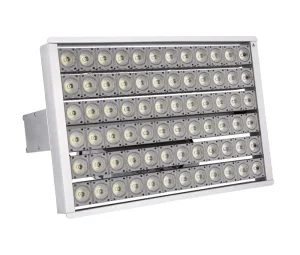
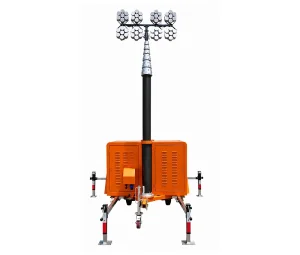
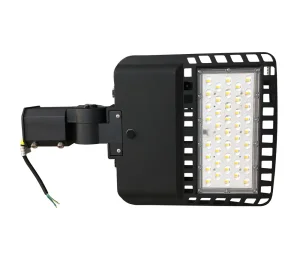
320,000+
Lumens Delivered @ 2000W
≤ 1.0%
TV Broadcast Flicker Rate (TLCI 95+)
100,000 Hrs
L80B10 Service Lifespan
Up to 300°C
Extreme Thermal Operational Capacity
Macro Ecosystem
Global Commercial & Industrial Lighting Landscape
In high-power industrial illumination, transitioning from legacy 4000W-5000W Metal Halide and High-Pressure Sodium (HPS) fixtures to ultra-efficient Flood Light 2000W systems has become a baseline operational directive across international supply chains.
Grid Decarbonization Mandates
Global net-zero policies demand that heavy industrial and sports infrastructures reduce connected lighting loads by over 60%. Advanced 2000W LED arrays achieve luminous efficiencies exceeding 160-180 lm/W, dramatically minimizing harmonic distortion (THD < 10%) on facility transformers.
Severe Thermal Dissipation Thresholds
Deploying 2000 Watts within high-ambient environments generates substantial junction heat. Tier-one factories resolve this challenge by implementing phase-change vapor chambers, extruded 6063 aviation aluminum fin profiles, and isolated driver compartments to prevent premature lumen depreciation.
Supply Chain Verification & Photometrics
Engineering procurement teams now require full lifecycle accountability. Genuine manufacturers differentiate themselves through IESNA LM-79/LM-80 verified data, third-party salt-spray test certificates, and complete Dialux photometrics, preventing costly on-site luminaire adjustments.
Architectural Benchmark
Industrial Specification Comparison Matrix
Evaluating high-intensity fixtures requires looking past generic wattage claims. This comparison demonstrates how specialized 2000W LED flood lights deliver performance advantages over commercial and legacy solutions.
| Performance Parameter | Tier-1 Industrial LED 2000W | Commodity Commercial LED | Legacy Metal Halide (2000W-4000W) |
|---|---|---|---|
| Luminous Efficacy | 160 – 185 lm/W (Precision Optics) | 100 – 120 lm/W (Standard PMMA) | 65 – 80 lm/W (Omnidirectional loss) |
| Thermal Resilience | Standard -40°C to +65°C; Custom ≤ 300°C | Max +45°C (Rapid junction degradation) | Extremely high radiant heat release |
| Ingress & Corrosion Protection | IP67/IP68 + C5-M Marine Powder Coat | IP65 (Thin die-cast; oxidizes rapidly) | IP55-IP65 (Bulky housings prone to leaks) |
| Optical Uniformity & Glare Control | UGR < 19, Asymmetrical cutoff, < 1% Flicker | Symmetrical standard spill, visible flare | High glare index, uncontrollable beam spill |
| Surge & Transient Protection | 20kV / 10kA Integrated SPD Module | 4kV / 6kV Internal Driver Varistor | External ballast required (Prone to failure) |
Field Deployments
Localized Application Scenarios & Case Blueprints
A single 2000W optical architecture cannot address every mission profile. Precision manufacturers tailor beam distributions, mounting brackets, and corrosion protections to specific geographic and industrial environments.
Maritime Ports & Gantry Cranes
Ship-to-Shore (STS) cranes and automated container terminals demand high optical throw from heights above 45 meters, alongside resilience to constant marine salt spray, salt fog, and mechanical vibrations.
4K / 8K Broadcast Sports Arenas
International sporting venues require uniform vertical illuminance (> 2500 lux) and zero-flicker performance (TLCI > 95) to support high-frame-rate television cameras during night broadcasts.
Extreme Foundry & Blast Furnaces
Steel casting bays, smelters, and petrochemical facilities expose lighting to ambient heat upwards of 80°C to 150°C. Remote driver configurations prevent power supplies from sustaining damage.
Open-Pit Mining & Excavation
Heavy machinery and mobile lighting skids require IK10 shatterproof optics, custom anti-vibration rubber dampers, and tight optical angles (10°/15°) to penetrate airborne dust.
Risk Mitigation
Localized Support & Global Compliance Assurance
Purchasing heavy-duty industrial luminaires requires navigating international safety frameworks. Professional manufacturers provide complete documentation to ensure compliance across regional jurisdictions.
UL 1598, CE, & IEC Compliance
Certified luminaires adhere to North American (UL 1598/CSA C22.2) and European (EN 60598-1/2-5) standards, backed by full electrical isolation, fire-rated wiring paths, and verifiable CE-RoHS documentation.
Dark Sky & Light Pollution Guidelines
Modern municipalities actively enforce IDA (International Dark-Sky Association) compliance. Advanced asymmetrical optics produce a sharp cutoff, directing light strictly where needed and preventing stray upward spill.
Bespoke Photometrics & Layout Support
Experienced design teams provide complete Dialux and AGi32 simulations before fabrication begins. This modeling verifies horizontal lux, vertical uniformity, and pole-load weight limits before fixtures leave the facility.
Future Roadmap
Technical Roadmap: Next-Gen Industrial High-Power Flood Lights
The high-power illumination sector is evolving beyond conventional LED-and-heatsink builds. Leading manufacturers continue to invest in driver topology, materials science, and digital building integration.
Phase 1: GaN (Gallium Nitride) Driver Integration
Gallium Nitride power semiconductors are redefining industrial driver development. By running at significantly higher switching frequencies with minimal heat generation, GaN drivers decrease total driver chassis volume by up to 40% while maintaining an electrical conversion efficiency above 96.5%.
Phase 2: IoT-Driven Smart Edge Telemetry & D4i Control
Modern 2000W luminaires now incorporate embedded sensory arrays. Utilizing D4i standards, DMX-512, and wireless mesh topologies, maintenance crews can track real-time fixture temperatures, driver run hours, voltage fluctuations, and automatic lumen maintenance (ALM) from centralized control rooms.
Phase 3: Graphene Thermal Superconductors & Aerogel Insulation
Managing ambient heat up to 300°C requires advanced materials. Leading research centers utilize graphene coatings and aerogel thermal barriers to insulate sensitive electronics from high radiant heat while maximizing heat transfer to ambient surroundings.
Modular Form Factors
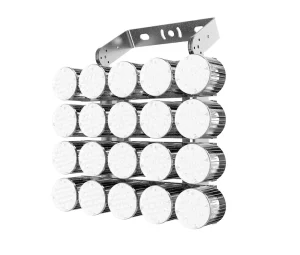
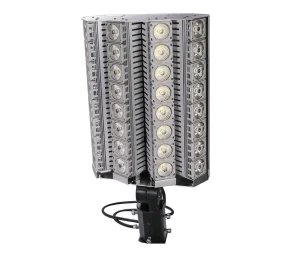
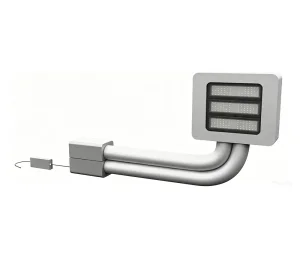
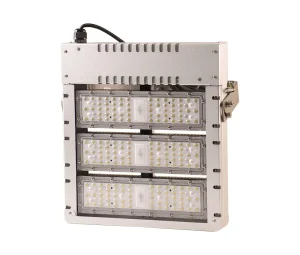
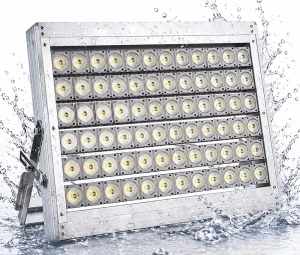
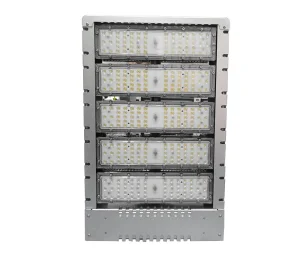
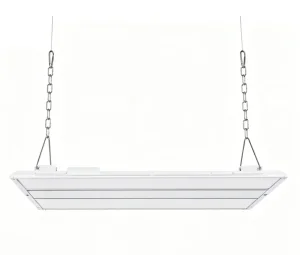
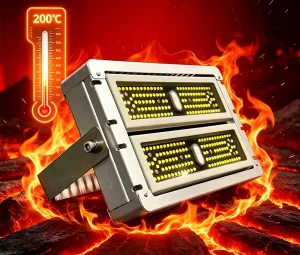
Extreme-Environment Luminaire Range
Explore specialized industrial fixtures engineered for maritime use, sports venues, roadway infrastructure, and high-heat production lines.
Procurement Directives
Frequently Asked Questions (Technical FAQ)
Essential guidance for EPC contractors, electrical engineers, and facility directors specifying 2000W LED fixtures for demanding infrastructure projects.
How does an industrial 2000W LED compare with a 2000W Metal Halide?
A true industrial 2000W LED produces up to 340,000+ lumens, directly replacing 4000W to 5000W legacy Metal Halide fixtures. Because LEDs deliver directional light via precision secondary optics, target surface illuminance (lux) typically rises by 200% to 300% while cutting total system energy demand in half.
What thermal strategies prevent 2000W LED fixtures from overheating?
Effective management centers on three factors: isolating the power supply in a dedicated external bay, utilizing cold-forged or extruded pure aluminum fins with high thermal conductivity, and maintaining sufficient spacing between optical modules to encourage natural chimney-effect airflow.
How are inrush currents handled on high-wattage LED arrays?
Multiple 2000W drivers starting simultaneously can trip standard building breakers. Industrial installations utilize drivers with integrated soft-start circuits, NTC thermistors, or external sequential relay controls to keep inrush currents below established electrical code thresholds.
What optical beam angles are recommended for high mast towers?
Mounting heights above 30 meters benefit from narrow 10° or 15° beam angles to direct high-intensity light down to the working surface. For uniform apron or stadium coverage, asymmetric forward-throw lenses (such as 60°x100°) help maintain target illuminance without causing blinding glare.
What surface treatments protect against coastal salt corrosion?
Fixtures operating in marine zones should feature architectural-grade polyester powder coating applied over chromate conversion layers, passing 2,000+ hours of ASTM B117 salt spray testing. Mounting brackets must be fabricated from 316 stainless steel to eliminate galvanic corrosion risks.
Can standard 2000W LED fixtures be dimmed or integrated with DMX?
Yes. Commercial-grade units support standard 0-10V, 1-10V, and PWM dimming. For stadium entertainment and architectural installations, drivers can be specified with DMX512 or DALI-2 protocols, enabling smooth dynamic fading and automated scene scheduling.