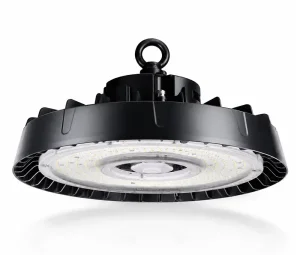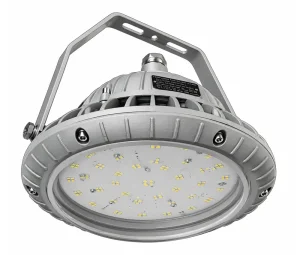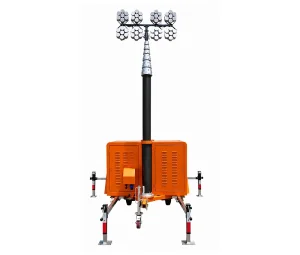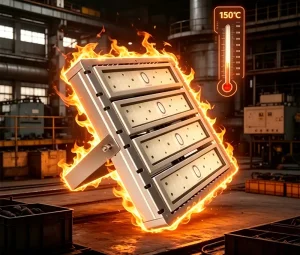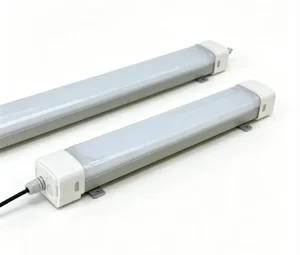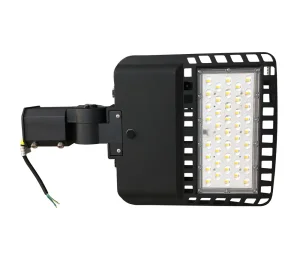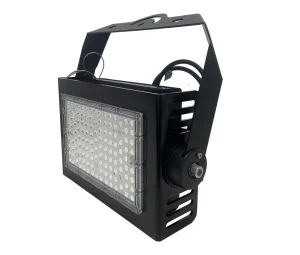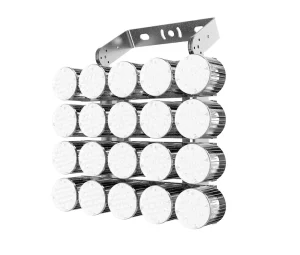
Direct Factory Precision Units
Certified Hazardous Area & Industrial Luminaires
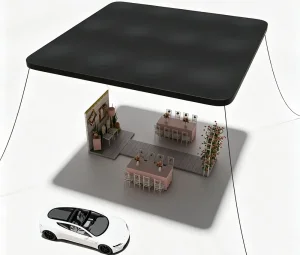
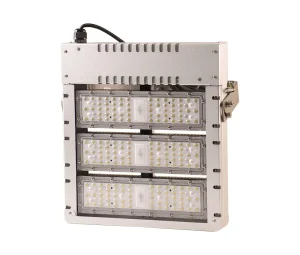
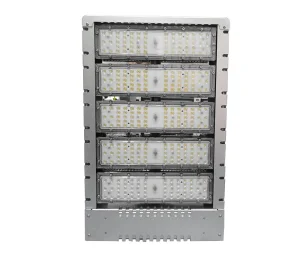
Engineered specifically for Class I Division 1 & 2 and Zone 1 & 2 service stations, forecourts, and volatile industrial processing facilities.
180 lm/W
Peak Optical Efficacy
Zone 1 / 2
Explosive Atmosphere Class
100,000 hrs
L70 Lifetime @ 65°C
T6 / 85°C
Lowest Temp Code Rating
Industry Intelligence
Technological Evolution & Macro Procurement Dynamics
Modern service station architecture demands luminaires that balance extreme mechanical flame-path isolation with dynamic, sensor-driven energy systems.
Escalating TCO Optimization
Global petrol station networks (Shell, TotalEnergies, BP) have transitioned from legacy metal halide to solid-state explosion-proof canopies, targeting a 70% decrease in kilowatt-hour usage and eliminating elevated maintenance risks over active dispensers.
Intelligent Forecourt Control
Smart multi-level microwave occupancy sensors and DALI-2 protocols embedded directly within flameproof Ex d chambers automatically scale forecourt illumination from 20% standby to 100% active operational lumens upon vehicle entry.
EV & Hydrocarbon Hybridization
The rapid addition of high-capacity DC Fast EV Chargers alongside liquid fuel pumps creates complex multi-zone hazardous safety perimeters, forcing a unified standard for explosion-proof and surge-protected luminaires.
Engineering Framework
Hazardous Area Specification Standards
A comprehensive technical breakdown contrasting gas station forecourt requirements against general industrial luminaires.
| Evaluation Parameter | Gas Station Forecourt (Canopy & Islands) | Fuel Storage & Offloading Terminal | Standard Industrial Lighting |
|---|---|---|---|
| Hazardous Zoning | Class I, Div 1 & 2 / Zone 1, Zone 2 (IIA/IIB) | Class I, Div 1 / Zone 0 & Zone 1 (IIB/IIC) | Non-Hazardous / Ordinary Dry & Wet Locations |
| Ex Protection Concept | Ex d (Flameproof) / Ex ec (Increased Safety) | Ex d (Flameproof) + Ex ia (Intrinsically Safe) | General enclosure; standard gasket sealing |
| Temperature Rating (T-Code) | T5 (≤100°C) to T6 (≤85°C) Critical | T6 (Strict ignition prevention threshold) | T2 to T3 (Typically unrated for auto-ignition) |
| Optical Glare Control | UGR < 19 (Driver eye-level protection) | High directional beam intensity | Variable diffuser setups (UGR 22–28) |
| Surge Suppression | 10kV – 20kV Integral SPD (Grid instability) | 20kV Extreme Transient Surge Suppressors | 2kV – 4kV Basic Varistor protection |
| Housing Metallurgy | Copper-free Die-Cast ADC12 Aluminum + Epoxy | 316L Stainless Steel or Marine Grade Alloy | Standard A380 Aluminum or Polycarbonate |
Global Operations
End-to-End Solutions & Localized Compliance
Eliminating procurement risk with accredited third-party test reports, comprehensive Dialux simulations, and turnkey OEM/ODM production lines.
Rigorous Third-Party Audits
Every explosion-proof production batch is systematically tested under hydrostatic overpressure, thermal cycling (-40°C to +65°C), and spectroscopic flux verifications certified under IECEx, ATEX, and UL844 frameworks.
Bespoke Dialux Photometrics
Our application engineers provide custom 3D photometric simulations ensuring gas station forecourts strictly achieve 200–300 Lux horizontal ground illumination with a uniformity ratio (U0) > 0.7 to comply with EN 12464-2.
Localized Conduit Compatibility
Supplied standard with dual NPT 3/4" or metric M20/M25 threaded cable entries, enabling direct drop-in integration into European, North American, or Middle Eastern rigid conduit explosion-proof piping infrastructures.
Forward Engineering
Future Roadmap: Next-Gen Hazardous Lighting
Where solid-state physics, materials science, and industrial telemetry converge to establish ultra-safe service station environments.
Predictive Component Telemetry
Integrating IoT condition sensors within the power supply cavity to track capacitor ripple currents and thermal junction degradation in real time, notifying facility teams prior to end-of-life luminaire failure.
Graphene Nanocoating Dissipation
Advancements in Phase 2 thermal management utilize graphene heat sinks that increase natural convection efficiency by 28%, significantly lowering surface operational temperatures down to cold T6 ratings under severe 60°C ambient loads.
Circular Modular Enclosures
Transitioning to completely field-serviceable, tool-free mechanical designs that allow driver and optical engine retrofits directly beneath the canopy without breaching hazardous certification seals or taking down structural housings.
Technical Clarity
Frequently Asked Engineering & Sourcing Questions
Critical considerations addressed by senior lighting engineers for global hazardous site contractors and procurement directors.
What is the structural difference between flameproof (Ex d) and increased safety (Ex ec) for gas station applications?
Ex d (Flameproof) enclosures are designed with precision-machined flame paths capable of containing an internal explosion of volatile hydrocarbon vapors without allowing hot gases or sparks to propagate into the external explosive atmosphere. In contrast, Ex ec (Increased Safety) prevents internal arcing, sparks, and excessive surface temperatures under normal and specific abnormal operating conditions. For primary forecourt canopies directly over pump islands, Ex d or combination Ex db eb designs offer maximum safety margins against fuel vapor ignition.
Why is the T-Rating (Temperature Class) more critical than fixture wattage in hazardous environments?
In environments where volatile petroleum gases (such as gasoline, vaporizing at ambient temperatures) are present, auto-ignition can occur spontaneously if any fixture component exceeds the flash point of the gas mixture. A T6 rating guarantees that no exposed surface of the lamp will exceed 85°C (185°F), and a T5 rating guarantees it remains below 100°C (212°F). High-wattage luminaires without sufficient thermal dissipation can create hazardous hot spots, making T-class verification a mandatory safety standard rather than simply checking lumen output.
How do you resolve canopy glare issues while maintaining compliant light levels on the pumps?
We utilize custom symmetric and asymmetric batwing optics molded from optical-grade polycarbonate or frosted borosilicate glass. By broadening the intensity distribution away from nadir (0°), the luminaire casts uniform light across fueling lanes and pump interfaces while preventing harsh high-angle glare (UGR < 19) in the peripheral vision of oncoming motorists and CCTV surveillance systems.
What measures are taken to prevent corrosive chemical degradation from fuel vapors and external elements?
Our luminaires are cast from copper-free ADC12 aluminum alloys containing less than 0.1% copper content to eliminate galvanic degradation. Housings receive a multi-stage chromate conversion pretreatment followed by an electrostatically applied thermoset architectural-grade epoxy or TGIC polyester powder coating, passing continuous 1,000-hour ASTM B117 salt spray tests and resisting prolonged exposure to hydrocarbon fumes, detergents, and UV radiation.
Can existing metal halide canopy cutouts be retrofitted without structural ceiling replacements?
Yes. We engineer universal architectural retrofit conversion plates that cover typical legacy cutouts (such as 12"x12" or 16"x16" openings from older HID canopy fixtures). The retrofit brackets interface directly with the existing structural canopy trusses, allowing a complete station conversion without sheet-metal cutting, welding, or compromising the weatherproofing of the overhead canopy structure.
High-Performance Catalog
Featured Industrial & Infrastructure Fixtures
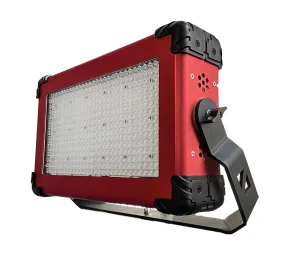
Explore additional specialized LED lighting units manufactured in our facility for extreme temperatures, marine environments, and heavy logistics.