
Glass Plant & High-Temperature Engineering Showcase
Explore our top-tier specialized LED luminaires designed for extreme thermal loads, furnace surrounds, float glass tin baths, high-bay warehouses, and industrial infrastructure.
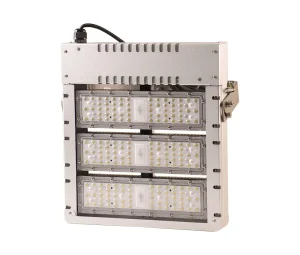
The Harsh Physics of Glass Manufacturing Facilities
Glass manufacturing represents one of the most mechanically and thermally punishing environments in heavy industry. Fixtures operating near melting furnaces, tin float baths, and container forming machines face simultaneous stress factors that destroy generic luminaires within months.
Thermal Stratification & Ceilings
In glass batch houses and melting furnace halls, massive radiant energy drives vertical convective currents, creating ceiling-level thermal pockets reaching 80°C to 120°C continuously. Conventional commercial LED drivers experience catastrophic electrolytic capacitor dry-out and thermal shutdown within 1,200 operating hours when not equipped with dedicated heat pipe topologies or remote galvanic enclosures.
Airborne Volatiles & Sulfur Attack
The batch blending and refining stages release volatile alkaline vapors, sodium sulfates, arsenic oxides, and fine silica abrasive particulate matter. In the presence of ambient humidity and high surface temperatures, these airborne agents induce severe chemical degradation on standard polycarbonate lenses, corrode traditional PCB copper traces, and yellow optical silicone encapsulants.
Severe Mechanical Cullet Shocks
Mechanical glass crushers, cullet return conveyor belts, and pneumatic individual section (IS) forming machines transfer severe 5G to 15G structural vibrations through plant structural trusses. Standard mounting brackets, solder joints, and wire terminal junctions succumb to structural fatigue if not isolated by aerospace-grade elastomer dampers and finite element analysis (FEA) reinforced castings.
Localized Application Scenarios in Modern Glass Plants
Different zones of a modern flat, container, or technical glass facility require vastly divergent optical geometry, spectral fidelity, and mechanical sealing architectures to guarantee safety and throughput.
1. Furnace Crown, Forehearth & Melting Bay
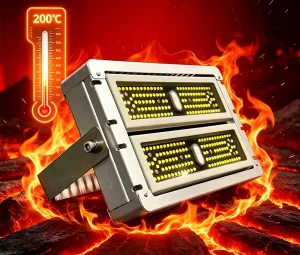
Operating Temperature: 85°C – 150°C sustained, spikes to 200°C near regenerator exhausts.
Engineering Solution: Luminaires installed here feature split-body remote power supplies housed 20 meters away in ventilated cabinets, while the optical head utilizes marine-grade A383 aluminum alloys coated with PVDF fluorocarbon coatings. Pure borosilicate micro-prismatic glass shields protect the LED engine from intense radiant infrared emission, preventing thermal runaway and phosphor degradation.
2. Float Glass Tin Bath & Dross Pockets
Operating Temperature: 65°C – 95°C with reducing hydrogen-nitrogen atmospheric leakage.
Engineering Solution: To prevent explosive hydrogen ignition in pressurized float chambers and tin bath peripheries, ATEX/IECEx Zone 1 and Zone 2 explosion-proof luminaires with Class I Division 1 certifications are mandated. Explosion-proof enclosures utilize flame-path joints, explosion-proof cable glands, and copper-free housings that prevent chemical degradation from molten tin vapors.
3. IS (Individual Section) Machine Forming Hall
Operating Temperature: 70°C – 110°C with atomized oil-mist aerosols.
Engineering Solution: Container glass forming machines spray combustible swabbing lubricants, atomizing mineral oils into the air. Luminaires must be certified IP67/IP69K, withstand high-pressure hot caustic water washdowns, and incorporate anti-static oleophobic front lenses that prevent oil residue build-up from scattering the optical distribution.
4. Cold-End Automated Optical Inspection (AOI)
Operating Temperature: 25°C – 45°C with strict photometric uniformity requirements.
Engineering Solution: Visual inspection for internal inclusions, micro-checks, seeds, and blister defects requires ultra-high Color Rendering Index (CRI ≥ 90, R9 ≥ 50) and zero-flicker drivers (SVM < 0.05, Pst LM < 0.1) synchronized with high-speed CMOS line-scan machine-vision cameras. Customized polarizations prevent reflection wash-out on translucent curved glass surfaces.
Technology Roadmap: High-Temperature Lighting to 2030
Leading lighting manufacturers are moving beyond brute-force heat sinks to integrate quantum-well semiconductor structures, ceramic micro-channels, and autonomous predictive thermal throttling.
| Thermal Architecture | Max Safe Ambient | Expected L70 Lifespan | Primary Failure Vector | Optimal Plant Placement |
|---|---|---|---|---|
| Standard Commercial Die-Cast High Bay | 40°C – 50°C | 12,000 Hours @ 50°C | Driver Capacitor Rupture | Finished Goods Warehouse, Palletizing Area |
| Heavy-Industrial Heat-Sink with 80°C Driver | 80°C (176°F) | 65,000 Hours @ 80°C | Phosphor Thermal Quenching | Annealing Lehr Exterior, Batch Preheating Line |
| Split-Body Phase-Change System (AlN Substrate) | 100°C (212°F) | 85,000 Hours @ 100°C | Silicone Optical Lens Degradation | Float Glass Tin Bath Sidewalls, Forehearth Walkways |
| Aerospace Ceramic Sealed Remote Topology | 200°C – 300°C Custom | 100,000 Hours (Optics Head) | Interconnect Soldering Creep | Direct Furnace Crown, Regenerator Valve Pits |
Why Shenzhen Leads Global High-Spec Industrial Lighting Supply
Shenzhen's advanced lighting manufacturing ecosystem provides end-to-end integration: from in-house high-pressure die-casting and precision optical diamond tooling to custom high-temperature driver R&D.
Vertical Thermal Integration
Our Shenzhen campus houses vertical CNC milling centers, 2500-ton cold chamber die-casting presses, and cleanroom encapsulation lines, collapsing prototype iterations from four months to twelve working days.
Tier-1 Component Partnerships
By partnering directly with Osram, Lumileds, Mean Well, and Inventronics, we guarantee direct foundry-traceable semiconductor wafers, custom phosphor doping, and electrolytic capacitors rated up to 135°C.
Strict In-House Stress Testing
Every industrial luminaire design passes 1,000-hour accelerated thermal chamber testing at 120°C, 500-hour ISO 9227 salt spray tests, and multi-axis harmonic vibration profile verifications.
Tailored Low-Volume Flexibility
Unlike monolithic global brands requiring 5,000-unit minimum batch sizes for custom bracketry, we deliver tailor-made bracket modifications, custom beam angles (from 10° to 120°), and special voltage rails.
International Glass Industry Standards & Safety Compliance
International glass conglomerates operating float, bottle, solar glass, and specialty display glass production must satisfy stringent occupational safety, optical clarity, and decarbonization mandates.
EN 12464-1 & OSHA 1910 Compliance
European and US work safety authorities require minimum maintained lux levels of 300 to 500 Lux at cold end inspection conveyors and 150 Lux across furnace walkways. Our high-bay solutions enforce unified glare ratings (UGR < 19) to eliminate direct disability glare that impairs furnace operators who monitor molten flow streams.
Decarbonization & Scope 2 Emission Offsets
With glass producers racing toward net-zero manufacturing by replacing gas furnaces with oxy-fuel and hybrid electric melting, lighting efficiency represents immediate electrical ROI. Upgrading from 400W Metal Halide to 120W Ultra-High Temp LED systems achieves a verified 70% energy reduction, saving hundreds of megawatt-hours annually per plant.
Hazardous Location Safety (ATEX / IECEx)
Float glass bath atmospheres rich in hydrogen and nitrogen carry explosion risks. Our luminaires are engineered with Ex d IIB+H2 or Ex nR restricted breathing protections, explosion-proof tempered lenses, and dual safety lanyard anchor rings to protect personnel operating underneath vibrating crane gantries.
Turnkey Lighting Design, Dialux Simulation & Global Support
From preliminary plant layout analysis to post-commissioning maintenance, our engineering department provides comprehensive technical services to glass plant engineering EPCs and plant asset managers worldwide.
Complimentary Dialux & Relux Photometrics
We generate precise 3D photometric calculation models incorporating furnace geometry, high-ceiling obstructions, overhead traveling cranes, and ambient reflectance values before you issue a purchase order, preventing dark spots and oversaturation.
5-Year Extreme Condition Warranty
Our high-temperature and explosion-proof luminaires carry non-prorated factory warranties covering 24/7/365 continuous operation in ambient environments up to their certified thermal rating, backed by quick-dispatch replacement parts.
Global Field Engineering & Fast Spares
With distribution hubs and dedicated logistics lines across Europe, North America, Southeast Asia, and the Middle East, standard modular optical modules, replacement drivers, and mounting kits ship rapidly, minimizing downtime.
Frequently Asked Questions on Glass Plant Lighting Solutions
Direct answers to the most critical technical, thermal, and economic inquiries posed by industrial electrical engineers, EPC consultants, and maintenance directors.
Commercial high bays are rated for maximum 40°C or 50°C ambient temperatures. At 75°C to 100°C, internal electrolytic driver capacitors overheat, boil electrolytes, and burst. Simultaneously, thermal expansion mismatches between silicone gaskets and cheap aluminum housings cause seal failure, pulling corrosive sulfur and silica dust directly onto the phosphor surface.
By physically separating the optical LED engine from the power supply, the driver can be mounted 10 to 40 meters away in an ambient-controlled area or at the bottom of a support stanchion. This reduces the thermal load on the electronics by up to 50°C, multiplies operational lifespan, and simplifies maintenance by avoiding boom-lift rentals over active molten glass production lines.
Inspecting flat or container glass requires identifying subtle stress patterns, surface waves, inclusions, and cord lines. High-CRI LED engines (≥ 90 Ra) with tailored 5000K or 6500K CCT and high R9 saturated red values provide crystal-clear contrast against transparent glass substrates. Diffused linear arrays prevent specular blinding glare for visual inspectors.
Yes. In container glass and tableware forming sections, oil mist accumulates rapidly, requiring periodic high-pressure steam and chemical degreaser washdowns. Our industrial luminaires are available with IP66, IP67, and IP69K ingress ratings, featuring seamless fluorosilicone O-rings, corrosion-resistant 316 stainless-steel clips, and tempered glass covers.
Most float and container glass plants achieve full capital expenditure payback within 14 to 22 months. This ROI is driven by two factors: immediate 65% to 75% energy savings compared to HID lamps, and the near elimination of hazardous lamp changeout maintenance, which often requires stopping production lines or operating under high fall-risk conditions.
We supply an extensive range of structural mounting interfaces, including 360° rotatable heavy-duty trunnions, universal I-beam clamps, anti-vibration rubber vibration isolators, and pipe-clamp assemblies. If your facility has non-standard beam configurations, our engineers fabricate bespoke 316 stainless-steel brackets based on your site photos or structural drawings.
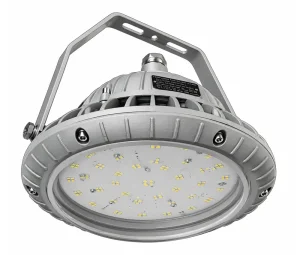
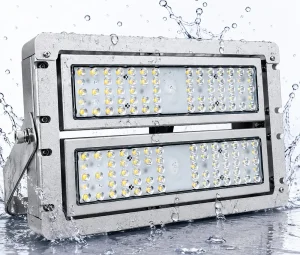
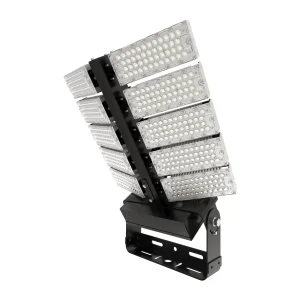
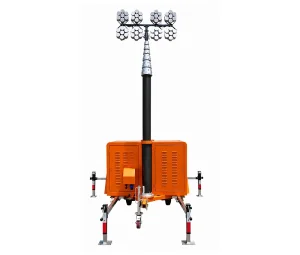
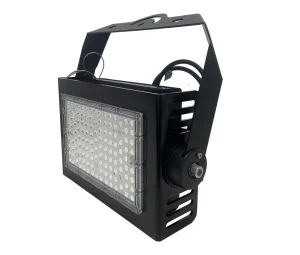
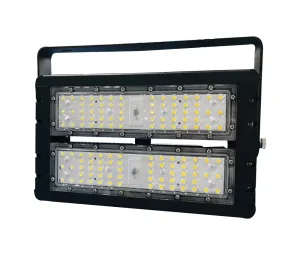
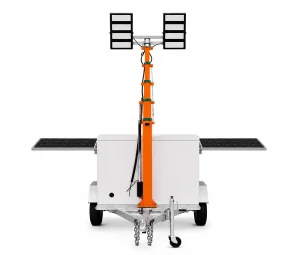
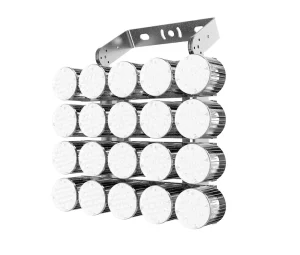
Industrial, Hazardous & Marine Lighting Solutions
Explore our full engineering line of heavy-duty industrial luminaires, mobile towers, and explosion-proof equipment built for extreme global operating environments.
Consult With a Glass Plant Lighting Specialist
Whether you are retrofitting an existing float glass facility, expanding an IS container line, or engineering a new solar glass manufacturing campus, our technical team provides photometric planning, thermal dissipation verification, and customized sample evaluations.