Featured Extreme-Environment Luminaires & Industrial Systems
Tailor-made industrial luminaires certified for steel furnaces, marine rigs, stadiums, and off-grid high-ambient job sites worldwide.
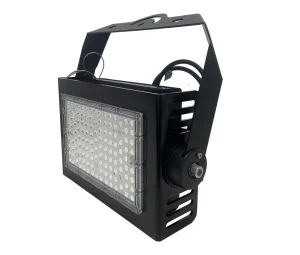
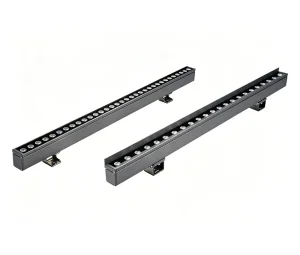
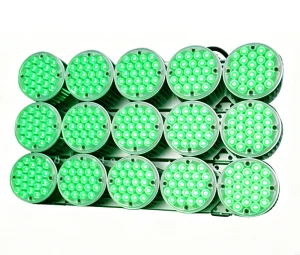
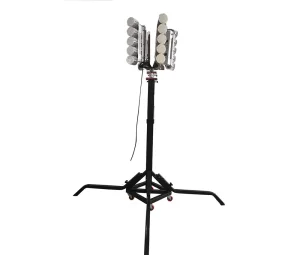
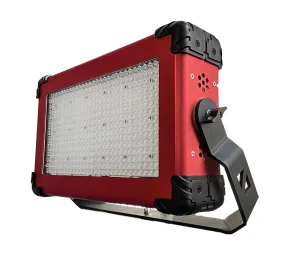
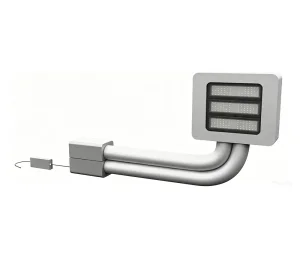
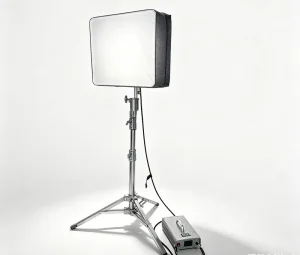
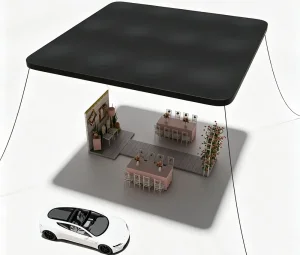
Physics of Photonic Degradation in Extreme Ambient Environments
In conventional optoelectronics, ambient temperatures above 50°C induce severe non-radiative recombination within the active semiconductor layers, precipitating rapid phosphor degradation, wire-bond shear failure, and driver electrolytic dry-out.
Arrhenius Kinetic Acceleration
Every 10°C increase in LED junction temperature ($T_j$) halves the functional operational lifespan (L70 metric). In environments like continuous casting lines (80°C to 150°C ambient), standard luminaires experience catastrophic component rupture within 90 operating days.
Isolated Driver Aerodynamics
Lsledsus solves premature driver burnout through Remote Driver Architecture (RDA) and specialized silicone gel potting with thermal conductivity ratings $\kappa \ge 2.8\text{ W/m}\cdot\text{K}$, decoupling sensitive capacitors from the primary photon engine.
Superconducting Heat-Pipes
Our phase-change copper loop thermosiphons achieve thermal transport velocities over 10,000 W/mK. Combined with CNC-milled 6063 aviation aluminum fin structures, heat is rapidly channeled toward turbulent boundary convection zones.
When retrofitting metallurgy facilities, measure the ambient temperature directly at the ceiling truss apex. Thermal stratification can cause overhead conditions to reach 115°C even when the working deck remains at a manageable 42°C. Specifying by ground ambient guarantees early luminaire failure.
Why Top Global EPCs Choose Our Chinese Manufacturing Ecosystem
Based in Longhua District, Shenzhen, Lsledsus leverages the world's most concentrated precision optoelectronics and metallurgical engineering cluster to deliver custom industrial lighting solutions with unmatched speed.
Complete Upstream Integration
From pure aluminum ingot die-casting (A380/ADC12) to high-speed surface-mount technology (SMT) with 0201 chip-placement accuracy, our regional ecosystem compresses R&D prototyping cycles from months to just 10 days.
Rigorous QA Testing Laboratories
Every luminaire undergoes accelerated thermal cycling inside our in-house environmental chambers (-40°C to +300°C), accompanied by goniophotometric darkroom testing, IP6X sand/dust blasting, and continuous salt-fog corrosion validation.
Direct Factory Cost Efficiency
By bypassing distributor markup layers, multinational industrial operators secure tier-1 quality luminaires (equipped with OSRAM, Lumileds, or Cree chips) at competitive pricing—optimizing CapEx across major facility upgrades.
High-Ambient Operating Classes: Engineering Breakdown
Select the appropriate thermal grade based on continuous equilibrium temperatures, peak transient spikes, and environmental contaminants.
| Thermal Grade | Continuous Ambient | Peak Transient | Cooling Topology | Typical Industrial Target Zones |
|---|---|---|---|---|
| Class 80 Alpha | Up to 80°C (176°F) | 90°C (194°F) | Extruded 6063 Aluminum Pin-Fin; Internal High-Temp Driver | Industrial Bakeries, Forging Mills, Rubber Vulcanization Facilities |
| Class 100 Beta | Up to 100°C (212°F) | 115°C (239°F) | Vapor Chamber Cold Plate + External Dual-Chamber Isolation | Steel Rolling Mills, Non-Ferrous Foundries, Pulp Paper Dryers |
| Class 150 Gamma | Up to 150°C (302°F) | 165°C (329°F) | Remote Driver Hub (up to 50m) + Fluoroelastomer Encapsulation | Coke Oven Batteries, Glass Annealing Lehrs, Rotary Cement Kilns |
| Class 300 Omega | Up to 300°C (572°F) | 330°C (626°F) | Active Closed-Circuit Thermal Barrier + Quartz/Borosilicate Optics | Direct Blast Furnace Slag Bays, Metallurgical Ladle Turrets, Chemical Syngas Flares |
Bespoke Solutions for Demanding Industrial Sectors
Every operational facility presents unique challenges involving dust abrasion, corrosive gases, mechanical vibration, and extreme ambient heat.
Steel, Foundries & Smelters
High ambient air currents carrying conductive iron particulate degrade typical electronics. Our sealed IP66/IP68 fixtures with non-stick fluorocarbon finishes prevent dust accumulation and thermal choking near furnaces and casting bays.
Marine, Ports & Offshore
Harsh marine installations combine intense sun exposure with salt fog and continuous deck vibration. We use marine-grade 316 stainless hardware, anti-corrosive powder coatings, and IP68 hermetic seals to protect docks, ships, and offshore rigs.
Glass, Ceramics & Kilns
Continuous radiant infrared heat near glass forming and ceramic kilns quickly degrades standard optical lenses. Our specialized borosilicate glass optics withstand localized thermal shock without micro-fissuring or color shift.
Chemical Refineries & Power
Combining Class I Division 2 / Zone 1 explosion-proof architectures with high-temperature resistance, our luminaires operate reliably across oil cracking units, coal pulverizing bays, and thermal power turbine decks.
Key Selection Criteria for Industrial Procurement Teams
When specifying luminaires for mission-critical industrial environments, evaluating these core parameters prevents premature failures and unexpected downtime.
1. Verified In-Situ Junction Temperatures
Always request third-party thermal imaging reports and thermocouple data verifying junction temperature ($T_j$) under worst-case ambient conditions, ensuring the LED operates well within its safe operating margin.
2. Driver Isolation & Surge Immunity
High-ambient environments frequently experience heavy electrical noise from electric arc furnaces and high-tonnage cranes. Ensure driver setups include minimum 10kV/20kV transient surge protection alongside physical isolation.
3. Photometric Layout Validation
Our engineering team provides comprehensive DIALux illuminance modeling before manufacturing, ensuring your installation meets ISO and OSHA worker-safety light levels while eliminating excessive glare.
High-Ambient Lighting: Technical Q&A
Direct insights from our chief thermal and optoelectronic engineers addressing common specification, manufacturing, and deployment questions.
Survival at these temperatures requires a complete thermal redesign: separating drivers into independent, thermally insulated enclosures, using gold-wire bonded ceramic LEDs, and applying super-conductive vapor chamber heat spreaders that continuously pull heat away from active diodes.
Standard high bays rely on internal drivers with electrolytic capacitors rated only to 85°C internal temperature. When roof ambient hits 65°C, internal driver temperatures exceed 105°C, drying out liquid electrolyte, cracking solder joints, and degrading standard silicone lenses within weeks.
Yes. Over 60% of our production involves tailor-made structural engineering. We customize mounting patterns, deliver narrow-to-wide beam distributions (15° to 120°), and engineer custom heavy-gauge vibration dampers that isolate luminaires from overhead crane shocks.
We provide standard 5-year full factory warranties on our Class 80 and Class 100 industrial luminaires under continuous rated operation, with project-specific warranties available for Class 150 and custom Class 300 platforms based on thermal simulation modeling.
Explore Additional High-Output Industrial Solutions
Engineered for extreme ingress, high wattage output, marine corrosion resistance, and mission-critical reliability.