
Industrial Engineering Standard
Best High Ambient Temperature Lighting Factories & Factory
Whitepaper & Industrial Architecture: Engineered Solid-State Illumination for Extreme 80°C to 300°C Thermal Environments, Heavy Industry Smelters, and Hazardous Processing Infrastructure.
Specialized Heavy-Duty & High-Temperature Deployments
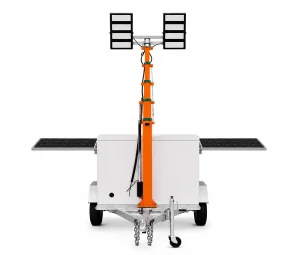
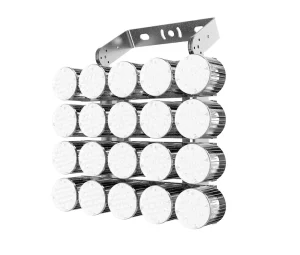
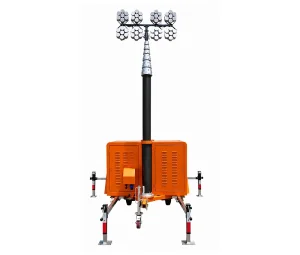
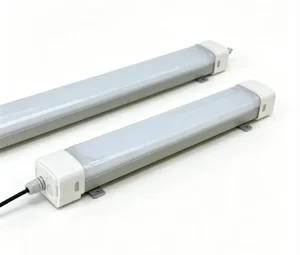
Direct from production: industrial mobile towers, stadium fixtures, and heat-resistant lighting engineered for uninterrupted duty cycles under severe environmental conditions.
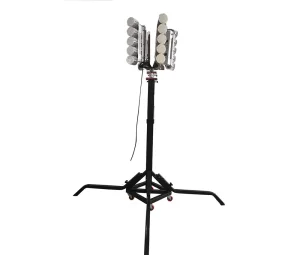
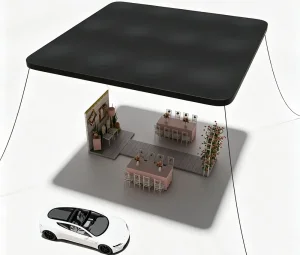
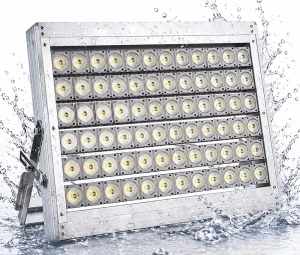
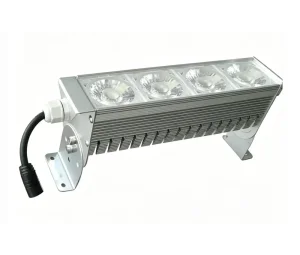
The Mechanics of High Ambient Temperature Lighting in Heavy Industry
Standard LED fixtures fail precipitously above 50°C. In high-thermal heavy industrial facilities, deploying enterprise-grade thermal management is critical for operational uptime and life-safety compliance.
Phosphor Degradation & Junction Control
At ambient temperatures exceeding 80°C, traditional silicone encapsulants brown and standard phosphors suffer thermal quenching. Industrial-grade factories deploy ceramic-based submounts and high-purity inorganic remote phosphors, eliminating chromaticity shifts and preserving high CRI across continuous 100,000-hour lifecycles.
Capacitor Venting & Driver Separation
Electrolytic capacitors within LED drivers are the primary point of thermal failure. Advanced factories counter Arrhenius acceleration by physically decoupling drivers via remote distribution consoles, utilizing solid-state tantalum capacitors, or encapsulating electronics in thermally conductive epoxy capable of withstanding prolonged 100°C–150°C bake zones.
Superconducting Phase-Change Siphons
Passive die-cast aluminum cannot reject heat when ambient delta-T is minimal. Our factories utilize sintered copper heat-pipe assemblies and 3D vapor chambers with phase-change working fluids. This thermal siphon technology transfers flux from LED matrices to perimeter aerospace-grade cooling fins at extreme thermal conduction velocities.
300°C
Peak Thermal Rating Engineered
100K+
Hours L70 Lifetime at 80°C
190 lm/W
System Luminous Efficacy
IP68 / IK10
Ingress & Mechanical Integrity
Industrial Thermal Classification & Engineering Matrix
Accurate ambient specification prevents premature downtime. Reference our thermal operating ceiling cross-reference to align optical packages with industrial zones.
| Thermal Class | Operating Ceiling | Standard Industrial Environment | Chassis & Thermal Topology | Driver Architecture |
|---|---|---|---|---|
| Class A | 80°C (176°F) | Hot workshops, rubber vulcanization, paper mills, forging zones | A383 ADC12 finned aluminum, pure silicone seals, anti-dust coating | Integrated constant-current driver rated at Tc 90°C, 6kV/10kV surge |
| Class B | 100°C (212°F) | Steel continuous casting bays, glass annealing, cement clinker coolers | Phase-change heat pipes, ceramic submount LEDs, fluorosilicone gaskets | Integral high-temp driver with Arrhenius-optimized Rubycon caps |
| Class C | 150°C (302°F) | Blast furnace catwalks, coke oven batteries, industrial baking tunnels | Vapor chambers, remote phosphor discs, copper sintered heat spreaders | Remote driver placement (40m-100m conduit), Teflon/PTFE cabling |
| Class Ultra | ≤300°C (572°F) | Direct furnace throat observation, metallurgical ladles, aerospace test cells | Active compressed-air vortex cooling or closed-loop liquid thermal jacket | External control console in climate-controlled automation center |
Mission-Critical Field Deployments
Engineered for extreme operating environments worldwide where thermal accumulation and corrosive atmospheres compromise conventional lighting.
Primary Metal Foundries
Continuous thermal up-drafts over electric arc furnaces and ladles create localized ceilings exceeding 95°C. Class B and C fixtures eliminate crane-mounted lighting failures, boosting scrap-charging safety.
Glass Melting & Annealing
Molten glass tanks run at 1500°C, filling mezzanine walkways with intense infrared radiation. Our remote-driver luminaires withstand radiant heating while delivering precision beam optics.
Petrochemical & Flare Boilers
In refining cracking units and steam generation halls, ambient heat combines with hydrocarbon vapors. Our high-temp luminaires hold dual ATEX/IECEx certifications for reliable high-heat Zone 1/21 operation.
Thermal Power Plants
Supercritical boiler halls, steam turbines, and coal-fired preheaters experience sustained ambient temperatures above 70°C. Our fixtures maintain reliable illumination and lower servicing frequency across high bays.
China Factory Ecosystem: Supply Chain Resilience & Velocity
Combining high-tonnage precision die-casting, rapid SMT electronics manufacturing, and dedicated in-house thermal chambers to deliver custom industrial luminaires within tight lead times.
Vertical Integration Under One Roof
Our Shenzhen industrial base consolidates multi-axis tooling, 2500-ton cold chamber die-casting, electrostatic powder coating lines, and SMT assembly under ISO 9001:2015 controls. This end-to-end integration reduces lead times for bespoke optics, chassis modifications, and custom mountings from months to weeks.
Complete BOM Sourcing & Traceability
Situated within the Greater Bay Area hardware cluster, our manufacturing lines access first-tier component partners like OSRAM, Mean Well, Inventronics, and Cree. Raw aluminum, silicones, and optical materials undergo spectrographic verification to maintain purity and mechanical strength.
Validation & Thermal Bake Testing
Every industrial luminaire series undergoes comprehensive validation before shipment. Our facilities house environmental chambers running continuous 100°C–150°C burn-in protocols, goniophotometer optical testing, salt-spray corrosion tests, and multi-axis vibration analysis to verify long-term stability.
Technology Roadmap: High-Temperature Solid-State Illumination
Next-generation power semiconductors, advanced nanomaterials, and intelligent sensor arrays are reshaping industrial lighting performance in extreme environments.
Wide-Bandgap Gallium Nitride (GaN) Drivers
Silicon drivers face hard physical limits around 105°C junction thresholds. The shift to Gallium Nitride (GaN) and Silicon Carbide (SiC) semiconductors allows drivers to operate stably at 175°C without efficiency loss, enabling integrated fixture designs in intense radiant heat zones.
Graphene Nanocomposites
Thermal coatings infused with graphene nanoplatelets raise radiative emissivity to near-unity (0.96) while cutting overall weight. These nanocomposites dissipate heat through both radiation and natural convection, functioning reliably even in stagnant, dust-laden environments.
Edge-AI Thermal Self-Regulation
Luminaires equipped with on-board microcontrollers dynamic-throttle drive currents in real time based on substrate temperatures. Wireless protocols (BLE Mesh, Zigbee, DALI-2) send predictive maintenance alerts before critical failures can disrupt plant operations.
Worldwide Compliance & Engineering Assurance
International industrial deployments require strict adherence to international electrical, mechanical, and safety standards across all operating regions.
CE, RoHS & UKCA
Full compliance with European Low Voltage Directive (LVD) and Electromagnetic Compatibility (EMC) regulations, verified by independent testing for safe worldwide export.
UL 1598 & CSA C22.2
Constructed in strict accordance with North American safety codes for luminaires deployed in non-hazardous wet and elevated ambient temperature locations.
IEC 60529 (IP68) & IK10
Dust-tight and protected against continuous immersion under hydrostatic pressure, combined with high mechanical impact resistance against physical plant shocks.
ANSI C136.2 & Surge 10kV/20kV
Industrial transient and lightning surge protection shields fixtures against severe voltage spikes caused by large inductive motor and furnace switches.
Comprehensive Industrial & Thermal Lighting Systems
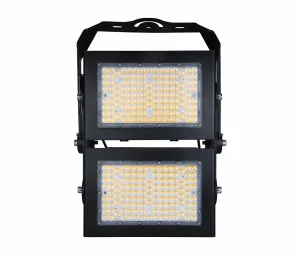
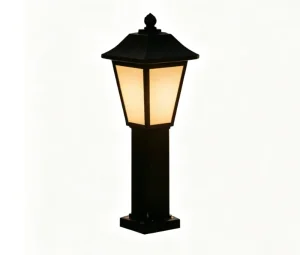
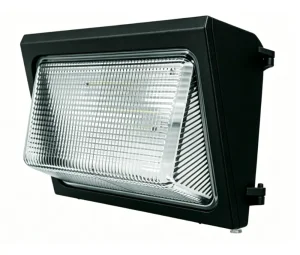
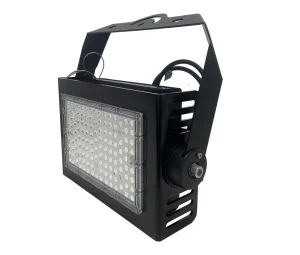
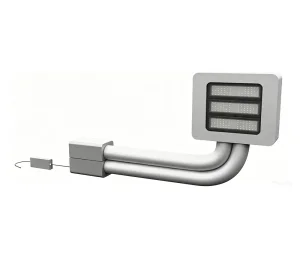
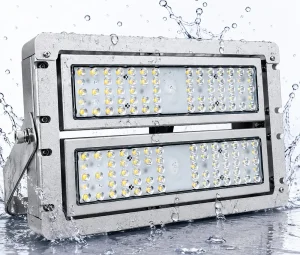
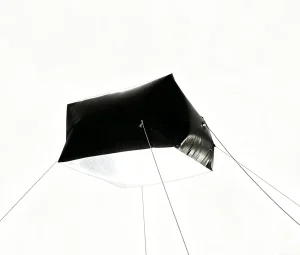
Explore our full line of specialized luminaires—from extreme 300°C furnace lights and marine floodlights to sports field arrays and compact site towers.
Frequently Asked Questions for Industrial Procurement
Detailed answers covering thermal engineering, system customization, and international compliance for high ambient temperature lighting projects.
What enables your high-temperature LED lights to run continuously in 80°C, 100°C, and 150°C ambients?
Our fixtures combine ceramic-packaged LED chips, inorganic optical glass, and sintered copper heat-pipe assemblies to keep junction temperatures well below degradation thresholds. For ambient conditions of 100°C to 150°C, drivers are housed in decoupled thermal enclosures or installed remotely, keeping sensitive electronics away from extreme heat sources.
How is an operating rating of 300°C (572°F) achieved in solid-state LED systems?
Reaching 300°C requires active thermal isolation. The luminaire optical head is shielded in a double-walled stainless steel or specialized alloy jacket cooled continuously by compressed plant air or closed-loop cooling fluid. All internal cabling uses braided PTFE/fiberglass, and the electronic driver console is positioned outside the high-heat zone.
Why do standard commercial-grade LED high bays fail inside heavy manufacturing plants?
Commercial LED fixtures are usually rated only up to 40°C or 50°C. In foundries, steel mills, or glass works, roof-level temperatures often surge past 65°C to 80°C. This excess heat rapidly dries out electrolytic capacitors in standard drivers, degrades silicone lenses, and accelerates LED junction decay, resulting in color shift, severe lumen drop, and early driver failure.
Can beam distributions, optical shields, and housing form factors be customized?
Yes. We offer fully customizable optical distributions (narrow 15° spot to 120° wide flood, as well as specialized asymmetric profiles for cranes and aisles). Housing geometry, mounting brackets, vibration dampeners, and wire harnesses can be tailored to match your existing plant infrastructure and mounting points.
Do you provide custom photometric planning and DIALux simulations prior to ordering?
Yes. Our application engineering department provides full DIALux and AGi32 photometric layout simulations. By reviewing your architectural drawings, mounting heights, working-plane lux targets, and ambient heat profiles, we deliver complete photometric reports with false-color renderings, lux uniformity maps, and glare ratings (UGR).
What certifications and quality documentation accompany high-temperature lighting exports?
Our product lines hold comprehensive international certifications, including CE, RoHS, UKCA, UL 1598, CSA, IP67/IP68 ingress ratings, and IK10 impact ratings. For hazardous industrial sites, select models offer ATEX and IECEx Zone 1/21 and Zone 2/22 explosion-proof documentation, along with complete factory burn-in and spectrometer test reports.