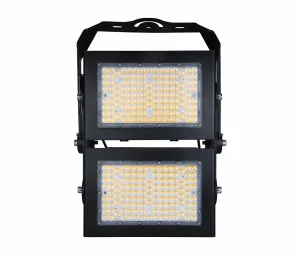
High-Temperature & Extreme Industrial Luminaires
Factory-direct industrial luminaires built to withstand severe thermal radiation, chemical abrasive dust, and high mechanical vibration.
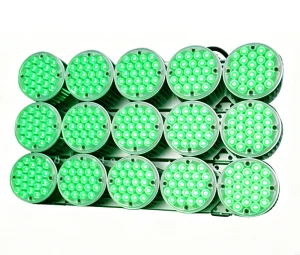
Best RGB Flood Lights - 1000W of Vibrant Power for High Towers & Grand Landscapes Manufacturers, Manufacturer
View Specification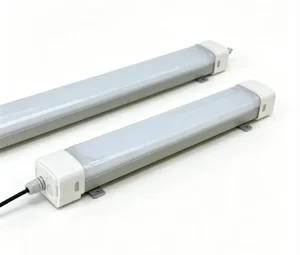
High-Quality IP65-IP67 triproof led light –Waterproof, Dustproof & Corrosion Resistant Supplier, Manufacturers
View Specification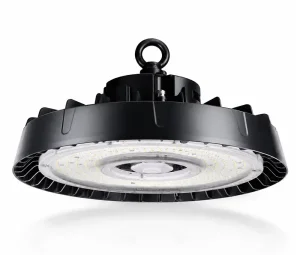
High-Quality Durable UFO High Bay LED Light – Long Lifespan & High Lumen Output Factories, Manufacturer
View Specification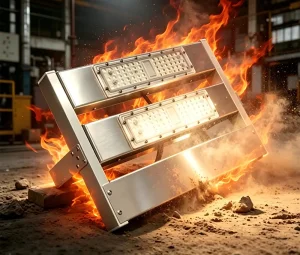
Best Tailored High Temperature LED Light with Highly Dustproof Configuration Factory, Manufacturers
View Specification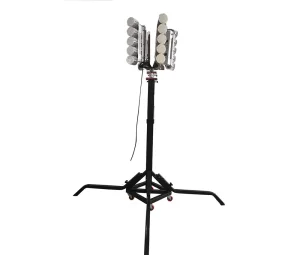
OEM Economic 4m Mobile Light Tower Factory, Manufacturer
View Specification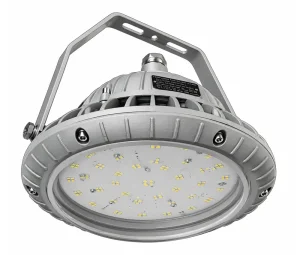
Best Explosion proof LED Light – Safe, Durable, Industrial Illumination Suppliers, Supplier
View Specification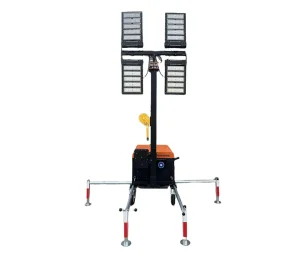
High-Quality Wholesale 6m Mobile Light Tower Factories, Factory
View Specification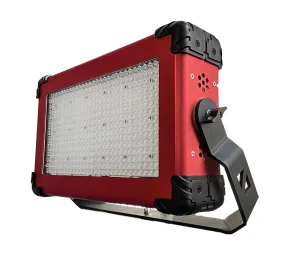
Best Revolutionary Underwater LED Film Light - 30-Meter Depth, Zero Housing Required Suppliers, Manufacturers
View SpecificationThe Global Crisis of Premature Solid-State Lighting Failure in Heavy Industry
Why commercial grade LED fixtures degrade catastrophically under combined ambient hyperthermia and conductive particulate deposition.
The Dual-Vector Breakdown: Thermal Saturation Compounded by Airborne Particulates
In pyrometallurgical processing facilities, hot rolling mills, clinker coolers, and carbon baking facilities, illumination reliability is compromised by a vicious feedback loop. Standard commercial luminaires rely on passive convection across aluminum heat-sink fins designed for a benchmark 25°C to 40°C ambient room temperature. When these luminaires are suspended 12 to 24 meters overhead within foundry roofs or furnace monitors, the microclimate routinely reaches 70°C to 110°C, and can spike higher during tap operations.
Simultaneously, the atmosphere is saturated with micron-sized particulate matter: metallurgical fume, fly ash, silica dust, iron oxide particulates, and pulverized coal. When dry airborne particulates settle between closely spaced heat-sink fins, they create an insulating blanket with thermal conductivity as low as 0.06 W/(m·K)—an order of magnitude lower than standard aluminum (205 W/(m·K)). This particulate blanket stifles convective air currents.
According to the Arrhenius rate equation, the chemical degradation of LED encapsulants (such as phenyl silicone or methyl silicone polymers) and the thermal wear of switch-mode power supplies (SMPS) doubles for every 10°C elevation in junction temperature ($T_j$). Electrolytic capacitors dry out, phosphor conversion layers blister, forward voltage drops, and chromaticity coordinates drift drastically toward blue or yellow spectrums, resulting in total lumen collapse in as little as 90 to 180 days.
Driver Electronics Vulnerability
Over 82% of solid-state luminaire failures in heavy industry originate in the driver, not the LED emitter array. Standard drivers utilize electrolytic capacitors rated only for 105°C maximum casing temperatures. When ambient operational conditions maintain a 80°C continuous floor, the internal driver temperature easily surges past 125°C, causing electrolyte vaporization, ripple current spikes, and immediate MOSFET dielectric breakdown.
Particulate Micro-Ingress
Microscopic industrial dust (down to PM2.5 and PM1.0 fractions) carries high electrostatic and conductive properties. Traditional foam gaskets deform over continuous thermal cycles (-20°C to +90°C), breaking hermetic seals. Once conductive dust breaches the optical chamber, it deposits on copper circuit traces causing catastrophic tracking shorts and rapid light output degradation.
Optical Fouling & Lumen Trapping
Polycarbonate lenses exposed to UV, intense infrared radiation, and hot sulfurous atmospheres turn yellow and brittle through photo-oxidation and thermal embrittlement. Furthermore, particulate cake layer accumulation on rough lens faces can trap up to 45% of emitted lumens inside the luminaire, converting lost optical energy directly into internal heat.
Engineering Physics: Surviving 100°C to 300°C Industrial Realities
How top-tier high-temperature LED manufacturers build resilient luminaires through materials science, thermal separation, and aerodynamic geometry.
1. Spatial Thermal Decoupling
The cornerstone of high-heat resilience is physical isolation between the photon-generating LED substrate and the electronic power converter. By separating the fixture into two independent cast copper-free aluminum (A380 or ADC12) chambers connected solely by an aerodynamic heat-choke bracket with hollow thermal spacers, thermal conduction between subsystems is virtually eliminated. This layout allows the driver to operate in a micro-environment 25°C to 40°C cooler than the LED module. For environments exceeding 100°C (up to 300°C), remote driver stations mounted up to 100 meters away in climate-controlled electrical rooms represent the ultimate survival design.
2. Self-Purging Aerodynamic Fin Topologies
Standard vertical pin-fin or tightly packed plate-fin designs act as particulate filters, capturing dust until the voids are choked solid. Extreme dust-resistant fixtures adopt widely spaced (>15mm pitch), knife-edged convective thermal flutes angled at 45° to 60°. Natural thermal drafts generate an accelerated chimney effect (buoyancy-driven flow) that sweeps fine particles out of the housing before adhesion occurs. Combined with electrostatically neutral, hydrophobic fluoropolymer powder coatings, dry powder accumulation is reduced by up to 88% compared to untreated raw die-castings.
3. Hermetic Fluoroelastomer Sealing
Thermal cycling exerts tremendous expansion and contraction stresses on housing perimeter joints. Low-cost EPDM and neoprene gaskets become brittle and lose elasticity within weeks above 80°C. Heavy industrial manufacturing demands continuous-bead molded Fluorocarbon elastomer (Viton / FKM) or specialized phenyl silicone compounds with compression-set resistance rated continuously from -40°C to +250°C. Coupled with tongue-and-groove enclosure designs, these fixtures secure true IP66, IP67, and IP69K ratings that prevent particulate ingestion even during aggressive 100-bar high-pressure water and steam washdowns.
| Thermal & Dust Engineering Parameter | Standard Commercial High Bay | Industrial Grade Luminaire | Lsledsus Extreme Heavy-Duty Class |
|---|---|---|---|
| Maximum Ambient Operating Range | -20°C to +40°C Fails in Heat | -30°C to +65°C | -40°C to +100°C (Standard) / +300°C (Active Custom) Optimized |
| Driver Isolation Topology | Integrated on-board / Shared chamber | Direct mount thermally isolated bracket | Dual-chamber physical chimney choke / Remote rackable option |
| Dust Ingress Rating (IEC 60529) | IP54 to IP65 | IP65 to IP66 | IP66, IP67, IP68 & IP69K (High-pressure steam washdown) |
| Optical Face Construction | Injection Molded Acrylic (PMMA) or PC | Standard Tempered Float Glass | 4mm–6mm IK10 High-Purity Borosilicate / Nanocoated Anti-Static |
| Gasketing & Seal Compound | Open-cell EPDM / Nitrile rubber | Solid profile Neoprene | Continuous-profile Fluorocarbon (Viton FKM) / Phenyl Silicone |
| Lumen Depreciation Rate (L70 @ 80°C) | Estimated <6,000 Operating Hours | Estimated 25,000 Operating Hours | >100,000 Hours (TM-21 projected extrapolation) |
Mission-Critical Applications: Where Failure Is Not an Option
Detailed breakdown of operating environments across the most demanding global processing sectors.
Steel Making: EAF, Tundish & Casting
Atmospheric Profile: Ambient temperatures around Electric Arc Furnaces (EAF) and Continuous Casting machines reach 85°C to 130°C. The atmosphere carries heavy concentrations of conductive iron oxide dust, graphite particles, and molten slag splatter, complemented by severe mechanical vibration from heavy scrap bucket movements and overhead crane operations.
Engineering Solution: Heavy-duty, low-copper aluminum fixtures with dual-layer Viton gaskets, remote-mounted driver pods outside the furnace crane rail zone, and high-impact IK10 borosilicate protective covers with sacrificial protective mesh screens.
Cement & Lime: Pre-Heater Towers & Kilns
Atmospheric Profile: Suspension pre-heater cyclone towers and rotary kiln hoods operate with continuous ambient heat between 70°C and 95°C. Airborne particulate concentrations exceed 150 mg/m³, consisting of abrasive, highly alkaline limestone, calcium oxide, and clinker dust that bonds chemically to damp surfaces.
Engineering Solution: Smooth-contoured, self-draining cast housings devoid of horizontal horizontal ledges. Wide cooling fins prevent bridging of clinker powder. Optical faces treated with superhydrophobic coatings permit dry vibration shedding without caking.
Glass Production: Forehearths & Annealing Lehrs
Atmospheric Profile: Continuous infrared radiation from molten glass forehearths and forming bays keeps ambient temperatures between 80°C and 110°C year-round. Ambient air carries volatile sulfur oxides (SOx), vaporized sodium, and mold release oil lubricants.
Engineering Solution: Chromate-conversion treated housings coated with thermoset fluoropolymer finishes resistant to acidic condensate. Gas-tight optical cavities pressurized with dry inert nitrogen or sealed with chemical-resistant Viton gaskets.
Next-Generation Technologies for Extreme Operating Conditions (2025–2035)
The progression of materials science, wide-bandgap semiconductors, and autonomous thermal regulation in industrial illumination.
Decoupled GaN Drives & Superhydrophobic Optics
- Wide-Bandgap GaN: Gallium Nitride power MOSFETs replacing silicon, enabling 97%+ efficiency and internal driver operation up to 125°C without derating.
- Sintered Copper Vapor Chambers: High-performance planar heat pipes embedded in MCPCB substrates, lowering LED junction-to-casing thermal resistance to under 0.15 °C/W.
- Self-Shedding Nanocoatings: Fluorinated silane lens treatments creating water contact angles >115°, preventing humid dust cake adhesion.
Solid-State Cooling & Micro-Pressure Defense
- Thermoelectric Peltier Integration: Solid-state heat pumps actively driving heat away from critical microcontroller components in ambient conditions up to 140°C.
- Dynamic Optical Cleaners: Micro-acoustic piezoelectric transducers built into lens perimeters, vibrating at ultrasonic frequencies to shake loose dry particulate crusts.
- Self-Diagnostics: Integrated micro-sensors measuring casing temperature, vibration signatures, and optical transmission losses to predict end-of-life before hardware failure.
Direct-Thermal Radiation & 300°C Monolithic Engines
- Diamond & AlN Substrates: Synthetic polycrystalline diamond thermal spreaders providing thermal conductivity >1200 W/(m·K) for extreme radiant heat rejection.
- Silicon Carbide (SiC) Power Units: High-voltage SiC power stages operating natively at continuous 200°C ambient temperatures without external active cooling.
- Autonomous Micro-Pneumatic Purging: Thermally powered bimetallic check valves that vent expanding internal air while maintaining zero-particle filtration barriers.
Engineering Audit Framework: How to Evaluate an Extreme-Duty LED Manufacturer
A rigorous checklist for plant engineers, procurement directors, and EPCM contractors sourcing extreme-environment luminaires.
Thermal Validation
- Full-Chamber Burn-In: Demand certified test reports validating continuous operation at rated ambient temperature (e.g., 80°C or 100°C) for at least 3,000 consecutive hours.
- In-Situ Thermocouple Data: Review forward-current thermocouple logs verifying that the LED solder junction ($T_s$) remains below the chip manufacturer's maximum derating limit.
- Driver Capacitor Calculations: Verify that the capacitor manufacturer's lifespan calculation formula delivers >60,000 hours at actual measured case temperatures ($T_c$).
Ingress & Material Proof
- Dust Wind Tunnel Testing: Certify IP6X performance under negative pressure via dry talcum powder testing (8 hours continuous agitation, 20 mbar depression).
- High-Temperature Steam Jet (IP69K): Ensure seals withstand 80°C water at 14–16 L/min and 100 bar pressure without moisture or particulate ingress.
- Corrosion Category: Verify housing surface finish conforms to ISO 12944 C4-High or C5-Industrial atmospheric corrosivity categories.
Photometric & Mechanical Layout
- Thermal-Compensated Dialux/IES: Photometric layouts must be calculated using high-ambient light loss factors (LLF 0.70 to 0.80) rather than standard room-temperature metrics.
- Resonance & Vibration Proof: Verify that mounting brackets, yokes, and internal screws withstand 3G to 5G vibration sweeps (ANSI C136.31 bridge/industry standard).
- Secondary Safety Cable: Dual-point redundant aircraft-grade stainless steel safety cables anchored directly into the primary casting frame.
Frequently Asked Questions: High-Heat & Dust-Resistant LED Lighting
Clear, uncompromised technical guidance for project managers, safety directors, and facility electrical engineers.
What is the fundamental difference between ambient temperature rating and LED junction temperature?
Why do standard IP65 industrial luminaires fail in dust-heavy environments?
How far can the driver enclosure be mounted away from the LED fixture in high-heat zones?
Can high-heat luminaires also meet explosion-proof (ATEX / IECEx) standards?
What maintenance cycle should be anticipated for high-heat, high-dust installations?
What parameters are required to calculate an accurate lighting layout before purchasing?
High-Temperature, Mobile & Extreme Industrial Luminaires
Complete your plant installation with specialized floodlights, sports field luminaires, off-grid mobile towers, and road systems.
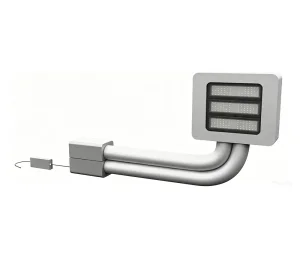
High-Quality Tailored High Temperature LED Light with Active Thermal Management- Rated 300°C (572°F) Factory, Manufacturers
View Specification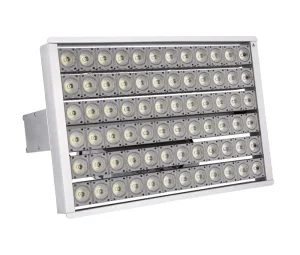
High-Quality High Temperature LED Light Rated 90°C(194°F) Suppliers, Manufacturers
View Specification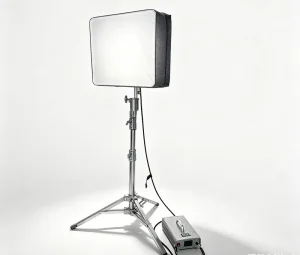
High-Quality Flexible LED Mat - Powerful, Flicker‑Free Lighting That Conforms to Any Surface Factories, Supplier
View Specification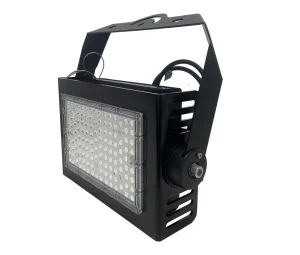
OEM 48V DC LED Flood Light for Mobile Light Towers & Off-Grid Industrial Lighting Factory, Suppliers
View Specification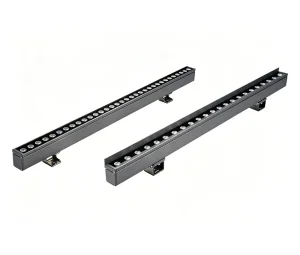
Best RGB Wall Washer – Effortless Commercial Decoration with Linear Precision Suppliers, Manufacturer
View Specification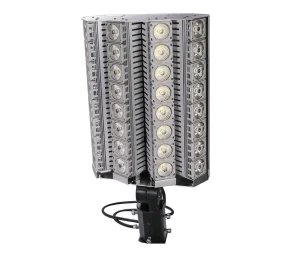
Best LS-STN Series Asymmetric LED Street Light for Roadway Applications Factories, Supplier
View Specification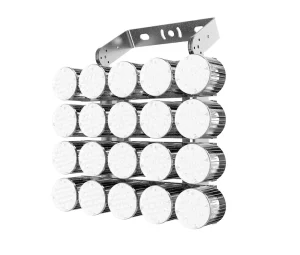
High-Quality Arena LED Stadium Light – Ultra‑Compact Design with Maximum Efficiency Factories, Factory
View Specification