High-Temperature & Extreme Environment Product Catalog
Manufactured under rigorous ISO9001/ISO14001 thermodynamic standards, our luminaires incorporate decoupled driver housings, phase-change thermal pipes, and aerospace-grade alloys.
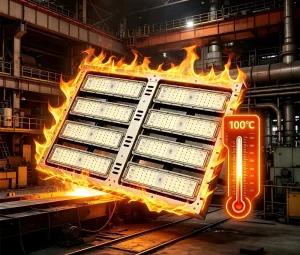
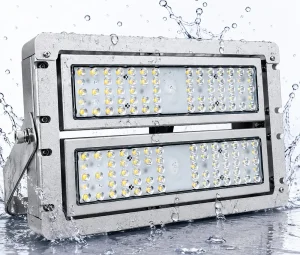
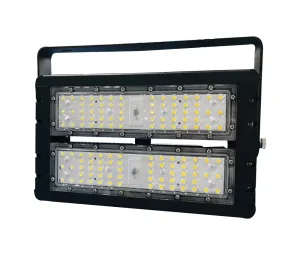
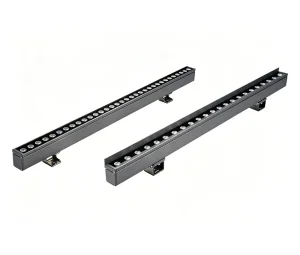
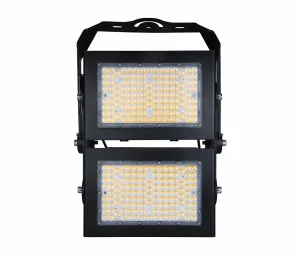
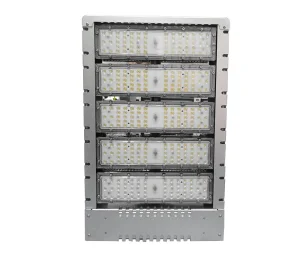
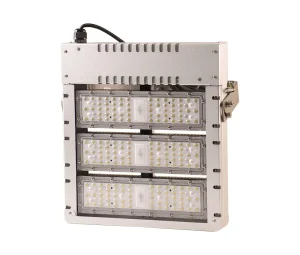
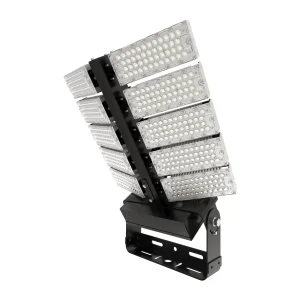
The Global State of High-Temperature Heavy Industrial Illumination
Standard commercial LED fixtures suffer catastrophic failure when continuous ambient temperatures exceed 45°C. Heavy industrial infrastructures require purpose-built solid-state thermodynamic architectures.
Thermal Failure Modes in Industrial Plants
In foundries, steel casting bays, hot rolling mills, and cement rotary kilns, the ceiling ambient air routinely hovers between 65°C and 120°C. Standard LED luminaires deployed in these zones encounter rapid lumen depreciation, catastrophic phosphor degradation (turning beam profiles purple), and electrolytic capacitor vapor blowout within weeks.
As a leading Chinese high-temperature LED light factory, Lsledsus engineers each component around thermodynamic resilience. By decoupling junction temperatures ($T_j < 85^\circ\text{C}$ even in $100^\circ\text{C}$ ambient conditions) via high-purity AL6063 cold-forged extrusion and remote driver enclosures, we guarantee 100,000-hour operational lifespans under continuous operational strain.
- Vapor Phase Chamber Cooling: Low-thermal-resistance internal heat pipes transfer heat 200x faster than solid aluminum.
- Decoupled Solid-State Drivers: Physical separation of power converters avoids mutual thermal entrapment.
Strict Certification & Safety Compliance
Engineering fixtures for environments characterized by airborne slag, toxic fumes, and mechanical vibration requires uncompromising structural integrity.
Our fixtures comply with international explosion-proof and ingress criteria including ATEX Zone 21/22, IECEx, UL844 Class I Div 2, and rigorous IP68 immersion thresholds, ensuring absolute sealing against moisture, acidic mist, and corrosive particulates.
Industrial High-Temperature LED vs. Conventional Industrial Fixtures
A rigorous comparative analysis highlighting thermodynamic boundaries, MTBF expectations, and system reliability parameters.
| Performance Dimension | Standard Commercial LED | Heavy-Industrial Rated (80°C) | Ultra-Extreme Heat Line (100°C - 300°C) |
|---|---|---|---|
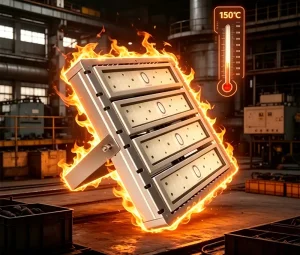
| Operating Ambient Threshold | -20°C to +40°C (-4°F to 104°F) | -40°C to +80°C (-40°F to 176°F) | -40°C to +150°C (Standard) / Up to 300°C Custom |
| Driver Integration & Lifespan | Internal; standard e-caps (15k hrs @ 60°C) | Integrated isolated driver with 105°C e-caps | Remote Galvanic Isolation; High-reliability SiC solid-state circuitry |
| Optical Material & Lens | PMMA / Polycarbonate (Yellows above 65°C) | Tempered borosilicate glass / UV-stable PC | Heavy-duty 4mm thermal-shock resistant borosilicate glass |
| Lumen Depreciation Rate | L70 at 12,000 hrs in elevated heat | L80 at 65,000 hrs at +75°C | L90 at 70,000 hrs / L70 > 100,000 hrs at continuous peak heat |
| Ingress & Corrosion Protection | IP65 basic rubber gaskets | IP66 / IP67 Fluorosilicone seals | IP68 Hermetic Viton® O-rings, C5-M anti-corrosion coating |
Field-Tested Deployment Across Mission-Critical Facilities
Different operating environments present distinct physical stresses. Lsledsus designs custom thermal pathways to match localized industrial conditions.
Steel Mills & Continuous Casting Plants
Above ladles, tundishes, and basic oxygen furnaces, ambient air routinely spikes to 100°C–130°C, compounded by radiant infrared energy and conductive iron oxide dust accumulation. Conventional high bays short-circuit or experience thermal runaways.
Our solutions deploy finless, self-cleaning aerodynamic top housings that prevent dust deposition, paired with remote driver boxes mounted up to 50 meters away in climate-managed electrical raceways.
Glass Manufacturing & Ceramic Kilns
Annealing lehrs and float glass baths radiate intense convective heat 24/7/365 without thermal cycling shutdowns. Lighting luminaires suspended within 3 meters of the float lines encounter continuous thermal convection of 90°C.
Equipped with pure copper vapor tubes and ceramic-base Cree/OSRAM high-power LEDs, our luminaires maintain full optical efficacy and stable 5000K daylight balance, preventing color shift during optical quality inspection.
Power Stations, Turbines & Chemical Crackers
Steam turbine rooms, coke calcination ovens, and petrochemical sulfur recovery units demand high heat resistance paired with anti-corrosive chemical inertness. The combination of steam, sulfur dioxide, and heat degrades standard seals.
Our extreme-temperature marine and industrial luminaires leverage electrophoretic anti-acid coatings, stainless steel 316 brackets, and IP68 hermetically compressed Viton seals to eliminate vapor penetration.
Engineering Horizon: The Future of High-Temperature Solid-State Lighting
Lsledsus is actively pioneering third-generation wide-bandgap semiconductors, phase-change matrices, and AI-driven thermal telemetry to push thermal boundaries beyond 300°C.
Decoupled Driver Architecture
Complete physical isolation of electronics from the optical assembly. Drivers are relocated to ambient areas up to 100 meters away, or integrated into liquid-cooled chassis, extending electronic component lifespan to 120,000+ hours.
Gallium Nitride (GaN) & SiC Drivers
Integrating wide-bandgap Gallium Nitride and Silicon Carbide transistors directly into solid-state power supplies, allowing conversion electronics to operate at junction temperatures exceeding 150°C with 96% efficiency.
Vapor Loop Phase Heat Spreaders
Micro-grooved capillary wick structures encapsulated within pure oxygen-free copper plates disperse thermal flux densities exceeding $50\text{W/cm}^2$, keeping LED junction points safely below thermal degradation limits.
Real-Time AI Optical Telemetry
Embedded thermodynamic micro-sensors communicate with plant SCADA systems via LoRaWAN/DALI-2, dynamically adjusting current feeds during furnace blowout spikes to preserve continuous luminaire safety and system health.
End-to-End Enterprise Solutions from Factory Floor to Plant Installation
Procuring from Lsledsus provides global heavy-industry EPCs, distributors, and plant operators with end-to-end engineering certainty.
Dialux Photometric Engineering
We provide full-scale 3D Dialux calculations before component assembly. We account for mounting height, ambient temperature gradients, and high ceilings, preventing glare and hot spots while meeting OSHA and EN 12464-4 safety standards.
Comprehensive OEM Customization
Every industrial project has unique structural and power requirements. We custom engineer housings, optical distributions (15° to 120°), input voltages (100-277VAC, 347-480VAC, 12V/24V/48V DC for mobile masts), and bracket mounting geometry.
Comprehensive Plant ROI
Replacing traditional 400W–1000W Metal Halide, HPS, or mercury vapor fixtures yields immediate power savings of 65%–75%. More critically, eliminating frequent fixture replacements under active furnaces avoids costly production line stoppages.
High-Temperature Industrial Lighting: Technical FAQs
Clear engineering answers to critical thermal management, certification, and optical questions for project consultants and procurement leads.
What primarily causes LED fixture failure in high ambient temperatures?
The primary point of failure is typically not the LED chip itself, but the driver’s electrolytic capacitors. At ambient temperatures above 60°C, the liquid electrolyte inside standard capacitors boils off, leading to driver shutdown. The second failure mode is phosphor thermal quenching, which degrades brightness and causes severe color shifting toward blue/purple spectrums.
How does Lsledsus achieve reliable operation up to 100°C, 150°C, and 300°C?
We deploy a multi-stage thermal architecture: 1) Physical separation and remote mounting of power supplies in cooler plant zones; 2) Phase-change copper heat pipes and AL6063 aerospace-grade aluminum housings; 3) Ceramic-packaged LEDs that tolerate high junction temperatures; 4) Borosilicate glass lenses that resist thermal shock and never yellow.
Can you provide custom beam angles and photometric studies?
Yes. Our engineering division provides complete Dialux photometric planning for each bay and mounting height. We manufacture optics ranging from narrow 15°–30° spot profiles (for high-ceiling crane bays) to 60°, 90°, and 120° wide flood spreads, optimizing light uniformity across work planes while eliminating direct line-of-sight glare.
What is the typical lead time and minimum order quantity (MOQ) for custom OEM projects?
As a direct high-temperature LED light manufacturer based in Shenzhen, China, we support both custom prototypes and full container rollouts. Prototype validation samples take approximately 7–10 business days, while standard bulk factory runs are completed in 3–4 weeks. Standard fixtures feature flexible MOQs to support initial project testing.
High-Temperature & Extreme Environment Product Catalog
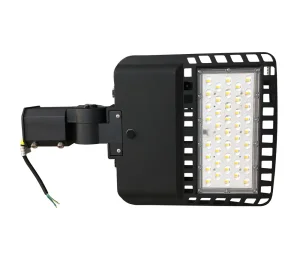
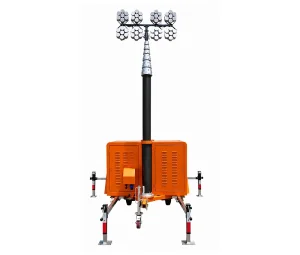
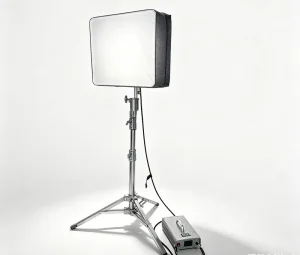
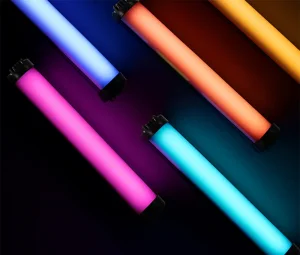
Explore the remainder of our engineered product portfolio, encompassing industrial high bays, mobile mine towers, flexible filming arrays, and IP68 underwater fixtures.