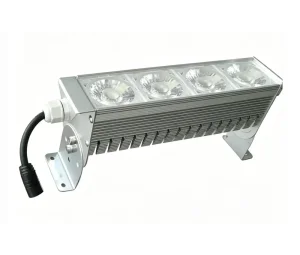
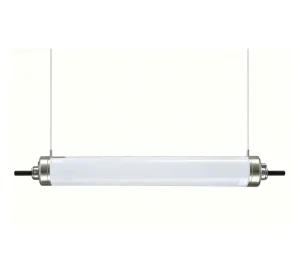
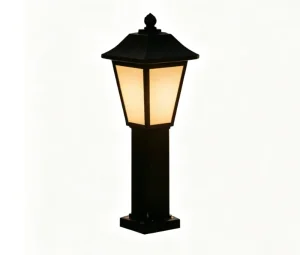
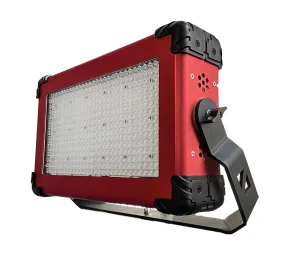
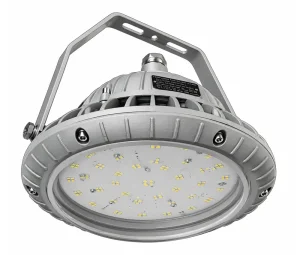
High-Temperature Industrial Showcase (Group I)
Verified thermal performance, dust-proof enclosures, articulated modular configurations, and extreme environment floodlights direct from our certified manufacturing facility.
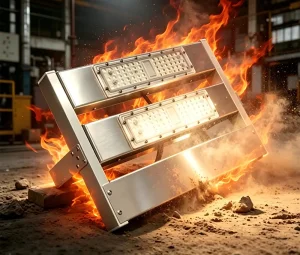
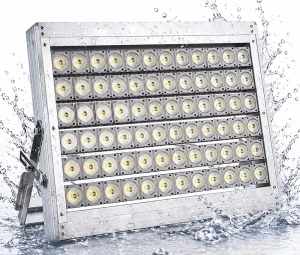
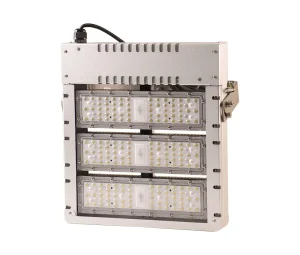
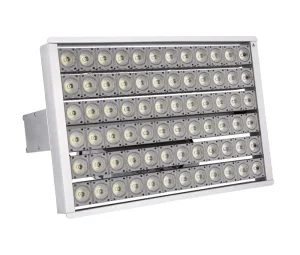
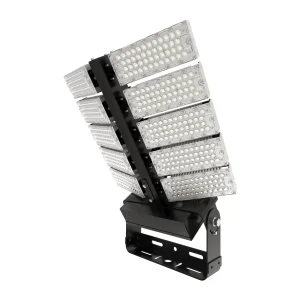
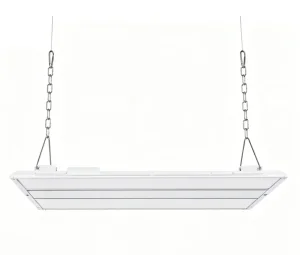
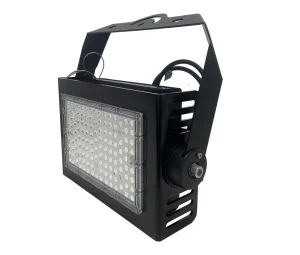
The Physics of Extreme Heat Illumination: Why Standard Fixtures Fail
In heavy industrial processing, high temperature is not simply an operating inconvenience—it is an exponential catalyst for electronic, optical, and mechanical breakdown governed by semiconductor physics.
Arrhenius Thermal Degradation
The Arrhenius rate reaction dictates that for every 10°C increase in LED junction temperature (Tj) above design thresholds, semiconductor life degrades by approximately 50%. Commercial off-the-shelf high bays experience rapid lumen depreciation, severe color shifting via yellowing silicone, and bonding wire fractures within 6 months when deployed above 50°C environments.
Electrolytic Vaporization
Integrated LED drivers are the primary point of failure. Standard electrolytic capacitors dry out rapidly under elevated ambient operating heat. Lsledsus solves this by engineering remote driver mounting architectures, utilizing solid -state ceramics, aerospace-grade magnetic isolation, and specialized silicone potting compounds rated for continuous 150°C to 200°C case stability.
Phase-Change Heat Pipe Transfer
Our specialized high-temperature lights incorporate high-purity extruded 6063-T6 aluminum alloys and sinter-powder copper vapor heat pipes. This thermal conductance (>4000 W/m·K) channels heat instantaneously away from the Nichia/Lumileds LED dies directly to aerodynamic aerodynamic cooling fins, preventing localized thermal saturation even at ambient levels of 90°C to 150°C.
Macro Industrial Solutions: Purpose-Built for Critical Infrastructure
Generic industrial fixtures cannot survive extreme thermal loading accompanied by conductive dust, chemical gases, and mechanical vibrations. Here is how our engineering tackles specific sectors.
Steel Mills & BOF Furnaces
Overhead cranes, ladle refining stations, and casting bays produce convective thermal air plumes from 80°C to 150°C, combined with metallic conductive iron dust. Our fixtures utilize sealed IP66/IP69K enclosures with borosilicate glass lenses that resist thermal shock and prevent graphite shorts.
Foundries & Smelters
Electrolytic aluminum reduction lines produce immense electromagnetic interference (EMI) and caustic fluoride gases alongside extreme heat. Our fixtures incorporate non-magnetic structural housings, advanced Class I surge protection (10kV/20kV), and anti-corrosive fluorocarbon powder treatments.
Glass Lehr & Ceramic Kilns
Continuous annealing ovens generate radiant ambient conditions maintaining 85°C to 120°C across the ceiling structure. With decoupled remote driver boxes located up to 50 meters away in ambient rooms, the light heads withstand uncompromised radiant heat without maintenance interruptions.
Petrochem & Coke Dry Quenching
In chemical boiler houses, steam methane reformer enclosures, and CDQ installations, fixtures meet dual requirements: classified hazardous location explosion containment (ATEX/IECEx Zone 1/21) plus sustained resistance to 80°C+ ambient steam and sulfurous atmospheres.
Engineering Benchmarks: Standard Industrial vs. High-Temperature Architecture
A rigorous specification breakdown demonstrating the architectural and material distinctions engineered into Lsledsus extreme ambient lighting lines.
| Performance Dimension | Standard Commercial LED | Standard Industrial High Bay | Lsledsus Extreme Ambient System |
|---|---|---|---|
| Operating Ambient Limit | -20°C to +40°C | -30°C to +55°C | -40°C to +80°C / +150°C / Custom +300°C |
| Driver Location & Topology | Integrated; Standard Caps | Integrated; 105°C Electrolytics | Decoupled Remote Architecture / 125°C Solid-State Ceramics |
| Thermal Interface Material | Generic Pad (<1.5 W/m·K) | Standard Grease (~2.5 W/m·K) | Phase-Change Metallic Sinter Matrix (>6.0 W/m·K) |
| Optical Material | Standard Polycarbonate (PC) | Stabilized PMMA / PC | Optical Borosilicate Glass (Tempered, Non-Yellowing) |
| L70B10 Lifespan @ 70°C | < 5,000 Hours (Imminent Failure) | 15,000 – 25,000 Hours | > 100,000 Hours Guaranteed |
| Corrosion Resistance Class | Standard Powder Paint | Polyester Powder Coat (C3) | Fluorocarbon Marine-Grade C5-M / Super Anti-Corrosion |
Enterprise TCO Optimization: Evaluating Capital vs. Lifecycle Maintenance
In continuous manufacturing facilities, luminaire replacement costs often dwarf initial procurement expenses by a factor of 10 to 1.
The True Cost of Crane Downtime
Replacing a failed high-bay fixture positioned 25 meters above an active hot-strip rolling mill requires overhead crane halts, specialized scaffolding, certified electricians in proximity heat suits, and safety shutdown permits. A single maintenance intervention easily incurs $5,000 to $20,000 in lost production output. Deploying 100,000-hour rated fixtures removes repetitive shutdown costs entirely.
Photometric Precision & Worker Safety
Severe heat often causes rapid lumen degradation (often losing 40% illuminance in under 12 months), creating dark zones around hazardous molten iron spouts and heavy slitter knives. Our fixtures utilize custom beam optics (from 15° concentrated narrow punches up to 120° wide batwing curves) to maintain compliant OSHA/EN 12464-1 lux levels across critical manufacturing corridors.
Comprehensive Quality Validation
As a tier-one manufacturing supplier, Lsledsus conducts comprehensive In-situ Temperature Measurement Testing (ISTMT), accelerated life testing (HALT/HASS) inside programmable thermal chambers up to 300°C, and finite element thermal simulation (FEA) prior to serial fabrication. Every production lot undergoes high-voltage insulation tests and 48-hour continuous burn-in.
Global Standards: Localized Support & Certification Governance
Procuring industrial lighting requires adherence to rigorous regional electrical codes, hazardous environmental classifications, and safety certifications across North America, Europe, the Middle East, and Asia-Pacific.
UL 1598 & UL 844
Full compliance with North American luminaire standards and Class I Division 2, Class II Division 1/2 hazardous location safety requirements with verified T-codes (Temperature Identification Numbers).
ATEX & IECEx Directives
Certified for European and international explosive atmospheres (Zones 1, 2, 21, 22). Engineered with flameproof ('d') and increased safety ('e') enclosures impervious to flammable gases and airborne combustible dusts.
IP68 & IP69K Testing
Hermetically sealed against prolonged deep submersion and high-pressure, high-temperature washdowns (up to 100 bar at 80°C), essential for chemical scrub-down areas and heavy maritime wash racks.
EMC & Power Quality
Harmonic distortion suppressed below 10% (THD < 10%), power factor > 0.98, and full immunity to industrial transients per IEEE/ANSI C62.41 standards, shielding fixtures from heavy motor startup surges.
Technological Roadmap: The Next Frontier of Extreme Thermal Lighting
Lsledsus R&D continues to push the boundary of solid-state illumination physics, actively pioneering architectures for the next generation of industrial automation.
Gallium Nitride (GaN) Drivers
Transitioning power electronics from legacy silicon to wide-bandgap semiconductors such as Gallium Nitride (GaN) and Silicon Carbide (SiC). This reduces power conversion losses by 60% and enables on-fixture drivers to sustain operating temperatures in excess of 115°C without thermal throttling or decoupling.
AIoT Predictive Diagnostics
Integrating micro-sensor arrays directly onto the LED substrate to broadcast telemetry—including exact real-time junction temperature, total thermal cycles, dynamic power fluctuation, and luminous flux retention—over secure industrial mesh networks (DALI-2, Zigbee Pro, and Modbus) for predictive plant scheduling.
Passive Thermosiphon Loops
For ultra-extreme installations (200°C to 300°C) near electric arc furnace roofs and coke batteries, our advanced laboratory has engineered closed-loop passive thermosiphon systems utilizing environmentally neutral dielectric fluids, moving heat to remote dissipation zones without mechanical pumps.
High Temperature Lighting Technical & Sourcing FAQ
In-depth engineering answers to common technical queries raised by electrical engineering contractors, procurement heads, and EPC project managers.
What is the primary difference between a luminaire rated for 50°C versus one rated for 80°C or 100°C?
A 50°C rating is typical of standard commercial LED fixtures designed for general warehousing. At 80°C and above, standard thermal engineering breaks down completely. High-temperature fixtures engineered by Lsledsus require military-spec ceramic capacitors, isolated remote driver housings, die-cast ADC12 aluminum with custom fin spacing to prevent thermal choking, and optical-grade borosilicate lenses that do not discolor or degrade under intense heat and UV exposure.
How do remote driver configurations function in high ambient temperature facilities?
In our 100°C, 150°C, and custom 300°C series, the LED optical head is separated from the sensitive driver circuitry. The luminaire head containing the LEDs and solid-state heat sinks is mounted directly in the high-heat zone (e.g., above a furnace or boiler), while the electronic driver unit is housed in an IP66 enclosure placed 10 to 50 meters away in a cooler, accessible utility corridor. This extends driver longevity to over 100,000 operating hours.
Can these high-temperature luminaires handle corrosive gases and frequent high-pressure washdowns?
Yes. Our industrial product line features multi-stage surface preparation, including chemical conversion coatings and electrostatically applied fluorocarbon powder coatings rated for ISO 12944 C5-M extreme marine and industrial corrosivity. Ingress ratings of IP66, IP67, IP68, and IP69K ensure total protection against ingress of superheated steam, washdown sprays, and volatile chemicals.
What photometric simulation services does Lsledsus provide prior to procurement?
Our in-house engineering team uses certified DIALux and AGi32 photometric modeling software to produce complete point-by-point illuminance calculations, 3D false-color rendering maps, Unified Glare Rating (UGR) assessments, and electrical balance schedules before production. We guarantee that on-site lux measurements will match simulated deliverables.
What custom OEM/ODM parameters are available for industrial lighting projects?
We tailor mechanical mounting brackets (316 stainless steel swivel yokes, vibration-damped pipe mounts), input voltages (100–277VAC, 277–480VAC, 24–48VDC), optical distributions (15°, 30°, 60°, 90°, 120°, and asymmetrical forward throws), specific Color Rendering Indexes (CRI >70, >80, >90), emergency battery backup integration, and smart industrial controls (DALI-2, 0-10V, wireless Zigbee).
Specialized Harsh-Environment Showcase (Group II)
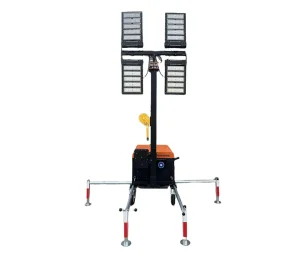
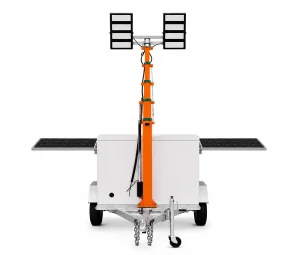
High-bay linear luminaires, IP69K washdown solutions, mobile mast towers, underwater cinematography fixtures, and certified explosion-proof equipment.