
Featured Extreme-Grade Industrial Lighting Series
Explore precision-engineered lighting systems deployed across harsh industrial terrains, ports, heavy mining complexes, and mission-critical municipal facilities.
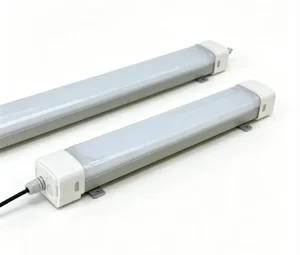
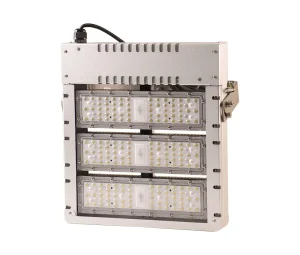
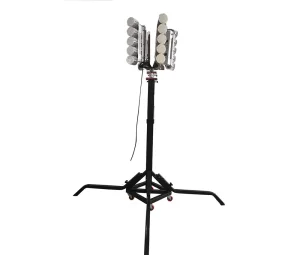
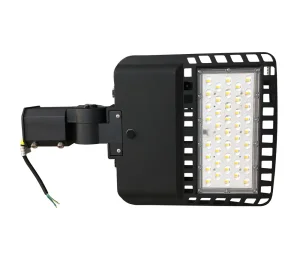
The Technological Paradigm Shift in Industrial Wall Pack Lighting
Exterior building envelopes, loading bays, perimeter corridors, and petrochemical sites require uninterrupted nighttime visibility. The transition from legacy Metal Halide (MH) and High-Pressure Sodium (HPS) fixtures to solid-state IP65 waterproof LED wall packs represents a massive leap in luminous efficacy, electrical safety, and optical precision.
Photometric Control & Zero Up-Light
Legacy wall packs flooded surrounding night skies with unshielded light pollution. Next-generation IP65 wall pack luminaires integrate Type III, Type IV, and Forward Throw cutoff optics compliant with International Dark-Sky Association (IDA) guidelines, directing 100% of usable flux onto work planes and pedestrian paths.
Dynamic Thermal Decoupling
Elevated ambient temperatures severely degrade LED phosphor efficiency and dry out driver electrolytic capacitors. Modern architectural and industrial wall packs utilize dual-chamber isolation: driver housings are aerodynamically separated from the LED engine via die-cast ADC12 aluminum thermal convection chimneys.
Smart Autonomous Sensor Integration
Contemporary B2B buyers mandate integrated energy management: 0-10V step dimming, factory-calibrated microwave motion occupancy sensing, and bi-level dusk-to-dawn twist-lock photocells (ANSI C136.10/C136.41 NEMA sockets) capable of shaving another 40% off operational kWh bills.
Global Enterprise Procurement: Critical Selection Criteria
When tier-1 EPC contractors, international project developers, and electrical engineering firms source IP65 wall pack lighting, purchasing decisions transcend face-value unit pricing. Specifications require rigorous scrutiny of optical durability, driver surge ratings, and full lifecycle total cost of ownership (TCO).
Electrical Resilience & Surge Suppression (6kV / 10kV / 20kV)
Outdoor industrial perimeters are prone to lightning transients, utility switching surges, and dirty line power. Enterprise-grade wall pack lights feature integrated metal oxide varistors (MOVs) and gas discharge tubes certified to IEEE C62.41.2 Location Category C High. Drivers must accommodate universal 120-277VAC or high-voltage 277-480VAC inputs with Total Harmonic Distortion (THD) under 15% and Power Factor (PF) over 0.95.
Hermetic Ingress Sealing & Vapor Equalization
True IP65/IP66 waterproof performance demands more than a basic rubber seal. Temperature cycling between daytime solar radiation and freezing night winds induces interior vacuum pressure that sucks in ambient moisture. Leading manufacturers incorporate continuous one-piece extruded silicone gaskets combined with ePTFE hydrophobic breathable membrane valves to equalize barometric pressure without moisture ingress.
Photometric Certifications: DLC 5.1 Premium & BUG Ratings
Utility rebate qualification throughout North America and Europe hinges on DesignLights Consortium (DLC) 5.1 Premium listing. Luminaires must deliver superior spectral quality (CRI ≥ 70 or 80), controlled Backlight-Uplight-Glare (BUG) ratings (typically U0 for zero direct skyward spill), and documented efficacy above 140 lm/W to maximize commercial retrofit rebates.
IK10 Mechanical Impact & Anti-Corrosion Finishing
Industrial facilities, distribution centers, and parking garages expose wall packs to equipment strikes, vandalism, and airborne chemicals. Heavy-duty die-cast housings rated at IK08 or IK10 mechanical impact resilience feature UV-stabilized impact-resistant polycarbonate or borosilicate tempered glass lenses, finished with multi-stage thermoset polyester powder coating passing 1,000-hour ASTM B117 salt fog tests.
Engineering Matrix: Legacy vs. Standard vs. Tier-1 Industrial IP65 Wall Packs
Direct comparative metrics analyzing optical performance, thermal management, reliability, and total lifetime cost indicators.
| Performance Parameter | Legacy Metal Halide / HPS | Standard Commercial Grade | Industrial Tier-1 IP65/IP66 Specification |
|---|---|---|---|
| Luminous Efficacy | 45 - 65 lm/W (depreciates fast) | 110 - 130 lm/W | 150 - 180 lm/W (DLC 5.1 Premium) |
| Operating Lifespan | 10,000 - 15,000 Hours | 35,000 - 50,000 Hours | 100,000+ Hours (L70 @ 55°C) |
| Thermal Management | Passive (over 250°C bulb surface) | Single-cavity shared heat sink | ADC12 Dual-Chamber Thermal Isolation |
| Ingress & Pressure Equalization | IP44 - IP54 (Foam gasket) | IP65 (Glued rubber seal) | IP65/IP66 + ePTFE Breather Valve |
| Optical Cutoff & Glare | Unshielded Refractor (U3-U5 sky glow) | Semi-Cutoff Polycarbonate | Full Cutoff (U0 Dark-Sky / Type III/IV) |
| Transient Surge Protection | None / External Ballast Only | 2kV - 4kV Internal MOV | 10kV - 20kV SPD Integrated (IEEE C62.41) |
| Smart Controls & Dimming | Uncontrollable / Delayed Warmup | Fixed Output or 1-10V Dimming | 0-10V / Microwave Sensor / NEMA C136.41 |
China Factory 4.0: Supply Chain Agility, Die-Casting & Engineering Precision
Modern industrial lighting demands an agile, integrated manufacturing foundation. Leading Chinese manufacturing clusters in Shenzhen and the Pearl River Delta have evolved beyond manual assembly, deploying automated robotics, computerized die-casting, and closed-loop testing to achieve unparalleled cost-to-performance efficiency.
Automated High-Pressure Die-Casting
Fully robotic 800-ton to 1600-ton cold-chamber die-casting machines fabricate monolithic ADC12 aluminum housings with ultra-dense grain structure. This maximizes thermal conductivity (up to 96 W/m·K) while completely eliminating microscopic air pockets that compromise ingress sealing.
High-Speed SMT & Automated Optical Inspection
Precision surface mount technology (SMT) lines place high-power Lumileds, OSRAM, or Bridgelux SMD LEDs with sub-micron accuracy. In-line 3D Automated Optical Inspection (AOI) inspects 100% of solder joint integrity, thermal paste layer thickness, and polarity orientation before conformal coating.
In-House CNAS Accredited Laboratory
Every production batch undergoes exhaustive reliability validation: Type C rotating-mirror goniophotometer optical distribution tests, continuous water-jet spray chambers for IPX5/IPX6 testing, -40°C to +85°C thermal shock cycles, and 72-hour full-load dynamic burn-in on automated aging racks.
Agile OEM / ODM Customization & Supply Chain Resilience
Direct access to Shenzhen's concentrated electronic and mechanical ecosystem enables rapid engineering cycles: custom 3D printed prototype housings within 72 hours, tooling turnarounds in 25 days, bespoke CCT/wattage selectable drivers, tailored emergency battery backup packs, and customer-branded silkscreen labeling at minimal MOQs.
Engineered Applications Across Critical Operational Perimeters
Different industrial environments introduce unique mechanical, chemical, and atmospheric stress factors. Here is how specialized IP65 wall pack lighting performs across mission-critical sectors.
Automated Logistics & Loading Bays
High-frequency forklift cross-traffic and tractor-trailer docking require wide-angle Forward Throw (Type IV) optics mounted at 15 to 25 feet. Integrated microwave sensors trigger from 20% standby to 100% illumination upon vehicle approach, maximizing security and dock worker safety while maintaining compliance with OSHA 1926.56 guidelines.
Petrochemical & Refinery Perimeters
Auxiliary buildings in petrochemical, oil refining, and wastewater plants encounter airborne hydrocarbons, sulfur dioxide, and corrosive washdown chemicals. Specially formulated epoxy-polyester powder coats and 316 stainless steel exterior fasteners prevent galvanic corrosion, ensuring zero housing degradation over 10+ years.
Cold Storage & Frozen Food Facilities
Exterior wall perimeters of cold storage facilities undergo brutal thermal gradients: -25°C inside vs. +40°C exterior ambient. Premium internal drivers with cold-start components fire instantaneously without strike delays, while hermetic silicone seals prevent ice-dam formation and lens fogging.
Harbor, Shipyard & Coastal Marine Facades
Coastal perimeters are subjected to constant ocean salt spray, intense UV exposure, and relentless coastal gales. Wall pack luminaires certified to ASTM B117 standards, paired with high-durability fluoropolymer finishes and IP66 sealing, maintain hermetic performance and prevent surface pitting even in active port facilities.
Corporate Headquarters & Institutional Campuses
Architectural slim-profile full-cutoff wall packs blend smoothly into modern facade aesthetics. With precision CCT tuning (3000K warm white to 5000K daylight) and integrated emergency battery packs providing 90 minutes of illuminated egress pathway compliance (NFPA 101 Life Safety Code), facilities balance high design with regulatory compliance.
Industrial Luminaire Engineering & Sourcing FAQ
Authoritative, direct answers to the most rigorous technical, electrical, and commercial inquiries encountered by lighting procurement directors.
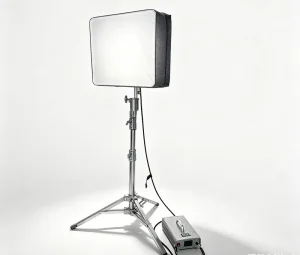
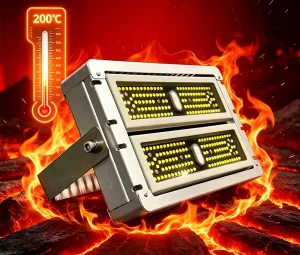
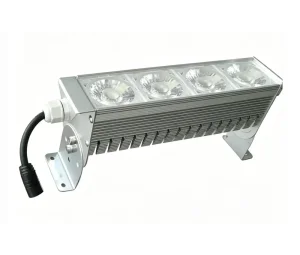
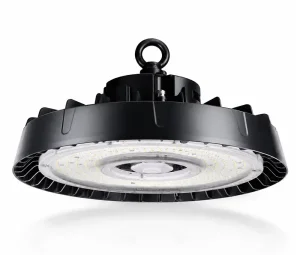
Specialized Industrial & Marine Product Portfolio
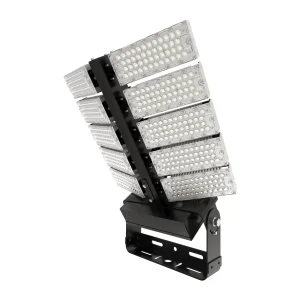
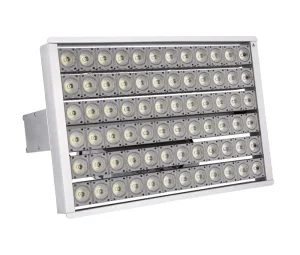
Explore our full line of mission-engineered fixtures built for high-heat environments, underwater applications, linear facilities, and heavy-duty industrial sites.
Accelerate Your Industrial Project with Direct Engineering Consultation
From custom photometric DIALux calculations and bespoke housing tooling to comprehensive DLC 5.1 / UL 1598 compliance verification, our Shenzhen engineering teams provide end-to-end support for global distributors, contractors, and project developers.