Specialized Heavy-Duty Industrial Luminaires
Factory-calibrated high-temperature, marine-grade, explosion-proof, and sports lighting engines engineered for deployment in high-consequence global installations.
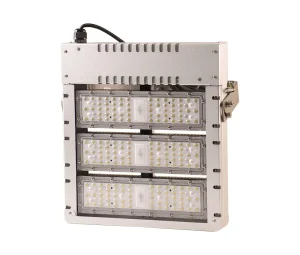
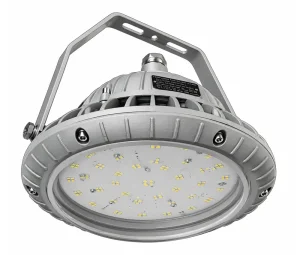
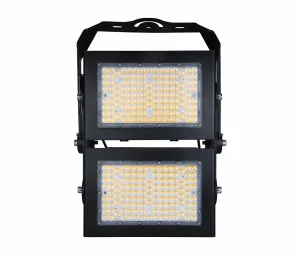
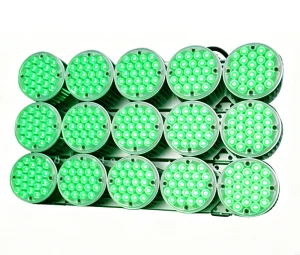
The 2000W LED Flood Light Paradigm: Overcoming the Thermal & Photometric Wall
Replacing legacy 4000W–5000W metal halide fixtures is not an exercise in brute-force wattage scaling. It requires mastering solid-state junction physics, micro-collimated beam vectors, and severe thermal boundary dynamics.
Thermodynamic Phase-Change Cooling
At 2000W input power generating up to 340,000 lumens, thermal dissipation density exceeds 1.2 W/cm² across the LED emitter footprint. Our architecture utilizes vacuum-sealed sintered copper micro-heat pipes mated to cold-forged 6063-T6 aluminum heat sink fins. This keeps the continuous junction temperature below 65°C under 45°C ambient conditions, completely preventing phosphor crystallization and thermal droop.
Precision Optical Collimation
Standard high-bay floodlights suffer from severe spill light and high-angle atmospheric glare (Upward Light Output Ratio > 3%). Our 2000W systems utilize custom Japanese Mitsubishi optical-grade PMMA lenses delivering asymmetric and tight pencil-beam distributions (from ultra-narrow 10° spot optics to 60°x100° oval beams) with a 96% internal transmission efficiency and zero yellow-fringe chromatic aberration.
Decoupled Remote Driver Enclosures
For critical installations such as high-mast towers and steel foundry crane runways, radiant heat and mechanical vibration will degrade driver electrolytic capacitors within 18 months if mounted adjacent to the emitters. We design segregated, stainless steel IP67 driver enclosures with quick-disconnect military-spec bayonet couplings, allowing drivers to be located up to 60 meters away from the luminaire head.
Engineering Deep Dive: Junction Temperature ($T_j$) Formula & Lumen Maintenance
Thermal equilibrium is governed by the relation $T_j = T_a + (P_d \times R_{\theta j-a})$, where $T_a$ is ambient temperature, $P_d$ is total thermal power dissipated, and $R_{\theta j-a}$ represents the thermal resistance from junction to ambient air. In our 2000W LED platforms, $R_{\theta j-a}$ is engineered down to an industry-leading 0.038°C/W through direct copper bonding (DCB) ceramic substrates and phase-change thermal interface materials (TIM rated at 8.5 W/m·K), ensuring lumen depreciation conforms to IESNA LM-80/TM-21 standards even when deployed continuously at 55°C operating ambients.
Engineered Sector Solutions: Where Standard Luminaires Fail
Extreme mechanical shock, corrosive saline aerosols, severe radiant heat fluxes, and strict broadcast compliance necessitate purpose-designed 2000W lighting systems.
Steel Mills, Smelters & Hot Forging
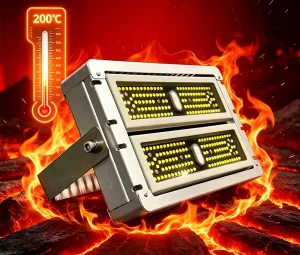
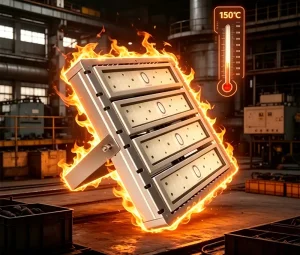
Furnace bays and continuous casting lines routinely experience ceiling ambient temperatures between 80°C and 150°C, combined with airborne iron dust and severe sulfur dioxide fumes. Our specialized high-temperature flood configurations employ silicone-free seals, borosilicate glass diffusers impervious to particulate etching, and thermally separated drivers placed in climate-controlled electrical galleries.
Deep-Sea Harbors & Offshore Terminals
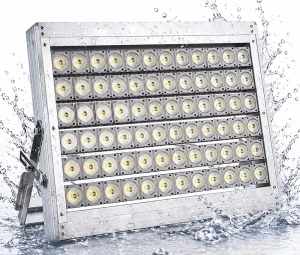
Subject to Class C5-M marine atmospheric corrosivity, high-mast port terminal cranes require structural integrity against salty dampness, galvanic corrosion, and cyclonic wind shear. Our 2000W marine luminaires feature electro-chemically passivated aluminum housings, 316 stainless steel mounting yokes, and electrophoretic epoxy coatings passing 3,000+ hours of continuous ASTM B117 salt spray testing.
Olympic Arenas & HDTV Super-Stadiums
High-speed Phantom broadcast cameras recording at 1000+ frames per second demand a Television Lighting Consistency Index (TLCI) > 90 and flicker rate < 0.2%. Our 2000W sports luminaires feature DMX-RDM, Art-Net, and DALI-2 low-latency controls with customized narrow beam cut-offs to eliminate stray light blinding athletes or spill onto residential boundary zones.
Open-Pit Mining & Mobile Light Towers
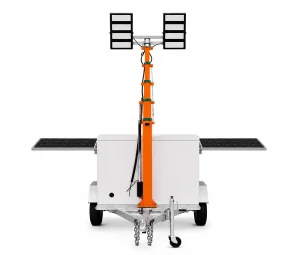
Excavation sites require wide horizontal throw and rugged mechanical damping against continuous heavy haul truck vibration (rated up to 5G acceleration). Our 2000W LED platforms can be configured for 48V DC battery-bank operation or heavy-duty 480V three-phase grid feeds, minimizing diesel genset fuel burn by over 68% compared to HID light towers.
Petrochemical & Hazardous Processing
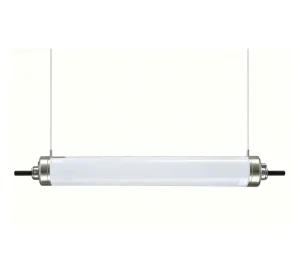
In explosive gas (Zone 1 / Zone 2) and combustible dust (Zone 21 / Zone 22) atmospheres, thermal ignition control is mandatory. Our explosion-proof floodlight derivatives conform to ATEX/IECEx standards with flameproof Ex d chambers, ensuring surface temperatures stay strictly beneath gas auto-ignition thresholds across Temperature Classes T1 through T6.
Airport Aprons & Intermodal Freight Yards
Compliant with FAA Advisory Circular 150/5360-13 and ICAO Annex 14 requirements, our 2000W floodlight matrices provide high horizontal and vertical lux uniformity ($U_o \ge 0.40, U_d \ge 0.25$) across aircraft parking ramps without creating pilot-blinding vertical glare vectors or interfering with air traffic control tower sightlines.
Shenzhen Optoelectronics Hub: Supply Chain Agility & QA Integrity
How our vertically integrated Shenzhen manufacturing complex compresses lead times, maintains strict BOM traceability, and delivers customized high-power luminaires at unmatched scale.
Fully Integrated Die-Casting & CNC Milling
Rather than relying on outsourced generic enclosures, we operate in-house 2,500-ton cold chamber die-casting presses and 5-axis CNC machining centers. This allows rapid iterative changes in aerodynamically optimized convective cooling channels, reducing total windage area (Effective Projected Area, EPA < 0.35 m²) for 50-meter high-mast installations while lowering fixture net weight by 22%.
Automated SMT & Nitrogen Reflow
Our high-speed Yamaha and ASM SMT production lines run under class 100,000 cleanroom standards with 10-zone nitrogen reflow soldering. By strictly controlling the solder voiding ratio below 8% on MCPCBs (Metal Core PCBs), thermal resistance between the Nichia/Lumileds/Osram emitters and copper substrate is kept at the theoretical physical minimum, preventing localized hot-spot burnouts.
End-to-End Stress Testing Protocols
Every 2000W LED production batch is subjected to rigorous zero-defect screening: 72-hour continuous thermal burn-in at 50°C, automated goniophotometer spatial flux mapping, dielectric voltage withstand testing up to 3,750V AC, and high-frequency multi-axis harmonic vibration simulating Category 17 hurricane forces (up to 60 m/s wind velocities).
Enterprise Procurement Matrix: 2000W LED vs. Conventional Systems
A side-by-side engineering evaluation contrasting our 2000W high-performance solid-state system with traditional 4000W metal halide luminaires and generic multi-module imports.
| Evaluation Parameter | LSLEDSUS 2000W Engineered LED | 4000W High-Intensity Discharge (HID) | Generic Multi-Module LED (Assembly) |
|---|---|---|---|
| Actual System Efficacy | 170 lm/W (340,000 lm) | 75–85 lm/W (Depreciates rapidly to 50 lm/W) | 120–130 lm/W (High thermal droop) |
| Annual Energy Draw (4,000 hrs) | 8,000 kWh ($960 @ $0.12/kWh) | 17,600 kWh (including ballast loss; $2,112) | 9,600 kWh ($1,152) |
| Useful Lifespan (L70 / L90) | L90B10 > 100,000 Hours | 6,000 – 12,000 Hours (Annual relamping) | 35,000 Hours (Capacitor/Solder failure) |
| Restrike & Ignition Time | Instantaneous (< 0.1 sec), zero warm-up | 10 to 20 minute cold/hot strike delay | Instantaneous |
| Corrosion Resistance Rating | ASTM B117 3,000h (C5-M Marine Class) | Standard enamel coat (Degrades < 500h) | Powder coat (Pits at fin crevices in 1,000h) |
| Structural Windage (EPA) | 0.32 m² (Aerodynamic low-drag chassis) | 0.68 m² (Bulky parabolic reflector) | 0.54 m² (High surface wind resistance) |
| Total Cost of Ownership (5 Yrs) | Lowest ($): 60% ROI achieved within 14 mos. | Highest ($$$): Extreme crane & lamp costs | Moderate ($$): High replacement downtime |
Procurement Technical Checklist for Specifying Engineers
When drafting tender documents for ports, sports arenas, or heavy foundries, ensure the following parameters are strictly enforced: (1) Total Harmonic Distortion (THD) < 8% across full dimming range; (2) Inrush current limiting suppression preventing circuit breaker nuisance tripping; (3) Surge protection rating of minimum 20kV / 10kA conforming to IEEE C62.41.2; (4) Minimum IP66 (preferably IP67/IP68) submersible rating on optoelectronic modules with pressure-equalizing GORE breathers to prevent internal condensation vacuum draw.
Technology Roadmap (2025–2030): Next-Gen Optoelectronic Horizons
How our laboratory is integrating Gallium Nitride (GaN) driver architectures, AI-driven predictive edge telemetry, and dynamic metamaterial beam shaping.
Phase 1: GaN Wide-Bandgap Power Stages
Migrating from silicon MOSFETs to Gallium Nitride (GaN) and Silicon Carbide (SiC) switching topologies pushes power conversion efficiency beyond 97.5%. This reduces internal driver heat generation by 45%, shrinking power supply volumetric dimensions and enabling true 2000W continuous operation in ambient environments exceeding 70°C without derating.
Phase 2: Edge-AI Health & Vibration Telemetry
Embedded inside the luminaire control board, miniature MEMS accelerometers and calibrated thermal junction thermistors continuously stream real-time operating metrics over Zigbee/LoRaWAN mesh networks. Machine learning algorithms flag harmonic mast resonance, gasket degradation, or driver capacitor wear-out hundreds of operating hours before failure occurs.
Phase 3: Metasurface Software-Controlled Beam Shaping
Replacing fixed physical PMMA lenses with active electro-optical liquid crystal metasurface arrays. Facility managers can dynamically adjust photometric beam angles between 15° and 90° via facility BMS software without needing a cherry picker or crane to mechanically replace optical lenses or adjust aiming brackets.
Comprehensive Certification & Regional Compliance Guarantees
Every luminaire dispatched from our facility arrives with fully validated international accreditation, test reports, and site-specific photometric documentation.
North American Standards: UL & DLC Premium
Fully certified to UL 1598 (Luminaires) and UL 8750 (Light Emitting Diode Equipment for Use in Lighting Products) with CSA C22.2 No. 250.0 approvals. Listed on the DesignLights Consortium (DLC) 5.1 Premium Qualified Products List, unlocking maximum energy rebate subsidies for commercial retrofit contractors across US and Canadian utility grids.
European CE, ENEC & RoHS Compliance
Compliant with EN 60598-1, EN 60598-2-5 (Floodlights), EN 55015 (Radio disturbance), and EN 61547 (Immunity). Free of hazardous lead, mercury, or polybrominated flame retardants in conformity with RoHS Directive 2011/65/EU and REACH (EC) 1907/2006. CB Scheme certificates available for instant localized EU market importation.
Dark Sky & Environmental Stewardship
Engineered with zero up-light distribution (U0 rating) and sharp optical cut-offs, our 2000W sports and high-mast luminaires comply with International Dark-Sky Association (IDA) guidelines. This prevents light pollution, protects nocturnal avian wildlife in coastal corridors, and respects adjacent residential zoning ordinances.
Frequently Asked Technical & Procurement Inquiries
Direct engineering answers to technical queries raised by electrical contractors, lighting designers, and municipal procurement directors.
How does an engineered 2000W LED compare in illuminance to legacy 4000W metal halide lamps?
A traditional 4000W metal halide lamp emits approximately 360,000 initial bulb lumens, but suffers from an omnidirectional 360° emission profile where over 40% of lumens are absorbed inside the luminaire housing or scattered by secondary reflectors (fixture efficiency rarely exceeds 60%). In contrast, our 2000W LED outputs 340,000 directional lumens through 96% efficient PMMA optics. This delivers 20% to 35% higher target ground lux while cutting electrical load by more than 55%.
What is the maximum operating ambient temperature for your 2000W LED floodlights?
Our standard high-power floodlights operate continuously in ambient conditions ranging from -40°C to +55°C (-40°F to 131°F). For extreme heavy-industry applications such as steel melt shops and glass annealing furnaces, we offer custom engineered high-temperature configurations rated for continuous ambient environments of 80°C, 100°C, 150°C, and custom project-specific units up to 300°C with remote driver installations.
Can you provide custom Dialux / AGi32 photometric layout simulations before ordering?
Yes. Our in-house optical engineering team provides comprehensive, certified DIALux and AGi32 photometric modeling free of charge for approved projects. We calculate point-by-point horizontal lux, vertical illuminance grids, overall uniformity ratios (U1, U2), and CIE glare ratings (GR < 45) based on your exact CAD site layout and mounting elevations.
What driver brands and control protocols are utilized in your 2000W platforms?
We partner with industry-leading Tier-1 driver manufacturers including Mean Well, Inventronics, and Sosen, or supply our proprietary digital power drivers. Controls support 0–10V / 1–10V analog dimming, PWM, DALI-2, and bidirectional DMX512-RDM suitable for dynamic arena lighting shows, automated timer scheduling, and central BMS integration.
How do you guarantee wind-load and structural integrity on high-mast poles?
Our luminaires are subjected to computational fluid dynamics (CFD) airflow simulation to minimize the Effective Projected Area (EPA). Constructed from high-tensile ADC12/6063 aluminum with stainless steel structural fasteners, our 2000W assemblies are rated to withstand sustained wind speeds of up to 60 m/s (134 mph), equivalent to a Category 5 hurricane, without mechanical yielding.
What is the typical manufacturing lead time for container-scale custom B2B orders?
Standard OEM production for customized 2000W luminaires (tailored CCT, beam optics, bracketry, and driver configurations) ranges from 15 to 25 business days from drawing sign-off. Sample evaluation units and urgent pilot orders can be expedited within 7 business days leveraging our automated Shenzhen SMT line agility and inventory of standard sub-assemblies.
Specialized Industrial, Architectural & Studio Luminaires
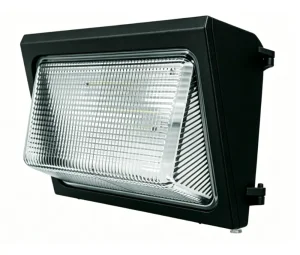
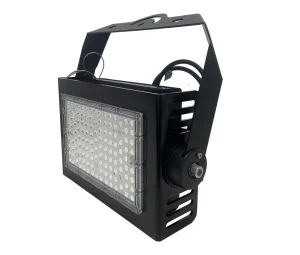
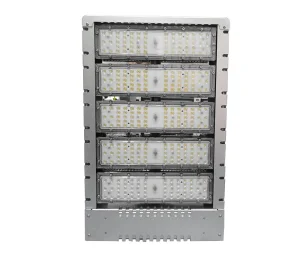
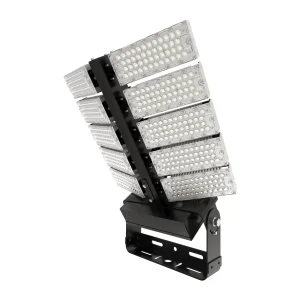
Browse the remainder of our engineered product lines, spanning IP68 submersible film fixtures, modular field lights, perimeter wall packs, and articulated stadium systems.