
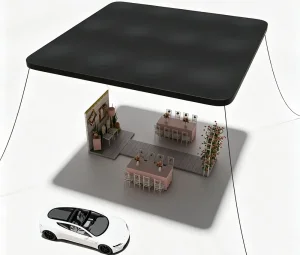
Industrial Luminaire Catalog
High-Efficiency Portable & Area Lighting Engineering
Verified supplier-grade illumination units built with military-spec seals, dynamic driver chips, and multi-scenario outdoor adaptability.
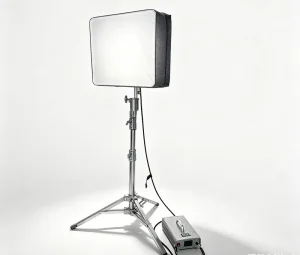
High-Quality Flexible LED Mat - Powerful, Flicker‑Free Lighting That Conforms to Any Surface
View Specifications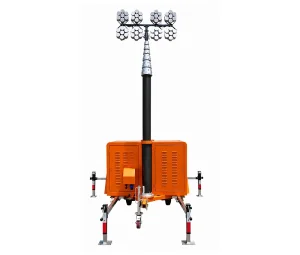
Best Portable 9m Mobile Light Tower Suppliers, Manufacturer
View Specifications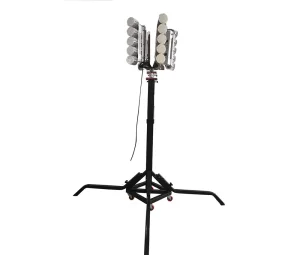
OEM Economic 4m Mobile Light Tower Factory, Manufacturer
View Specifications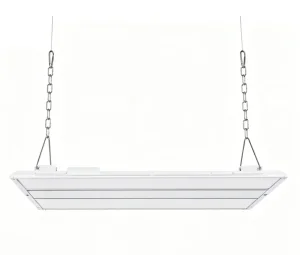
High-Quality Linear High Bay LED – Bright, Reliable, and Smart-Controlled
View Specifications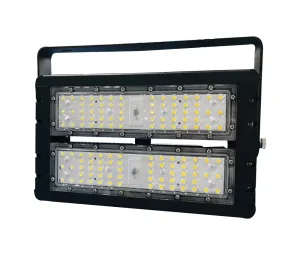
High-Quality 12V/24V DC LED Flood Light for Portable & Solar Applications
View Specifications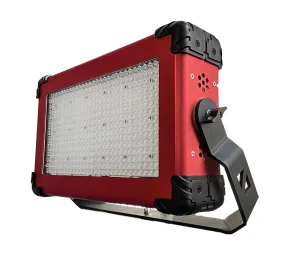
Best Revolutionary Underwater LED Film Light - 30-Meter Depth, Zero Housing
View Specifications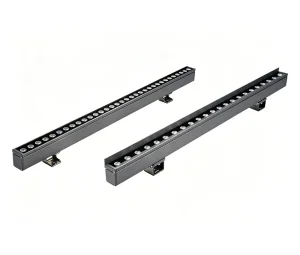
Best RGB Wall Washer – Effortless Commercial Decoration with Linear Precision
View Specifications
Industry Economics & Trajectory
Global Market Dynamics of Lightweight Portable Illumination
Transitioning from basic recreation accessories to high-specification mission-critical hardware.
The Macro Environment: From Primitive Lanterns to Advanced Solid-State Devices Market Valuation: $3.8B by 2028
The worldwide demand for lightweight camping lanterns has undergone an aggressive paradigm shift over the past half-decade. Historically relegated to single-junction incandescent diodes or heavy cold-cathode fluorescent lamps (CCFL) powered by lead-acid or zinc-carbon dry cells, the global sector is now dominated by ultra-compact solid-state surface-mounted devices (SMD LEDs) and Chip-on-Board (COB) matrices. The explosive expansion of adventure tourism, off-grid overland exploration, emergency disaster response reserves, and extreme trekking has compressed structural weight budgets down to sub-150-gram standards, while simultaneously ratcheting output expectations above the 500-lumen baseline.
International commercial retailers and brand aggregators in North America, Europe, and the Asia-Pacific region are prioritizing structural durability (MIL-STD-810H and IP67/IP68 ingress standards), multi-spectrum chromatic flexibility (from 1800K ultra-warm amber up to 6500K high-CRI cold white, augmented by 660nm deep red night-vision preservation), and bi-directional fast charging via USB Power Delivery (USB-PD). As a consequence, procurement directors no longer simply seek lantern assemblies; they require holistic, thermally managed, lightweight luminaire platforms engineered to operate reliably in sub-zero alpine conditions and equatorial humid jungles alike.
Energy Density Maturation
The ubiquity of high-capacity 21700 and polymer lithium-cobalt oxide (LiCoO2) chemistry yields runtimes exceeding 120 hours on low-mode operations while shaving upwards of 40% gross weight compared to legacy 18650 packs.
Ingress Engineering
Modern lightweight designs incorporate dual-shot liquid silicone rubber (LSR) overmolding and ultrasonically sealed housing boundaries, maintaining IPX6 to IPX8 liquid isolation against driving downpours and flash immersion.
Optical Waveguide Diffusion
To eliminate direct glare without lumen penalty, advanced optical micro-prismatic optical polymers and 360-degree frosted toric lenses disperse harsh glare, maximizing foot-candle uniformity over broad campsite footprints.
Supply Chain Hegemony
China's Manufacturing Agility & Tier-1 Efficiency
Why leading global outdoor brands source and assemble precision lightweight lanterns across the Greater Pearl River Delta ecosystem.
Full Vertical Integration: From SMT Pick-and-Place to Tooling Prototyping
The undisputed leadership of Chinese specialized lighting factories in the lightweight camping lantern domain hinges on extreme regional industrial clustering, primarily situated in Shenzhen, Dongguan, Zhongshan, and Ningbo. Unlike disaggregated supply loops in North America or Western Europe, a top-tier Chinese manufacturing OEM consolidates computer-numerical control (CNC) aluminum mold tooling, rapid polycarbonate injection, high-speed Surface Mount Technology (SMT) line population, cleanroom optical assembly, and internal battery validation testing within a single 50-kilometer industrial corridor.
This vertical integration unlocks substantial lead-time compressions: conceptual industrial design-to-T1 sample iterations can be achieved within 21 to 30 calendar days. Furthermore, local procurement advantages concerning raw luminescent materials—such as Nichia, Osram, and San'an high-efficacy dies—combined with indigenous micro-controller (MCU) programming houses, grant original equipment manufacturers unmatched agility to integrate smart features like stepless touch dimming, inductive charging loops, and Bluetooth Low Energy (BLE) mesh app connectivity without expanding the unit's physical envelope.
| Technical Metric | Tier-1 China Factory Standard | Legacy Overseas Benchmark | Operational Impact |
|---|---|---|---|
| SMT Line Speed & Accuracy | 0201 component placement >60,000 CPH | 0402 component placement ~25,000 CPH | Enables ultra-dense circuit layouts in micro lantern housings. |
| Battery BMS Integration | Dual-MOSFET overcharge/overdischarge protection | Single-stage fuse or basic cutoff | Zero thermal runaway risk during rapid USB-PD recharging cycles. |
| Luminous Efficacy | 140 - 180 lm/W (SMD 2835 / 3030 array) | 90 - 110 lm/W | Doubles operating hours at identical lumen output and cell weight. |
| Thermal Interface Materials | Phase-change graphite pads (>4.5 W/m-K) | Standard silicone thermal grease (<1.5 W/m-K) | Prolongs LED lumen maintenance (L70 > 50,000 hours). |
Field Deployment Analysis
Engineered for Extreme Contexts: Real-World Use Cases
Lightweight camping lanterns engineered beyond casual backyards into rugged mission-critical settings.
Ultra-Light Fastpacking & Alpine Trekking
When every gram compounds metabolic load over vertical elevation gains, thru-hikers mandate lighting units weighing below 80 grams. Compact lanterns with carabiner clip hangings, magnetic bases for tarp poles, and collapsible high-transmittance silicone globes deliver 360-degree ambient perimeter vision without encumbering technical packs.
Civil Protection & Emergency Survival
During seismic disruptions, flooding, or grid failures, municipal disaster recovery agencies require high-durability lanterns stored with minimal self-discharge. Features include integrated reverse power-bank functionality (5V/2.4A or 9V/2A) to sustain handheld communications, paired with an emergency beacon mode delivering 72 hours of uninterrupted SOS signaling.
Commercial Overlanding & Tactical Camps
Rugged off-road vehicular expeditions demand broad area illumination with variable mounting capabilities. Modern lanterns incorporate ultra-strong neodymium (N52) magnetic footings that latch onto 4WD roof racks or chassis panels, resisting vibration while illuminating vehicle recovery zones or kitchen work stations with high CRI (>90) color accuracy.
Procurement Roadmap
Emerging Industry Trends & Global Sourcing Requirements
Actionable audit criteria for B2B procurement managers, contract manufacturers, and outdoor lifestyle brands.
Key Technological Horizons (2025–2030)
Hybrid Photovoltaic Harvesting: Embedding monolithic high-efficiency micro-solar cells (converting up to 23% solar radiation) into top housing domes, facilitating trickle-charging in prolonged off-grid environments.
Biocompatible Circadian Illumination: Integration of dynamic tuning algorithms that cycle output automatically from blue-depleted melatonin-friendly warmth (2200K) at twilight to alertness-inducing neutral white (4000K) during tasks.
Recycled Ocean-Bound Plastics (OBP): Brand buyers are enforcing ESG compliance, demanding housings cast with at least 40% post-consumer recycled polyamides without compromising UL94-V0 flame retardancy.
Enterprise Sourcing & Compliance Audit
Battery Cell Certifications: Verification of genuine UN38.3 shipping compliance, IEC 62133 cell health standards, and UL 1642 safety marks to prevent catastrophic customs impoundments or liability risks.
Photometric ANSI/PLATO FL-1 Testing: Enforcing standardized measurement for total luminous flux (lumens), peak beam intensity (candela), impact resistance (drop height), and usable runtime before lumen droop.
Supply Chain Traceability: Auditing conflict-free tantalum, gold, tin, and tungsten (3TG) documentation for all SMD driver components, along with complete RoHS 2.0 and REACH chemical compliance disclosures.
Direct Consultation
Frequently Asked Engineering & Sourcing Questions
Authoritative technical and logistical answers directly from factory engineers and international procurement experts.
What defines a true "lightweight" camping lantern in modern B2B outdoor product specs?
+
In technical outdoor supply tenders, a "lightweight" camping lantern refers to an integrated luminaire with an all-up operational weight (including internal cells) not exceeding 220 grams (7.7 oz) for full-featured multi-day basecamp models, and sub-100 grams (3.5 oz) for ultralight (UL) backpacking classification. It must achieve this low mass without falling below 150 lumens sustained output or compromising impact durability from a 1.5-meter drop test onto concrete.
How do Chinese manufacturing partners maintain consistent IP67/IP68 ingress ratings at scale?
+
High-caliber OEM/ODM facilities employ automated multi-axis precision robotic dispensers applying room-temperature vulcanizing (RTV) silicone seals or pre-formed LSR (Liquid Silicone Rubber) gaskets. Every production batch undergoes automated differential air-pressure decay testing on 100% of finished housings before battery installation, preventing microscopic seam leaks at the USB-C charge port, power actuation buttons, and globe seals.
What are the critical battery safety and export regulations when shipping portable lanterns?
+
Because lightweight lanterns predominantly house high-energy-density Li-ion or Li-polymer cells, factories must supply authentic UN38.3 test summaries, Material Safety Data Sheets (MSDS), and drop-test transport packaging certificates. For European market entry, luminaires must conform to CE, RoHS, WEEE, and battery directive IEC 62133. For North American distribution, UL 2054, FCC Part 15 Class B, and California Proposition 65 testing are fundamental requirements.
Why is thermal design crucial even in low-wattage lightweight lanterns?
+
High-output LEDs generate elevated junction temperatures (Tj). In an enclosed polycarbonate lantern globe, insufficient thermal transfer causes accelerated phosphor degradation, chromatic shift (turning cold blue or green), and catastrophic runtime curtailment via internal protection throttles. Tier-1 factories overcome this by utilizing engineered internal aluminum core heat sinks (AL6063) or thermal conductive polyamides that conduct thermal loads outward without adding structural bulk.
What is the typical Minimum Order Quantity (MOQ) and production turnaround for custom OEM/ODM projects?
+
Standard OEM production (applying custom brand logos, customized packaging, and specific housing pantone colors on existing tooling) typically commands an MOQ of 1,000 to 2,000 units with a lead time of 30 to 45 days. Complete ODM projects (involving proprietary optical molds, novel mechanical tooling, and custom firmware drivers) generally require an MOQ of 3,000 to 5,000 units, requiring 60 to 90 days from industrial design sign-off to full container dispatch.
Rugged Industrial & Field Range
High-Performance Extreme Environmental Lighting Solutions
Proven high-output arrays, deep-submersible luminaires, and specialized area lights engineered for maximum reliability.
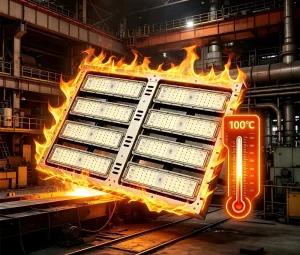
High-Quality High Temperature LED Light Rated 100°C(212°F), IP68 Waterproof
View Specifications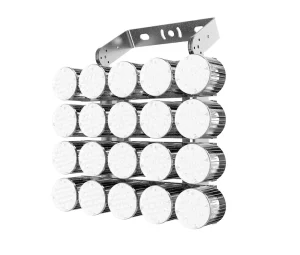
High-Quality Arena LED Stadium Light – Ultra‑Compact Design with Maximum Efficiency
View Specifications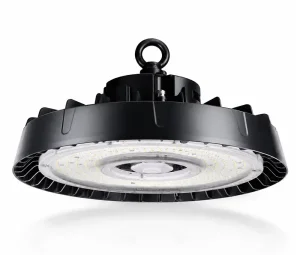
High-Quality Durable UFO High Bay LED Light – Long Lifespan & High Lumen Output
View Specifications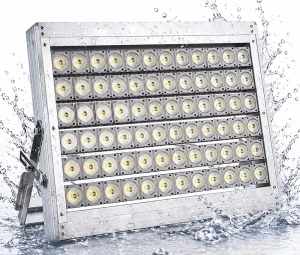
High-Quality LS-FLN Titans Series LED Marine Light for Deep Sea & Offshore Applications
View Specifications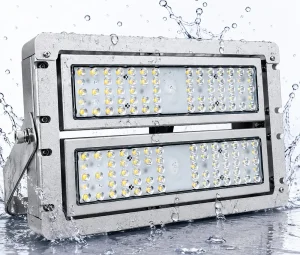
OEM LS-ARE Ocean Series LED Marine Light for Boats, Docks, Harbors & Underwater
View Specifications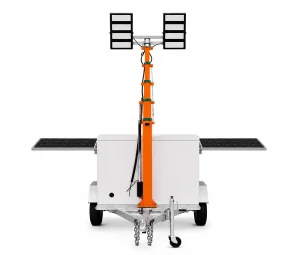
High-Quality 7M Solar Mobile Light Tower Factories, Supplier
View Specifications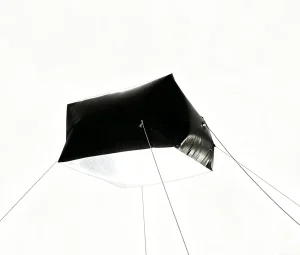
High-Quality Helium Balloon LED Light - Truss-Free Aerial Illumination with Optimized Helium
View Specifications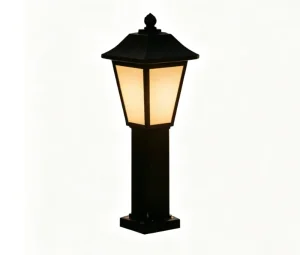
OEM Garden LED Light – Elegant, Durable Landscape & Pathway Lighting
View SpecificationsInitiate Your Tailored OEM/ODM Luminaire Development
Consult directly with senior optical, electrical, and mechanical engineers in Shenzhen. From photometric simulations to mass DFM validation, we accelerate your path to market.