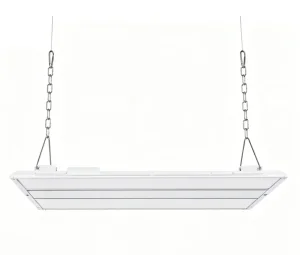
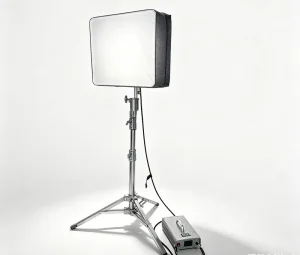
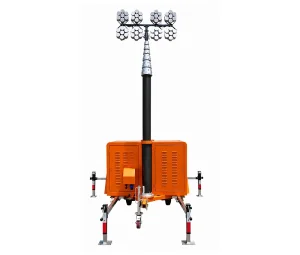
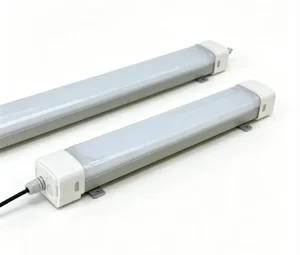
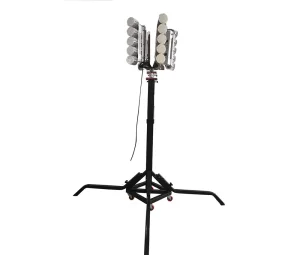
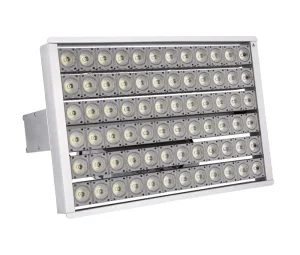
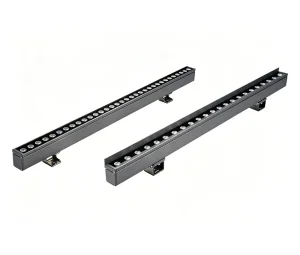
Specialized Heavy-Duty Lighting Equipment
Direct manufacturing specs for extreme high-temperature kilns, deep-sea marine engineering, and mobile towers.
Global Trends Reshaping Industrial Outdoor Flood Lighting
The market has moved beyond primary lumen-per-watt metrics to total lifecycle resilience, intelligent telemetry, and application-specific thermal survivability.
GaN Drivers & High-Density Thermodynamics
Next-generation exterior flood lights integrate wide-bandgap semiconductors such as Gallium Nitride (GaN), reducing driver thermal footprint by up to 40% and sustaining performance under ambient operating boundaries exceeding 80°C to 150°C.
- Elimination of electrolytic capacitor failure loops
- Sustained lumen maintenance past L90B10 @ 100,000 hrs
- Pure phase-change chamber heat pipe heat sinking
Ultra-Narrow TIR & Dark Sky Compliance
Municipal and industrial port authorities now mandate strict BUG (Backlight, Uplight, Glare) controls. Custom Total Internal Reflection (TIR) optical arrays focus 95%+ of emitted photons strictly into target working grids without polluting surrounding ecosystems.
- Uplight rating U0 for zero skyglow pollution
- Rotatable asymmetrical distributions for perimeter security
- CCT shifting modes (2200K - 5700K) dynamically controlled
DALI-2, Zhaga & Smart Mesh Connectivity
Factories are terminating isolated fixture models in favor of open-standard sensor sockets. Zhaga Book 18 receptacles and D4i internal nodes empower smart city grids to collect ambient metrics, power logging, and automated failure warning triggers.
- Real-time asset telemetry & degradation diagnostics
- Sub-metering energy analytics via digital bus interfaces
- Autonomous daylight harvesting and microwave radar control
Engineering Benchmarks for Extreme Environmental Stability
Tested against ISO 9227 salt fog standards, MIL-STD vibration ratings, and UL1598 heat endurance protocols.
Marine-Grade C5-M Corrosion Coating
High-pressure die-cast A380/ADC12 aluminum undergoes multi-stage chromate conversion pretreatment followed by a 120-micron architectural TGIC polyester powder finish, certified for harsh coastal offshore platforms.
Active/Passive Thermal Redundancy
Patented dual-cavity physical isolation segregates the LED optical matrix from the driver housing, eradicating mutual heating effects and ensuring constant solid-state junctions well below critical Tj parameters.
10kV/20kV Transient Surge Immunity
Industrial lightning protectors shield sensitive circuits from voltage swings induced by inductive plant equipment switching, utility substation surges, and direct atmospheric strikes in vast exposed terrains.
Enterprise Procurement Framework: How EPCs & Industrial Plants Select Manufacturers
Sourcing large-scale outdoor illumination systems demands scrutiny far beyond initial quotation pricing. High-consequence project delivery requires systematic verification of supply assurance, optical validation, and compliance tracking.
1. Traceable Photometric Validation
Global procurement teams must require verifiable, independent IES LM-79 and LM-80 test reports verified by third-party NVLAP accredited laboratories. Synthetic simulator charts cannot replace certified goniophotometer documentation when computing accurate ground horizontal lux and glare ratings.
2. Environmental & Hazardous Certifications
Deployments in chemical processing facilities, refineries, and offshore marine rigs mandate rigorous compliance with explosion-proof and ingress criteria. Sourcing managers evaluate ATEX/IECEx Zone 1/21 & Zone 2/22, UL844 Class I Div 2, and salt-spray testing exceeding 3,000 continuous hours.
3. Complete OEM Customization Agility
Every commercial development faces unique site constraints. Tier-1 direct manufacturers supply custom mounting brackets (trunnion, slip-fitter, pendant, yoke), diverse AC/DC voltage inputs (100-277V, 347-480V, 24V-48V DC), and interchangeable optics suited to site topologies.
Localized Engineering Support & Turnkey Compliance Assurance
Mitigating cross-border procurement vulnerabilities with dedicated project engineering, DIALux simulations, and documented warranty enforcement.
DIALux & Relux Photometric Calculations
Before metal is cut or luminaires are assembled, application engineers run complete 3D ray-tracing simulations to verify average illuminance (Eav), overall uniformity (U0), and Unified Glare Rating (UGR) to eliminate commissioning penalties.
Comprehensive Standard Certifications
Products are documented under CE, RoHS, CB, UL, cUL, DLC Premium, and SAA requirements. Factory batches undergo strict electrical hi-pot safety testing, thermal imaging profiling, and vibration frequency sweeps prior to dispatch.
Supply Chain Continuity & Spares SLA
Industrial contracts receive guaranteed spare-parts availability matrices for 10+ years. Modular quick-disconnect driver brackets allow maintenance crews to swap field components without dismounting massive luminaires from high masts.
Engineering Roadmap: The Next Era of High-Mast & Floodlighting
Anticipating the technological shift in solid-state efficiency, solar hybrid energy generation, and dynamic autonomous optics.
220+ Lumens Per Watt Systemic Efficacy
By leveraging ceramic-substrate flip-chip micro-LED packages and ultra-transmissive quartz optical lenses, future floodlight arrays will break previous thermal dissipation barriers, drastically lowering operational kilowatt draws on macro infrastructure projects.
Hybrid DC Microgrid Direct-Drive Architectures
Eliminating central AC inversion losses by connecting high-power floodlights directly to 48V-380V DC localized battery and solar microgrids. Ideal for off-grid mining excavation, emergency lighting towers, and clean municipal transport yards.
Liquid Lens & Dynamic Beam Steering
Future iterations feature electronically alterable focal lenses capable of adjusting beam divergence angles (from 15° to 90°) via software presets without field physical lens replacement, reducing maintenance overhead in mega-venues.
Frequently Asked Questions: Industrial & Outdoor Floodlighting
In-depth technical answers addressing critical specification questions submitted by EPC contractors, facility managers, and lighting engineers.
How do ambient ratings of 150°C to 300°C work without destroying the LEDs?
Standard LEDs degrade quickly above 85°C junction temperature. For extreme thermal operating zones (furnaces, foundry bays, boiler rooms), we employ active remote driver topologies, heat pipe phase change loops, high-purity aluminum extrusion radiators, and specialized silicone-encapsulated emitters rated for non-crystallizing thermal resistance.
What is the distinction between IP65, IP66, IP67, and IP68 in heavy floodlights?
IP65 and IP66 protect against low- and high-pressure water jets respectively. IP67 certifies against temporary immersion up to 1 meter for 30 minutes. IP68 guarantees continuous submersion under specified depth and pressure conditions. Marine and offshore lights demand IP67/IP68 hermetic O-ring seals to prevent salt air condensation.
Why is asymmetrical optic distribution essential for large perimeter floodlighting?
Symmetrical optics waste illumination backward and cause extreme glare for security cameras and passing vehicles. Asymmetrical optics throw the light forward in a tailored batwing or forward-throw pattern, illuminating working boundaries evenly while keeping the light source hidden from direct eye levels.
Can high-power stadium fixtures (up to 3000W) support slow-motion 4K broadcasting?
Yes. Broadcast standards require a Flicker Factor < 1% to prevent strobe bands during high-frame-rate (1000+ fps) replays. We integrate ripple-free constant-current power modules and high-frequency driving circuits to achieve full TLCI > 90 and CRI > 90 broadcast compliance.
Specialized Flood & Linear Industrial Luminaires
Engineered for high-ceiling warehouses, mobile construction units, linear architecture, and corrosive ambient environments.