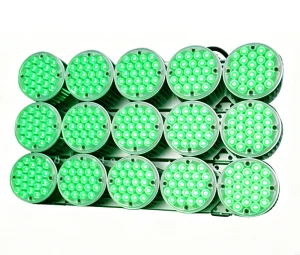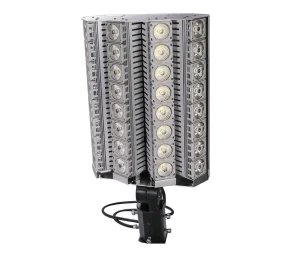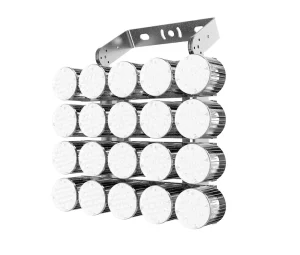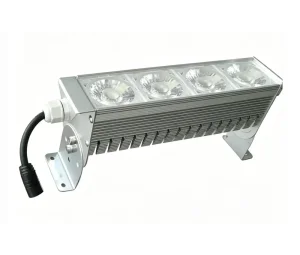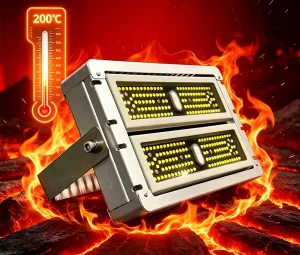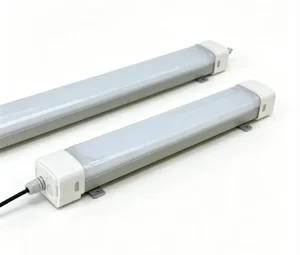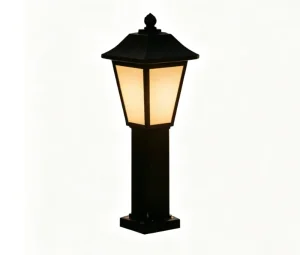
High-Performance Industrial & Sports Lighting Lineup
Engineered to endure intense thermal loads, marine corrosion, and broadcast-level luminaire requirements. Explore our flagship engineered products below.
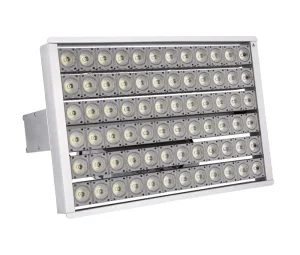
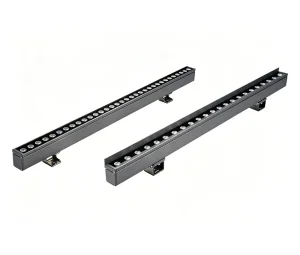
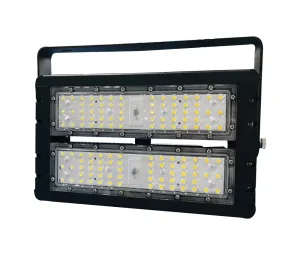
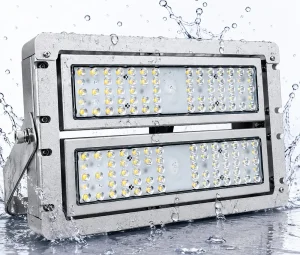
Engineering Next-Generation Outdoor LED Stadium & Arena Lighting
Designing outdoor stadium lighting for modern multi-purpose sports complexes, FIFA-standard football stadiums, and Olympic-grade arenas demands a rigorous blend of high-lumen optical physics, thermodynamic management, and electronic driver reliability. Unlike standard floodlights used in basic commercial applications, stadium luminaires operate under severe atmospheric and operational stresses. High-mast poles ranging from 25 to 60 meters subject luminaires to relentless wind shear, humidity fluctuations, direct UV radiation, and ambient thermal buildup.
To achieve broadcast-quality illumination (TLCI > 90, CRI > 90) compatible with 4K/8K Ultra High Definition (UHD) slow-motion camera systems broadcasting up to 1,000 frames per second, luminaires must produce a continuous, flicker-free waveform with a ripple factor under 1%. The integration of advanced optical lens matrices—utilizing optical-grade Japanese PMMA or high-transmittance tempered glass—allows engineers to shape narrow beam angles (from 10° ultra-narrow spot to 60° wide asymmetric flood) that cast light precisely over distances exceeding 100 meters without spilling spill light into neighboring urban zones.
Key Photometric Criteria for Professional Sports Arenas
-
•
Horizontal & Vertical Illuminance Ratio: Professional broadcast matches require EH/EV ratio < 1.5 to maintain subject clarity for lateral tracking cameras.
-
•
Unified Glare Rating (UGR): Advanced anti-glare visors and honeycomb louvers maintain UGR < 19, safeguarding athlete vision during high-altitude tracking.
-
•
Flicker Index & Ripple Factor: Driven by premium Mean Well or Inventronics drivers operating with low harmonic distortion (THD < 10%), ensuring steady light output without stroboscopic artifacts.
The Strategic Advantage of Sourcing Outdoor LED Stadium Lights from China
Discover how China’s fully integrated LED industrial cluster delivers unprecedented supply chain resilience, custom engineering elasticity, and cost efficiency for international mega-projects.
Pearl River Delta Ecosystem
Located in Shenzhen and Greater Guangdong, factories sit at the epicenter of raw metal extrusion, precision SMT packaging, optical mold creation, and driver assembly. This ultra-dense industrial cluster condenses component lead times from months to days.
Tailored OEM & ODM Flexibility
Leading Chinese manufacturers like Lsledsus specialize in bespoke structural modifications. From customized 300°C extreme thermal housings to specialized IP68 marine-grade underwater floodlights, engineers tailor solutions directly to site requirements.
Rigorously Certified Quality Assurance
Premier suppliers maintain full compliance with international standards, including UL1598, CE, RoHS, CB, SAA, and ATEX certifications. Multi-stage QA testing includes goniophotometric profiling, IPX8 immersion tanks, and thermal shock chambers.
Global Industry Trends Shaping Outdoor LED Stadium Lighting
The international lighting market is shifting rapidly from passive illumination fixtures toward intelligent, highly controllable photonic nodes. Facility managers and municipal planners are no longer evaluating fixtures solely on initial cost per watt; total cost of ownership (TCO), energy efficiency, and operational versatility are now the primary purchasing drivers.
1. Smart IoT & DMX512 Control Systems
Modern stadiums require multi-scenario dynamic control. Integration with DALI-2, DMX512, and wireless mesh protocols (Zigbee/LoRa) enables instantaneous transitions between televised professional matches, recreational training modes, and light-show concert entertainment sequences.
2. Ultra-High Luminous Efficacy
Driven by advanced LED chip packaging (such as Lumileds and Osram Opto) and 3D heat pipe vapor chamber cooling, efficacy has surged from 120 lm/W to over 180 lm/W. This breakthrough reduces facility energy consumption by upwards of 60% compared to legacy metal halide lights.
3. Enhanced Surge Protection & Durability
High-mast stadium poles act as lightning rods in open environments. Next-generation stadium luminaires feature built-in 10kV to 20kV SPD (Surge Protection Devices) combined with IK10 impact-resistant poly-carbon lenses to withstand brutal hail and electrical surges.
Macro Technical Solutions for Diverse Localized Scenarios
Stadium floodlights are deployed across a vast range of demanding applications. Below is a detailed matrix showcasing tailored engineering responses to distinct operational environments.
| Application Scenario | Environmental Challenges | Key Product Specifications Needed | Recommended Engineering Solution |
|---|---|---|---|
| Professional Sports Arenas | TV broadcast standards, glare control, strict lux uniformity. | CRI > 90, TLCI > 90, 5700K CCT, UGR < 19, 1000W–3000W. | Asymmetric precision optical lenses with anti-glare visors; DMX512 dynamic dimming interface. |
| Maritime Docks & Harbors | Saline salt spray, high humidity, continuous vibration, IP marine ingress. | IP68 waterproof rating, C5M anti-corrosion coating, stainless hardware. | Pure die-cast ADC12 aluminum with electrophoretic primer; marine-grade silicone seals. |
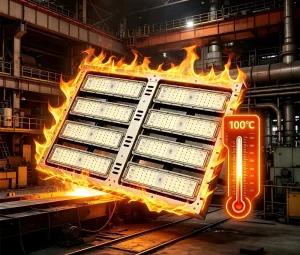
| High-Temperature Steel Mills | Radiant ambient heat up to 150°C–300°C, airborne conductive dust. | Extreme ambient heat rating (90°C–300°C), isolated remote driver box. | Active phase-change vapor chamber heat sink; remote driver mounted 20m away from heat source. |
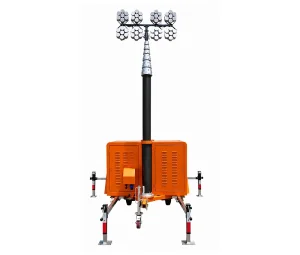
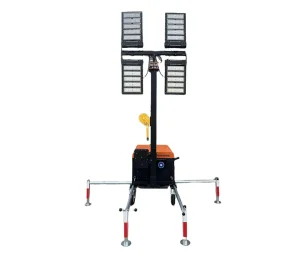
| Mining & Construction Sites | Frequent transportation, shock & vibration, off-grid generator power supply. | 12V/24V DC or low-voltage AC input, IK10 impact resistance, mobile tower mast. | Compact high-lumen floodlights mounted on 6m–12m hydraulic mobile light towers. |
Global Enterprise Procurement Evaluation Framework
When sourcing high-mast outdoor LED stadium lights for international infrastructure projects, EPC contractors and lighting engineers must evaluate suppliers beyond simple price quotes. Follow this structured checklist during vendor qualification:
1. Photometric Dialux Simulation Validation
Demand detailed .IES or .LDT files from the supplier and request a comprehensive Dialux evo simulation. Verify target Lux levels (e.g., Class I FIFA 1500 Lux, Class II 750 Lux), overall uniformity (U1 > 0.7), and tilt angles prior to tooling or shipment.
2. Thermal Dissipation & LM-80/TM-21 Reports
Verify LED junction temperature (Tj) ratings. Request LM-80 test data for the LED chips and TM-21 lifetime projection reports to guarantee that light degradation does not exceed 30% after 60,000 to 100,000 operating hours.
3. Electrical Component Integrity & Warranty Terms
Ensure driver components utilize top-tier global brands (e.g., MeanWell, Inventronics, Philips Xitanium) with minimum 5-year full replacement warranties. Review surge protection guarantees for regions with frequent thunderstorm activity.
Specialized Industrial, RGB & Mobile Light Series
Complementary high-power luminaires for high towers, street networks, hazardous zones, and marine environments.