
Engineered Hazardous & Harsh Environment Luminaire Series
Explore field-proven LED luminaires purpose-built to withstand corrosive washdowns, volatile vapors, mechanical shocks, and extreme ambient temperatures.
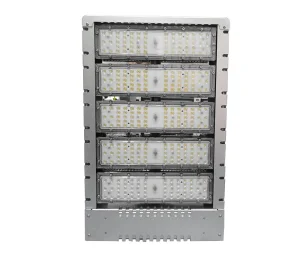
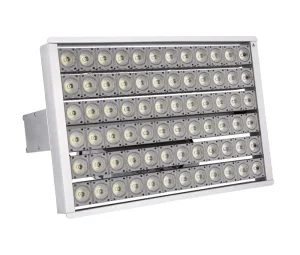
Engineering Integrity: Explosion-Proof Principles, Enclosure Metrics & Thermal Physics
Industrial explosion-proof luminaires demand a fault-tolerant combination of electrical isolation, advanced metallurgic die-casting, and hermetic elastomeric sealing.
Flameproof 'Ex d' Containment Dynamics
Lsledsus explosion-proof housings are constructed using heavy-duty copper-free cast aluminum alloy (ADC12). Rather than attempting to block gas entry entirely, the flameproof design permits combustible gas penetration while ensuring that any internal ignition is contained. Flame paths (precision-machined spigot and threaded joints) quench escaping hot gases below the autoignition temperature of the external atmosphere (T4/T5/T6 compliance).
Hermetic IP66 to IP68 Ingress Protection
Where explosive gases meet moisture-rich maritime conditions, water ingress can cause catastrophic failure. We utilize high-grade fluorosilicone and peroxide-cured EPDM continuous gasket channels. These formulations resist compression sets, chemical washdowns, and continuous salt-fog corrosive atmospheres. They maintain IP66/IP67/IP68 hermetic seals under severe temperature cycles (-40°C to +90°C).
Thermodynamic Heat Pipes & Driver Isolation
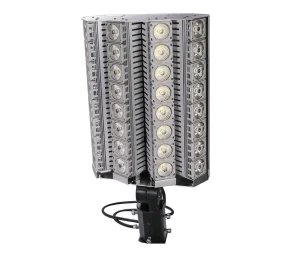
LED junction temperature directly influences both explosion safety and luminous depreciation. Our housings feature patented dual-chamber thermal isolation: the optical compartment and driver gear cavity are mechanically decoupled. Utilizing sintered copper heat-pipes with specialized phase-change working fluids, thermal resistance is kept below 0.12°C/W, avoiding internal hot spots.
| Hazardous Zone Class | Ingress Rating | Thermal Dissipation Mechanism | Explosion Protection Type | Recommended Industrial Applications |
|---|---|---|---|---|
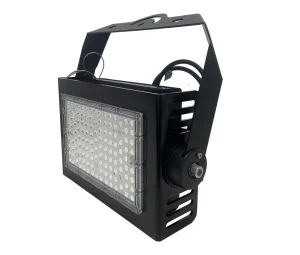
| Zone 1 / 21 (ATEX / IECEx) | IP66 / IP67 / IP68 | Dual-chamber finned ADC12 with remote heatsink | Ex d IIC T6 Gb / Ex tb IIIC T80°C Db | Petrochemical refineries, offshore rigs, spray booths |
| Zone 2 / 22 (Class I Div 2) | IP66 / IP67 | High-conductivity aviation alloy passive convection | Ex nR IIC T4 Gc / Ex tc IIIC T135°C Dc | Chemical warehouses, grain silos, power generation halls |
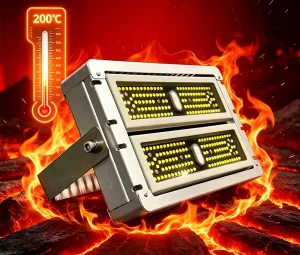
| Heavy Industrial (Extreme) | IP68 (Hermetic) | Sintered copper heat-pipes rated up to 200°C–300°C | Ex d / Heavy Duty Thermal Isolation | Steel mills, blast furnaces, glass manufacture lines |
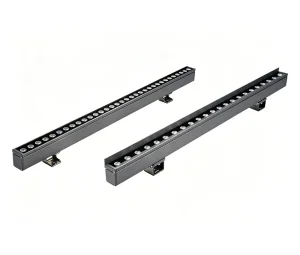
| Marine & Offshore | IP67 / IP68 (Salt Spray) | AkzoNobel marine epoxy powder + pure copper plate | Ex e mb IIC T5 Gb / IP68 Submersible | Vessel decks, shipyards, sub-surface docks, loading ports |
China Factory 4.0: Supply Chain Resilience, Die-Casting & Optical Testing
Headquartered in Shenzhen's high-tech industrial cluster, our manufacturing facility pairs vertical integration with stringent automated quality control for Tier-1 industrial buyers.
Automated High-Pressure Die-Casting
We operate 800-ton to 1600-ton cold-chamber die-casting machinery that stamps structural enclosures with zero micro-porosity. Every batch undergoes non-destructive ultrasonic and X-ray flaw detection to verify the wall thickness and mechanical burst pressure resistance required for explosion-containment certs.
Tier-1 Component Strategic Alliances
Reliability hinges on silicon purity and driver topology. Through decades of direct factory partnerships with OSRAM, Philips Lumileds, Cree, and Mean Well, our luminaires leverage custom phosphor-converted LED dies and Class-I surge-suppressed isolated driver architectures engineered for 10KV/20KV lightning resistance.
Hydrostatic, Aging & Spectrometric Labs
Every single explosion-proof fixture leaving our production line undergoes 100% helium mass-spectrometer leak tests, 2.0 bar hydrostatic pressure checks, 72-hour burn-in inside high-temperature chambers, and full photometric verification in our darkroom goniophotometer to provide verifiable .IES and .LDT files.
Heavy-Industry Deployment Scenarios & Tailored Optical Strategies
Standard architectural or commercial lighting cannot survive heavy industrial conditions. We calibrate light distribution, lux uniformity, and housing materials to precise facility conditions.
Steel Mills & Smelters
With ambient air reaching 150°C to 300°C above ladle furnaces and continuous casting lines, standard drivers fail instantly. We supply remote gear-box configurations and thermal-insulated ceramic circuit boards.
Offshore Oil Platforms
Constant corrosive salt fog (C5-M environment), high-pressure deck washdowns, and hydrogen sulfide gas require electropolished 316 stainless steel brackets and multi-stage epoxy coats.
Flour & Grain Storage
Combustible grain dust (Class II Div 1 / Zone 21) creates dangerous combustible blankets. Smooth exterior housings prevent dust accumulation, maintaining low external surface temperatures below ignition limits.
Chemical Reactor Halls
Corrosive acid fumes and high-density solvent vapors demand high-impact borosilicate tempered glass lenses and chemically inert perfluoroelastomer (FFKM) hermetic sealing systems.
R&D Technology Roadmap: Smart Hazardous IoT & Advanced Materials
The convergence of industrial automation, smart condition monitoring, and advanced materials is redefining explosion-proof lighting reliability.
Intrinsically Safe Wireless Mesh & DALI-2
Traditional explosion-proof enclosures act as Faraday cages, blocking RF signals. Lsledsus is pioneering integrated ATEX-certified sapphire dielectric RF windows. These permit continuous wireless mesh (Zigbee / Bluetooth Mesh) communication and bidirectional DALI-2 intelligent automated light control without compromising pressure ratings.
Predictive AI Maintenance & Telemetry
Integrated embedded Micro-Electro-Mechanical Systems (MEMS) monitor interior gas pressure, gasket moisture degradation, driver capacitor temperature, and vibration amplitude. Real-time predictive telemetry flags potential seal wear before hazardous vapors can enter the chamber.
Carbon-Neutral Graphene Composites
To reduce fixture weight for easier overhead mounting while increasing thermal conduction, our material science division is testing graphene-reinforced polymer matrix composites. These materials resist harsh caustic chemicals, eliminate static spark hazards, and cut carbon footprints during manufacture.
Global Compliance, Photometric Engineering & EPC Project Support
Navigating global explosion-proof compliance requires seasoned engineering backing. We partner with industrial contractors and distributors from design to commissioning.
DIALux / Relux Layouts
Avoid expensive field retrofits and ensure compliance with OSHA and EN 12464-4 illuminance standards. Our application engineering team provides complete 3D photometric calculation files, shadow analysis, glare indexes (UGR < 19), and lux uniformity reports before dispatch.
Full Regulatory Paperwork
International imports demand unyielding paper trails. We provide comprehensive technical compliance dossiers including ATEX / IECEx certificates, EU Declarations of Conformity, UL 844 hazardous location test reports, factory acceptance test (FAT) documentation, and 3.1 material certificates.
Bespoke OEM / ODM Tailoring
Every industrial project comes with unique site conditions. We engineer custom mounting brackets (pendant, stanchion, ceiling, wall-trunnion), variable cable-entry threads (NPT 1/2", NPT 3/4", M20, M25), emergency battery back-ups, and custom wide/narrow optical optics.
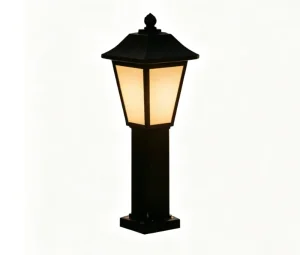
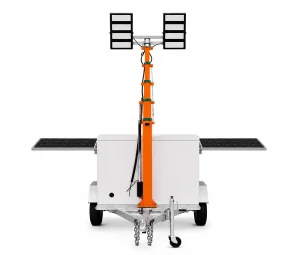
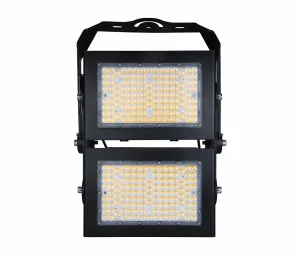
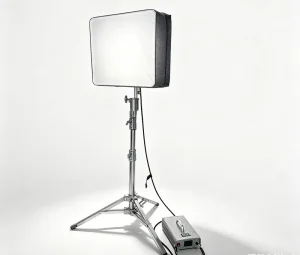
Specialized Industrial Luminaires, Light Towers & Marine Modules
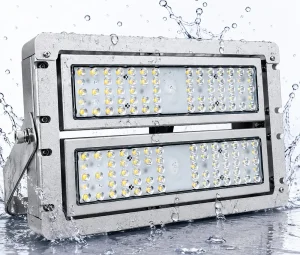
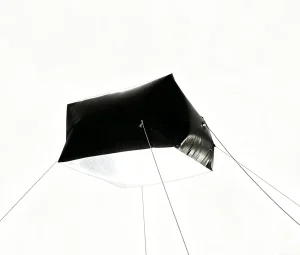
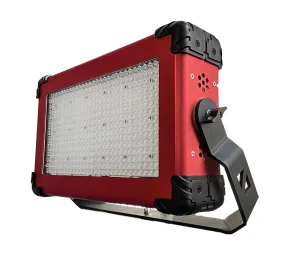
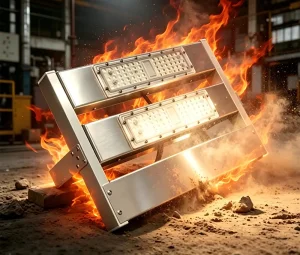
Broad industrial solutions: browse heavy-duty marine, underwater, mobile, sports field, and high-temperature LED options.
Frequently Asked Questions: Industrial Procurement & Engineering
Clear, direct answers for engineering leads, procurement teams, and MRO contractors specifying explosion-proof and high-temperature luminaires.
What is the practical difference between IP67, IP68, and Explosion-Proof ratings?
IP ratings indicate mechanical protection against solids and liquids (IP67 allows immersion up to 1m for 30 minutes; IP68 provides continuous submersion protection). In contrast, Explosion-Proof (ATEX / IECEx Ex d / Ex e) specifies containment or prevention of internal electrical arcs from igniting combustible surrounding gases or dusts. High-grade industrial fixtures combine both certifications.
How do Lsledsus luminaires survive extreme ambient heat up to 300°C?
Standard luminaires feature drivers that fail around 60°C. For conditions exceeding 90°C, 150°C, or up to 300°C, we isolate driver electronics into cooler control zones, rely on high-grade ceramic-substrate LEDs, and apply aerospace-grade heat pipe cooling assemblies inside copper-free alloy enclosures.
Can you provide custom beam angles and photometric studies before purchase?
Yes. Our engineering department runs DIALux calculations based on your structural ceiling heights, crane interference points, and target lux levels. We customize optics across symmetric and asymmetric profiles (15°, 25°, 40°, 60°, 90°, and 120°) to deliver uniform illumination and zero hot-spots.
What protection mechanisms guard your lights against marine corrosion?
Fixtures designed for shipyards, docks, and offshore oil platforms undergo high-grade electrostatic polyester powder application with AkzoNobel marine coatings. They withstand over 1,000 to 2,500 hours of continuous ASTM B117 salt spray testing, paired with SUS316 stainless hardware.
Connect Directly with Our Hazardous Lighting Engineers
Send over your plant layouts, hazardous classification requirements, or custom OEM fixture specifications. Receive factory-direct quotes, lighting calculations, and certified datasheets within 24 hours.
Request a Factory Quotation & Layout