
Featured Industrial & DC Solar Flood Light Products (Part 1)
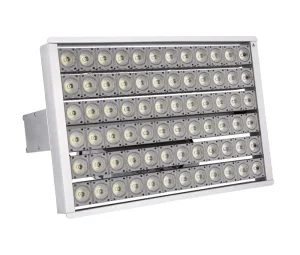
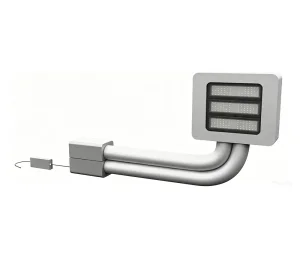
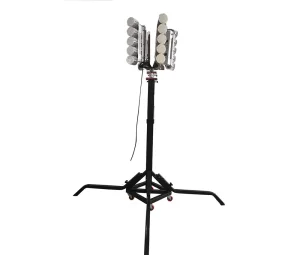
Direct from certified OEM/ODM production lines: High-efficiency DC floodlights, mobile light tower luminaires, and extreme temperature-rated industrial LED arrays engineered for off-grid solar power systems.
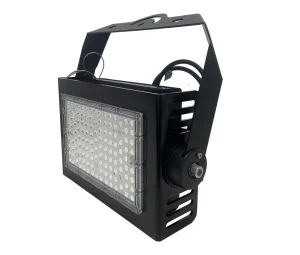

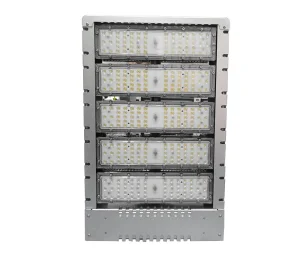
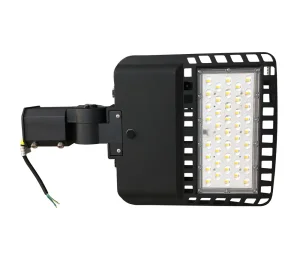
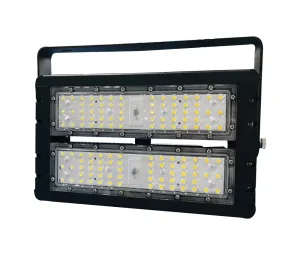
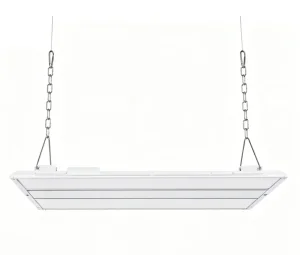
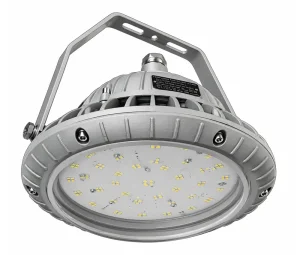
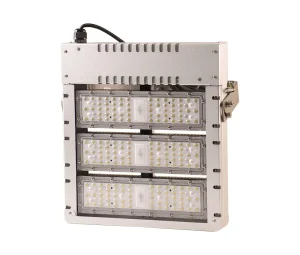
1. Global Commercial & Industrial Solar Flood Light Market Status
The global transition toward sustainable infrastructure, combined with rising energy costs and grid instability, has propelled the industrial off-grid solar illumination sector into a major technological expansion. High-power solar flood lighting systems are no longer restricted to peripheral residential pathways or low-lumen garden accents. Today, Tier-1 industrial buyers, EPC (Engineering, Procurement, and Construction) contractors, mining corporations, and municipal authorities demand robust, commercial-grade solar flood lights capable of delivering continuous, ultra-bright output across severe climatic conditions.
According to recent industrial market analyses, the commercial solar lighting sector is projected to maintain a compound annual growth rate (CAGR) exceeding 14.5% over the next decade. This growth is primarily fueled by advancements in N-Type TOPCon photovoltaic conversion efficiency, high-density Lithium Iron Phosphate (LiFePO4) energy storage systems, and intelligent Maximum Power Point Tracking (MPPT) charge control algorithms. Industrial project developers are actively replacing traditional high-pressure sodium (HPS) and legacy metal halide floodlights with high-luminous-efficacy DC LED arrays directly integrated with dedicated solar and battery management enclosures.
From an enterprise procurement perspective, identifying the best solar flood lights factories requires evaluating manufacturing hubs based on strict engineering benchmarks rather than surface-level cost-per-unit metrics. China's Pearl River Delta—specifically specialized industrial clusters in Shenzhen, Zhongshan, and Dongguan—remains the epicenter of high-end solar lighting engineering. Factories operating in this region leverage mature upstream supply chains for high-binning LED chips (such as Osram, Bridgelux, and Lumileds), aluminum alloy die-casting foundries, and advanced surface-mount technology (SMT) cleanrooms capable of assembling high-temperature resistant circuit boards.
Photovoltaic Architecture
Modern factories utilize Grade-A monocrystalline silicon solar panels with conversion efficiencies exceeding 23.5%, treated with anti-reflective glass coatings to maximize photon capture even during low-irradiance, overcast weather.
Battery & BMS Integration
Industrial solar flood lights require built-in thermal protection, active cell balancing, and high-discharge LiFePO4 chemistry to guarantee 10–12 years of maintenance-free operation across wide temperature spectrums (-20°C to +70°C).
Precision Optics & Photometrics
Custom optical lenses engineered with asymmetric light distribution patterns (Type II, Type III, or narrow spot angles) minimize light pollution, control backlight spill, and optimize lux levels per square meter.
2. Industrial Technology Trends & Architectural Breakthroughs
The solar flood light manufacturing ecosystem has evolved far beyond standalone residential fixtures with integrated PIR sensors. Heavy-industrial manufacturing facilities now engineer modular, high-voltage off-grid lighting architecture capable of operating in demanding environments such as deep-pit mines, commercial sea harbors, remote logistics hubs, and high-temperature manufacturing complexes.
A. Advanced Thermal Dissipation and Active/Passive Cooling
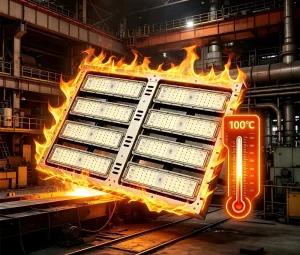
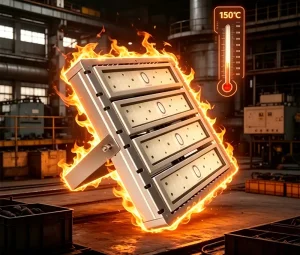
The operational lifespan of an LED junction temperature ($T_j$) is inversely proportional to its thermal exposure. In solar flood lighting applications where fixtures absorb direct thermal radiation during the day and run high drive currents at night, heat dissipation is the single critical failure vector. Leading solar flood light factories employ copper heat-pipe technology, phase-change thermal interface materials (TIM), and heavy-duty ADC12 die-cast aluminum heat sinks featuring vertical convective cooling fins. For extreme ambient temperature zones (such as foundries, glass factories, or equatorial desert environments), specialized manufacturers develop custom high-temperature LED engines rated for operation up to 80°C, 100°C, and even 150°C continuous ambient heat.
B. Smart Control Systems, IoT, and Autonomous Dimming Profiles
The integration of IoT telematics is transforming off-grid illumination management. Modern OEM solar flood light systems feature integrated LoRaWAN, Zigbee, or Cellular NB-IoT controllers that allow facility managers to remotely monitor battery State of Charge (SoC), solar input wattage, temperature, and individual luminaire health in real-time. Automated dimming profiles utilize predictive algorithms that adjust lumen output based on historical solar yield data, ensuring 100% illumination autonomy even during extended multi-day rainy spells (365-day lighting guarantee).
| Engineering Vector | Standard Consumer Grade | Professional Commercial Grade | Industrial OEM / Heavy-Duty Factory Grade |
|---|---|---|---|
| Solar Panel Tech | Polycrystalline (15-17% eff.) | Standard Mono (19-21% eff.) | N-Type TOPCon / Bifacial Mono (23-25% eff.) |
| Battery Chemistry | Second-hand Li-ion / Lead-Acid | Standard LiFePO4 (2,000 cycles) | EV-Grade LiFePO4 with Active BMS (6,000+ cycles) |
| Charge Controller | PWM (65-75% efficiency) | Basic MPPT (88-92% efficiency) | Smart Adaptive MPPT with Dynamic Tracking (>99%) |
| Ingress & Impact Rating | IP65 / IK06 Plastic Housing | IP66 / IK08 Aluminum Housing | IP67–IP68 / IK10 Anti-Corrosion Marine-Grade Finish |
| Driver / Voltage Architecture | Direct 3.2V / 3.7V low voltage | 12V / 24V DC Systems | 48V DC Low-Loss Architecture / Hybrid AC-DC Switching |
C. 48V DC High-Voltage Off-Grid Architecture
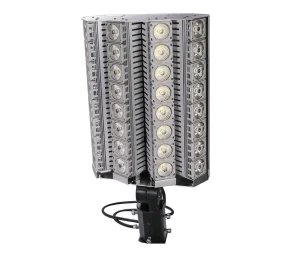
Traditional solar flood lights operate on 3.2V or 12V DC system buses. However, high-wattage floodlights exceeding 200W–500W draw significant current at low voltages, resulting in severe I²R copper line losses and thermal buildup inside the fixture wiring. Leading manufacturing plants now design 48V DC bus architectures for mobile light towers and large-scale solar arrays. Lowering systemic current reduces cable thickness, lowers operating temperatures, increases system efficiency by up to 12%, and prolongs the lifespan of internal electronic components.
Solar Flood Lighting Technology Roadmap (2025 – 2030)
Mass implementation of N-type photovoltaic cells and smart cloud-connected IoT monitoring nodes.
Transition toward semi-solid and solid-state lithium batteries offering higher volumetric energy density and total thermal safety.
Commercialization of hybrid solar modules surpassing 28% efficiency ratings, drastically reducing required panel surface areas.
Fully self-healing optical networks with edge-computing AI managing regional energy distribution dynamically.
3. Localized Application Scenarios & Specialized Solutions
A primary failure point in industrial solar lighting procurement is selecting generic off-the-shelf products for highly specialized field environments. A solar flood light factory must customize optics, coatings, battery chemistries, and mounting brackets based on local environmental stressors.
Coastal Terminals & Marine Shipyards
Environmental Challenge: Constant salt fog spray, extreme humidity, high wind loads, and corrosive atmosphere.
Factory Solution: Utilization of marine-grade 6063-T6 aluminum, electrophoretic primer coatings, 316 stainless steel fasteners, glass lenses (replacing polycarbonate), and full IP68 hermetic sealing tested under salt spray standards (ASTM B117).
Mining Operations & Off-Grid Infrastructure
Environmental Challenge: High vibration, heavy airborne dust, extreme shock impacts, and lack of grid access.
Factory Solution: Heavy-duty shock-mounted LED engines rated to IK10, custom 48V DC mobile light tower fixtures, dust-tight gasket protection, and narrow-beam optics (15°/30°) for high-mast pit illumination.
Desert & Extreme Heat Zones
Environmental Challenge: Ambient solar temperatures exceeding 50°C, direct UV degradation, and rapid heat accumulation.
Factory Solution: Remote battery box mounting options (underground or shaded installation), high-temperature rated components (80°C to 150°C), and heat-resistant silicone seals.
4. Enterprise Sourcing Guide: Evaluating Solar Flood Light Manufacturers
When searching for the best solar flood lights factories, international buyers must establish rigorous vendor verification protocols to filter out assembly trading companies from genuine original equipment manufacturers (OEMs). A direct factory partner must possess in-house design, optical modeling, thermal simulation, and comprehensive quality assurance testing labs.
Essential Factory Testing Infrastructure
Before issuing a commercial Purchase Order (PO) or tendering contract, request proof of the following in-house testing equipment and engineering certifications:
- Integrating Sphere & Spectroradiometer Systems: To accurately measure total luminous flux (lumens), Correlated Color Temperature (CCT), Color Rendering Index (CRI/Ra), and spectral power distribution across DC voltages.
- Goniophotometer Testing Chamber: Used to generate official IES (Illuminating Engineering Society) and LDT photometric files required by lighting engineers to build DIALux site simulations.
- IP67 / IP68 Ingress Water Testing Tanks & High-Pressure Jet Chambers: Verifying long-term seal integrity under simulated heavy downpours and water immersion.
- Thermal Shock & Environmental Aging Chambers: Cycling fixtures rapidly between -40°C and +85°C to test solder joint stability, thermal grease longevity, and lens stress resistance.
- Vibration Testing Tables: Essential for solar flood lights deployed on mobile light towers, mining rigs, or high-mast posts subjected to constant mechanical vibration.
5. Industrial Solar & DC Flood Light Procurement Q&A
Clear technical answers addressing critical engineering, manufacturing, and global supply chain considerations for enterprise lighting projects.
Featured Industrial & Solar Lighting Products (Part 2)
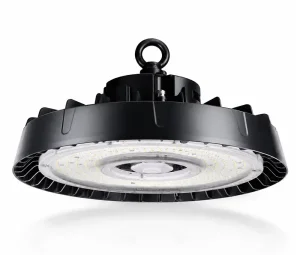
Explore specialized street lights, extreme high-temperature fixtures, coastal stadium arrays, and heavy industrial UFO bay luminaires suitable for turnkey OEM deployment.
Partner with a Premier Industrial Solar Flood Light Factory
Need specialized optical modeling, custom DC input voltages (12V/24V/48V), or tailored ambient heat ratings for your industrial project? Our engineering team delivers turnkey OEM/ODM solutions tailored to your site specifications.