
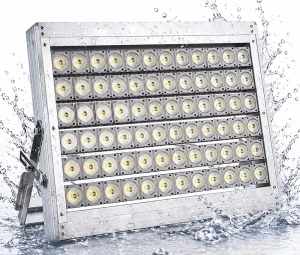
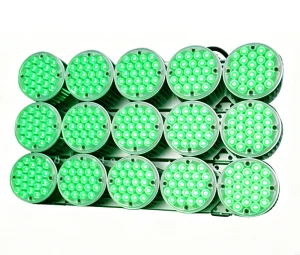
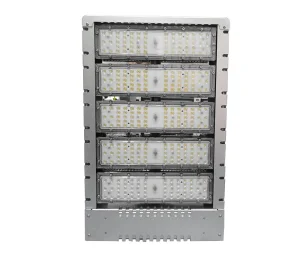
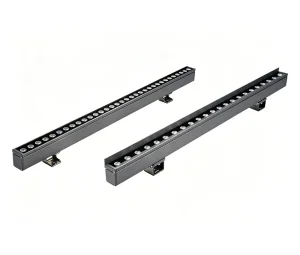
Featured Extreme-Grade Submersible & Industrial Systems
Explore our top tier of field-proven marine, deep-water submersible, stadium, and industrial high-output luminaires engineered for hostile fluid dynamics and extreme ambient pressures.
The Global Paradigm Shift in Industrial Submersible Luminaires
Analyzing the convergence of high-power solid-state lighting, fluid dynamics, hydrostatic pressure resistance, and harsh electrochemical environments in heavy offshore and wet industrial sectors.
In modern industrial and marine infrastructure, specifying the best submersible lights supplier & manufacturers has evolved from a simple aesthetic procurement task to a safety-critical engineering consideration. Submersible and underwater flood illumination systems operate under a severe convergence of physical degradation vectors: relentless hydrostatic pressure, continuous electrolytic corrosion in salinity-rich waters, biological fouling, optical transmittance loss caused by water particulate turbidity, and internal thermal buildup driven by high-output luminaire footprints.
Historically, underwater lighting relied on high-wattage tungsten halogen or metal halide units enclosed in heavy bronze or welded stainless-steel chambers. These conventional systems suffered from high rates of seal failure caused by drastic cyclic thermal expansion and contraction, which degraded silicone O-rings within 2,000 to 4,000 operational hours. Today, the global commercial landscape demands solid-state hermetically sealed LED architectures rated from IP68 (continuous immersion past 5 meters) to IP69K (high-pressure, high-temperature thermal washdown resistance), offering operational longevities surpassing 50,000 hours without maintenance intervention.
Total Cost of Ownership (TCO) Optimization
Subsea and immersed fixtures carry disproportionately high maintenance costs. Replacing a defective unit inside a municipal reservoir, offshore oil rig splash zone, or industrial treatment plant often requires commercial divers and facility shutdowns. Engineering durability into the initial casting eliminates repetitive field servicing.
Electrochemical & Galvanic Immunity
Deploying subsea fixtures demands strict galvanic compatibility. Submersible lighting manufacturers must utilize marine-grade 316L austenitic stainless steel or precision passivation coatings. This prevents the formation of galvanic couples between the chassis, mounting brackets, and submerged vessel hulls or marine sheet piles.
Optical Transmission in Viscous Media
Water selectively attenuates photon wavelengths, absorbing the red spectrum (650–700 nm) within the first 3 to 5 meters while allowing blue-green light (450–520 nm) to propagate further. Commercial suppliers engineer spectral power distributions (SPDs) and specialized optical collimate lenses to maximize underwater lux throw.
China Factory Precision: Vertical Integration & Engineering Agility
How tier-one Chinese manufacturing infrastructure in Shenzhen and the Pearl River Delta delivers unmatched speed, cost engineering, and bespoke mechanical prototyping for high-performance submersible lighting.
In global industrial lighting procurement, selecting an agile and technically sophisticated factory partner is the decisive factor between on-budget deployment and catastrophic project delays. The concentration of optoelectronic design houses, multi-axis CNC metal machining centers, hermetic polyurethane and silicone potting plants, and ISO/IEC 17025 accredited radiometric test facilities in Shenzhen, China provides significant engineering synergies over traditional Western boutique manufacturers.
Vertical Integration Across Critical Manufacturing Stages
A true OEM/ODM industrial submersible luminaire manufacturer does not merely assemble modular third-party parts. Tier-one Chinese manufacturers maintain absolute vertical control across the whole value stream:
CNC Marine Machining
High-precision 5-axis CNC routing from solid billet 316L stainless steel blocks or marine-grade die-cast aluminum alloys ensures structural wall integrity, eliminating microscopic casting porosity that fails under pressure.
Vacuum Resin Potting
Automated vacuum potting utilizing high-dielectric optical-grade silicones and resins. Fixture internal cavities are filled completely, eliminating air pockets that compress under deep hydrostatic pressure.
SMT Chip Optimization
High-speed surface-mount technology (SMT) lines deploying Lumileds, Cree, and OSRAM emitters onto metal-core printed circuit boards (MCPCB) with thermal conductivities reaching >3.0 W/m·K.
Helium Mass Testing
Every subsea unit undergoes 100% helium mass-spectrometer leak detection and submerged hyperbaric chamber testing up to 10–50 bar, ensuring flawless field integrity before international crating.
This concentrated ecosystem reduces rapid engineering iteration cycles from months to days. When an international naval architecture group or municipal engineering authority requests a custom lens distribution, a specialized Kelvin color temperature (such as 4000K high-CRI for subsea coral photography), or an exotic bronze alloy mounting clamp, a specialized Shenzhen production facility can generate CAD designs, produce 3D mockups, machine functional metal prototypes, and complete photobiological validation within 10 to 14 working days.
Mission-Critical Deployment Scenarios for Submersible Lights
Submersible luminaire specifications diverge radically depending on fluid chemistry, pressure differentials, and operational visibility goals. Review key installation environments below.
Offshore Oil Platforms & FPSO Hull Lighting
Harsh marine splash zones and subsea structures require high-flux LED luminaires featuring corrosion-resistant 316L housings with anti-algae passivation. Fixtures operate reliably under direct marine splash, extreme salinity, wave action, and Class I Div 2 hazardous atmospheric environments.
Commercial Aquaculture & Pelagic Hatcheries
Industrial salmon and yellowtail mariculture rely on submersible LED fixtures to regulate fish photoperiods, stimulating feed intake and preventing premature sexual maturation. Lights demand blue-green spectrum tuning (480–510 nm) and non-toxic food-grade silicone potting.
Underwater Cinematography & Film Production
Submersible film luminaires demand zero-flicker performance up to 5,000 FPS for super-slow-motion aquatic shoots. Fixtures must feature high color fidelity (CRI ≥96, TLCI ≥97), DMX512/RDM underwater digital integration, and helium balloon diffusion setups.
Civil Water Reservoirs & Treatment Plants
Municipal water tanks and clarification basins require chemically neutral, ozone-resistant IP68 floodlights. Potting compounds and outer surfaces must avoid leaching harmful compounds, meeting NSF/ANSI Standard 61 drinking water compliance guidelines.
Port Docks, Harbors & Marine Shipyards
Pier pilings, dry docks, and marine vessel berths require robust luminaires engineered to withstand heavy tides, mooring tug vibrations, and high-impact debris. Fixtures feature thick IK10 tempered glass lenses and specialized pressure-compensating valves.
Architectural Fountains & Monumental Cascades
High-end water features in commercial plazas and civic parks require high-power RGB/RGBW underwater illumination. These lights offer sharp 10° narrow-beam punching power to trace soaring vertical water plumes, paired with sub-millisecond DMX/RDM lighting choreography.
Engineering Specifications: Submersible vs Standard Marine Fixtures
Direct comparative breakdown detailing physical, mechanical, thermal, and optical parameters required for uninterrupted deep immersion versus surface marine floodlights.
| Performance Parameter | Commercial Grade Submersible (IP68) | Industrial High-Pressure Subsea (10-50 Bar) | Standard Marine Splashlight (IP66/67) |
|---|---|---|---|
| Primary Housing Metallurgy | AISI 316L Stainless Steel / Anodized 6063-T6 | Titanium Gr. 2 / Nickel Aluminum Bronze (NAB) | Die-Cast Marine Aluminum (A360 / ADC12) |
| Ingress Protection Standard | Continuous Immersion (≥5m depth, IP68) | Deep Hydrostatic Immersion (≥100m, IP68/69K) | Heavy Wave Jetting (3-minute jet test, IP66/67) |
| Potting Medium & Enclosure | Optical Polyurethane / High-Temp Silicone | Solid Vacuum-Injected Dielectric Elastomer | Gasketed Hollow Enclosure (No Potting) |
| Front Optical Element | 8mm–12mm Toughened Borosilicate Glass | 15mm–25mm Fused Quartz / Sapphire Crystal | 4mm–6mm Clear Tempered Float Glass |
| Driver Isolation Topology | Separated Remote Driver Cabinet (SELV 24V/48V) | Subsea Isolated Galvanic Power Conversion | Internal On-Board AC Driver (100–277VAC) |
| Corrosion Resistance Testing | ASTM B117 Salt Fog: 2,500 Hours Min. | ASTM G48 Pitting & Crevice Fog: 5,000 Hours | ASTM B117 Salt Fog: 1,000 Hours Standard |
| Thermal Dissipation Vector | Forced Aquatic Convection (Water Submerged) | Direct Fluid Heat Transfer / Deep Ambient Sink | Natural Ambient Air Passive Fin Convection |
Critical Engineering Caveat: Aquatic vs. Atmospheric Operation
A frequent error made by lighting contractors is dry-testing high-power submersible LED luminaires out of the water. Professional submersible lights utilize forced fluid-convective thermal dissipation. The aluminum or stainless steel housing is engineered to transfer heat directly into the surrounding water body.
If operated continuously in free air without water immersion, high-power submersible fixtures (such as 100W–500W configurations) will experience thermal runaway within minutes. Modern industrial luminaires integrate an intelligent Negative Temperature Coefficient (NTC) thermistor circuit on the LED board. This safety mechanism throttles driving current down to 10%–20% if dry operating temperatures exceed 75°C, protecting the LED diodes from thermal failure.
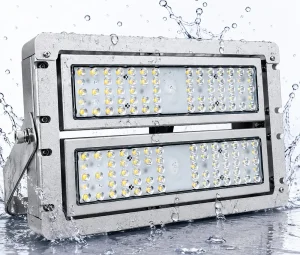
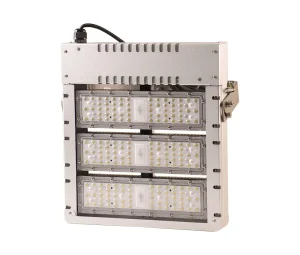
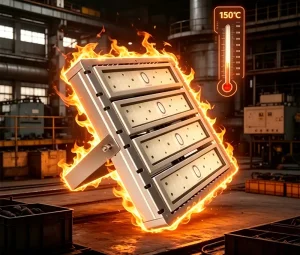
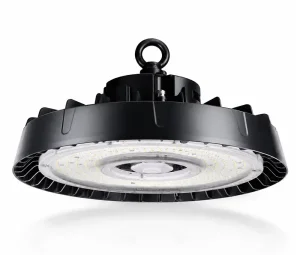
Specialized Heavy-Duty & High-Temperature Lighting Systems
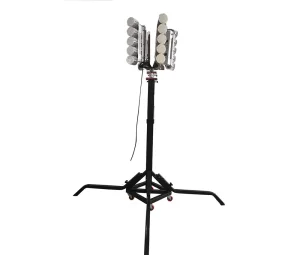
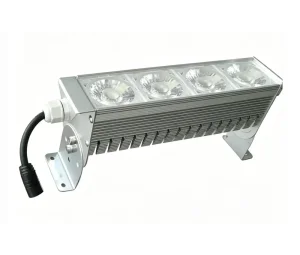
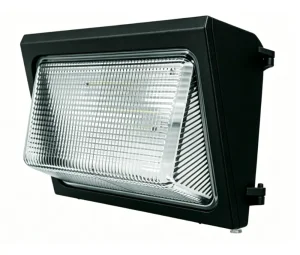
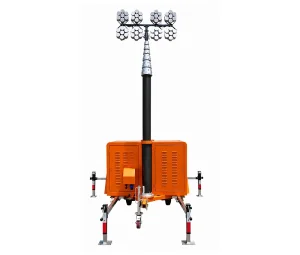
Explore our complementary lineup of extreme high-temperature industrial fixtures, explosion-proof mining units, mobile illumination masts, and heavy industrial plant lighting.
Enterprise Procurement Protocols: Vetting a Submersible Lights Supplier
Key parameters that engineering procurement directors, marine contractors, and EPC project managers must evaluate prior to issuing international purchase orders for underwater luminaires.
Cable Entry & Gland Integrity
Over 80% of underwater lighting failures originate at the cable entry point. Insist on dual-compression, epoxy-blocked submarine cable glands (IP68 certified). The cable jacket must feature cross-linked polyurethane (PUR) or chlorosulfonated polyethylene (CSPE/Hypalon) to prevent moisture wicking along inner copper strands.
UL 676 & EN 60598-2-18 Safety Standards
For wet-niche, fountain, and municipal installations where humans come into direct fluid proximity, all luminaires must comply with UL 676 or EN 60598-2-18. This demands extra-low voltage (SELV) supply architectures (typically 12V DC, 24V DC, or 48V DC) operating via galvanic isolation transformers.
Corrosion Passivation & Crevice Defense
Austenitic stainless steel (AISI 316L) requires rigorous electro-chemical polishing and nitric/citric acid passivation. This treatment removes surface free iron, forming a chromium oxide barrier that resists chloride-induced pitting and crevice corrosion under low-oxygen bio-sediment layers.
Frequently Asked Questions: Submersible Lighting Engineering
Clear, authoritative technical answers addressing common procurement questions regarding hydrostatic testing, electrical topologies, and optical performance underwater.
A: IP67 certifies immersion protection up to 1 meter depth for a maximum duration of 30 minutes; it is not suitable for permanent underwater installation. IP68 guarantees continuous immersion under defined hydrostatic pressures (e.g., 5m, 20m, or 100m depth continuous). IP69K adds protection against high-temperature (80°C) and high-pressure (8,000–10,000 kPa) cyclic water jets, essential in food processing or severe marine washdowns.
A: Electrolytic capacitors in LED drivers are the most heat-sensitive components in a lighting system. Relocating the driver to an accessible, shore-side or above-water IP66 cabinet isolates the electronics from underwater pressure stresses. This simplifies maintenance and ensures that only safe, low-voltage direct current (e.g., 24V/48V DC) routes through submerged cabling.
A: When dissimilar metals connect in an electrolyte like seawater, galvanic corrosion accelerates on the less noble metal (e.g., aluminum). We supply dielectric isolation kits—including heavy POM/Delrin mounting bushings, non-conductive nylon washers, and sacrificial zinc or magnesium anodes—to break electrical conductivity between the fixture chassis and structural hull.
A: Suspended particulates cause Mie scattering, refracting wide-angle light back toward the source and creating visual glare (backscatter). In turbid or saline water, we specify narrow pencil optics (10° to 25°) to pierce through the particulate field, and select higher-wavelength blue-green emitters (around 500nm) that offer lower attenuation in water than standard 6500K cool white light.
A: While certain specialized units like our 150°C high-temperature series carry IP68 ratings to protect against direct industrial washdown and condensation, submersible and high-temperature fixtures are designed around opposite heat flows. High-temperature lights transfer heat into hot air using specialized thermal paths; submersible lights rely on cold water cooling. Using a standard fixture underwater without verifying potting depth ratings can lead to failure.
A: Comprehensive factory acceptance testing (FAT) packs include hyperbaric chamber pressure test certificates (verified at 1.5x working depth rating for 24 hours), spectroradiometric integrating sphere photometric reports (.IES and .LDT files), ASTM B117 salt fog test certificates, material mill test reports (MTR) verifying 316L chemical composition, and CE/RoHS/UL compliance dossiers.
Need Custom-Engineered Submersible or Extreme Lighting?
Our Shenzhen engineering facility collaborates directly with offshore operators, marine contractors, and civil engineers worldwide. Provide your installation depth, water chemistry conditions, and illumination footprint to receive custom photometric layouts, CAD models, and factory quotations within 24 hours.