Best Tri-Proof Led Lights Factories & Manufacturers
Precision-engineered IP65/IP66/IP69K waterproof, dustproof, and anti-corrosion luminaires built for harsh industrial processing, agricultural cold chains, and extreme thermal sites.
High-Performance Heavy-Duty Industrial Luminaires
Engineered for seamless integration into marine logistics, steel fabrication lines, extreme weather sports arenas, and chemical transport hubs.
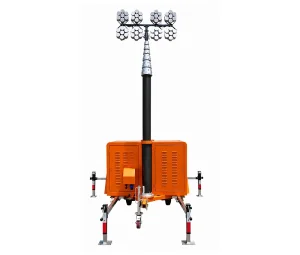
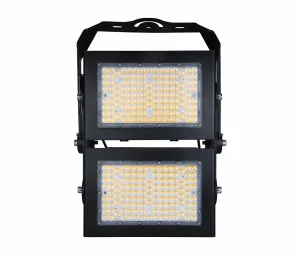
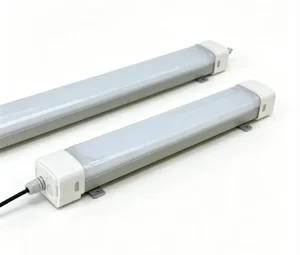
The Global Landscape of Tri-Proof LED Lighting Engineering
Why modern industrial procurement is pivoting away from standard sealed battens to modular, chemical-resistant, and high-efficacy architectural enclosures.
Tri-Proof Definition Redefined
Historically designated as "Waterproof, Dustproof, and Corrosion-proof," contemporary commercial specifications mandate strict ingress verification against high-pressure, steam jet cleaning (IP69K), severe mechanical impacts (IK10), and aggressive petrochemical vapors or ammonia present in intensive agricultural setups.
Energy Decarbonization Mandates
With corporate ESG targets and European ERP eco-design directives tightening, Tier-1 manufacturing facilities are replacing legacy T8 and fluorescent moisture-proof fittings with 150-180 lm/W high-lumen linear systems, shrinking factory baseline electricity expenditure by up to 68% annually.
Total Cost of Ownership (TCO)
In inaccessible areas like chemical distillation plants and underground transit tunnels, labor replacement costs far exceed luminaire hardware pricing. Specifying hermetically sealed fixtures featuring Meanwell or Osram drivers guarantees sustained 50,000+ hour operational longevity without driver failure.
Why Sourcing from Shenzhen & Greater Bay Hubs Leads Global Markets
Combining complete vertical supply chains, advanced automated co-extrusion technology, and comprehensive photometric validation.
Vertical Tooling & Extrusion
Shenzhen industrial clusters provide immediate access to dual-color co-extrusion tooling for Polycarbonate (PC) and PMMA diffusers, enabling unified aluminum core integration with superior thermal conduction paths.
Agile OEM Customization
From quick-install push-fit terminal blocks to multi-wattage and CCT selectable dip-switches, Chinese manufacturing allows bespoke electrical architecture tailored to country-specific wiring regulations (UL, CE, SAA, CB).
Tier-1 Component Ecosystem
Direct volume integration with Osram, Philips Lumileds, Samsung, and Tridonic drivers ensures top-tier performance data, tight MacAdam Ellipse bins (≤3-step), and guaranteed warranty backstops for international contractors.
Cost-Competitive Scalability
Automated SMT pick-and-place lines running alongside continuous silicone gasketing pouring machines yield dramatic unit cost reduction without sacrificing seal consistency across containers of 5,000+ fixtures.
Mission-Critical Environments Requiring Tri-Proof Fixtures
Addressing localized thermal, chemical, and physical hazards across key global commercial sectors.
Food Processing & Slaughterhouses
Facilities subject to mandatory daily sanitization using caustic sodium hydroxide sprays and steam cleaning. Luminaires must feature seamless PMMA or stainless-steel endcaps, IP69K non-water retention contours, and shatterproof non-glass certification (NSF compliant) to prevent cross-contamination.
Cold Chain Storage & Blast Freezers
Sub-zero conditions reaching -40°C cause conventional plastic housings to embrittle and low-grade capacitors to fail at start-up. Specialized low-temperature LED drivers combined with silicone gaskets and breathing valves regulate internal fixture barometric pressure without drawing moisture.
Underground Metro & Parking Garages
Continuous 24/7 operating cycles demand integrated micro-wave motion sensors, daylight harvesting sensors, and 3-hour lithium iron phosphate (LiFePO4) emergency battery backup packs to conform to national building safety egress guidelines.
Marine Docks & Coastal Harbors
Salt spray corrosion rapidly degrades unanodized aluminium. Anti-corrosive tri-proof fixtures utilize marine-grade 316 stainless-steel brackets and high-grade polycarbonate bodies passing 1000-hour neutral salt spray (ASTM B117) tests without chromatic degradation.
Chemical Distilleries & Textile Mills
Environments heavy in volatile hydrocarbon vapors or airborne combustible cotton fluffs require high-temp engineered housing with controlled surface temperatures (T-ratings) to prevent accidental external vapor ignition while maintaining maximum output.
Livestock Farming & Poultry Sheds
Concentrated ammonia gases (NH3) rapidly degrade standard PC materials, turning lenses opaque within months. Ammonia-resistant PMMA tube profiles or chemically pure glass shells ensure high light transmission over five years of active animal husbandry.
Material Engineering & Enclosure Selection Matrix
Review standard industrial housing substrates to align structural mechanics with project-site exposure variables.
| Substrate Material | Impact Strength (IK) | Chemical Resistance | Thermal Range | Ideal Application Scenario |
|---|---|---|---|---|
| Full Polycarbonate (PC) | IK08 – IK10 (Extreme) | Moderate (Sensitive to strong solvents & ammonia) | -25°C to +50°C | Warehouses, rail transit, carparks, workshop ceilings |
| PMMA (Acrylic) Body | IK06 – IK07 (Medium) | Superior (Resistant to ammonia, oils & alkalis) | -20°C to +45°C | Pig farms, poultry stables, car wash tunnels, dairy plants |
| Extruded Aluminium + PC/Glass | IK09 – IK10 (High) | High (Anodized/powder coated anti-corrosion) | -40°C to +80°C | Heavy manufacturing, metallurgical bays, coastal docks |
| 316 Stainless Steel Hybrid | IK10 (Maximum) | Absolute (Resists saline, caustic acid washes) | -30°C to +60°C | Chemical synthesis tanks, marine platforms, offshore rigs |
Emerging Technological Trends in Tri-Proof Lighting
How IoT integration, modular optics, and smart facility controllers are transforming modern industrial luminaires.
DALI-2 & Wireless Mesh Ecosystems
Tri-proof fixtures are transitioning from standalone units into node-addressable smart devices. Integrating Bluetooth Low Energy (BLE) or Zigbee wireless mesh allows granular scheduling, zoning, and automated failure reporting to centralized building management dashboards.
Tool-Free Linkable Daisy-Chaining
Labor comprises up to 40% of lighting installation cost. State-of-the-art Chinese tri-proof luminaires now feature internal through-wiring (3-phase, 5-wire or 7-wire) with external waterproof push-connectors, reducing electrical installation hours by over 50% across long linear halls.
Circular Economy & Replaceable Trays
Discarding entire plastic shells upon LED end-of-life is unsustainable. New architectural configurations feature rapid-release gear trays, permitting localized driver replacement or LED module updates while maintaining the waterproof housing securely fixed to ceiling mounts.
A Strategic Sourcing Framework for Global Engineering Buyers
Essential quality checkpoints when auditing Chinese tri-proof LED factories for utility-grade and industrial supply contracts.
1. Seal Integrity Verification
Always audit factory ingress testing facilities. Reliable manufacturers employ automated IP6X dust chambers and vacuum pressure drop testers on the assembly line rather than relying solely on third-party sample certificates.
2. Thermal Margin Calculations
Request TM-21 and ISTMT (In Situ Temperature Measurement Test) reports. Verify that LED solder point (Ts) temperatures do not exceed manufacturer-rated junction tolerances when operating under maximum project ambient conditions.
3. Driver Surge Protection
Industrial machinery causes severe transient overvoltages. Ensure your vendor embeds 4kV to 6kV line-to-line/line-to-ground surge protection within the constant-current LED drivers to safeguard installations from inductive kickbacks.
4. Photometric IES Files
Demand genuine goniophotometer IES / LDT distribution files to run precise Dialux simulations, confirming Lux uniformity levels, Unified Glare Ratings (UGR < 22/19), and required spacing-to-mounting height ratios.
Frequently Asked Questions on Industrial Tri-Proof Lighting
Direct technical answers addressing ingress metrics, material selections, and electrical integration.
What is the fundamental difference between IP65, IP66, and IP69K ratings?
Why is PMMA preferred over Polycarbonate (PC) in agricultural poultry installations?
How do breathing valves prevent internal condensation in tri-proof fixtures?
What is the maximum linkable run length for linear tri-proof lights?
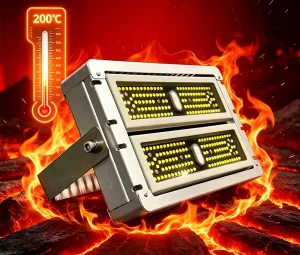
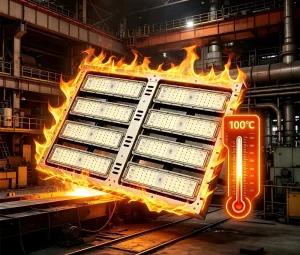
Can tri-proof LED lights operate continuously in high-temperature ambient zones?
Engineered Extreme-Duty Lighting Solutions
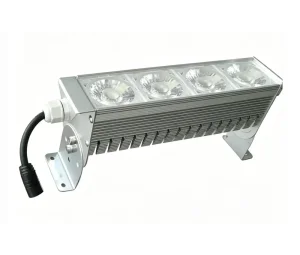
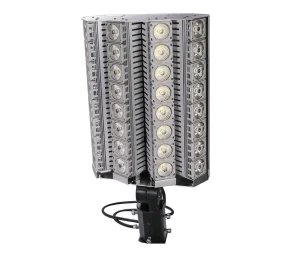
Explore specialized industrial lighting products: architectural strips, high-temperature high bays, stadium luminaires, and underwater exploration systems.