
Industrial-Grade Field & Outdoor Lighting Systems
Explore specialized optoelectronic luminaires engineered for extreme weather, heavy-duty mobile camps, high-altitude operations, and intensive outdoor environments.
Global Landscape of Waterproof Camping Light Manufacturing
A rigorous examination of supply chain transitions, precision ingress standards, and the industrial shift toward resilient solid-state illumination.
Supply Chain Realignment
The manufacturing ecosystem for high-end outdoor camping lights has transitioned from disposable plastic consumer novelties to precision-engineered optoelectronic hardware. Modern procurement demands heavy CNC-machined aerospace 6063 aluminum, high-grade fluorosilicone gaskets, and robust LED drivers capable of handling severe line variations or unstable off-grid generators.
- Shift toward automated robotic SMT assembly lines ensuring solder joint zero-defect rates.
- Adoption of direct-bond copper (DBC) and metal core printed circuit boards (MCPCB).
- Stringent raw material traceability satisfying European RoHS and REACH standards.
Engineering Demands of Ingress Protection
Outdoor expedition illumination demands authentic continuous performance under prolonged downpours, high-pressure hose-downs, and momentary submersion. Factory engineering has evolved past simplistic "IP65" lab ratings to true IP67, IP68, and IP69K standards, utilizing pressure-equalization breathing membranes to balance vapor pressures.
- Hydrophobic ePTFE acoustic and venting vents eliminating negative pressure condensation.
- Dual-stage O-ring hermetic containment on battery and driver compartments.
- Salt-fog atmospheric validation based on ASTM B117 standards for maritime camping.
Photometric & Ergonomic Convergence
Professional field lighting avoids visual fatigue and insect attraction while providing high visual acuity. Premier OEM factories incorporate variable color temperature (CCT) profiles ranging from 1800K wildlife-friendly warm amber to 6500K hyper-intensity task flood patterns with 90+ Color Rendering Indexes (CRI).
- TIR (Total Internal Reflection) optical collimators for dual-beam spot and area wash.
- Micro-grooved anti-glare diffusers for eye comfort in basecamp mess halls.
- Flicker-free pulse-width modulation (PWM) drivers rated for field cinematography.
Localized Engineering Solutions Across Extreme Geographies
How leading factories calibrate optoelectronic performance to conquer hostile regional conditions worldwide.
Sub-Zero Alpine Expeditions
In high-altitude alpine terrain (-40°C), traditional lithium-ion chemistries suffer severe internal impedance surges, resulting in catastrophic capacity depletion. Factory innovations incorporate integrated low-power thermistor heating circuits and specialized LiFePO4 / solid-state pouch cells that function without degradation.
- Cold-resistant silicone wiring harness maintaining elasticity below -45°C.
- Polycarbonate anti-shatter optical windows resisting sub-zero impact forces (IK10).
- Mechanical glove-operable rotary dials avoiding frozen micro-switches.
Tropical Rainforest Monsoon Zones
Equatorial rainforests combine 98%+ relative humidity with persistent biological hazards such as fungi, mold, and chemical insect repellents (DEET). Standard polycarbonate covers dissolve or craze upon exposure to DEET, requiring chemical-resistant optical grades or tempered borosilicate glass.
- Hermetically sealed potting with conformal polyurethane coatings on PCB assemblies.
- Corrosion-resistant stainless steel 316 structural fasteners and carabiner loops.
- Dual-wavelength insect repellent illumination spectrum (590nm amber output).
Arid Sandstorm & Desert Environments
Desert campsites experience massive diurnal temperature fluctuations ranging from +50°C daytime solar loading to below freezing at night. Airborne abrasive silica dust quickly damages slide mechanisms, cooling fins, and rotary switches unless engineered with magnetic contactless hall-effect actuators.
- IP6X certified dust-tight enclosure resisting micron-level particles.
- Hard anodized Type III military-spec outer casing resisting sand scouring.
- High-efficiency passive pin-fin thermal sinks preventing heat buildup under ambient heat.
Technical Roadmap: Next-Generation Basecamp Luminaires
Anticipating the technological transitions redefining high-reliability waterproof outdoor illuminators over the next decade.
GaN Power Architectures
Transitioning from traditional silicon MOSFET drivers to wide-bandgap Gallium Nitride (GaN) switching circuits, cutting internal thermal loss by 40% and shrinking driver volumes inside hermetic enclosures.
Solid-State Cell Integration
Adopting non-flammable solid-state electrolytes to achieve energy densities beyond 400 Wh/kg while eliminating high-pressure gas venting requirements under prolonged extreme outdoor use.
Mesh Telemetry & IoT Control
Low-power Bluetooth 5.4 and Sub-1GHz LoRa mesh modules allowing camp-wide synchronized illumination, dynamic perimeter detection alerts, and centralized energy monitoring via satellite links.
Tunable Metasurface Optics
Implementing flat metasurface nanostructured lenses providing ultra-thin beam steering without mechanical gimbals or heavy reflector hoods, reducing luminaire pack-out weight by 35%.
| Evaluation Parameter | Commercial Grade (Retail) | Professional Outdoor Grade | Industrial Basecamp Grade (LS Spec) |
|---|---|---|---|
| Ingress Protection | IPX4 – IP65 (Splash / Rain) | IP66 – IP67 (Short Submersion) | IP68 Continuous / IP69K Steam Jet |
| Housing Material | ABS / Basic Polypropylene | Anodized Aluminum Alloy 6061 | Aerospace 6063 Aluminum + Hard Coat III |
| Impact Resistance (IK) | IK04 – IK06 | IK07 – IK08 | IK09 – IK10 Heavy Impact Resistant |
| Thermal Interface | Direct FR4 PCB mounting | Standard Aluminum Core MCPCB | Direct-Bond Copper (DBC) + Vapor Phase |
| Operational Temp Range | -10°C to +40°C | -20°C to +50°C | -40°C to +80°C (Extended to 150°C/300°C) |
| Optics & Gasket Tech | Nitrile Rubber Gaskets | Standard Silicone O-Rings | Fluorosilicone + Gore-Tex ePTFE Venting |
Enterprise Solutions for Global Procurement & OEM Partners
Comprehensive engineering compliance, turnkey validation testing, and precision production workflows for global distributor brands.
Automated Quality Validation
Every industrial-grade waterproof luminaire undergoes multi-stage automated testing before warehouse clearance. Hydrostatic vacuum pressure decay chambers verify seal integrity under simulated deep-water hydrostatic immersion.
- Helium mass-spectrometry leak detection for high-pressure hermetic assemblies.
- 100% full-load electrical burn-in testing under elevated temperature chambers.
- Photogoniometer optical mapping generating verified IES / LDT file packages.
Bespoke OEM / ODM Capabilities
For distributors seeking differentiated private-label lines, tier-one manufacturers provide turnkey product lifecycle engineering—from industrial clay styling and thermal simulation to tooling manufacture and global compliance.
- Rapid CNC prototyping and 5-axis mold tooling with mirror EDM finishing.
- Customized driver firmware supporting wireless DMX, Bluetooth, or Zigbee.
- Laser etching, custom anodization coloring, and military-spec rugged packaging.
Regulatory & Environmental Safety
Global export compliance demands uncompromising adherence to electrical safety and electromagnetic compatibility directives. Products conform to UL 1598, CE, UKCA, FCC Title 47, and IEC 62471 photobiological safety standards.
- Ex-proof intrinsic safety engineering for mining, oil-field, and chemical camps.
- UN38.3 lithium battery transportation certification ensuring secure sea/air freight.
- Circadian blue-light hazard mitigation conforming to IEC/TR 62778 RG0/RG1.
Specialized Flood, Tower & Architectural Solutions
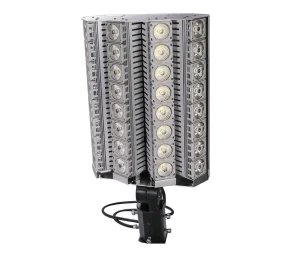
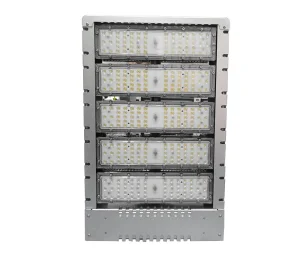
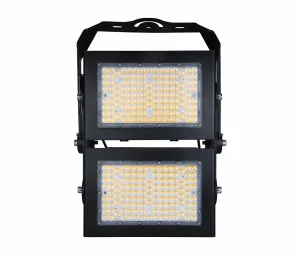
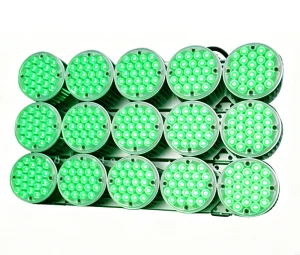
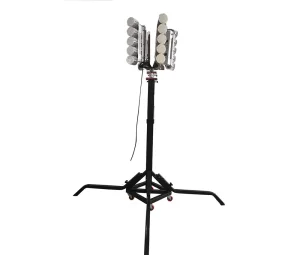
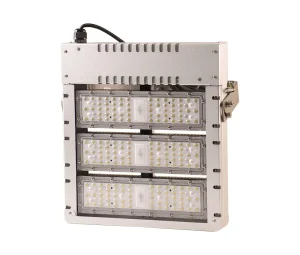
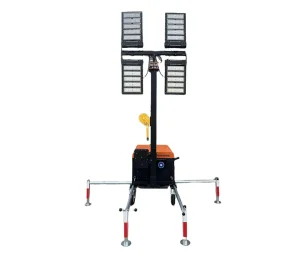
Discover high-performance floodlights, deployable mobile masts, roadway systems, and sports-grade field luminaires engineered for large-scale outdoor projects.
Engineering Inquiries & B2B Manufacturer Specifications
Direct technical answers addressing the critical mechanical, thermal, and optoelectronic questions asked by industrial buyers and engineering teams.
What critical engineering differentiates IP67 from true IP68 in camping lights?
IP67 designates temporary immersion in water up to 1 meter depth for 30 minutes under static pressure. True industrial-grade IP68 indicates continuous hermetic protection at defined water depths (typically 2 to 5 meters) under dynamic thermal cycles. This requires dual-stage elastomeric compression gaskets, potting compounds around electrical connectors, and hydrophobic vents that prevent internal vacuum siphoning during rapid temperature drops.
How do professional manufacturers solve internal lens condensation?
Internal fogging occurs when air sealed inside a warm enclosure cools rapidly in cold rain or rivers, causing moisture to condense on the inner lens. Leading factories solve this by installing bidirectional ePTFE (expanded polytetrafluoroethylene) membranes. These breathing membranes allow air molecules to pass freely to equilibrate pressure differentials while completely blocking liquid water and sub-micron vapor droplets.
What impact resistance (IK rating) should expedition fixtures maintain?
Field equipment must withstand accidental drops onto granite, vehicular rollover, and shifting cargo. While residential camping lanterns rarely surpass IK06 (1 joule of impact), industrial luminaires are constructed to IK09 (10 joules) or IK10 (20 joules) standards using thick-walled A380 die-cast or CNC 6063 aerospace aluminum coupled with high-impact optical-grade polycarbonates.
How does thermal management work in sealed waterproof enclosures?
Because sealed IP68 luminaires cannot utilize active convection cooling or ventilation slots, heat from high-output LED emitters must be conducted directly to the outer housing. Manufacturers utilize copper-core MCPCBs (with thermal conductivities above 400 W/mK) bonded to the exterior aluminum chassis with phase-change thermal interface materials (TIM), turning the entire luminaire casing into a passive heat radiator.
What are the photobiological and insect attraction risks in outdoor camp lighting?
Standard 6500K cool-white diodes emit strong peaks in the 450nm blue wavelength region, which disrupts human melatonin production and strongly attracts nocturnal flying insects. Advanced camping light factories engineer dual-spectrum engines: high-CRI neutral daylight (4000K, Ra>90) for technical activities, alongside monochromatic amber or ultra-warm 2200K low-blue outputs for comfortable insect-free communal areas.
What is the standard lead time and tooling timeline for OEM/ODM luminaires?
Turnkey custom industrial luminaire projects follow a structured development cycle: 10–14 days for optical simulation, thermal FEA analysis, and 3D prototyping; 35–45 days for hardened steel injection/die-casting tooling fabrication; and 20–25 days for initial pilot production and laboratory certification (UL, CE, IP testing). Standard production lead times for volume repeat orders typically run 25–35 days.