
Engineered Extreme-Environment Deployments
Verified photometrics tested for elevated thermal tolerance, IP68 hermetic sealing, and corrosive atmospheres.
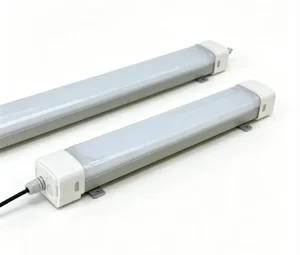
High-Quality IP65-IP67 triproof led light – Waterproof, Dustproof & Corrosion Resistant
Explore Specifications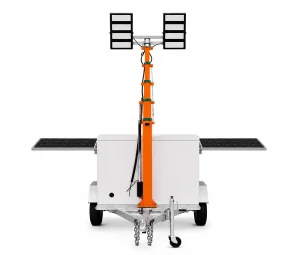
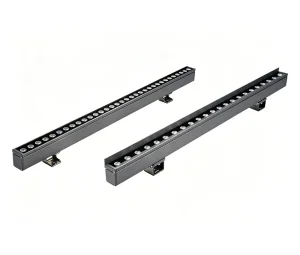
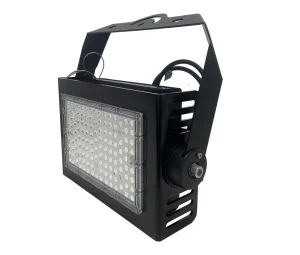
Best RGB Wall Washer – Effortless Commercial Decoration with Linear Precision
Explore Specifications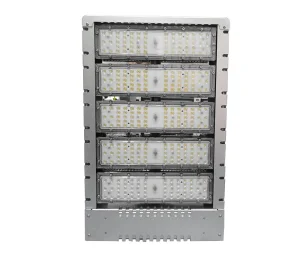
Best Artemis LED Stadium Light - IP67 Durability for Harsh Coastal Environments
Explore Specifications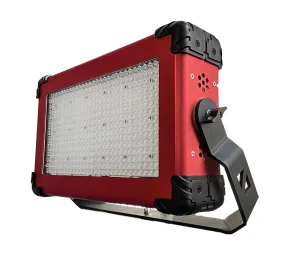
Global Industrial Status: The 100°C Thermal Barrier
Why conventional solid-state lighting catastrophic failure rates spike in extreme heavy-manufacturing zones.
Thermal Stratification Realities
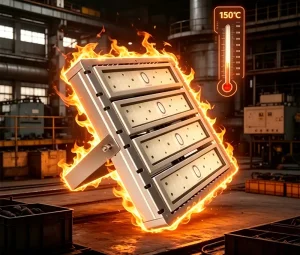
In hot manufacturing plants such as metallurgy mills, glass blowing shops, and casting workshops, natural thermodynamic convection forces ambient air beneath roof bays to stratify. While the floor floor sits at 35°C to 45°C, high bay fixtures endure prolonged ambient envelopes between 80°C and 100°C.
Phosphor Degradation & Shift
Standard grade LEDs operated beyond 85°C junction temperature suffer instantaneous thermal quenching, chromatic aberration shifting into harsh blue wavelengths, and fast phosphor cracking. True 100°C LED luminaires require ceramic-substrate emitters and gold-wire bonding to maintain CIE color coordinates.
Electrolytic Driver Vulnerability
Over 80% of luminaire field failures are electrical rather than diode breakdown. Conventional power drivers contain liquid electrolytic capacitors that boil dry rapidly when exposed to 80°C+. Our specialized 100°C solutions decouple the driver into isolated cold channels or remote driver boxes.
China Advanced Manufacturing & Supply Ecosystem
How direct manufacturing delivers extreme cost-performance advantages without sacrificing aerospace-grade thermodynamics.
6063-T6 Extrusion & Copper Heat-Piping
By leveraging Greater Bay Area industrial supply hubs, our facilities mold ultra-pure 6063 aviation extruded aluminum enclosures combined with vacuum-sealed sintered copper micro-heat pipes, achieving thermal conductivity rates upwards of 210 W/m·K.
In-House Environmental Burn-in Testing
Every batch of our 100°C rated series undergoes rigorous 72-hour thermal stress screening inside calibrated burn-in ovens operating at 105°C sustained atmosphere, validating current ripple suppression and photon maintenance prior to dispatch.
Tier-1 Component Strategic Alliances
We work closely with global LED semiconductor giants including OSRAM and customized thermal driver foundries. This eliminates multi-tier distribution markup and delivers tailor-engineered photometrics directly to overseas enterprise buyers.
| Performance Specification | Standard Commercial LED High Bay | Standard Industrial Tri-Proof | Lsledsus 100℃ Heavy-Industry Series |
|---|---|---|---|
| Max Ambient Temperature | 40°C to 45°C max | 50°C max | 100°C / 212°F Continuous |
| Heatsink Thermal Dissipation | Die-cast ADC12 aluminum (96 W/m·K) | Polycarbonate / Plastic housing | Cold-Forged 6063-T6 + Copper Heatpipes (210+ W/m·K) |
| Driver Topology & Isolation | Integrated internal electrolytic driver | Internal unvented driver | Galvanically Isolated, Remote Driver Box or Solid-State Solid Capacitor Architecture |
| Lens Material & Gasket | Commercial PMMA / Standard Silicone | Polycarbonate / Nitrile | Borosilicate 3.3 Tempered Glass + Fluororubber (FKM) Hermetic Seals |
| Lumen Depreciation (L70) | <6,000h under 70°C ambient | <10,000h under 70°C ambient | >65,000 Hours @ 100°C Continuous Ambient |
Verified Applications for 100℃ Rated Lighting
Engineered for industries where unpredicted relamping means dangerous, cost-prohibitive assembly line shutdowns.
Steel Mills & Continuous Casting
Installed over ladle turrets, tundish preheating lines, and slab casting runs where ambient radiant heat consistently peaks at 90°C–100°C.
Glass Melting & Float Lines
Designed for lehr zones and forehearths, impervious to intensive thermal radiance, volatile gas exposure, and ambient high temperatures.
Aluminum Smelting Potrooms
Withstands electromagnetic interference alongside continuous elevated heat and caustic airborne fluoride particulates.
Turbine Halls & Power Stations
Guarantees uninterrupted illumination over steam generator ceilings, waste incinerators, and turbine decks.
Global Procurement Demands & Technology Trends
How EPC contractors and facility directors reduce their Levelized Cost of Light (LCOL).
IoT-Enabled Thermal Telemetry
Modern high-heat fixtures are adopting intelligent thermal throttling sensors. If ventilation fails or ambient air rises above standard levels, intelligent microprocessors dynamically dim the fixture to keep the junction temperature below critical damage thresholds rather than shutting off.
Modular Remote Power Enclosures
Global procurement teams specify centralized driver panels placed 20 to 50 meters away in climate-controlled electrical closets. This protects drivers from thermal stress and allows ground-level maintenance without scaffolding or lift rentals.
Optical Resilience: Pure Glass vs PMMA
High-temperature operations are moving away from acrylic and polycarbonate lenses. High heat and UV degrade plastic optics, causing yellowing and light loss. Solid borosilicate lenses ensure 94%+ light transmission across the luminaire's operational life.
Specialized Industrial & Thermal Lighting Systems
Complete project specifications: from 80°C flood lights to customized 300°C extreme assemblies.
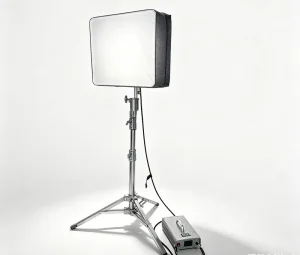
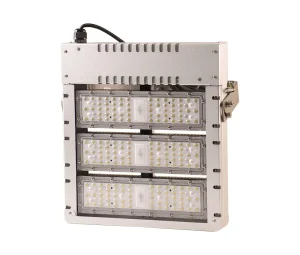
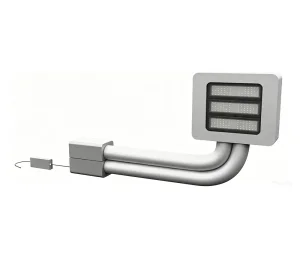
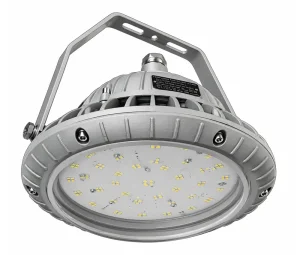
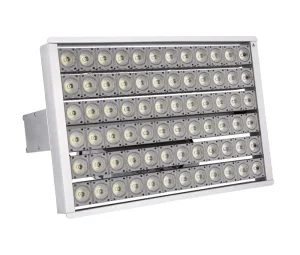
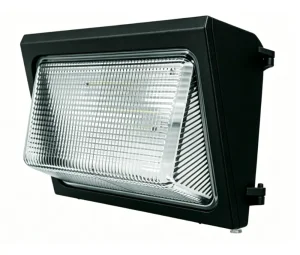
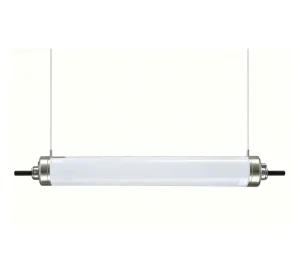
Best IP69K Tri-proof Light for Harsh Environments – High Efficacy Performance
Explore Specifications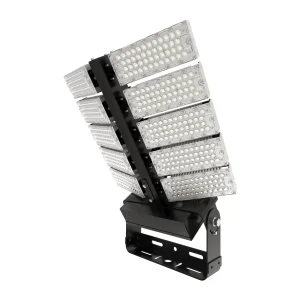
Frequently Asked Questions: High Temperature LED Solutions
Direct technical answers from our senior optical and thermal engineers.