Precision Engineering Catalog
High-Output Luminaires & Specialized Industrial Fixtures
Explore certified outdoor, marine, high-bay, and mobile lighting hardware manufactured to exceed stringent municipal and industrial standards worldwide.
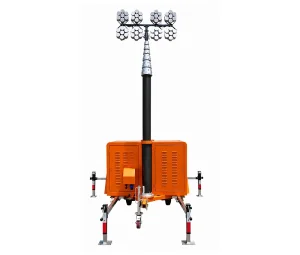
Best Portable 9m Mobile Light Tower Suppliers, Manufacturer
Explore Specifications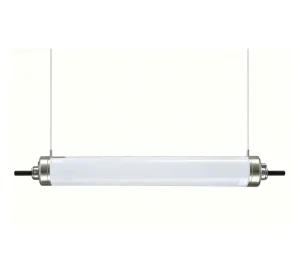
Best IP69K Tri-proof Light for Harsh Environments – High Efficacy
Explore Specifications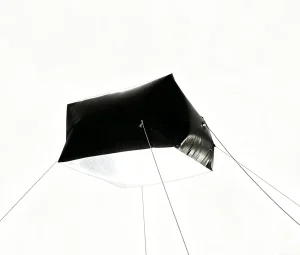
High-Quality Helium Balloon LED Light - Aerial Illumination
Explore Specifications
High-Quality High Brightness 12m Mobile Light Tower Factory
Explore Specifications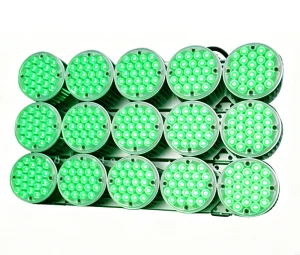
Best RGB Flood Lights - 1000W Power for Towers & Grand Landscapes
Explore Specifications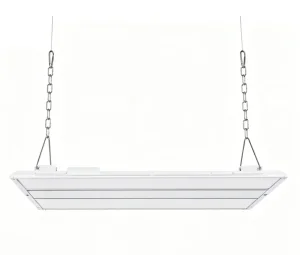
High-Quality Linear High Bay LED – Bright, Reliable & Smart-Controlled
Explore Specifications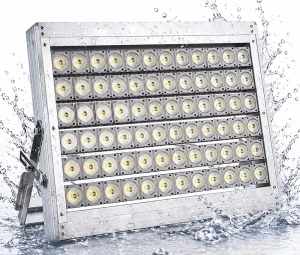
High-Quality LS-FLN Titans Series LED Marine Light for Deep Sea
Explore Specifications
Engineering White Paper • Section 01
Evolution of 150W LED Street Lighting: From Basic Retrofit to Smart Infrastructure
A rigorous examination of optical efficiency, solid-state thermodynamics, and municipal grid modernization across international roadway corridors.
The 400W HPS Replacement Golden Ratio
For decades, 250W–400W High Pressure Sodium (HPS) and Metal Halide (MH) lamps dominated expressways, six-lane arterials, and logistics hubs. Operating at 65–85 lm/W system efficacy with poor Color Rendering Index (CRI < 25), they suffered from catastrophic lumen depreciation. The modern 150W LED engine delivers up to 28,500 lumens at 170–190 lm/W chip efficacy, achieving an immediate 65% to 72% energy reduction while dramatically improving visual acuity and scotopic/photopic (S/P) ratios.
L90B10 Service Life Exceeding 100,000 Hours
Early LED streetlights failed prematurely due to electrolytic capacitor degradation and thermal choking. Leading 150W luminaire manufacturers now integrate solder-free surface-mount technology (SMT), aluminum nitride metal-core PCBs (MCPCB), and isolated constant-current drivers rated for 100,000 operational hours at 45°C ambient. This translates to an unprecedented 22-year lifecycle under standard 12-hour dusk-to-dawn operational cycles.
DarkSky & Zero Upward Light (U0)
Modern ecological guidelines mandate the mitigation of light pollution and blue-light scattering. Advanced 150W roadway luminaires employ flat, tempered optical glass lenses with an absolute cutoff angle (>80°) and zero uplight (BUG rating U0). Coupled with targeted CCT options from 2200K amber (wildlife-safe) to 4000K neutral white, municipalities meet international dark-sky certification without sacrificing pavement luminance uniformity (U0 ≥ 0.40).
Advanced Photometrics • Section 02
Aerodynamic Thermodynamics & Precision Ray-Tracing Optics
A high-performance 150W LED street luminaire is fundamentally an optoelectronic cooling system designed around high-flux solid-state emitters. The fixture utilizes low-copper die-cast ADC12 aluminum with integrated self-cleaning convection ribs, preventing road grime, sand, and foliage accumulation.
- Junction Temperature Control: Engineered thermal resistance (<0.85°C/W) maintains the LED junction temperature ($T_j$) below 65°C under 45°C ambient test conditions.
- IESNA Type II, III, and IV Distribution: Non-imaging optical grade PMMA / PC TIR lenses ensure asymmetrical light throw, eliminating dark spots across multi-lane highways.
- Tool-Less Maintenance Clasp: Automatic power-cutoff disconnect switch allows rapid field servicing by municipal technicians without live-line hazards.
150W Engineering Specification Matrix
System Power Consumption
150W ± 3% (True RMS)
Luminous Flux Output
24,000 – 27,000 lm (160–180 lm/W)
Input Voltage & Frequency
100–277V / 277–480V AC, 50/60Hz
LED Chip Engine
Lumileds 5050 / Osram Square (High Flux)
Power Factor (PF) / THD
≥ 0.98 / THD < 10% @ Full Load
Surge Protection Device (SPD)
10kV / 20kV (IEC 61643-11 Class II)
Ingress & Impact Rating
IP66 / IP67 • IK10 Vandal-Proof
Corrosion Resistance
1,000h Salt Spray (ASTM B117 / ISO 9227)
Financial Engineering • Section 03
Global B2B Procurement: Total Cost of Ownership (TCO) & Tender Evaluation
Strategic financial analysis comparing standard legacy high-pressure sodium luminaires with high-efficiency 150W LED installations over a 10-year municipal horizon.
| Evaluation Parameter | Legacy 400W HPS + Ballast | Standard Low-Cost 150W LED | Tier-1 Factory 150W LED Luminaire |
|---|---|---|---|
| Nominal System Wattage | 450W (400W Lamp + 50W Ballast Loss) | 150W ± 8% | 150W Precision Controlled |
| System Luminous Efficacy | 75–85 lm/W (Degrades quickly) | 120–130 lm/W | 170–185 lm/W Real Test |
| Relamping / Maintenance Frequency | Every 15,000–24,000 Hours (3–4 yrs) | Every 30,000–40,000 Hours (Driver failure) | Zero Maintenance (>100,000 Hours L90B10) |
| Annual Energy Consumption (4,380 hrs) | 1,971 kWh per pole | 657 kWh per pole | 459 kWh (With Autonomous Dimming) |
| 10-Year Cumulative Energy Cost ($0.15/kWh) | $2,956.50 per fixture | $985.50 per fixture | $688.50 per fixture (76.7% Savings) |
| Surge & Lightning Immunity | Minimal (Ballast burnout risk) | 4kV–6kV (Vulnerable to grid spikes) | 10kV / 20kV SPD (Mean Well / Inventronics) |
| Smart City Expandability | None | Fixed photocell only | NEMA 7-Pin / Zhaga Book 18 IoT Ready |
Smart City Infrastructure • Section 04
Connected Intelligence: IoT Control Architectures & Smart Roadway Ecosystems
How modern municipal tenders leverage 150W LED platforms as dynamic IoT nodes for connected urban telemetry, adaptive traffic control, and grid load-balancing.
Zhaga Book 18 & NEMA 7-Pin Sockets
Standardized twist-lock mechanical receptacles allow plug-and-play installation of photocells, microwave radar sensors, or cellular IoT nodes without opening the driver compartment. Dual-socket configurations (top for daylight sensing, bottom for traffic radar) facilitate modular upgrades over decades.
LoRaWAN / NB-IoT Mesh Telemetry
Central Management Systems (CMS) monitor voltage, active power, power factor, lamp running hours, and tilt angle in real time. Automated failure alerts dispatch maintenance teams directly to coordinates, eliminating manual nighttime inspection patrols.
Autonomous Virtual Midnight Dimming
Onboard microcontrollers automatically calculate the mathematical midpoint between dusk and dawn. Dynamic 5-stage dimming profiles (e.g., 100% at dusk, 70% at 22:00, 40% at 01:00, 80% at 05:00) yield an additional 25–35% in energy savings while adhering strictly to roadway class standards.
180 lm/W
Peak System Efficacy
100,000h
Rated L90B10 Lifetime
20 kV
Lightning Surge Protection
IP68 / IK10
Ingress & Impact Hardened
Turnkey Engineering • Section 05
Macro Municipal & Industrial Infrastructure Solutions
Deployment topologies configured to meet international illumination standards, including EN 13201 (M1 to M4 classes) and ANSI/IES RP-8-21 roadway compliance.
Multi-Lane Expressways
Mounting heights of 10m–14m with 35m–45m pole spacing. Type II-M optics provide high longitudinal uniformity ($U_l \ge 0.7$), mitigating the rhythmic flickering fatigue experienced by long-distance commercial drivers.
Port & Heavy Industrial Logistics
Harsh operating perimeters with heavy container crane traffic, airborne sulfur, and severe vibration. Anti-resonance mounting hardware and 1,000h salt spray coatings ensure continuous uninterrupted uptime.
Urban Boulevards & Interchanges
Complex roundabouts and highway flyovers requiring Type III-M and Type IV forward-throw distribution. High CRI > 80 options enhance traffic camera facial recognition and license plate capture accuracy.
Solar-Hybrid Microgrid Integration
Low inrush current and pure DC driver options (24V/48V DC) engineered to interface seamlessly with off-grid lithium energy storage systems (BESS) along remote desert or tropical highway stretches.
R&D Horizons • Section 06
Technology Roadmap & Next-Generation Engineering (2026–2030)
Architectural milestones defining our factory's research and development trajectory in solid-state lighting physics and urban AI computing.
Phase 1 • 2026
200+ lm/W System Efficacy
Adoption of sub-nanometer phosphor conversion layers and GaN-on-Si substrates delivering unprecedented fixture efficiency exceeding 200 delivered lumens per watt at production scale.
Phase 2 • 2027
Edge AI Vision Nodes
Direct integration of low-power edge tensor processors within the 150W housing to classify vehicle types, pedestrian footfall, and road icing conditions without external cloud latency.
Phase 3 • 2028
Dynamic Spectral Tuning
Dual-channel circadi-dynamic optical engines transitioning continuously between 2200K (heavy fog/wildlife hours) and 4000K (high-speed transit) based on weather sensors.
Phase 4 • 2030
V2X Optical LiFi Communication
Optical vehicle-to-infrastructure (V2I) communication embedding lane-guidance telemetry and high-speed data delivery directly into high-frequency LED light streams.
Factory Quality Verification Protocols
Every production batch undergoes 100% automated end-of-line (EOL) burn-in testing inside our ISO 17025 accredited metrology lab prior to container staging:
Goniophotometer Darkroom Testing
Type-C Far-Field IES / LDT Files
Integrating Sphere Spectral Scan
CRI, CCT, SDCM < 3 MacAdam Ellipse
IPX6 / IPX7 Rain & Immersion Chamber
High-Pressure Water Jet Validation
Thermal Shock & Climate Testing
-40°C to +65°C Rapid Cycling
Electromagnetic Compatibility
CISPR 15 / EN 55015 Radiated EMC
Compliance • Section 07
Global Certification & Tender Risk Mitigation
Navigating public municipal tenders requires ironclad third-party compliance. Our 150W LED street luminaires are engineered to satisfy national procurement codes across North America, the European Union, Australia, the Middle East, and Latin America.
We provide full documentation dossiers, including certified Dialux and Relux photometrics, LM-79 luminous test reports, LM-80 lumen maintenance extrapolation curves, and TM-21 life expectancy projections.
- European Market: CE, RoHS, ENEC, CB Scheme, and DarkSky U0 cut-off certified.
- North American Market: UL 1598, cUL, and DLC 5.1 Premium listing for municipal utility rebates.
- Middle East & APAC: SASO, NOM, SAA, and Class I Div 2 hazardous suitability options.
Procurement & Engineering FAQ • Section 08
Frequently Asked Questions: Technical & Contractual Guidance
Comprehensive answers compiled by our Chief Photometric Engineer to resolve technical ambiguities prior to municipal submission or distributor sampling.
Why is 150W considered the universal sweet spot for arterial roadway lighting?
A true 150W LED luminaire running at 170 lm/W delivers between 24,000 and 27,000 lumens. This precisely matches the photopic eye requirements for multi-lane roadways (mounting heights of 10m to 14m, pole distance of 35m–45m) satisfying EN 13201 M2/M3 lighting classes while replacing legacy 250W–400W HPS lamps without modifying pole foundations or mast-arm brackets.
How does your factory prevent galvanic corrosion between the fixture and steel poles?
We apply high-purity thermoset polyester powder coating (tested to 1,000h salt spray ASTM B117) and utilize 316-grade marine stainless steel fasteners. Furthermore, an anodized, non-conductive isolation sleeve or gasket can be integrated at the spigot clamp to stop galvanic electron transfer between aluminum housings and galvanized steel poles.
What is the practical difference between Zhaga Book 18 and ANSI C136.41 NEMA 7-Pin?
NEMA 7-pin uses line-voltage AC connections across larger mechanical blades, historically dominant in North American markets. Zhaga Book 18 is a compact, digital 24V DC interface native to European and D4i smart lighting standards. Our factory housings feature interchangeable dual-port castings, supporting either NEMA or Zhaga configurations per tender requirements.
Can you provide custom IES files and Dialux calculations for municipal bid proposals?
Yes. Our in-house photometric engineering team generates comprehensive Dialux Evo calculations and produces certified .IES and .LDT files based on your road width, pole spacing, tilt angle, setback distance, and target roadway illumination class (EN 13201 / IES RP-8) within 24 to 48 hours.
How does the fixture handle extreme ambient temperatures from -40°C to +55°C?
We pair premium grade aluminum die-castings with solid cold-start industrial drivers rated to -40°C without pre-heating delays. In high-heat zones like the Middle East or Australian Outback, oversized convective heat sinks and automated NTC thermistor thermal foldback lower drive currents if case temperatures exceed 85°C, preserving lifetime.
What is the minimum order quantity (MOQ) and production lead time for OEM projects?
Standard batch runs begin at 50 units for evaluation samples, with containerized bulk volumes (1,000–5,000 units) manufactured in 20–25 working days. Full OEM customization (including laser-etched branding, bespoke CCT, and customized spigot entry diameters) is fully supported.
Comprehensive Hardware Ecosystem
High-Temperature, Marine, Sports & Off-Grid Luminaires
Industrial LED fixtures engineered alongside our 150W street luminaires to conquer steel mills, hazardous ports, athletic arenas, and autonomous off-grid towers.
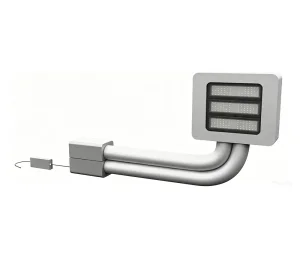
High-Quality Tailored High Temperature LED Light Rated 300°C (572°F)
Explore Specifications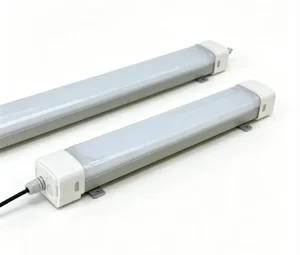
High-Quality IP65-IP67 Triproof LED Light – Waterproof & Corrosion Resistant
Explore Specifications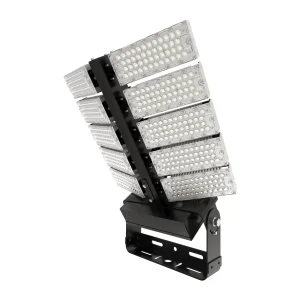
High-Quality Flex LED Flood Light - Articulating Modules for Field Uniformity
Explore Specifications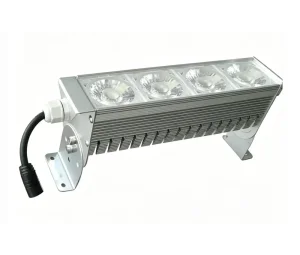
High-Quality LED Linear Strip Light for Industrial & Commercial Architectural
Explore Specifications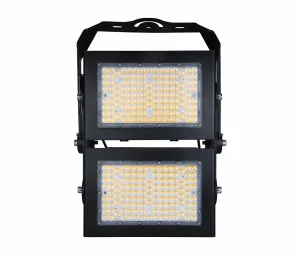
OEM Vega LED Sports Field Light - Robust Design, Adjustable Optics
Explore Specifications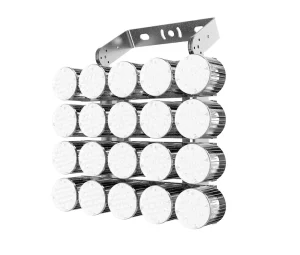
High-Quality Arena LED Stadium Light – Ultra-Compact Design
Explore Specifications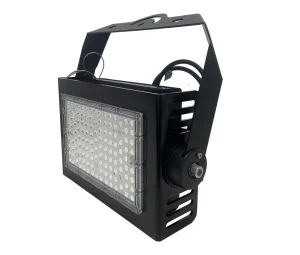
OEM 48V DC LED Flood Light for Mobile Light Towers & Off-Grid Lighting
Explore Specifications