Featured Industrial Luminaires & Critical Systems
Heavy-duty, high-efficiency illumination hardware verified for extreme stress operating envelopes.
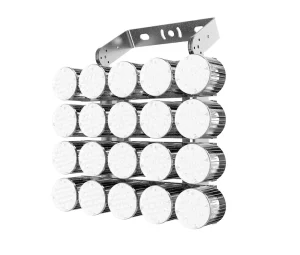
Engineering LED Reliability in 200℃ Ambient Thresholds
Conventional LED fixtures fail catastrophically when ambient operating temperatures cross 65℃. Sustaining continuous photometric flux at 200℃ demands a complete thermodynamic re-architecture.
Thermal Decoupling & Remote Power Architectures
Electrolytic capacitors inside standard LED drivers dry out and fail rapidly above 85℃. In a 200℃ continuous rating system, power conversion units are physically segregated into climate-controlled sub-chambers or remote modular racks situated 20 to 100 meters away, shielding electronic semiconductors while driving bare optical arrays via high-purity nickel-plated wiring paths.
Phase-Change Superconducting Heat Sinks
Our 200℃ luminaire chassis utilize aerospace-grade 6063-T6 extruded aluminum paired with embedded vacuum copper-water or sintered powder heat pipes. This achieves thermal conductivities exceeding 4,000 W/mK—over 20 times that of cast aluminum—evacuating junction heat rapidly even when the external convective delta-T approaches razor-thin margins.
Inorganic Borosilicate Glass & Viton Seals
Polycarbonate and PMMA optical lenses yellow, degrade, and off-gas violently above 110℃. We deploy high-transmission, low-iron borosilicate flat or refractive optics, hermetically compressed against precision-milled housings via Fluorocarbon (Viton™) fluoropolymer O-rings rated for continuous 230℃ operation against corrosive chemical fumes and thermal shocks.
Comparative Matrix: Standard vs. 200℃ Industrial LED
System-level engineering differences between commercial grade luminaires and true high-heat certified luminaires.
| Performance Dimension | Commercial High Bay LED | Heavy Industry 100℃ Rated | 200℃ Engineered Custom Luminaire |
|---|---|---|---|
| Maximum Ambient Rating (Ta) | 40℃ to 50℃ (104°F - 122°F) | 100℃ (212°F) | 200℃ continuous, peaks up to 300℃ |
| Driver Topology | Internal onboard integrated | Direct mount thermally isolated | Decoupled remote modular driver bank |
| Optical Material | Polycarbonate / Acrylic (PMMA) | Tempered soda-lime glass | Micro-prismatic Borosilicate 3.3 glass |
| Gasketing Compound | Silicone rubber / EPDM | High-grade synthetic silicone | Viton™ / Fluoroelastomer (FKM) |
| Thermal Interface (TIM) | Standard silicone thermal grease | Alumina ceramic pads | Indium alloy / Nanocarbon phase change |
| L70 Lifetime @ Elevated Ta | < 500 hours (early catastrophic failure) | 50,000 hours @ 100℃ | 60,000+ hours @ 200℃ continuous Ta |
Global Procurement Trends in Extreme Industrial Lighting
Enterprise operators across North America, Europe, Australia, and the Middle East are shifting from disposable lighting to ultra-resilient architectural-grade assets.
Total Cost of Ownership (TCO) Replaces Capex Bias
Replacing a burnt-out high-bay light above an active hot strip mill requires crane shutdowns, safety spotters, and dangerous scaffolding operations costing upwards of $15,000 in lost uptime. Fortune 500 metallurgic facilities prioritize long-term thermal survivability over upfront fixture pricing to maximize plant yield.
Industrial Decarbonization Mandates (ESG)
Legacy high-pressure sodium (HPS) and metal halide fixtures burn excessive energy and radiate massive parasitic heat back into facilities. High-efficiency 200℃ LEDs deliver 130–160 lm/W system efficacy, cutting facility carbon footprint while instantly turning on without sluggish restrike delays.
Digital Twin & Smart Factory Integration
Modern plant upgrades demand integration with SCADA and industrial IoT ecosystems. Contemporary 200℃ lighting lines incorporate isolated DALI-2, 0-10V, and wireless mesh gateways inside decoupled sub-stations, providing real-time telemetry on operating temperature, current flux, and power consumption.
Shenzhen Industrial Manufacturing & Global Supply Chain Advantages
How our integrated factory ecosystem delivers military-grade thermal fixtures at global scale with radical cost-to-performance efficiency.
Full In-House Tooling & Die Casting
From raw 6063 billet extrusion to 2,000-ton high-pressure die casting, all chassis are designed and finished in-house, ensuring zero micro-voids that impede thermal paths.
Tier-1 Semiconductor Partnerships
We collaborate directly with global optoelectronic leaders such as Osram, Cree, and Lumileds, sourcing ultra-high junction temperature chips verified up to Tj 150℃+.
Turnkey OEM / ODM Customization
Rapid prototyping turnarounds of less than 14 days for custom mounting brackets, marine-grade AkzoNobel powder coatings, and specialized optical lenses matching any ceiling profile.
Rigorous Environmental Testing Lab
Every luminaire model passes exhaustive 500-hour continuous thermal chamber stress tests, salt-spray chambers (ASTM B117), and IP68 submersion tests before shipment.
Mission-Critical Deployment Scenarios for 200℃ Fixtures
Engineered specifically for hazardous, high-vibration, corrosive, and intensely hot processing zones worldwide.
Steel Smelting, BOF & Continuous Casting Bays
Suspended within meters of molten metal ladles, continuous casters, and basic oxygen furnaces where radiant heat drives ceiling ambient temps over 160℃ to 200℃, compounded by heavy graphite dust and sulfurous gases.
Glass Melting & Float Annealing Lehr Lines
Glass container production and float glass cooling tunnels generate steady-state thermal zones where standard electronics fail within weeks. Our fixtures preserve lumen intensity and color rendering indices (CRI > 80) across decades.
Industrial Forging, Heat-Treatment & Kilns
Cement rotary kilns, commercial bakery baking tunnels, carbon-fiber curing autoclaves, and large-scale hydraulic forging presses where severe thermal cycling stresses conventional solder joints and optic seals.
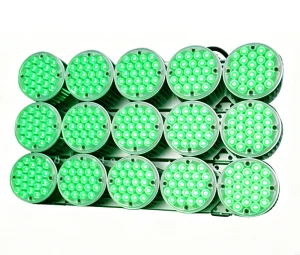
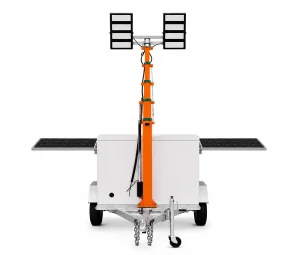
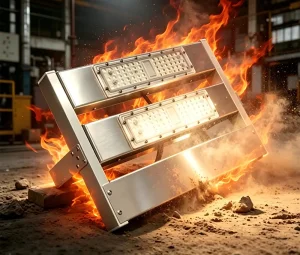
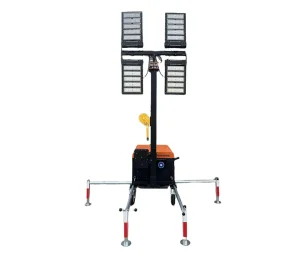
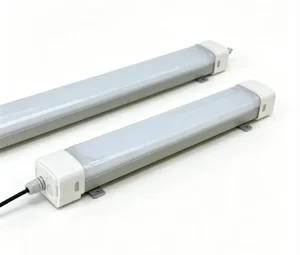
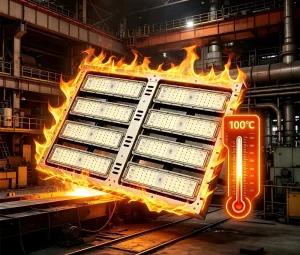
Heavy Industry & Severe Environment LED Lineup
Direct factory catalog: high-temperature high bays, explosion-resistant fixtures, and marine arrays.
Localization Support, Global Codes & Safety Compliance
Ensuring seamless site integration, full electrical compliance, and rigorous health and safety adherence across all international jurisdictions.
UL 1598 & EN 60598-1 Certification
All heavy-industrial fixtures are designed to satisfy international standard testing for thermal endurance, abnormal temperature operations, structural mounting safety, and mechanical shock dampening.
Hazardous Location (HazLoc) Compatibility
Engineered with encapsulated, non-sparking terminal connections and precision tolerances matching ATEX / IECEx Zone 1/21 and Zone 2/22 requirements for volatile airborne dusts and industrial gases.
Turnkey Photometric DIALux Simulations
Prior to project purchase authorization, our engineers generate complete 3D DIALux lighting models using real IES data, verifying exact lux levels, beam uniformity, and glare rating (UGR < 19) calculations.
Frequently Asked Questions: 200℃ LED Solutions
Detailed answers to technical and commercial questions posed by industrial facility managers and procurement teams.