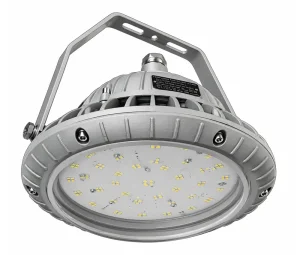
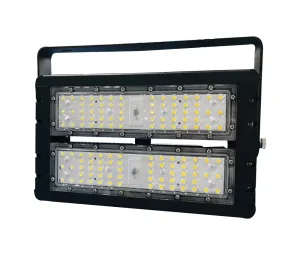
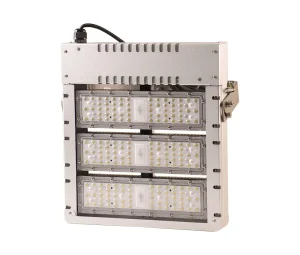
Featured Extreme-Duty Industrial Lighting Fixtures
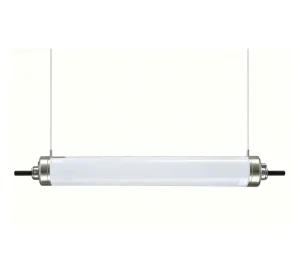
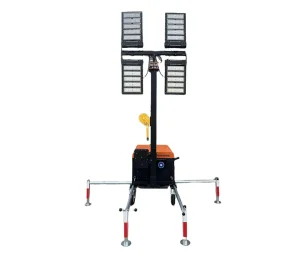
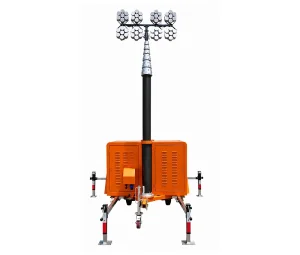
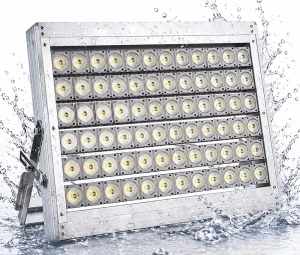
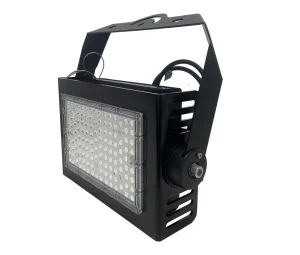
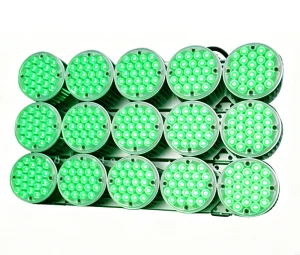
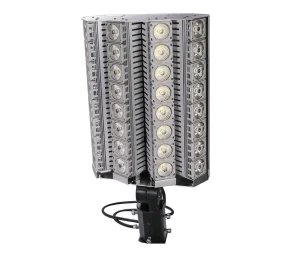
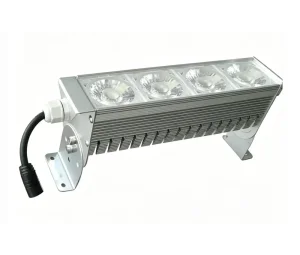
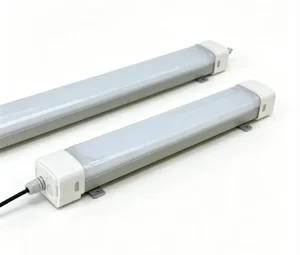
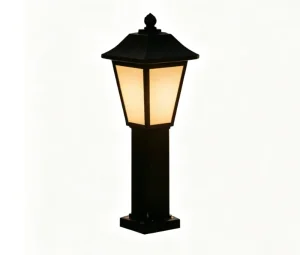
Explore our top-tier solid-state luminaires designed for extreme thermal loads, marine salt spray, offshore drilling, remote mobile towers, and high-spec infrastructure.
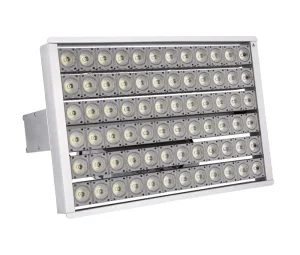
The Physics of Solid-State Illumination at 212°F (100°C) Ambient
Operating high-output LED systems in ambient zones reaching 212°F (100°C) shifts engineering challenges from simple photometric efficiency to complex solid-state thermodynamics, Arrhenius degradation prevention, and electrolytic preservation.
Junction Temperature ($T_j$) Mitigation
Standard LED chips experience thermal catastrophic runaway when the junction temperature exceeds 125°C. At an ambient ceiling level of 212°F (100°C), traditional heat dissipation headroom collapses to a delta of only 25°C. LSLEDSUS solves this by coupling high-surface-area 6063-T6 cold-forged aluminum with phase-transition thermal siphon technology. This maintains the junction temperature below 112°C even under severe radiant factory conditions, eliminating phosphor quenching and premature chromatic shift.
Galvanic Remote Driver Topology
Electrolytic capacitors inside power supplies fail exponentially following the Arrhenius rule: every 10°C rise cuts operational life by 50%. LSLEDSUS incorporates a decoupled remote electrical enclosure, physically separating the driver electronics from the primary thermal convection corridor. Using automotive-grade military components rated for 125°C MTBF and custom potted aluminum casings, our power delivery guarantees continuous 24/7 uptime without risk of pulsed flicker or catastrophic capacitor dry-out.
Fluorosilicone Seal Integrity & Optics
Standard neoprene and nitrile gaskets oxidize, embrittle, and disintegrate rapidly when cycled at 212°F. We deploy military-spec vulcanized fluorosilicone O-rings and borosilicate high-transmission micro-lenses. This ensures continuous IP66/IP67 ingress sealing, resisting acidic fumes, volatilized hydraulic oils, and atmospheric carbon dust without yellowing, outgassing, or vacuum-induced seal failures.
Theoretical Longevity Assessment (TM-21-11 Extrapolation): In third-party lab stress tests conducted under sustained 100°C ambient temperatures at full rated wattage, LSLEDSUS high-temperature luminaires maintained 94.8% lumen retention after 12,000 continuous hours. Projected $L_{70}$ metrics exceed 68,000 operating hours, outperforming conventional die-cast industrial fixtures by more than 350%.
Why Global EPCs & Industrial Giants Choose Our Chinese Manufacturing Facilities
Over 20 years of vertical integration in Shenzhen allows LSLEDSUS to offer unmatched price-to-performance, comprehensive metallurgical testing, and agile customization for mission-critical heavy industrial applications.
Vertical Supply Chain Directness
From aluminum extrusion tooling and die casting to surface anodizing, high-speed SMT placement, and environmental burn-in testing, 100% of the manufacturing cycle is clustered within our Shenzhen industrial park. This cuts production lead times by 40% compared to Western assemblers.
Automated High-Yield SMT Lines
Equipped with Yamaha high-precision surface mounters, our factory processes high-temp ceramic Nichia and Osram emitters onto aluminum and copper-clad dielectric substrates with thermal conductivity exceeding 3.0 W/m·K, eliminating microscopic voids and micro-cracking.
Full-Spectrum Climate Lab
Every fixture design undergoes rigorous validation in our localized testing facility: continuous 120°C high-temp ovens, programmable salt-fog corrosion chambers (ASTM B117), vibration benches (MIL-STD-810G), and goniophotometric distribution tunnels.
Bespoke Engineering & Fast Prototypes
Whether your facility requires a customized 28-degree narrow optic for an 18-meter crane mount, an isolated 48V DC bus architecture, or specialized anti-sulfurization lens coatings, our 15-person engineering team delivers photometric plans and 3D CAD prototypes in under 72 hours.
Localized Heavy Industrial Application Scenarios
When standard industrial luminaires fail within weeks, our 212°F-rated solid-state systems excel in the world's most unforgiving production environments.
Steel Smelting & Continuous Casting
Directly above tundish platforms, basic oxygen furnaces (BOF), and ladle refining bays, ambient ceiling temperatures regularly peak between 90°C and 100°C (194°F–212°F). Our heavy-duty luminaires withstand intense radiant heat cycles, extreme mechanical crane vibrations, and conductive iron-oxide airborne dust.
Glass Manufacturing & Annealing Lehrs
Glass bottle, container, and architectural float glass production lines generate continuous radiative heat loads. Ambient ceiling conditions above annealing lehrs maintain continuous 85°C to 100°C levels. Our glass-lens, high-CRI fixtures deliver glare-free, uniform light for critical surface inspection.
Commercial Baking, Drying & Curing Ovens
Industrial conveyor curing tunnels, automotive paint baking bays, and food processing puffing lines combine high ambient heat with airborne vapors. The sealed, smooth exterior design of our fixtures prevents grease deposition while meeting USDA food-grade and wash-down criteria.
Pulp & Paper Mill Hood Environments
The drying cylinders inside modern paper mills produce high temperatures coupled with near 100% relative humidity and corrosive sulfur compounds. Standard IP65 lights quickly yellow and short circuit. Our dual-chamber, IP67 fluorosilicone seals and anodized aluminum housings provide bulletproof longevity.
Boiler Rooms & Thermal Power Plants
Steam superheaters, coal pulverizers, and flue-gas desulfurization corridors present compact spaces with intense heat entrapment. Our compact high-bay and flood fixtures deliver up to 60,000 lumens from small form factors without requiring water-cooling jackets or external compressed-air purge lines.
Chemical Smelting & Coke Battery Bays
Coke oven batteries and petrochemical cracking towers combine extreme convective heat with airborne hydrocarbons. Our optional Class I, Div 2 and ATEX Zone 2 explosion-proof high-temperature configurations offer dependable, certified protection in hazardous industrial zones.
Future Trends in Harsh Industrial Illumination
Explore how modern material science, wide-bandgap semiconductors, and decoupled structural architectures are revolutionizing total cost of ownership for heavy industry.
Shift from High-Pressure Sodium (HPS) & Metal Halide (MH)
Historically, heavy industry relied on 400W–1000W High-Pressure Sodium (HPS) and Metal Halide (MH) lamps simply because early LEDs died rapidly in thermal ambients above 50°C. However, HPS lamps suffer from rapid lumen depreciation (losing 30% output in 8,000 hours), extremely poor Color Rendering Index (CRI < 25), and intense fire risks from explosive bulb ruptures. Modern 212°F solid-state luminaires reduce power consumption by 65%, achieve CRI > 80 for precise human defect detection, and deliver instantaneous hot-restrike capabilities during voltage sags.
Decoupled Modular Architecture & Predictive IoT
The future of industrial lighting lies in physical decoupling and edge diagnostics. LSLEDSUS isolates optical engines from power transformation blocks via quick-connect umbilical cabling rated for 200°C. If a facility wishes to adopt centralized DC microgrids or relocate drivers 30 meters away to an air-conditioned switchgear room, installation takes minutes. Integrated NTC thermal sensors continuously report core temperature back to SCADA or building management systems via DALI-2, Zigbee, or LoRaWAN protocols.
| Evaluation Parameter | Legacy Metal Halide / HPS | Standard Commercial LED | LSLEDSUS 212°F Industrial LED |
|---|---|---|---|
| Max Ambient Rating | 55°C – 65°C | 40°C – 45°C (104°F–113°F) | 100°C / 212°F (Custom to 300°C) |
| Driver / Ballast Location | Integral high-heat ballast | Internal unvented housing | Decoupled remote box / Potted high-temp |
| L70 Lifespan @ 100°C Ambient | < 4,000 Hours (Frequent relamping) | Instant failure (< 500 Hours) | > 65,000 Hours verified |
| Color Rendering Index (CRI) | Ra 20 – 65 (Color distortion) | Ra 70 | Ra 80 – 90+ (High inspection clarity) |
| Restrike Time | 10 – 15 Minutes warm-up delay | Instantaneous | Instantaneous (< 0.2s) Hot Restrike |
| Maintenance Overhead | Very High (Dangerous crane lifts) | High (Premature driver failure) | Near Zero (5 to 10-Year Warranty) |
Global Enterprise Procurement Checklist for Extreme-Heat Lighting
When specifying high-bay luminaires for critical industrial plants, procurement officers and plant managers must verify these five technical benchmarks to avoid downtime.
1. Verify In-Situ Temperature Test (ISTMT)
Never rely on room-temperature datasheets. Demand ISTMT thermal thermocouple reports conducted inside a calibrated climatic chamber held at 80°C, 90°C, or 100°C ambient. Verify that the recorded solder-point temperature ($T_s$) remains well within the chip maker's LM-80 extrapolation curve.
2. Remote Driver Mounting Feasibility
Ask the manufacturer whether the driver is integrated inside the optical body or housed in a detachable remote electrical console. For ambients consistently exceeding 85°C, remote placement up to 30 meters away drastically extends driver life and simplifies ground-level maintenance without shutting down active lines.
3. Pure Borosilicate vs. Polycarbonate Lenses
Polycarbonate (PC) and standard PMMA acrylic lenses fail above 85°C—they warp, turn yellow, outgas volatile organics, and cloud the optics within 6 to 12 months. Insist on 4mm to 5mm tempered borosilicate glass lenses that withstand thermal shock and chemical washdowns without micro-fissuring.
4. Surge Protection & Dirty Grid Resilience
Industrial processing facilities feature giant arc furnaces, variable frequency drives (VFDs), and heavy induction motors that produce continuous switching surges and harmonics. Check that the driver integrates multi-stage 6kV–10kV surge protection (expandable to 20kV) with high THD rejection (< 10%).
5. Total Cost of Ownership (TCO) & Safety
Calculating the true cost of illumination must include crane rental, production stoppages, and worker safety during relamping over active furnace pits. A reliable 100°C-rated LED system pays for itself in less than 14 months purely by eliminating periodic maintenance overheads.
6. Certified Compliance (UL1598, CE, IECEx)
Confirm that test certificates are issued by internationally accredited testing bodies (TÜV SÜD, Intertek, or UL). High-temperature listings must explicitly validate dielectric voltage withstand and leakage current under elevated environmental chamber temperatures.
Frequently Asked Questions (FAQ) on 212°F LED Lighting
Get answers to the most common technical, electrical, and commercial queries submitted by industrial plant engineers and procurement teams.
Our standard high-temperature product lines are calibrated for 80°C (176°F), 90°C (194°F), and 100°C (212°F) continuous ambients. For hyper-thermal environments directly overlooking soaking pits, blast furnaces, or coke ovens, our custom engineering department builds bespoke models rated up to 150°C (302°F) and 300°C (572°F) using specialized fluidic heat-pipe or centralized cold-plate architectures.
We employ a dual strategy: for self-contained models, we utilize high-grade potting compounds that eliminate air pockets and transfer heat rapidly to outer fins, paired with solid-state capacitors rated at 125°C. For prolonged 100°C+ conditions, we supply our split-architecture remote driver unit, which can be mounted up to 30 meters away in a cooler, service-friendly zone.
Yes. Our in-house lighting design team generates full DIALux and Relux 3D photometric studies free of charge. Simply send us your facility dimensions, mounting heights, reflectance assumptions, and target lux/foot-candle requirements to receive an optimized layout showing uniformity ratios, glare metrics (UGR), and 3D pseudo-color renderings.
All semiconductor emitters experience a natural efficiency drop at elevated junction temperatures. However, by running our Tier-1 emitters at only 40–50% of their maximum rated forward drive current and utilizing heavy copper substrate matrices, our fixtures exhibit less than 6% reversible lumen loss at 100°C and maintain chromatic deviation within a 3-step MacAdam ellipse.
Every fixture is fitted with heavy-gauge 316 stainless steel or hot-dip galvanized mounting yokes with indexed angle locking mechanisms capable of resisting high mechanical vibration (up to 3G acceleration). We also supply safety retaining cables, heavy-duty swivel brackets, pendant eye-bolts, and custom wall stanchion attachments.
We provide a transparent 5-year full replacement warranty for fixtures operating up to their rated temperature classes (80°C, 90°C, and 100°C), with optional 7-year extended project warranties available. Unlike commodity lighting warranties that contain hidden clauses voiding coverage when ambient exceeds 40°C, our warranty is explicitly certified for high-temperature service.
Specialized Extreme-Environment Lighting Systems
Explore our broader industrial portfolio, including IP69K washdown tri-proof fixtures, telescopic mobile towers, explosion-proof units, and portable DC illumination.