High-Efficiency Industrial Lighting Systems
Explore heavy-duty luminaires designed for extreme conditions, marine environments, thermal resilience, and hazardous industrial sites.
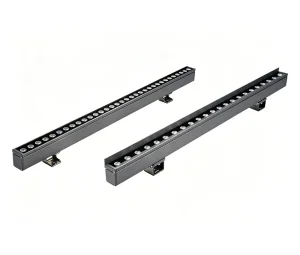
Navigating Global Hazardous Industrial Environments
Comprehensive engineering compliance for modern facilities handling flammable gases, volatile vapors, and combustible dust particulates.
Global Energy Transition & Volatile Vapors
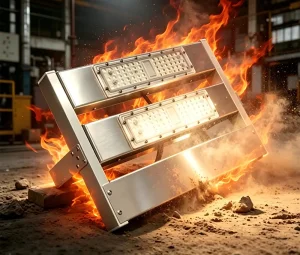
The acceleration of global energy diversification—encompassing LNG extraction, floating production storage and offloading (FPSO) units, green hydrogen generation facilities, and downstream petrochemical cracking complexes—has dramatically elevated safety parameters. In environments where methane, hydrogen (Group IIC), and ethylene mixtures are processed under volatile pressures, standard industrial luminaires represent an intolerable ignition risk. High-quality aluminum explosion-proof lamps are not merely illumination devices; they act as primary engineering safety barriers designed to prevent thermal or electrical arcs from igniting external ambient atmospheres.
Dust Explosions in Advanced Manufacturing
Beyond gaseous threats, modern manufacturing hubs are experiencing unprecedented risks associated with fine combustible dusts. From advanced pharmaceutical API synthesis suites to industrial wood pellet manufacturing, flour and starch grain elevators, and electric vehicle (EV) battery cathode processing facilities using micronized carbon black and aluminum powders, Zone 20, 21, and 22 classifications require strict surface temperature limits (T-Ratings). Our specialized explosion-proof enclosures feature non-conductive, dust-repellent coatings and thermodynamic sink topologies that eliminate dust accretion while keeping external contact temperatures safely below autoignition thresholds.
Harmonized Global Regulatory Landscape
Navigating global procurement requires adherence to dual certification frameworks: European ATEX Directive 2014/34/EU and the international IECEx system, along with North American NEC 500/505 (UL 844) standards. Top-tier explosion-proof aluminum luminaire manufacturers utilize precision die-casting techniques to ensure dimensional tolerances within critical flamepaths comply simultaneously with Ex d (flameproof), Ex e (increased safety), Ex tb (dust ignition protection by enclosure), and Class I Division 1 & 2 standards. This universal compliance simplifies global engineering procurement, minimizing spare part inventory across multijurisdictional installations.
Copper-Free Die-Cast Aluminum & Mechanical Integrity
A rigorous deep dive into structural alloy composition, surface chemical passivation, and thermodynamic dissipation architectures.
Alloy Purity (ADC12 / A360 / A380)
Marine-grade copper-free die-cast aluminum alloys (containing <0.1% to <0.4% Cu) prevent galvanic corrosion in sulfurous and saline environments. High-pressure die-casting delivers dense grain alignment free from internal porosity, micro-cracks, or casting inclusions, ensuring flamepath integrity under high internal pressures.
Dual-Chamber Decoupling
Thermal interference between LED diodes and driver electronics is a leading cause of premature solid-state failure. Our enclosures feature an aerodynamically isolated dual-chamber design. The driver compartment is thermally detached from the LED array, keeping electronic component temperatures low even in high ambient surroundings.
WF2 & C5-M Surface Coatings
To resist offshore salt spray, chlorine vapors, and acidic washdowns, aluminum surfaces undergo shot-blasting, chemical chromate conversion, and multi-stage automated electrostatic epoxy powder coating (thickness >100 µm). This multi-barrier defense passes 1,000-hour neutral salt spray tests, achieving WF2 and ISO 12944 C5-M ratings.
Borosilicate IK10 Optics
Optic ports utilize high-strength, shock-resistant tempered borosilicate glass directly seated against flameproof metallic lips. Offering superior light transmission (>93%) and robust mechanical defense, these lenses withstand mechanical impacts up to 20 Joules (IK10) and thermal shock differentials (ΔT) of over 180°C.
| Engineering Parameter | Commercial Grade LED | Industrial Tri-Proof | Certified Explosion-Proof (Ex d) |
|---|---|---|---|
| Housing Material | Stamped sheet metal / standard 6063 Al | Polycarbonate / Extruded Aluminum | Copper-free die-cast ADC12 / A360 (Cu < 0.4%) |
| Flamepath Joint Design | None (Direct vented) | Rubber gasket seal only | Machined spigot, threaded or flanged flamepath |
| Internal Pressure Rating | 0 bar (Non-pressurized) | 0.2 bar (Atmospheric) | Tested > 12 bar (4x peak explosion pressure) |
| Impact Resistance (Optics) | IK04 – IK06 (Plastic diffusers) | IK08 (Polycarbonate) | IK09 – IK10 (High-temperature tempered borosilicate) |
| Corrosion Class (ISO 12944) | C1 – C2 (Indoor light dry) | C3 – C4 (Industrial urban) | C5-M / C5-I Marine / Harsh Chemical (WF2 Certified) |
| Standard Certification | CE / FCC standard safety | IP65 / IP66 damp locations | ATEX / IECEx Zone 1/21, NEC Class I Div 1 |
Tailored Topologies Across Heavy Industry
Real-world integration blueprints engineered for mission-critical industrial installations worldwide.
Offshore Rigs & Marine Ports
Deployed across open-ocean drillships, jacket platforms, and LNG terminals, luminaires face constant salt spray, 120 km/h wind shear, and continuous deck vibration. Our explosion-proof lamps feature stainless-steel 316L mounting brackets, dual-axis rotational locks, and silicone-bonded borosilicate lenses that prevent moisture ingress while maintaining high optical output.
Refineries & Chemical Alkylation
Hydrocarbon distillation and reforming columns introduce elevated ambient temperatures and volatile fumes. By integrating high-grade thermal fins with remote driver architectures, these fixtures operate continuously in 65°C ambient zones, preventing lumen degradation while providing uniform light distribution across multi-tiered access stairs and valve manifolds.
Hydrogen Electrolysis & Battery Gigafactories
Hydrogen’s broad explosive limits (4% to 75% in air) require Group IIC explosion-proof certification with low-energy flamepath gaps. Furthermore, battery gigafactory dry rooms require zero heavy-metal offgassing. Our copper-free aluminum fixtures feature specialized passivated seals, ensuring full compatibility with hydrogen storage and cleanroom cathode rooms.
Technological Roadmap: The Future of Hazardous Lighting
From static luminaire hardware to autonomous, edge-monitored hazardous location infrastructures.
Intrinsically Safe IoT & Digital Twins
The next generation of explosion-proof luminaires incorporates intrinsically safe (Ex ia / Ex ib) wireless telemetry chips using Bluetooth Mesh and LoRaWAN protocols. These smart nodes stream real-time metrics—including junction temperature, driver impedance, operating hours, and ambient vibration—directly to cloud plant management systems, enabling predictive maintenance schedules before failures occur.
Optical Wireless Communications (LiFi)
In hazardous environments like deep mines, ammunition storage facilities, and petrochemical refineries, conventional radio frequency (RF) transmissions pose electromagnetic ignition risks and face heavy metallic interference. Future hazardous-area luminaires feature integrated high-speed LiFi modules, using modulated LED light waves to transmit multi-gigabit data safely throughout classified zones.
Advanced Optoelectronics >210 lm/W
Thermal management is the primary challenge in sealed explosion-proof systems. As solid-state LED efficacy surpasses 210 lm/W through chip-scale packaging (CSP) and optimized phosphors, waste heat generation drops by over 30%. This efficiency enables more compact aluminum fixtures, reduced structural weight on pipe racks, and lower surface temperature ratings (T6 class).
Heavy-Duty Field Equipment & High-Power Arrays
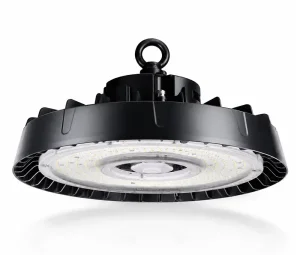
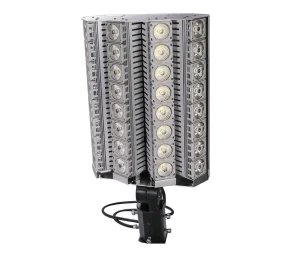
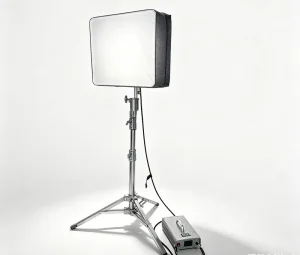
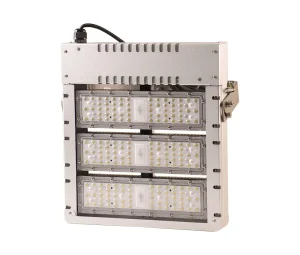
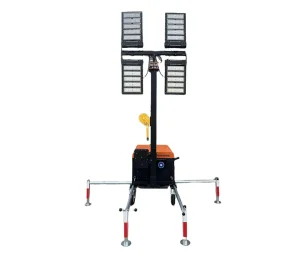
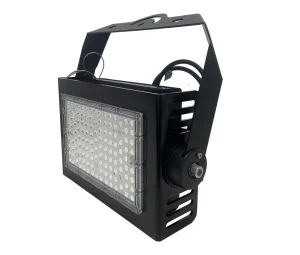
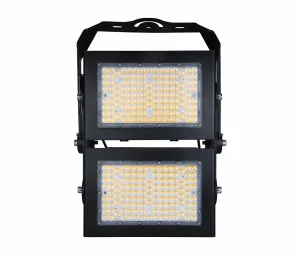
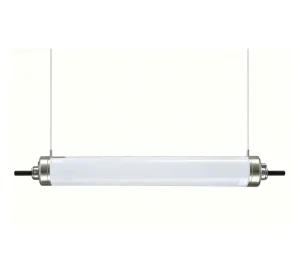
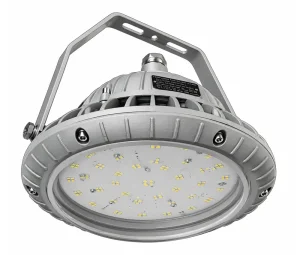
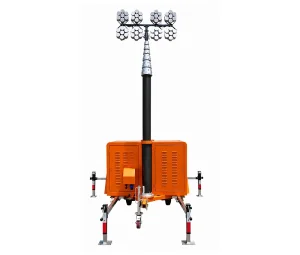
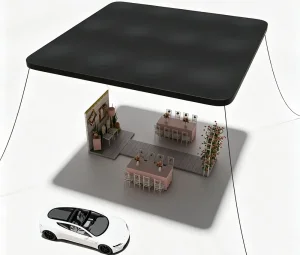
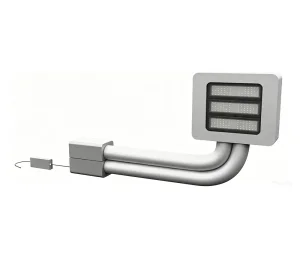
Explore specialized industrial fixtures, from high-temperature floodlights and mobile lighting masts to explosion-proof luminaires.
Engineering Questions & Technical Procurement
Essential design guidelines, compliance protocols, and technical answers for hazardous lighting projects.
What defines an aluminum explosion-proof lamp as "Flameproof" (Ex d / Ex db) vs. "Increased Safety" (Ex e)?
Why is copper content in aluminum alloys critical in hazardous industrial zones?
How do T-Ratings (Temperature Classes T1 to T6) affect fixture selection in gas and dust atmospheres?
Can explosion-proof aluminum LED lights replace legacy High-Pressure Sodium (HPS) and Metal Halide (MH) systems 1-to-1?
What testing methodologies validate IP66/IP68 and IK10 ratings on cast explosion-proof enclosures?
Need Custom Hazardous Location Lighting Engineering?
Our engineering team provides comprehensive photometric studies (DIALux), custom mounting configurations, and project-specific ATEX/IECEx compliance documentation tailored to your plant specifications.