
Engineered Lighting Solutions & Specialized Equipment
Direct factory-engineered fixtures for heavy-duty commercial applications, marine ports, industrial zones, and extreme-environment installations.
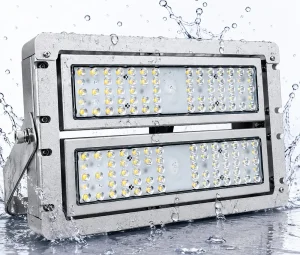
OEM LS-ARE Ocean Series LED Marine Light
Engineered for boats, docks, harbors, and underwater applications with IP68 marine-grade protection.
Explore Model Specs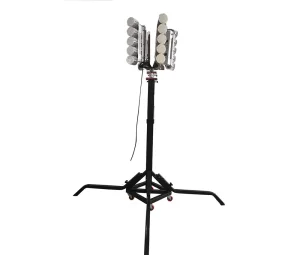
OEM Economic 4m Mobile Light Tower
Heavy-duty portable lighting mast designed for construction sites, sports fields, and emergency response.
Explore Model Specs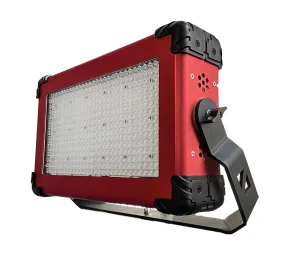
Underwater LED Film Light (30m Depth)
Zero external housing required. Revolutionary pressure-resistant LED cinema lighting rig.
Explore Model Specs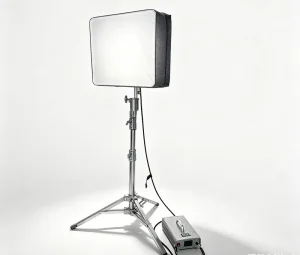
High-Quality Flexible LED Mat
Flicker-free high-output flexible panel conforming to complex architectural surfaces and film sets.
Explore Model Specs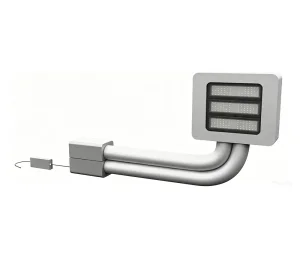
High Temperature LED Light (Rated 300°C / 572°F)
Active thermal management system designed for industrial foundries and high-heat processing zones.
Explore Model Specs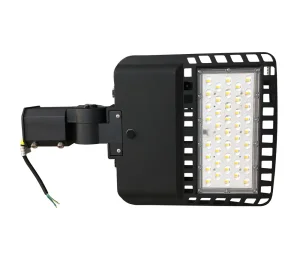
OEM LS-L Series Shoebox Area Light
Precision outdoor area lighting for stadium parking lots, perimeter security, and urban roadways.
Explore Model Specs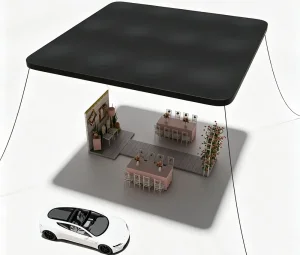
Helium Balloon Overhead Sun Shade Light
Truss-free overhead soft diffusion system requiring minimal gas volume for outdoor events and film sets.
Explore Model Specs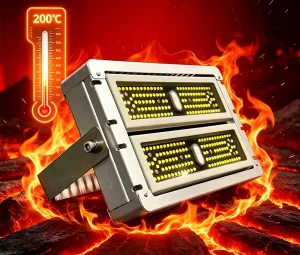
Ultra High Temp LED Light (200°C / IP68)
Extreme environmental floodlight combining 200°C heat tolerance with IP68 continuous submersion rating.
Explore Model SpecsAnalyzing global athletic infrastructure modernization: From legacy Metal Halide retrofits to precision Solid-State Lighting (SSL) deployments across FIBA Class I, NCAA, and municipal recreational domains.
Global Commercial & Industrial Status of Basketball Stadium Lighting
The international market for basketball stadium lighting is experiencing a structural paradigm shift. Driven by municipal sustainability mandates, energy cost volatility, and the stringent visual clarity demands of 4K/8K High-Definition (HDTV) broadcasting, sports facility operators are rapidly phase-out legacy Metal Halide (MH) and High-Pressure Sodium (HPS) fixtures. Modern basketball venues—spanning professional arenas, collegiate facilities, and community outdoor courts—demand photometric precision that eliminates glare, maintains extreme uniform illumination, and reduces operational expenditure by upwards of 65% to 75%.
As a leading basketball stadium lights factory and supplier, direct OEM/ODM engineering manufacturers are moving beyond basic illuminance (Lux/Foot-Candles) metrics. Focus has shifted to comprehensive spectral quality, micro-lens optical distributions, and thermal structural durability. According to recent industrial data, the global LED sports lighting sector is projected to expand at a CAGR of over 9.4%, with basketball arenas accounting for one of the highest replacement velocities due to the sport's fast velocity, high vertical ball trajectory, and tight television camera angles.
Macroeconomic Drivers & Regulatory Standards Compliance
The industrial landscape for basketball court illumination is governed by rigid international framework specifications set by organizations such as FIBA (International Basketball Federation), the IESNA (Illuminating Engineering Society of North America), and CIBSE. Compliance requires precise horizontal and vertical illuminance balance to ensure player peripheral vision is uninhibited, referees maintain unobstructed sightlines, and spectators experience zero visual fatigue.
| Competition Level | Target Horizontal Lux (Eh) | Uniformity Ratio (U1 / U2) | Max Unified Glare Rating (UGR) | Color Rendering (CRI / TLCI) |
|---|---|---|---|---|
| FIBA Level 1 / NBA Broadcast | ≥ 2000 - 3000 Lux | U1 ≥ 0.7 | U2 ≥ 0.8 | < 19 (Zero Direct Glare) | CRI ≥ 90 | TLCI ≥ 95 |
| FIBA Level 2 / NCAA Collegiate | ≥ 1000 - 1500 Lux | U1 ≥ 0.6 | U2 ≥ 0.7 | < 22 | CRI ≥ 80 | TLCI ≥ 85 |
| FIBA Level 3 / High School & Regional | ≥ 500 - 750 Lux | U1 ≥ 0.5 | U2 ≥ 0.6 | < 25 | CRI ≥ 80 |
| Community Outdoor & Recreational | ≥ 200 - 300 Lux | U1 ≥ 0.4 | U2 ≥ 0.5 | < 28 | CRI ≥ 70 |
Industry Development Trends & Core Technical Breakthroughs
To maintain competitive dominance, top-tier basketball stadium light manufacturers are driving multi-disciplinary innovations integrating advanced optics, thermodynamics, semiconductor driver electronics, and dynamic IoT control systems.
Ultra-Low Flicker Drivers for 8K Slow-Motion
Modern sports broadcasting uses high-frame-rate (HFR) cameras exceeding 1,000 to 3,000 frames per second. Traditional LED drivers exhibit ripple current that creates visible strobing or flickering during ultra-slow-motion replays. Advanced stadium fixtures utilize custom DC-to-DC topology ripple-free drivers maintaining a Flicker Factor under 0.5%, guaranteeing pristine broadcast quality for international networks.
Micro-Lensed Asymmetric Optics (UGR Control)
Basketball features continuous high-vertical gaze vectors (rebounding, layups, jump shots). Direct glare can blind players, causing missed plays or safety hazards. Modern optical configurations implement customized Total Internal Reflection (TIR) optical arrays and anti-glare honeycomb visors that channel light onto the playing floor while cutting off ambient spill and high-angle direct glare (UGR < 19).
Vapor Chamber & Cold-Forged Thermal Dissipation
High-wattage stadium floodlights (600W to 1500W+) generate substantial thermal energy at the LED chip junction ($T_j$). Factory innovation in pure cold-forged aluminum heatsinks ($k > 220 \text{ W/m·K}$) combined with embedded copper phase-change vapor chambers keeps thermal resistance minimal, preventing lumen degradation and color shift over 100,000 operational hours.
Localized Application Scenarios & Architectural Engineering
Lighting requirements for basketball installations vary widely depending on indoor ceiling height, outdoor atmospheric exposure, structural mounting constraints, and multi-purpose venue utilization.
FIBA Professional Indoor Arenas
Characterized by high catwalk ceilings (15m to 25m+), indoor arenas demand narrow-to-medium symmetric optical angles (15°, 30°, 45°) to punch light down to the hardwood floor without creating hot spots. Dynamic DMX512 controls allow seamless integration with pre-game light shows, player introduction theatrical scenes, and instant blackout transitions.
Community Parks & School Outdoor Courts
Mounted on 8m to 12m perimeter poles, outdoor courts require extreme forward-throw asymmetric distribution (e.g., 60°x120° or 130°x30°) to cast light across the full 28m x 15m court without overflowing into neighboring residential properties. Robust IP66/IP67 ingress ratings and IK09/IK10 impact protection guard against weather and ball strikes.
Coastal & High-Ambient Venues
Outdoor basketball courts near ocean coastlines or in high-heat tropical regions face severe salt fog corrosion and ambient roof temperatures exceeding 50°C. OEM factory treatments include electrophoretic coating, 316 stainless steel hardware, and specialized high-temperature driver decoupling to maintain long-term reliability.
Multi-Purpose Field Complexes
Arenas that transition between basketball, volleyball, tennis, and concerts require versatile multi-scene preset dimming. Intelligent 0-10V or DALI-2 addressable drivers allow facility managers to instantly recalibrate lighting boundaries and lux levels with a single touchscreen controller.
Technical Roadmap & Future Outlook (2025–2030)
As solid-state lighting technology matures, the future of basketball stadium lighting lies in intelligent automation, extreme luminous efficacy, and circular material sustainability. Factory R&D roadmaps focus on four cornerstone developments:
1. Gallium Nitride (GaN) Power Architecture Integration
Next-generation LED driver designs are adopting GaN semiconductor power switches. GaN drivers achieve over 97% power conversion efficiency while shrinking driver physical footprint by up to 40%. This enables sleeker, lower-weight fixture profiles, drastically reducing wind load resistance (EPA) on outdoor stadium light poles.
2. AI-Driven Dynamic Photometric Beam Shaping
Emerging stadium fixtures feature micro-actuated motorized optical lenses and liquid-crystal optical refractors controlled by onboard AI algorithms. Rather than relying on fixed beam angles, the lighting system automatically adjusts beam distribution in real-time based on live game camera positioning, ambient daylight sensors, or specific event configurations.
3. Ultra-High Efficacy Package Innovation (>220 lm/W System Level)
By leveraging CSP (Chip Scale Package) LED arrays and quantum-dot phosphor formulations, direct factory suppliers are pushing system-level luminous efficacy past 200 lm/W. This breakthrough enables a 600W LED fixture to deliver light output previously requiring a 1000W first-gen LED or a 2000W traditional Metal Halide unit.
4. Modular Field-Serviceable Architecture & Circular Economy
Future stadium lighting design rejects single-body non-repairable units. Modular structural assembly allows tool-free driver replacement, quick-swap LED engine plates, and upgraded optic modules right on the mounting pole. This extends fixture operational lifetime past 15 years while dramatically minimizing e-waste.
Macro Industry Solutions & Factory OEM/ODM Capabilities
Navigating large-scale athletic venue upgrades requires comprehensive engineering support beyond off-the-shelf equipment sales. As a specialized high-power LED manufacturer, our factory provides end-to-end macro industry solutions tailored to global contractors, lighting designers, and municipal distributors.
DIALux Photometric Layout Engineering
Our in-house optical engineering team provides comprehensive 3D DIALux Evo rendering simulations. We calculate exact lux levels, uniformity ratios ($U_1/U_2$), point-by-point grid values, and false-color visual maps prior to manufacturing, guaranteeing compliance with FIBA, NCAA, or local municipal codes.
Custom Tooling & Mechanical Tailoring
We offer extensive OEM/ODM customization options including tailored mounting bracket geometries, specialized corrosion-resistant paint colors (RAL matching), custom input voltages (100-277V, 277-480V, 48V DC), custom CCT (2700K to 6500K), and client private-label branding.
Rigorous Environmental Testing & Quality Control
Every production batch undergoes stringent quality validation in our certified lab: 1,000-hour Salt Spray Testing (ASTM B117), Vibration Resistance Testing (ANSI C136.31), IP66/IP68 Waterproof Submersion Chambers, Thermal Shock Chamber Cycling (-40°C to +80°C), and Integrating Sphere Spectroradiometer testing.
Frequently Asked Questions (FAQ)
Expert guidance from our senior photometric engineers answering key procurement and installation queries.
High-Output Arena, Industrial & Architectural Lighting Series
Explore our full commercial offering of stadium-grade floodlights, high bays, linear architectural units, and high-temperature fixtures.
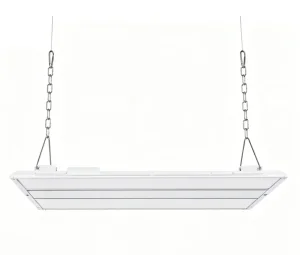
High-Quality Linear High Bay LED
Bright, reliable smart-controlled linear fixture for indoor sports complexes and high-ceiling gymnasiums.
Explore Model Specs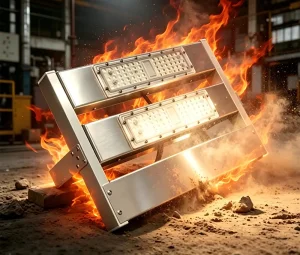
Dustproof High Temperature LED Light
Sealed anti-dust thermal configuration engineered for harsh particulate industrial environments.
Explore Model Specs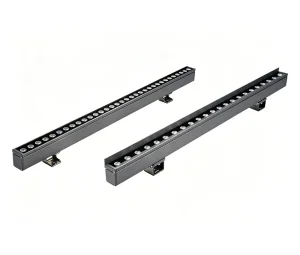
Best Precision RGB Linear Wall Washer
Effortless commercial facade illumination with precise linear beam angles and dynamic color spectrum control.
Explore Model Specs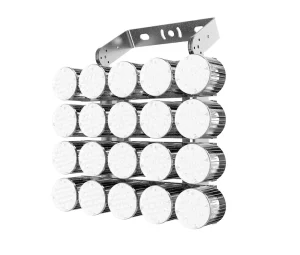
High-Quality Arena LED Stadium Light
Ultra-compact high-output stadium floodlight engineered for maximum luminous efficacy and minimum wind resistance.
Explore Model Specs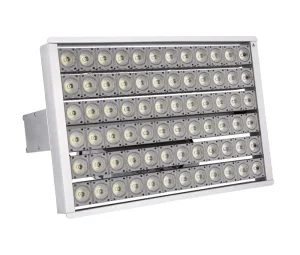
High Temperature LED Light Rated 90°C (194°F)
Specialized thermal-rated LED fixture for hot indoor industrial plant ceilings and boiler rooms.
Explore Model Specs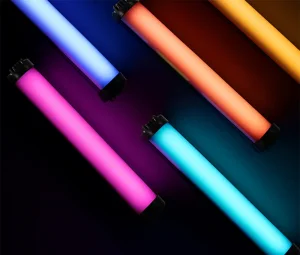
OEM Commercial Underwater Video Lights
Submersible cinema lighting unit for aquatic broadcasting, video shoots, and underwater sports filming.
Explore Model Specs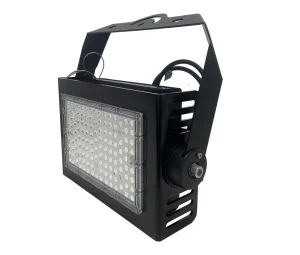
OEM 48V DC Industrial LED Flood Light
Low-voltage DC powered floodlight designed for solar microgrids, mobile light towers, and off-grid facilities.
Explore Model Specs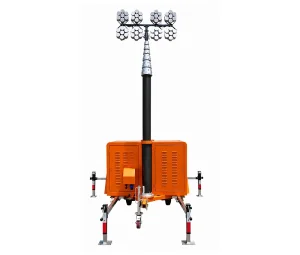
Best Portable 9m Heavy Duty Mobile Light Tower
High-mast telescopic mobile lighting tower designed for large outdoor sports events, mining, and construction.
Explore Model Specs