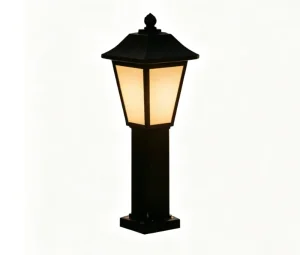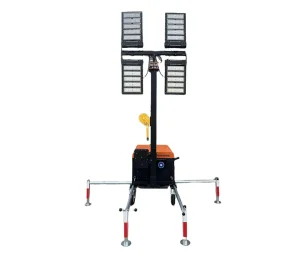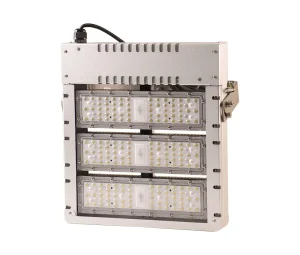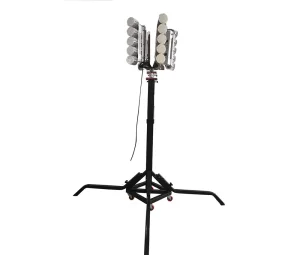
Industrial Catalog Phase I
Precision Dynamic Lighting Fixtures & Optical Systems
Explore heavy-duty architectural, submersible, and specialized harsh-environment illumination nodes certified for global enterprise deployments.
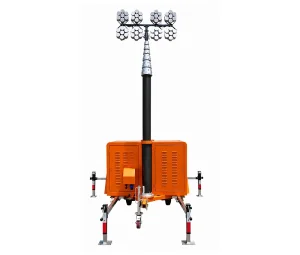
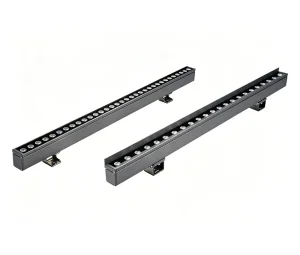
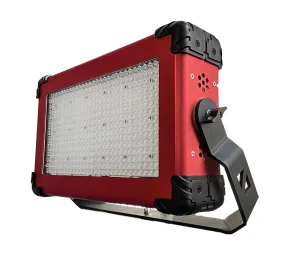
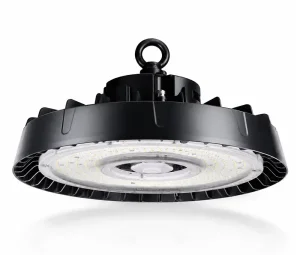
Enterprise Procurement Blueprint
Strategic Imperatives for Color Changing Lighting Procurement
In the transition toward intelligent illumination ecosystems, global procurement groups demand photometric accuracy, thermodynamic resiliency, and open-architecture network integration.
98.5%
MacAdam Step-3 Color Uniformity
100,000h
L80B10 Rated Luminaire Life
< 0.1%
High-Precision PWM Flicker Index
IP68/IP69K
Hermetic Seal Certification
Colorimetric Calibration & Binning
Global architectural and industrial specifiers cannot tolerate batch-to-batch chromatic divergence. Tier-1 color-changing light factories implement strict 2-step to 3-step MacAdam ellipse binning alongside onboard calibration algorithms. This ensures absolute CIE xy chromaticity coordination across thousands of multi-wattage luminaires over prolonged operational lifecycles.
Thermal & Photonic Equilibrium
Multi-channel emitter engines (RGB, RGBW, RGBA, and Dynamic White) exhibit asymmetric thermal degradation. Red chips degrade faster under elevated junction temperatures than Blue or Green dies. Leading manufacturing facilities utilize advanced copper vapor-chamber thermal management and integrated NTC dynamic drive feedback to actively preserve color balance across extreme thermal gradients.
Protocol Topology & Remote Diagnostics
Modern enterprise installations discard basic static control in favor of bidirectional DMX512-A/RDM (ANSI E1.20), Art-Net, sACN, and industrial DALI-2 (IEC 62386 Type 8). A direct manufacturing partner must guarantee robust galvanic isolation against ground-loop transients, self-addressing capabilities, and remote telemetry tracking voltage, current, and module thermals.
Macro Engineering Frameworks
Macro-Industrial Solutions Across Severe Deployments
Color-shifting technology has expanded beyond decorative accents. Today, it serves as critical functional signaling, biological circadian pacing, and high-contrast diagnostic illumination.
Heavy Metallurgy & Foundries
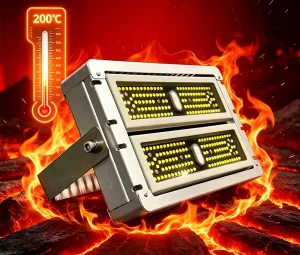
Color-dynamic cues integrated into high-temperature fixtures notify crane operators and ground teams of molten pour cycles, thermal threshold limits, and localized gas releases. Optical packages withstand ambient exposures from 80°C up to 300°C without lens yellowing or seal embrittlement.
Hazardous Processing (Ex Zones)
Explosion-proof, flame-path dynamic nodes integrate into petrochemical distillation columns and automated chemical synthesizers. Dynamic color switching from ambient white to amber or high-penetration crimson enables emergency evacuation guidance without requiring auxiliary beacons.
Subsea, Marine & Port Logistics
Marine environments demand C5-M anti-corrosion powders, marine bronze or 316L stainless housings, and true IP68 continuous immersion engineering. RGB dynamic signaling penetrates turbid water columns and ocean spray to facilitate automated vessel alignment and deep salvage telemetry.
HDTV Arena & Filming Hubs
High-power dynamic stadium fixtures require ultra-fast driver refresh rates (>20,000 Hz) to eliminate rolling-shutter artifacts and flicker in ultra-slow-motion 4K/8K broadcasts. Tunable white combined with full-spectrum color transitions provides dynamic pre-match entertainment and precision field illumination.
Future Architecture
Engineering Technology Roadmap: 2026–2030
How top-tier color-changing light factories are incorporating micro-electronics, direct-to-cloud mesh communication, and solid-state photonic advancements.
Phase 01: Present
GaN Direct-Drive Silicon
Adoption of Gallium Nitride (GaN) switching stages across multi-channel LED drivers. This delivers 96%+ power conversion efficiency, drastically reduces driver heat dissipation, and enables high-density packaging within IP68 architectural fixtures.
Phase 02: 2026-2027
Micro-Spectrometry Telemetry
Integration of low-cost, on-board spectral sensors directly within the optical chamber. Luminaires continuously monitor shifting spectral energy distributions, auto-correcting diode drift across aging cycles to maintain true color fidelity.
Phase 03: 2027-2028
Direct-to-Cloud Thread/Matter
Transition from wired DMX topologies toward low-latency, IPv6-based mesh architectures. Eliminates costly signal trenching in sprawling industrial facilities and mega-scale landscape lighting projects while keeping bank-grade security protocols intact.
Phase 04: 2029-2030
Micro-LED Co-Packaged Optics
Transitioning high-output dynamic floodlights toward micro-scale multi-emitter arrays paired directly with flat silicon metasurface optics. Yields micro-pencil beam control (under 3°) with zero chromatic aberration or secondary color fringing.
Compliance & Quality Verification
Global Standards Compliance & Localized Support
Reliable project execution hinges on rigorous laboratory testing, international code compliance, and dedicated field engineering support.
International Harmonization
Every commercial and industrial fixture series is manufactured in compliance with international standards: CE (LVD/EMC), RoHS, UL 1598, UL 8750, CSA 22.2, IEC 60598, and ATEX/IECEx hazardous-location standards. Fixtures undergo extensive goniophotometer verification to supply valid IES/LDT optical data files.
Reliability & Stress Testing
Quality assurance includes automated environmental stress testing: 1,000-hour ASTM B117 salt spray exposure, accelerated thermal cycle loading (-40°C to +150°C), IPX8/IPX9K pressurized water jet ingress validation, and 5G vibration testing on multi-axis pneumatic shake tables.
Factory-Direct Project Engineering
Our engineering services bridge manufacturing lines and site deployment. We deliver complete DIALux/Relux photometric simulations, wiring schematic layouts, control topology designs, and remote commissioning assistance directly to project consultants and electrical contractors worldwide.
Technical & Sourcing FAQ
Frequently Asked Questions for Sourcing Directors
Critical considerations for engineering teams evaluating factory capabilities for large-scale color changing and harsh-environment lighting systems.
What separates an industrial color changing light factory from commercial assembly plants?
Industrial manufacturing requires dedicated clean-room SMT lines, automated conformal coating lines, hermetic housing CNC machining, and specialized environmental test labs (salt spray, thermal shock, vibration). Commercial assemblers rely on off-the-shelf plastic or low-gauge aluminum components that rapidly fail in coastal, high-heat, or chemically aggressive sites.
How do you guarantee long-distance color uniformity across thousands of fixtures?
We source diodes strictly from Tier-1 foundries (such as OSRAM, Cree, Lumileds) matching single-bin coordinates (MacAdam 3-step or tighter). In addition, our digital driver architectures feature active voltage drop compensation, 16-bit PWM dimming resolution, and factory-calibrated chromaticity tables embedded within the EEPROM of each fixture head.
Can your color changing floodlights integrate into existing BMS or SCADA networks?
Yes. Utilizing native DMX/RDM or industrial DALI-2 gateways, our illumination hardware interfaces directly with building management systems, Modbus, BACnet, and industrial PLCs. This enables automated color mode triggers based on operational alarms, occupancy changes, or external astronomical clock schedules.
What is the typical lead time and engineering customization turnaround?
Standard architectural and heavy-duty configurations ship within 2 to 3 weeks. Custom photometric design, unique bracket fabrication, bespoke optic tooling, or extreme-temperature driver separations typically undergo simulation, 3D prototyping, and qualification within a 4-to-6 week engineering cycle.
Industrial Catalog Phase II
High-Capacity Industrial, Mobile & Extreme-Duty Systems
Heavy engineering luminaires, certified mobile towers, and specialized industrial fixtures built to sustain continuous operation under demanding conditions.