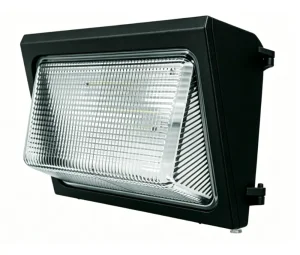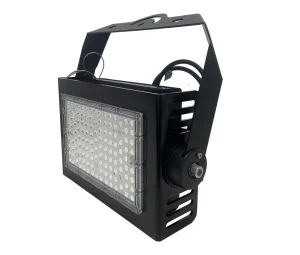
Direct Production Line · Tier-1 Heavy Duty & Task Catalog
Featured Industrial & Mission-Critical Lighting Assemblies
Engineered under stringent ISO9001 and IATF-grade manufacturing frameworks, our modular lighting architectures serve critical task fields, mobile job sites, extreme-heat fabrication lines, and architectural workstations worldwide.
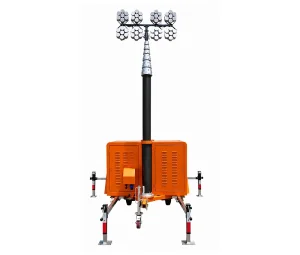
Best Portable 9m Mobile Light Tower Suppliers, Manufacturer
Configure & Inquiry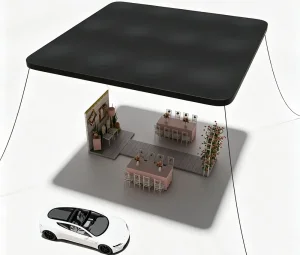
OEM Easy-Setup Helium Balloon Sun Shade - Truss-Free Overhead Diffusion
Configure & Inquiry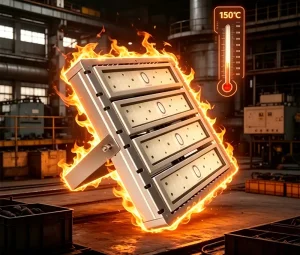
High-Quality Extreme High Temperature LED Light - Rated 150°C (302°F)
Configure & Inquiry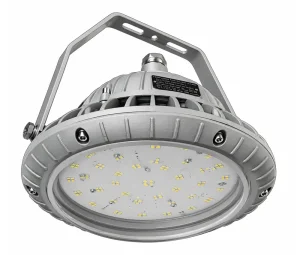
Best Explosion proof LED Light – Safe, Durable, Industrial Illumination
Configure & Inquiry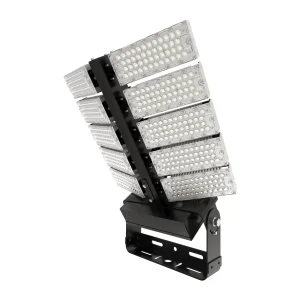
High-Quality Flex LED Flood Light - Independently Articulating Modules
Configure & Inquiry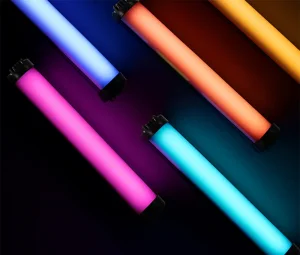
OEM Commercial Underwater Video Lights – 2-Meter Depth Waterproofing
Configure & Inquiry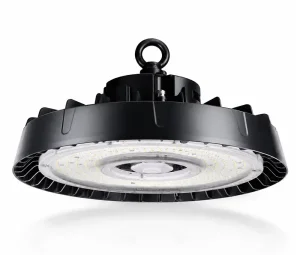
High-Quality Durable UFO High Bay LED Light – High Lumen Output
Configure & InquiryCRI ≥ 98
Full-Spectrum Color Fidelity (R9>95)
< 0.1%
Stroboscopic Ripple Factor (SVM<0.4)
100,000+
L80B10 Rated Luminaire Lifespan Hours
50+ Countries
Global Supply Chain & Compliance Reach
Executive Summary & Market Drivers
The Strategic Transformation of Task Lighting Ecosystems
The global commercial and high-performance task lighting sectors are undergoing a systemic technological transition. Where legacy procurement treated desk lamps as rudimentary consumer commodifications, modern corporate specifiers, architectural design firms, educational conglomerates, and industrial command center contractors view task illumination through the lens of Human-Centric Lighting (HCL), physiological productivity optimization, and photobiological workplace safety.
As an established manufacturing conglomerate operating over two decades of high-grade industrial luminaire fabrication, our Shenzhen-based facilities integrate advanced optical physics, solid-state thermal management, and precision constant-current reduction (CCR) driver engineering. This technical white paper explores the critical engineering paradigms, multi-tier procurement evaluation criteria, regulatory compliance matrix, and future technological vectors that define elite dimmable desk lamp factories and global OEM/ODM partnerships.
Macro Innovation Trajectories
Development Trends in Precision Dimmable Task Illumination
Navigating the convergence of solid-state semiconductor efficiency, neurobiological chronobiology, and smart building integration protocols.
Full-Spectrum SunLike™ Emitter Integration
Traditional blue-pump phosphor LEDs inflict harmful 450nm spectral spikes that exacerbate asthenopia (ocular strain) and disrupt circadian rhythm melatonin suppression. Premium dimmable desk lamp factories have transitioned to violet-pump, full-spectrum phosphor topologies (Seoul Semiconductor SunLike™ or Bridgelux Thrive™ platforms), generating an emission spectrum virtually identical to natural daylight across 400nm–780nm with minimal cyan gap.
Non-Visual Chronobiological Photoreception
Lighting specifiers now mandate melanopic lux calculations rather than photopic lux alone. By optimizing the Melanopic Daylight Equivalent (m-EDI) via dual-channel CCT dynamic modulation (1800K to 6500K), dimmable desk lamps actively synchronize alertness during daytime task intensive hours while facilitating parasympathetic transition during evening corporate or remote shifts.
Optical Asymmetry & Micro-Prismatic Lensing
Symmetrical downward flood distributions generate severe specular reflections off computer screens and glass desktops. Contemporary industrial tooling utilizes polycarbonate micro-prismatic total internal reflection (TIR) extrusions that throw a tailored 45° asymmetric forward light throw, illuminating the keyboard and reading zone at >750 lux while strictly eliminating direct glare (UGR < 10).
B2B Supply Chain Dynamics
Global Enterprise Sourcing Demands & Technical Vendor Audits
How multinational procurement departments evaluate factory tiering, batch consistency, mechanical longevity, and supply chain transparency.
Mechanical Kinematic Reliability
Articulated desk lamp arms and friction damper counterbalances undergo extreme cyclic fatigue. Tier-1 enterprise procurement guidelines specify robotic durability testing surpassing 30,000 continuous hinge articulative rotations without torque decay greater than 5%, utilizing internal high-carbon steel counterbalance springs and zinc-aluminum die-cast knuckle housings.
Aviation-Grade Thermal Management
Thermal accumulation directly accelerates LED phosphor degradation and shift in chromaticity coordinates (duv drift). Our factory integrates 6063-T5 extruded aluminum light heads functioning as conductive heat dissipation sinks. Operating junction temperatures are throttled below 65°C under continuous maximum drive currents, guaranteeing sustained L80B10 operational benchmarks exceeding 100,000 hours.
Supply Chain Modularity (SKU Agility)
International retailers and commercial project contractors demand modular SKU architectures. Our automated production lines enable plug-and-play swapping of mounting platforms (weighted desktop pedestals, precision C-clamp screw vices, grommet through-desk penetrations, and wall-mounting bracket assemblies) with integrated USB-C Power Delivery (PD 65W/100W) fast charging interfaces.
| Evaluation Parameter | Consumer-Grade Commodity | Commercial Specifier Grade | Lsledsus Industrial OEM/ODM Benchmark |
|---|---|---|---|
| Color Rendering Index (CRI) | Ra 70 - 80 (R9 < 10) | Ra 90+ (R9 > 50) | Ra 98+ | R9 > 95 | Rf 97, Rg 100 (IES TM-30-20) |
| Dimming Modulation Architecture | Low-Frequency PWM (< 1 kHz) | High-Frequency PWM (3 - 5 kHz) | Hybrid Analog CCR (Constant Current Reduction) Ripple < 0.1% |
| Photobiological Blue Light Risk | IEC TR 62778 / IEC 62471 RG1 or RG2 | IEC 62471 RG0 (Exempt) | Certified IEC 62471 RG0 Exempt + Zero UV/IR Emission |
| Hinge Cycle Longevity | < 3,000 movements | 10,000 movements | 30,000+ Robotic Calibrated Cycles with Zinc Alloy Clutches |
| Chassis Thermal Metallurgy | ABS / Polycarbonate Plastic | Sheet Aluminum Stamping | CNC Anodized 6063-T5 Extruded Structural Aerospace Alloy |
| IoT Protocol Integration | None or Proprietary Infrared | Bluetooth BLE Low-Tier | Matter-Over-Thread, Zigbee 3.0, Tuya IoT, & 0-10V / DALI Options |
Deep-Dive Engineering Solutions
Overcoming Electro-Optical Failure Modes in Precision Task Lighting
Comprehensive technical analysis of constant current drivers, flicker eradication according to IEEE 1789-2015, and thermomechanical integrity.
Eradicating Invisible Flicker (IEEE 1789)
Most commercial dimmers utilize low-frequency Pulse-Width Modulation (PWM), rapidly oscillating power between 200Hz and 2000Hz. While imperceptible to conscious human vision, this invisible square-wave strobe induces neurological micro-saccadic eye movement fatigue, migraines, and cognitive decrement. Our dimmable architectures deploy Linear Constant Current Reduction (CCR) circuitry paired with high-frequency multiphase filtering (>25kHz), completely eliminating stroboscopic visibility measures (SVM < 0.4 and Pst LM < 0.1).
Continuous Stepless Rotary & Capacitive Touch
Human tactile interaction requires intuitive, zero-latency response curves. We employ micro-controller units (MCU) calibrated with algorithmic logarithmic human eye response (Weber-Fechner Law dimming curves). This ensures that visual intensity adjustments appear linear to the operator from 1% moonlight standby up to 100% full-output technical drafting levels (1500 lux at desktop plane), selectable via 360° optical rotary encoders or slide-touch capacitive glass interfaces.
Closed-Loop Ambient Light Auto-Dimming
Incorporating onboard photodiode lux sensors and proportional-integral-derivative (PID) control loops, our smart task luminaires dynamically sense shifting ambient luminance from natural windows and overhead lighting. The luminaire automatically ramps its lumen output up or down in real time to sustain a stable target work surface illuminance (e.g., exactly 500 lux ± 5%), significantly contributing to commercial building LEED and BREEAM energy-reduction credits.
Comprehensive Compliance Assurance
Global Market Access, Certifications & Localized Engineering Support
Seamless international distribution guaranteed by robust laboratory pre-compliance, safety listing accreditations, and rapid OEM/ODM prototyping.
North American Mandates
Full qualification under UL 153 (Portable Electric Luminaires), CSA C22.2, FCC Part 15 Class B (conducted and radiated emissions), and California Energy Commission (CEC) Title 20 / Title 24 JA8 high-efficacy light source compliance.
European Directives
Full compliance with CE (LVD/EMC), UKCA, RoHS 2.0 (lead-free surface mount technologies), REACH chemical compliance, and the latest EU 2019/2020 Single Lighting Regulation (SLR) / Energy Labeling Regulation (ELR) for eco-design reparability.
Asia-Pacific Standards
CCC (China Compulsory Certification with GB 7000.1 / GB 7000.204 and GB 40070 classroom eye-comfort benchmarks), PSE (Japan Diamond/Circle Markings under DENAN law), and RCM certification for Australia/New Zealand (AS/NZS 60598).
Factory Direct Prototyping
In-house CNC rapid prototyping, 3D laser powder bed sintering, comprehensive photometric goniophotometer measurement, and thermal chamber stress tests validate bespoke client design drafts within 14 business days from CAD freeze.
Technology Roadmap 2026 - 2030
Future Horizons: IoT Interoperability & Solid-State Innovation
Anticipating the technological disruptions that will reshape professional task environments and smart workspace infrastructure over the next decade.
Matter-Over-Thread Unified Mesh Integration
Siloed proprietary smart home protocols are rendering legacy lighting obsolete. Next-generation dimmable desk lamp architectures are embedding low-power multi-protocol wireless SOCs supporting Matter-Over-Thread. This guarantees friction-free, local-network cross-platform connectivity across Apple HomeKit, Google Home, Amazon Alexa, and enterprise Building Management Systems (BMS) with zero vendor lock-in.
GaN (Gallium Nitride) Driver Miniaturization
By shifting from silicon power MOSFETs to wide-bandgap Gallium Nitride (GaN) power stages, our factory engineering team has reduced internal AC-DC converter volumetric profiles by over 60%, while elevating thermal conversion efficiency to >94%. This permits the integration of 100W multi-port USB-C PD fast chargers directly within the ultra-slim pedestal base of the luminaire without generating perceptible surface heat.
Millimeter-Wave (mmWave) Presence Tracking
Superseding passive infrared (PIR) sensors that fail when users remain stationary while typing or reading, cutting-edge 24GHz/60GHz radar micro-motion sensors discern micro-respiratory biometric movements. The desk lamp powers on instantly upon workstation occupancy, dynamically angles its motorized gimbal head toward active document surfaces, and initiates energy-saving hibernation when the workspace is vacated.
B2B Frequently Asked Questions
Critical Specifications & Procurement FAQ for Commercial Buyers
Straightforward engineering answers to assist technical directors, wholesale importers, and lighting specifiers.
Why is Constant Current Reduction (CCR) vastly superior to PWM dimming in task desk lamps?
Pulse-Width Modulation (PWM) dims by rapidly switching the LED chip completely on and off at full current. Even at frequencies above 3,000Hz, this generates microscopic mechanical resonance and stroboscopic retinal disruption, which medical literature links to subclinical asthenopia, optic nerve fatigue, and headaches. Linear Constant Current Reduction (CCR)—also known as analog dimming—modulates light intensity by physically scaling the milliampere current amplitude flowing through the diode. The emission is 100% continuous and linear, producing true zero-flicker light under both human observation and high-speed digital video cameras.
What minimum IES TM-30-20 color metrics should enterprise lighting buyers require?
While legacy procurement specifications only note the standard CIE Ra metric (often measuring only 8 pastel reference swatches R1-R8), professional enterprise task illumination should mandate IES TM-30-20 testing. The luminaire must achieve a Fidelity Index (Rf) ≥ 95, a Gamut Index (Rg) between 98 and 102, and specific extended color swatch values: R9 (saturated red) ≥ 90, R12 (saturated blue) ≥ 85, and R13 (skin tone) ≥ 95. This prevents color distortion during graphic design, fine architectural drafting, textile inspection, and electronics assembly.
How does your factory prevent articulated arm drooping and mechanical failure?
Arm sagging is the #1 consumer complaint in poorly engineered desk lamps. Our factory utilizes multi-plate high-carbon tempered spring steel damping clutches combined with internal teflon-coated nylon washers within high-pressure zinc alloy die-cast joint knuckle housings. Every batch undergoes accelerated robotic load cycling testing exceeding 30,000 articulation sweeps. The damping friction remains stable within ±5% across an ambient temperature operating range of -10°C to +45°C.
What is the standard production lead time and Minimum Order Quantity (MOQ) for custom OEM projects?
For standard catalogue configurations with client laser engraving, custom packaging, and localized regional AC power cords (US, UK, EU, AU), our standard MOQ is 200 units with an ex-factory turnaround of 15 to 21 calendar days. For comprehensive bespoke OEM/ODM developments requiring custom extrusion dies, dedicated plastic injection tooling, and tailored MCU firmware programming, typical tooling lead times are 30–35 days, followed by 25 days for initial pilot mass production (MOQ 1,000 units).
How are blue light hazard thresholds governed under IEC 62471 and IEC TR 62778?
Under international standard IEC 62471, lighting products are classified into Risk Groups: RG0 (Exempt - no photobiological hazard under infinite continuous exposure), RG1 (Low Risk), RG2 (Moderate Risk), and RG3 (High Risk). Elite task lamps must achieve certified RG0 Exempt classification across all correlated color temperatures (from 2700K up to 6500K) at a measuring distance of 200mm. We verify this via spectral irradiance radiometers to confirm zero photochemical retinal risk.
Complete Project & Industrial Lighting Range
Industrial High-Output & Extreme Environment Product Catalog
Complementing our precision desk and task lamp fabrication lines, explore our internationally proven high-temperature, marine-grade, high-mast, and architectural luminaires engineered for extreme project deployments.
High-Quality High Brightness 12m Mobile Light Tower Factory, Suppliers
Configure & Inquiry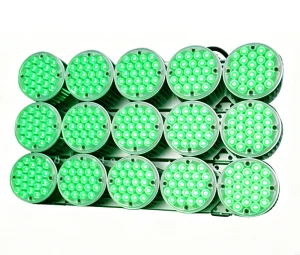
Best RGB Flood Lights - 1000W of Vibrant Power for High Towers & Grand Landscapes
Configure & Inquiry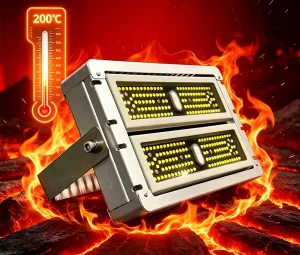
Best Ultra High Temperature LED Light - Rated 200°C (392°F) with IP68
Configure & Inquiry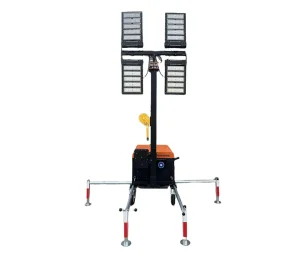
High-Quality Wholesale 6m Mobile Light Tower Factories, Factory
Configure & Inquiry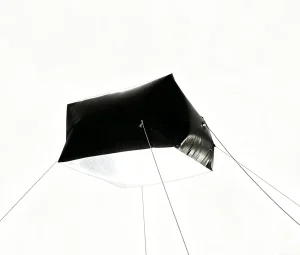
High-Quality Helium Balloon LED Light - Truss-Free Aerial Illumination
Configure & Inquiry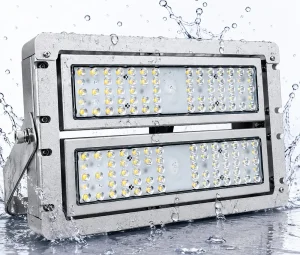
OEM LS-ARE Ocean Series LED Marine Light for Boats, Docks, Harbors & Underwater
Configure & Inquiry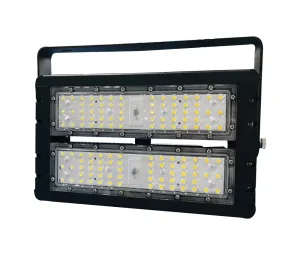
High-Quality 12V/24V DC LED Flood Light for Portable & Solar Applications
Configure & Inquiry