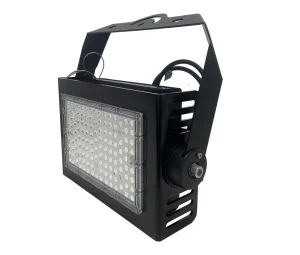
Engineered Extreme-Environment & Dust Ignition-Proof Luminaires
Explore heavy-duty, certified industrial lighting systems built to endure volatile particulate matter, extreme thermal loads, corrosive atmospheres, and high mechanical vibration.
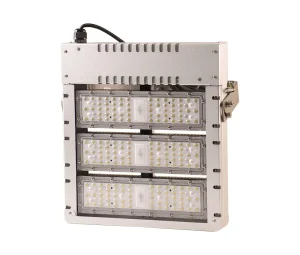
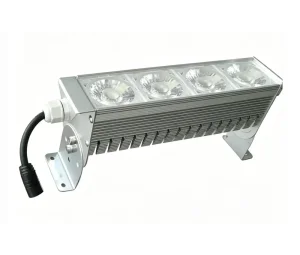
High-Quality LED Linear Strip Light for Industrial, Commercial & Architectural Applications Factories, Factory
Explore Product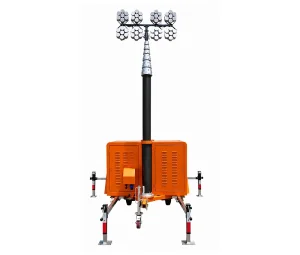
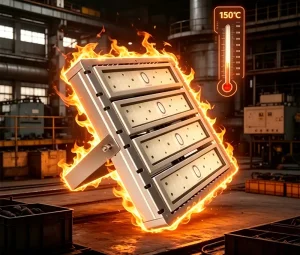
High-Quality Extreme High Temperature LED Light - Rated 150°C (302°F) with IP68 Waterproof Protection Factories, Factory
Explore Product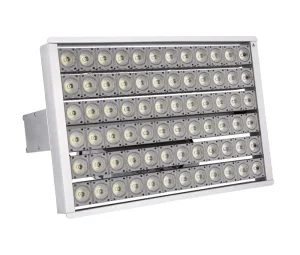
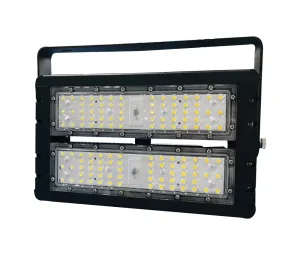
High-Quality 12V/24V DC LED Flood Light for Portable & Solar Applications Factories, Supplier
Explore Product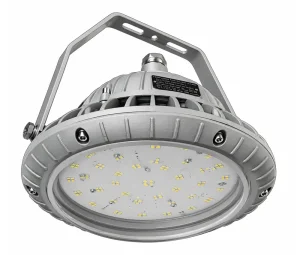
Best Explosion proof LED Light – Safe, Durable, Industrial Illumination Suppliers, Supplier
Explore Product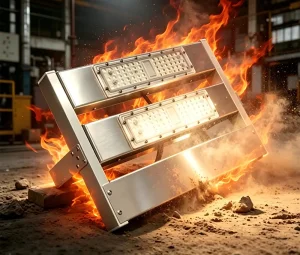
Best Tailored High Temperature LED Light with Highly Dustproof Configuration Factory, Manufacturers
Explore ProductThe Physics of Combustible Dust & Ignition Prevention Dynamics
Understanding the critical divergence between flameproof (Ex d) gas luminaires and dust ignition-proof (Ex tb/tc, DIP) luminaires under international safety protocols.
In modern industrial facilities handling fine particulates—ranging from agricultural grain terminals and textile mills to pharmaceutical API synthesis and titanium additive manufacturing—combustible dust represents one of the most volatile yet frequently underestimated catastrophic risks. Unlike flammable vapors that dissipate through targeted directional ventilation, airborne combustible particulates settle quietly across structural steelwork, cable trays, and luminaires, forming an insulative combustible blanket.
The operational hazard is governed by the Explosion Pentagon: Fuel (combustible particulate), Ignition Source (luminaire surface heat or electrical flashover), Oxygen, Dispersion (forming an airborne cloud exceeding the Minimum Explosibility Concentration, or MEC), and Confinement (enclosed industrial bays). Standard high bay or flood lights frequently trigger primary explosions when dust settling directly onto hot optical surfaces reaches its Layer Ignition Temperature (LIT). The subsequent pressure shock wave disperses dormant dust deposits, sparking a devastating secondary chain-reaction explosion through the entire facility.
Critical Specifier Rule: A luminaire rated exclusively for Class I (Gas/Vapor) cannot be legally or safely substituted for Class II (Combustible Dust). Gas explosion protection relies on internal containment and flame path quenching (Ex d), whereas Dust Ignition-Proofing relies on hermetic sealing (Ex t) and strict external thermal limitation under dense dust blanket accumulation.
Thermal Choking Mitigation
Continuous accumulation of dust layers acts as an ultra-high thermal insulator. Our fixtures integrate oversized finning geometries that guarantee maximum external surface temperatures (T-Ratings) remain well below 75°C under a continuous 5mm dust blanket.
Hermetic Ingress Barriers
Engineered with dual-stage vulcanized silicone or fluorosilicone gaskets, our luminaires deliver certified IP66/IP67/IP68 ingress ratings, preventing micro-particulate infiltration (down to 1μm) into high-voltage electrical driver and LED cavities.
Galvanic & Arc Isolation
Transient electrical arcs, component breakdown, or switching surges can shatter standard optics. Our dust ignition-proof housings feature mechanical separation between LED driver electronics and optical arrays, containing internal anomalies completely.
Global Enterprise Trends in Hazardous Area Procurement
How multinational engineering, procurement, and construction (EPC) conglomerates are modernizing hazard specifications to achieve net-zero, OSHA compliance, and lifecycle reliability.
Across North America, Europe, the Middle East, and Asia-Pacific, industrial risk underwriters and safety regulatory bodies—including OSHA, ATEX, IECEx, and the National Fire Protection Association (NFPA)—have enforced rigorous standards such as NFPA 652 (Standard on the Fundamentals of Combustible Dust) and NFPA 654. In parallel, global procurement directors are abandoning outdated legacy high-intensity discharge (HID), high-pressure sodium (HPS), and metal halide fixtures due to high maintenance overheads, excessive power consumption, and fire risks triggered by lamp ruptures.
The modern procurement mandate centers on four fundamental pillars:
Total Cost of Ownership (TCO)
Replacing high-bay fixtures inside explosive grain silos or petrochemical pulverizing plants involves costly plant shutdowns, elevated scaffolding, and hazardous work permits. Industrial LED systems with L70 lifespans >100,000 hours slash maintenance OPEX by up to 88%.
Optical Ergonomics & Visual Acuity
Dust-laden air scatters light, causing severe veil glare. Advanced TIR (Total Internal Reflection) optics and prismatic anti-glare tempered glass provide controlled beam patterns (30°, 60°, 90°, 120°) that penetrate airborne particulates while maintaining Unified Glare Ratings (UGR) < 19.
ESG & Intelligent Smart Controls
Integrating 0–10V, DALI-2, and wireless mesh nodes inside hazardous luminaire housings enables automated daylight harvesting, occupancy dimming, and predictive thermal telemetry, aligning operations with stringent Scope 2 carbon reduction goals.
China Factory 4.0: Supply Chain Resilience & Custom OEM/ODM Agility
How our vertically integrated Shenzhen production campus delivers unmatched manufacturing speed, rigorous metallurgical control, and global competitive advantage.
In high-specification hazardous lighting, product integrity is determined at the metallurgical and manufacturing level. Standard commercial assembly plants cannot meet the structural demands of explosion-proof certification. Our advanced manufacturing facility operates under the Industry 4.0 paradigm, integrating automated robotic pressure die-casting, high-precision 5-axis CNC machining, automated SMT cleanrooms, and helium mass spectrometer leak detection.
By controlling the complete lifecycle—from molten raw ingot to high-vacuum powder coating and goniophotometric validation—we eliminate third-party supply chain vulnerabilities while delivering deep OEM/ODM adaptability for the world's most demanding engineering projects.
Copper-Free Aluminum Metallurgy
Cast from premium marine-grade ADC12 / A380 alloys with copper content verified below 0.2%. This structural architecture prevents galvanic corrosion while maximizing thermal conductivity across wide temperature ranges.
Multi-Tier Automated Quality Gates
Every luminaire batch undergoes automated optical inspection (AOI), X-ray flaw detection for internal casting voids, 100% high-pressure helium leak tests, and continuous 72-hour thermal burn-in under elevated chamber temperatures.
Modular Agile Customization
Our rapid prototyping facility customizes mounting brackets (swivel, stanchion, pendant, wall), beam distributions, specialized voltages (12V/24V/48V DC, 100–277V AC, 347–480V AC), and external driver configurations in days, not months.
Engineered Deployment in Critical Global Hazardous Zones
Purpose-built photometric and physical configurations addressing specific localized dust groups, thermal extremes, and chemical hazards.
Grain Elevators, Mills & Silos
Environment: Class II, Division 1, Group G; ATEX Zone 20/21. Dense, explosive organic starch, wheat, and flour dust with low Minimum Ignition Energy (MIE < 30mJ).
Engineering Solution: Smooth, sloped outer housings prevent dust accumulation. IP66 sealed enclosures with T5 rating (100°C) ensure zero external surface hot spots ignite grain dust layers.
Pharmaceutical & Chemical Processing
Environment: Fine active pharmaceutical ingredients (API), organic pigments, and sulfur dust prone to high static accumulation.
Engineering Solution: Anti-static architectural powder coatings, corrosion-resistant 316 stainless steel external hardware, and chemically toughened borosilicate glass resistant to caustic cleaning solvents.
Metal Powder & Additive Manufacturing
Environment: Class II, Group E (Conductive dusts including aluminum, magnesium, and titanium). Extreme deflagration index (Kst > 300 bar·m/s).
Engineering Solution: Intrinsic spark containment, non-sparking copper-free aluminum architecture, and hermetically sealed internal electrical drivers that eliminate any risk of conductive dust bridging.
Coal Prep, Biomass & Power Generation
Environment: Heavy particulate airborne coal dust (Group F), high ambient temperature boilers, and violent structural vibrations.
Engineering Solution: Heavy-gauge anti-vibration brackets rated for 5G resonance, remote-driver enclosures rated up to 150°C/300°C ambient, and high-surge 10kV/20kV MOV transient line suppression.
Comprehensive Industrial Lighting Performance Comparison
A side-by-side engineering evaluation comparing legacy lighting technologies with modern Dust Ignition-Proof industrial systems.
| Performance Metric | Legacy HID / HPS Systems | Commercial Grade LED | Lsledsus Dust Ignition-Proof LED |
|---|---|---|---|
| Combustible Dust Certification | Uncertified / Non-compliant | None (Standard damp rating only) | Class II Div 1/2; ATEX/IECEx Zone 21/22 |
| Operating Surface Temp under Dust | Extreme (> 300°C / Hazard point) | Uncontrolled (> 135°C / Choke risk) | Controlled T4 / T5 / T6 (< 85°C – 100°C) |
| Ingress Protection (IP Rating) | IP54 Typical (Dust breathing) | IP65 (Liquid resistant, particulate leak) | IP66 / IP67 / IP68 Continuous Submersion |
| Housing Metallurgy & Finish | Sheet steel / High copper alloy | Extruded aluminum (Corrosive) | Die-cast copper-free Al (<0.2% Cu) + Epoxy |
| Lumen Efficacy & Maintenance | 50–70 lm/W | Rapid lamp depreciation | 100–120 lm/W | Driver failure at 50°C | 140–180 lm/W | L70 > 100,000 Hours |
| Max Ambient Thermal Rating | 40°C to 50°C Max | 40°C Max (Premature shutdown) | 80°C / 100°C / 150°C up to 300°C Custom |
Frequently Asked Questions on Hazardous Lighting Procurement
Authoritative technical answers for safety engineers, project consultants, and global procurement directors.
What is the key engineering distinction between Class I (Gas) and Class II (Dust) hazardous lighting?
How does dust blanket accumulation impact the thermal performance and T-Rating of an LED fixture?
Can your dust ignition-proof luminaires operate in environments with simultaneous extreme ambient temperatures?
What metallurgical properties prevent corrosion in chemical and coastal hazardous facilities?
Do you provide custom photometric simulations (DIALux) prior to project procurement?
What is the turnaround time for OEM/ODM prototypes and full container shipments?
Specialized Industrial Luminaires, Light Towers & Architectural Fixtures
High-power mobile illumination systems, extreme-temperature specialty luminaires, and precision architectural floodlights for multifaceted industrial and commercial requirements.
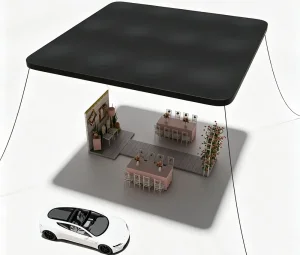
OEM Easy-Setup Helium Balloon Sun Shade - Truss-Free Overhead Diffusion with Minimal Helium Use Factories, Suppliers
Explore Product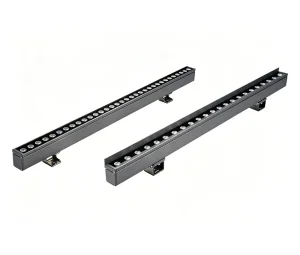
Best RGB Wall Washer – Effortless Commercial Decoration with Linear Precision Suppliers, Manufacturer
Explore Product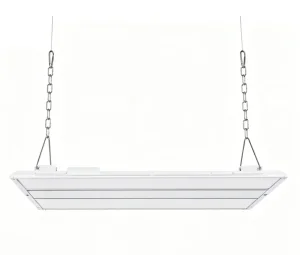
High-Quality Linear High Bay LED – Bright, Reliable, and Smart-Controlled Factory, Suppliers
Explore Product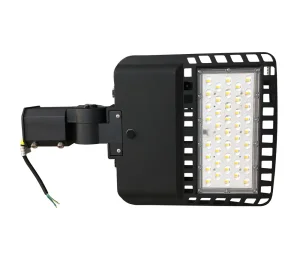
OEM LS-L Series Shoebox Street Light for Urban & Area Lighting Factories, Manufacturer
Explore Product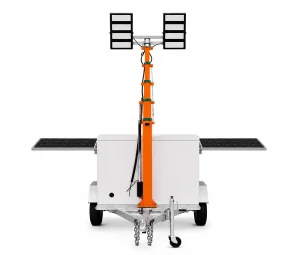
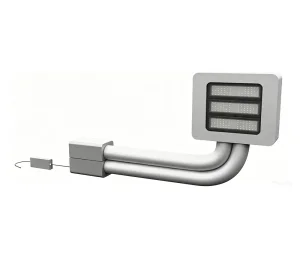
High-Quality Tailored High Temperature LED Light with Active Thermal Management- Rated 300°C (572°F) Factory, Manufacturers
Explore Product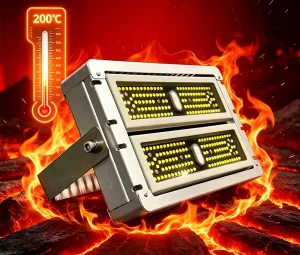
Best Ultra High Temperature LED Light - Rated 200°C (392°F) with IP68 Waterproof Protection Factory, Manufacturers
Explore Product