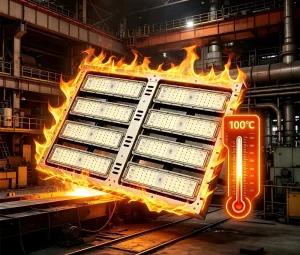
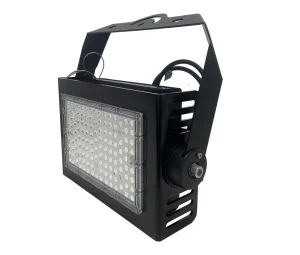
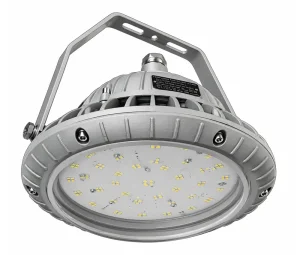
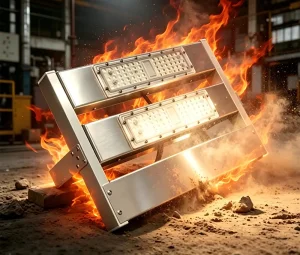
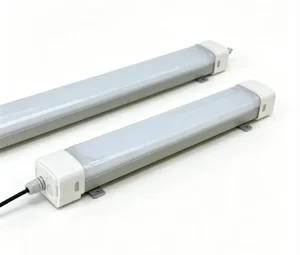
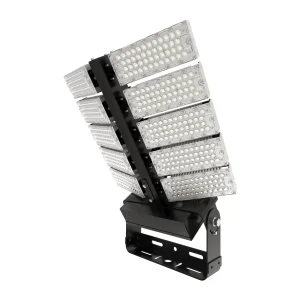
Featured Industrial & Sports Lighting Systems
Engineered for maximum optical output, thermal endurance, and precise beam distribution across sports arenas and demanding industrial environments.
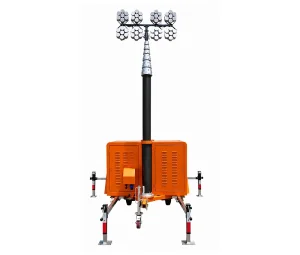
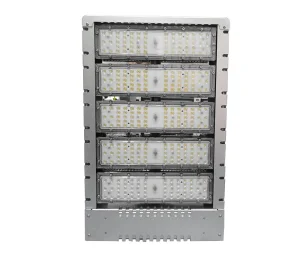
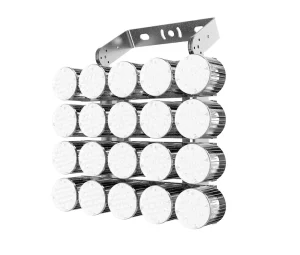
Global Commercial & Industrial Status Quo of Football Field Lighting
Analyzing the macro-economic transformation from legacy High-Intensity Discharge (HID) optics to intelligent Solid-State Stadium Luminaires.
The global sports lighting industry is undergoing a monumental shift driven by stringent decarbonization mandates, evolving broadcasting technologies, and the commercial necessity of multi-purpose venue optimization. Historically dominated by 1000W to 2000W Metal Halide (MH) and High-Pressure Sodium (HPS) fixtures, modern athletic facilities are systematically retrofitting their infrastructure with high-power LED floodlight arrays. High-quality football field lighting suppliers are no longer merely assembling luminaires; they function as precision optical engineering partners capable of delivering low-glare, flicker-free, and digitally addressable illumination systems tailored to global standards such as FIFA Stadium Guidelines 2023, UEFA Stadium Lighting Regulations, and EN 12193.
CAPEX vs. OPEX Realignment
While solid-state sports lighting installations require an initial capital expenditure 20% to 35% higher than legacy MH systems, operational savings yield payback within 18 to 30 months. Total power consumption is reduced by 55% to 70%, while maintenance costs are virtually eliminated due to 100,000-hour driver and module ratings.
4K & 8K HDTV Broadcast Imperatives
Modern sports broadcasting relies heavily on super-slow-motion cameras capturing up to 1,000 frames per second (fps). Standard AC-driven lighting produces visible stroboscopic flickering. Tier-1 manufacturers engineer high-frequency ripple-free drivers maintaining flickering factors below 0.5% (Flicker Index < 0.02) to guarantee broadcast compliance.
Dark Sky & Light Pollution Norms
Environmental regulations worldwide strictly mandate zero upper light output ratios (ULOR = 0%). Modern sports floodlights utilize precision asymmetric optics and secondary visor cut-offs to throw light exclusively onto the playing field while completely eliminating sky glow and spill light into surrounding residential neighborhoods.
When sourcing football field lighting suppliers, facility managers and EPC contractors must align technical specifications with the designated competition tier. Below is the technical illuminance summary governing international sports facilities:
| Lighting Class / Category | Application Profile | Horizontal Lux ($E_h$) | Vertical Lux ($E_v$) | Uniformity ($U_1 = E_{min}/E_{max}$) | Glare Rating (GR) |
|---|---|---|---|---|---|
| FIFA Quality Pro / UEFA Elite | International Broadcast, World Cup Finals | ≥ 2000 lux | ≥ 1800 lux | ≥ 0.70 | ≤ 40 |
| Class I (Professional) | National Leagues, High-Capacity Arenas | ≥ 1400 lux | ≥ 1000 lux | ≥ 0.60 | ≤ 45 |
| Class II (Semi-Pro / Training) | Regional Clubs, University Complexes | ≥ 500 lux | N/A | ≥ 0.50 | ≤ 50 |
| Class III (Recreational) | Community Pitch, School Grounds | ≥ 200–300 lux | N/A | ≥ 0.40 | ≤ 50 |
Emerging Industry Trends & Technology Roadmap
The technological vectors reshaping next-generation sports floodlighting manufacturing and control integration.
1. Articulated Modular Optical Engine Architectures
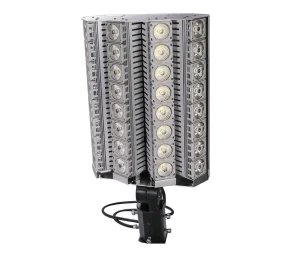
Monolithic high-wattage floodlights are rapidly being superseded by multi-module independently articulating LED arrays. By allowing each individual LED optical pod to tilt and pan across vertical and horizontal planes independently, optical engineers can precisely contour beam shapes to achieve near-perfect field uniformity ($U_1 > 0.80$) without causing harsh hotspots or deep shadowing beneath player feet.
2. Dynamic DMX512 & DALI-2 Entertainment Integration
Stadium floodlights are no longer single-function utility fixtures. Modern high-power LED systems are directly integrated with DMX512 RDM or DALI-2 digital control protocols. This enables real-time light shows synchronized with audio systems, pre-match light sequencing, player entrance strobe effects, and instant half-time dimming, transforming sports venues into multi-use entertainment arenas.
3. Phase-Change Thermal & Active Vapor Chamber Cooling
As luminaire power densities surpass 1500W to 2400W per unit, standard passive extruded aluminum heat sinks hit thermal dissipation boundaries. Leading suppliers now utilize pure copper heat-pipe vapor chambers coupled with micro-finned phase-change cooling fins. This engineering breakthrough maintains junction temperatures ($T_j$) below 75°C under continuous high ambient loads, preventing LED phosphor degradation and color shift over time.
4. Full Spectrum & High TLCI (>95) Emitters
Early LED sports lights suffered from low Color Rendering Index (CRI < 70) and poor Television Lighting Consistency Index (TLCI). Modern high-performance chips feature specialized spectral tuning—boosting the deep red R9 and blue R12 spectrums—ensuring natural grass rendering, true skin-tone fidelity, and broadcast color accuracy under high-definition camera arrays.
Localized Application Scenarios & Engineering Challenges
Customizing optical, mechanical, and electrical configurations for localized geographical and structural conditions.
Football grounds situated in coastal zones (e.g., Mediterranean, Gulf Region, Southeast Asian coastlines) face severe atmospheric salinity and continuous moisture exposure. Standard powder-coated aluminum fixtures undergo rapid galvanic corrosion and optical lens clouding within 18 to 24 months. Premier suppliers overcome this by applying ISO 12944 C5-M rated anti-corrosion surface treatments, marine-grade A4 316 stainless steel hardware, electro-passivated die-cast housings, and toughened chemically strengthened glass optics with hydrophobic coatings.
In regions such as Saudi Arabia, UAE, and North Africa, summertime ambient temperatures frequently exceed 48°C, with direct sunlight heating luminaire housings to over 70°C prior to operation. Standard LED drivers shut down due to thermal overload protection. Custom engineering solutions require remote driver enclosure placement (housing power supplies inside air-conditioned electrical rooms at the base of lighting towers) and utilizing active thermal monitoring microcontrollers that dynamically throttle power output to preserve driver lifespan without visual interruption.
High-mast light towers (ranging from 25 meters to 55 meters in height) carry significant Effective Projected Area (EPA) loads. Heavy wind shears exert structural torque on mounting brackets and cross-arms. High-quality suppliers engineer ultra-compact, aerodynamically streamlined profiles with low drag coefficients ($C_d < 0.35$), reducing structural stress on steel poles and allowing facility developers to lower structural steel foundations and installation costs.
Turnkey Stadium Lighting Solution & Master Procurement Protocol
A step-by-step engineering framework for procurement directors, EPC contractors, and stadium operators.
Phase 1: Photometric DIALux / Relux Simulation
Prior to procurement, suppliers must generate comprehensive 3D photometric renderings based on exact pitch dimensions (Standard FIFA pitch: 105m x 68m). Calculations must calculate horizontal illuminance ($E_h$), vertical illuminance toward 4 camera angles ($E_v$), uniformities ($U_1, U_2$), and Unified Glare Ratings (GR). DIALux reports confirm target lux levels without field guesswork.
Phase 2: Electrical Architecture & Surge Mitigation
High-mast lighting towers act as natural lightning rods. High-quality installations mandate multi-stage surge protection devices (SPD)—typically 20kV / 10kA rated—integrated at both the luminaire head and the ground control cabinet. Electrical lines must feature low THD (< 10%) drivers to prevent harmonic distortion across facility transformers.
Phase 3: Mounting Topology & Laser Aiming
Optimized field coverage depends heavily on pole positioning: 4-Corner Mast Layouts, 6-Pole Lateral Configurations, or Continuous Canopy Ring Mounts. Each luminaire bracket must feature calibrated protractor scales and laser-aiming sight mounts to allow precision field-aiming during nocturnal commissioning.
Phase 4: Total Cost of Ownership (TCO) Audit
Procurement decisions should evaluate 15-year TCO metrics rather than unit unit cost. Calculation formula: TCO = Initial Hardware + Installation + (Operating Hours x Wattage x Energy Tariff) + Maintenance Lifecycle Cost. High-efficiency LED systems consistently reduce total lifecycle investment by over 50%.
Strategic Supplier Evaluation Matrix (E-E-A-T Benchmark)
How to verify manufacturing integrity, technical expertise, and quality control capabilities of lighting factories.
| Evaluation Pillar | Technical Criterion | Verification Standard / Metric | Risk Profile of Substandard Sourcing |
|---|---|---|---|
| Optical Performance | Integrating Sphere & Goniophotometer Testing | LM-79-19 Standard Reports, IES Photometric Files | Inaccurate beam spreads, uneven lux levels, field dark spots |
| Thermal Longevity | In-Situ Temperature Measurement Test (ISTMT) | LM-80 / TM-21 Lifetime Projection Data ($L_{80} > 100,000h$) | Rapid lumen depreciation, premature LED chip burn-out |
| Ingress & Impact | Enclosure Sealing & Mechanical Strength | IP66/IP67 Waterproofing, IK09/IK10 Vandal Resistance | Water ingress, internal condensation, glass fracture from ball impact |
| Electrical Reliability | Driver Topology & Surge Protection | Mean Well / Inventronics / Philips Xitanium Drivers, 10kV-20kV SPD | Driver failure during grid voltage spikes or lightning strikes |
| Compliance & Audit | Global Standards Certification | CE, RoHS, CB, UL/cUL, ENEC, ISO 9001, ISO 14001 | Customs clearance rejection, failure to meet municipal safety codes |
Frequently Asked Questions (Technical Sourcing Guide)
Expert answers to the most common engineering and procurement inquiries regarding football field lighting.
How many floodlights are typically required for a standard football field?
The total number of fixtures depends on the target lux level (Class I, II, or III), pole heights, and optical beam angles. For a standard 105m x 68m pitch:
- Recreational Class III (200 Lux): Approximately 12 to 16 high-efficiency 600W–800W LED floodlights across 4 or 6 poles.
- Semi-Professional Class II (500 Lux): Approximately 24 to 32 units of 1000W–1200W LED stadium lights.
- FIFA / Broadcast Class I (1400–2000 Lux): 48 to 80+ high-power 1200W–1500W precision floodlights with asymmetric narrow optics mounted on 30m–45m high masts.
What is the difference between symmetric and asymmetric optical distribution in field lighting?
Symmetric lenses project light evenly in a circular or square cone around the fixture's central axis. Asymmetric optics direct light forward at an angled tilt (e.g., 45° to 60° forward throw) while remaining mounted horizontally parallel to the ground. Asymmetric optics are crucial for football fields because they eliminate glare into player eyes, prevent light pollution into the night sky, and dramatically improve vertical illuminance uniformity.
Why is flicker frequency critical for sports field lighting?
Standard alternating current (AC) cycles power at 50Hz or 60Hz. While human eyes do not perceive this subtle pulsation, high-speed cameras shooting super-slow-motion footage at 300 to 1,000 frames per second record dark bands across the broadcast screen. High-grade football field lighting drivers utilize high-frequency pulse-width modulation or ultra-low ripple DC output (flicker factor < 0.5%) to ensure flawless broadcast quality.
How does glare rating (GR) affect player performance and how is it controlled?
Harsh glare momentarily blinds players tracking high-flying balls and disrupts goalkeeper reaction times. Glare Rating (GR) is a mathematical scale from 10 to 90. FIFA mandates GR ≤ 40–45. Glare is controlled by specifying asymmetric lenses, adding external anti-glare visors/louvers, elevating lighting tower heights to increase the light incidence angle above 25°, and spreading optical intensity across multi-module arrays.
What is the expected lifespan and maintenance requirement of modern LED stadium floodlights?
Quality LED stadium luminaires feature an $L_{80}B_{10}$ lifespan rating exceeding 100,000 hours, meaning 90% of installed fixtures maintain at least 80% of their initial lumen output after 100,000 operational hours. Operating 4 hours daily, this equates to over 25 years of service. Maintenance is virtually zero compared to Metal Halide systems, which require bulb replacement every 3,000 to 5,000 hours.
Can existing metal halide light towers be retrofitted with new LED fixtures?
Yes. Retrofitting is common. However, engineers must conduct a structural wind-load and weight assessment. Because high-power LED luminaires feature heavy heat sinks and specific EPA profiles, replacing 2000W MH lamps with equivalent 1000W-1200W LED fixtures requires confirming that existing pole cross-arms, wiring gauges, and structural foundations can safely accommodate the new hardware.
Specialized Industrial, Marine & Task Lighting Products
Explore our complete OEM/ODM manufacturing capability spanning high-temperature, explosion-proof, marine, and mobile lighting systems.