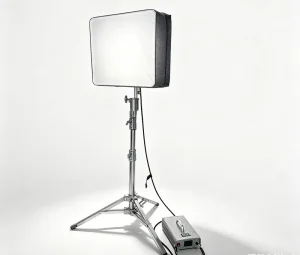
Featured Industrial & Stadium Luminaire Systems
Browse specialized high-temperature, marine-certified, heavy-duty mobile, and sports venue LED flood luminaires directly from our factory floor.
-
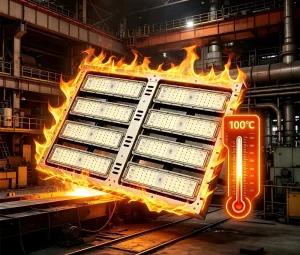
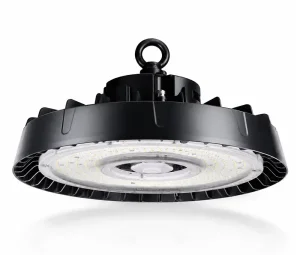
High-Quality High Temperature LED Light Rated 100°C(212°F), IP68 Waterproof Factories, Factory
-
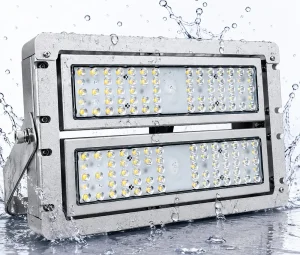
-
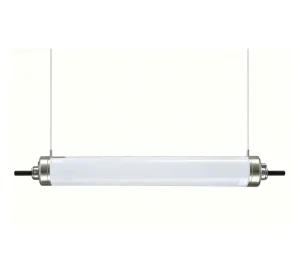
-
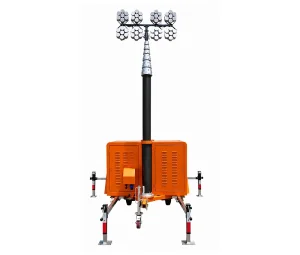
High-Quality High Brightness 12m Mobile Light Tower Factory, Suppliers
-
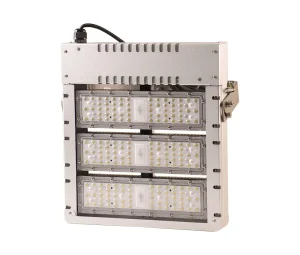
OEM High Temperature LED Flood and High Bay Light Rated 80°C Factories, Suppliers
-
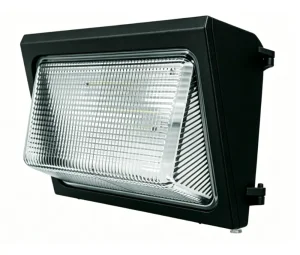
Best Wall Pack LED Light – Secure & Efficient Exterior Building Lighting Factories, Manufacturers
-
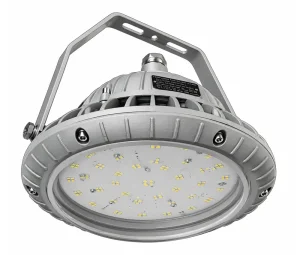
Best Explosion proof LED Light – Safe, Durable, Industrial Illumination Suppliers, Supplier
-
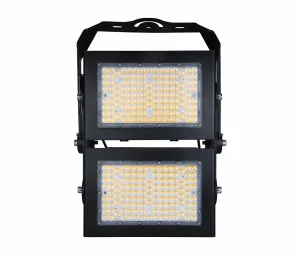
Architecting Modern Football Stadium Lighting: The Intersection of Photometry & Reliability
Contemporary sports arena illumination demands a paradigm shift away from traditional metal halide systems toward mathematically modeled, high-flux solid-state LED luminaires.
Ultra-Low Glare Index (UGR < 19)
Utilizing patented micro-lens arrays and secondary internal baffles, our stadium floodlights prevent direct optical blinding for goalkeepers and outfield athletes tracking high-altitude ball trajectories, satisfying strict FIFA Class V guidelines.
4K/8K Broadcast Quality (TLCI > 90)
Flicker rates engineered below 0.2% enable high-speed super slow-motion broadcasting (1000+ fps) without strobing or banding artifacts. Optimized Ra > 90 and Television Lighting Consistency Index (TLCI) deliver authentic color balance to international audiences.
Phase-Change Thermal Matrix
Integrating 6063 aviation cold-forged aluminum with vapor chamber heat pipes guarantees that junction temperatures (Tj) remain strictly under 65°C even in 50°C continuous ambient conditions, ensuring L90B10 operational life exceeding 100,000 hours.
Typhoon-Rated Structural Rigidity
Certified for 17-level severe windstorm conditions (up to 60 m/s wind load) with 20kV built-in surge protection. Our high-bay mounts feature precision stainless steel 316 aiming dials with 360-degree rotation and micro-tuning calibration scales.
China Supply Chain Advantages: From Raw Ingot to Smart Arena System
Shenzhen and Guangdong industrial clusters provide an unmatched ecosystem of optical prototyping, automated SMT lines, die-casting foundries, and darkroom goniophotometer testing.
Integrated Vertical Ecosystem
Our direct access to world-class aluminum extrusion presses, dedicated mold tooling centers, and leading driver chipset suppliers drastically curtails development cycles. Prototyping custom optics takes just 10 days.
Dialux Simulation & Photometric Planning
Every project receives pre-production photometric modeling verifying horizontal lux (Eh), vertical lux (Ev), uniformity factors (U1, U2), and spill-light containment onto adjacent residential zones.
Rigorous Destructive Validation
Luminaires undergo 1,000-hour neutral salt spray (ASTM B117), IK10 mechanical impact, resonance frequency vibration tests, and accelerated thermal-cycling chambers before dispatch.
Football Stadium Lighting Specifications: Standard vs. Heavy-Industrial Criteria
Procurement directors can compare operational thresholds between conventional public lighting solutions and specialized arena luminaires.
| Performance Metric | Municipal Pitch Standards | FIFA Class V / UEFA Elite Stadius | Factory Engineered Threshold (Lsledsus) |
|---|---|---|---|
| Horizontal Illuminance (Eh) | 200 – 500 Lux | 2000 – 3500 Lux | Configurable up to 4500 Lux custom design |
| Illuminance Uniformity (U1 / U2) | U1 > 0.5, U2 > 0.6 | U1 > 0.7, U2 > 0.8 | U1 > 0.75, U2 > 0.85 verified via IES files |
| Flicker Factor (Super Slow-Mo) | < 5% (Standard Video) | < 1% (Ultra HD Broadcast) | < 0.2% (High-Frequency DC Ripple Drivers) |
| Surge Protection Rating (SPD) | 6kV – 10kV | 10kV – 15kV | 20kV / 10kA Integrated Dual-Stage Module |
| Ingress & Corrosion Barrier | IP65, Standard Powdercoat | IP66, Marine C4 Coating | IP67 / IP68 + C5-M Anti-Corrosive AkzoNobel |
| Control Protocol Support | Manual / 1-10V Analog | DALI-2 / DMX512 RDM | DMX-RDM + Art-Net Dynamic Entertainment Show Sync |
Localized Engineering Compliance & Procurement Frameworks
Navigating municipal electrical standards, regional structural safety codes, and total cost of ownership requirements across international jurisdictions.
Regulatory Harmonization
Our sports luminaires come with verified CE-EMC, RoHS, UL/cUL (UL1598), CB, SAA, and Dark Sky compliance. We provide complete third-party lab documentation, LM-79, LM-80, and ISTMT thermal reports for municipal permit approvals.
TCO & Energy Decarbonization
Replacing antiquated 2000W metal halide lamps with 800W–1200W modular LEDs yields a 60–75% reduction in grid consumption. Integrated automated scheduling and dimming deliver substantial ROI within 24 months.
Contractor Turnkey Support
We provide end-to-end commissioning drawings, customized mounting brackets for high-mast cross arms, pre-wired quick-disconnect industrial connectors, and remote driver boxes installed at ground level for safe servicing.
Localized Deployment: Engineered for Complex Topographies
From wind-swept coastal arenas to high-altitude training grounds and semi-enclosed stadiums, our lighting handles varied environments.
Marine & Coastal Stadiums
Designed for seaside venues subject to high humidity and salt fog. Features electrophoresis pretreatment, marine-grade AkzoNobel powder coating, and 316 stainless hardware to stop galvanic corrosion.
High-Temperature Desert Arenas
Built to withstand Middle East summer peaks exceeding 55°C. Features remote IP67 driver cabinets, separated optical modules, and large thermal convective channels to prevent heat entrapment.
Multi-Purpose Arena Broadcasts
Rapid switching between training modes (200 Lux), amateur league games (500 Lux), and international live television matches (2500+ Lux), integrated into building management automation via BACnet or DMX512.
High-Mast Retrofit Installations
Lightweight aerodynamic chassis engineered to match existing pole weight limits and EPA wind surface limitations, avoiding costly tower rebuilds during metal halide upgrades.
Emerging Trends Reshaping Sports Lighting Architecture
Next-generation arena designs integrate smart sensors, dynamic entertainment features, and sustainable materials.
Connected IoT Mesh Intelligence
Wireless Bluetooth Mesh and Zigbee-controlled field topologies eliminate hundreds of meters of control wiring. Onboard sensors track driver temperature, real-time lumen degradation, and power line anomalies.
Spectator Dynamic Show Synchronization
Integrating white sports lighting with RGBW architectural luminaires lets arenas trigger goal celebrations, musical syncs, and player entrances with millisecond responsiveness directly from the DMX console.
Circular Design & Modular Upgrades
Toolless field servicing with modular LED boards and driver components supports rapid maintenance without unmounting the chassis from high-mast towers, lowering life-cycle waste and field costs.
Frequently Asked Technical & Sourcing Questions
Common questions from lighting designers, electrical contractors, and arena procurement teams.
How do you eliminate the stroboscopic effect for 4K super-slow-motion sports broadcasts?
Can your factory generate complete photometric Dialux simulations for tendering?
How does your thermal architecture prevent early LED lumen degradation in high-ambient environments?
What are the lead times and customization options for OEM / ODM procurement?
How do you solve light pollution and spillover into neighboring residential areas?
High-Performance Stadium, Portable & Special Application Lines
Engineered sports field fixtures, mobile solar light towers, and harsh-environment marine and high-heat luminaires from our manufacturing facility.
-
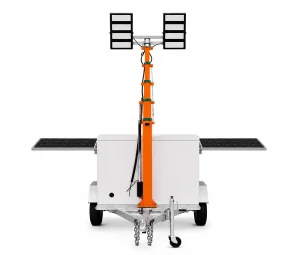
High-Quality 7M Solar Mobile Light Tower Factories, Supplier
-
-
-
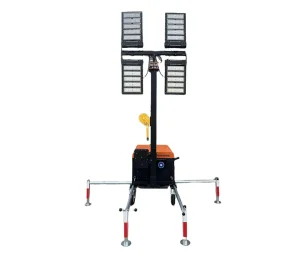
High-Quality Wholesale 6m Mobile Light Tower Factories, Factory
-
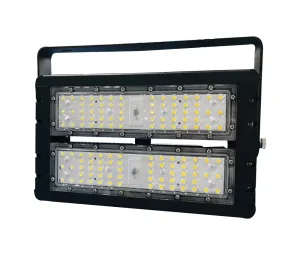
High-Quality 12V/24V DC LED Flood Light for Portable & Solar Applications Factories, Supplier
-
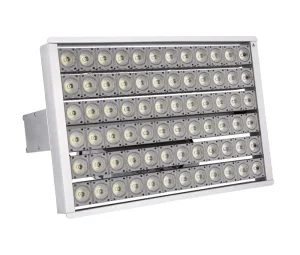
High-Quality High Temperature LED Light Rated 90°C(194°F) Suppliers, Manufacturers
-
-