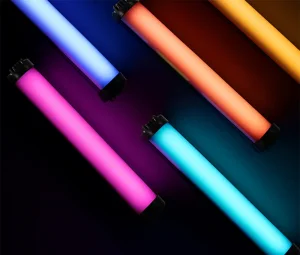
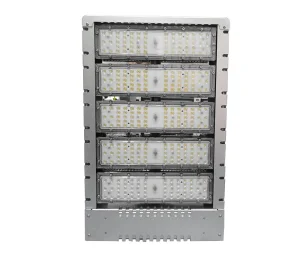
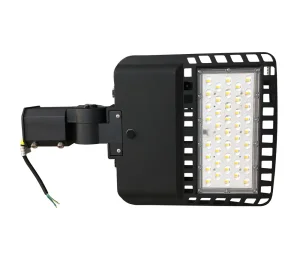
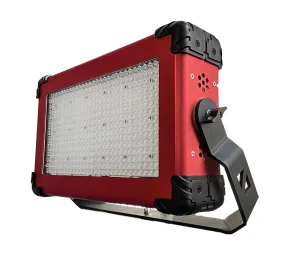
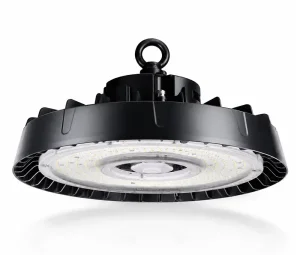
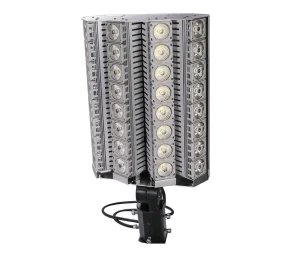
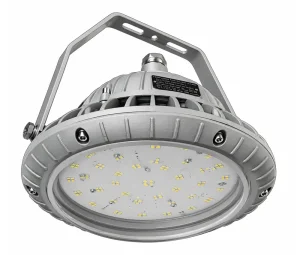
Featured Industrial Lighting Products
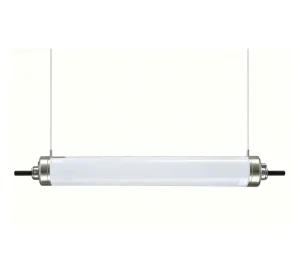
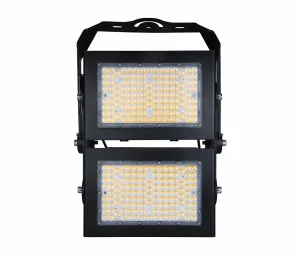
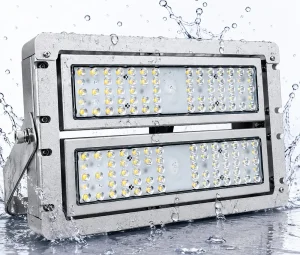
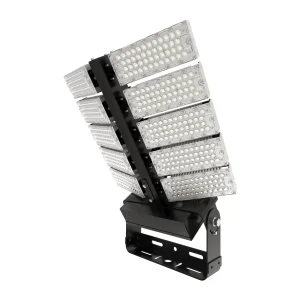
Explore high-efficiency, harsh-environment industrial LED fixtures engineered for extreme thermal, coastal, and heavy manufacturing conditions.
Global Commercial & Industrial Lighting Landscape
Decarbonization, smart automation, and operational efficiency are redefining high bay lighting specifications across global supply networks.
Energy Optimization & ESG Mandates
Modern industrial facilities operate under strict ESG (Environmental, Social, and Governance) targets. Upgrading legacy Metal Halide (MH) and High-Pressure Sodium (HPS) fixtures to high-efficacy LED high bays cuts power consumption by up to 70%, dramatically shrinking corporate carbon footprints.
IoT & Smart Building Integration
High bay luminaires have evolved into data hubs. Incorporating DALI-2, Zigbee 3.0, and 0-10V intelligent dimming allows automated daylight harvesting, occupancy sensing, and predictive maintenance tracking via cloud management systems.
Extreme Environment Resiliency
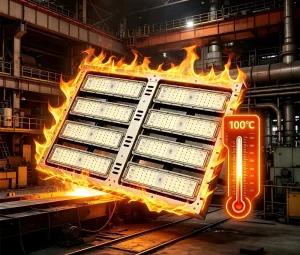
From steel foundries operating near 300°C to coastal shipping hubs plagued by high humidity and salt fog, heavy-duty high bays require advanced thermal management, IP68/IP69K sealing, and C5-M anti-corrosion coatings to ensure multi-year operational continuity.
Strategic Engineering Trends in High Bay Lighting
Technical innovations pushing the boundaries of luminous efficacy, thermal dissipation, and optical control.
1. Next-Generation Luminous Efficacy
Early-stage LED high bays delivered 100 lm/W. Today’s industrial state-of-the-art utilizes high-density SMD 2835 and 5050 LED arrays paired with pure aluminum PCB substrates to reach standard efficacies between 160 lm/W and 210 lm/W. This efficiency surge reduces operational thermal overhead while lowering electrical amperage draws per circuit.
2. Advanced Thermal Management Dynamics
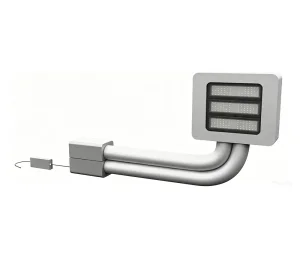
Thermal degradation is the primary cause of LED lumen depreciation. Manufacturers now deploy cold-forged aluminum heatsinks, phase-change heat pipes, and graphene-enhanced thermal coatings. For ultra-high ambient zones (foundries, glass works), remote driver housing configurations physically isolate sensitive driver electronics from ambient heat zone peaks.
3. Precision Optics & Unified Glare Rating (UGR)
Industrial safety mandates require uniform foot-candle delivery without blinding crane operators or forklift drivers. Utilizing polycarbonate (PC) micro-prismatic lenses and optical glass reflectors achieves strict UGR < 19 ratings with selectable beam angles ranging from concentrated 30° spot beams to 120° wide flood distributions.
Global Enterprise Procurement & Risk Mitigation
Why procurement teams are shifting focus from CapEx to Total Cost of Ownership (TCO) and robust supplier evaluation metrics.
Key Procurement Insight: Initial Cost vs. 10-Year Lifecycle Operating Expense
Purchasing cheap, low-grade LED high bays often leads to high maintenance expenditure due to premature driver failures, lens yellowing, and rapid lumen decay in high-ceiling environments where scissor lift rentals and line downtime dwarf original fixture costs.
International Compliance Certifications
Enterprise buyers require rigorous validation. High-quality suppliers supply complete laboratory reports including IES LM-79, LM-80, TM-21 lumen maintenance projections, alongside UL1598, CE, RoHS, DLC Premium 5.1, and ATEX explosion-proof certifications for hazardous industrial sites.
Tailored OEM/ODM Technical Flexibility
Generic catalog fixtures rarely fit legacy retrofit dimensions. Tier-1 manufacturers provide customized bracketry, specialized input voltages (100-277V, 347-480V high voltage), custom color rendering index choices (CRI 80, 90, 95), and factory-installed emergency battery backups.
Supply Chain Reliability & Warranty Guarantees
Unplanned facility darkness halts assembly lines. Suppliers must demonstrate robust component sourcing partnerships (e.g., Mean Well, Inventronics, Osram, Bridgelux drivers/chips) backed by non-prorated 5 to 10-year replacement warranty policies.
China Industry 4.0: Supply Chain Resilience & Manufacturing Edge
Unrivaled production agility, vertically integrated component ecosystems, and automated quality control.
Vertically Integrated Manufacturing Clusters
Leading Chinese LED high bay manufacturers operate complete in-house ecosystems: die-casting foundries, automated SMT surface-mount lines, optical lens molding shops, powder-coating lines, and accredited photometric test labs. This vertical integration reduces production lead times from months to weeks.
Automated Quality Control (AOI & Thermal Aging)
Industry 4.0 smart factories integrate Automated Optical Inspection (AOI) for SMT solder joint precision, computerized high-voltage isolation testing, dynamic waterproof immersion chambers, and 100% 48-hour continuous full-load thermal burn-in aging processes before export packaging.
Unmatched Cost-to-Performance Ratio
By leveraging concentrated raw material supply chains (aluminum, copper, optical silicones) and high-volume automated throughput, Chinese manufacturers deliver industrial-grade LED fixtures engineered to western quality benchmarks at competitive unit costs.
Localized Application Scenarios & Engineering Field Notes
How specific environmental factors demand specialized high bay fixture configurations.
Scenario A: Steel Mills & Heavy Metal Foundries
Environment: Ambient temperatures exceeding 60°C near ceiling trusses, airborne metallic dust, high physical vibration.
Engineered Solution: High-temperature high bays rated for 100°C to 300°C ambient operation, featuring active heat dissipation sinks, IP68 sealed optic modules, remote-mounted drivers installed in cooler control room walls, and vibration-proof mounting brackets.
Scenario B: Automated Cold Storage & Logistics Hubs
Environment: Sub-zero operating temperatures (-30°C), narrow aisle racking reaching 15 meters high, continuous operation.
Engineered Solution: Linear high bays featuring 30°x90° asymmetric aisle optics to direct lumens deep into shelf stacks, instant-on cold-temperature drivers, integrated microwave occupancy sensors for localized zone dimming, and IP66 condensation-proof seals.
Scenario C: Coastal Ports, Marine Docks & Shipyards
Environment: Salt mist airborne corrosion, severe ocean storm moisture, continuous vibration from heavy cranes.
Engineered Solution: Marine-grade high bay flood fixtures constructed with copper-free die-cast aluminum alloys, treated with 1000-hour salt spray tested C5-M powder coatings, stainless steel 316 fasteners, and IP68/IP69K pressure-wash rating.
High Bay Light Fixtures Comparison Matrix
Technical comparison across primary industrial high bay categories to guide your procurement selection.
| Fixture Category | Typical Luminous Efficacy | Ambient Temp Rating | IP / IK Rating | Ideal Application Zones |
|---|---|---|---|---|
| Standard UFO High Bay | 150 – 190 lm/W | -30°C to +50°C | IP65 / IK08 | Warehouses, Light Manufacturing, Retail Centers |
| Linear LED High Bay | 140 – 180 lm/W | -25°C to +45°C | IP54 / IP65 / IK08 | High-Bay Logistics Aisles, Big Box Stores, Assembly Lines |
| High-Temperature Bay (Extreme) | 130 – 160 lm/W | -40°C to +150°C / +300°C | IP67 / IP68 / IK10 | Foundries, Steel Mills, Power Plants, Glass Kilns |
| Explosion-Proof High Bay | 120 – 150 lm/W | -40°C to +60°C | IP66 / IP67 / Ex-Marked | Chemical Processing, Oil Refineries, Grain Elevators |
| Marine Grade High Bay | 140 – 170 lm/W | -30°C to +55°C | IP68 / IP69K / C5-M | Ports, Shipyards, Offshore Platforms, Wet Washdown |
Frequently Asked Questions (Procurement & Engineering FAQ)
Detailed answers to technical, commercial, and operational questions asked by industrial buyers.
Complete High Bay & Specialized Product Line
Browse our complete portfolio of high bay, stadium, street, and underwater industrial illumination products.