
Ultra-High Temperature & Specialized Industrial Fixtures
Field-proven luminaire solutions engineered to operate continuously in ambient zones exceeding standard thermal limits.
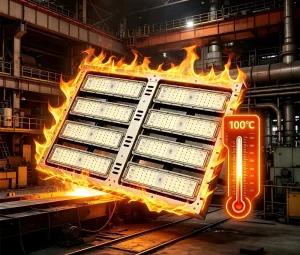
High-Quality High Temperature LED Light Rated 100°C(212°F), IP68 Waterproof Factories, Factory
View Tech Specs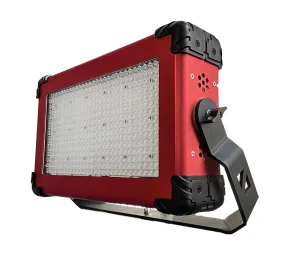
Best Revolutionary Underwater LED Film Light - 30-Meter Depth, Zero Housing Required Suppliers, Manufacturers
View Tech Specs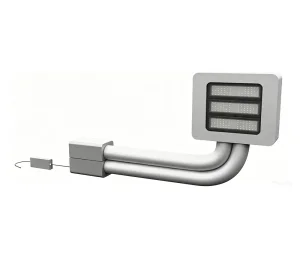
High-Quality Tailored High Temperature LED Light with Active Thermal Management- Rated 300°C (572°F) Factory, Manufacturers
View Tech Specs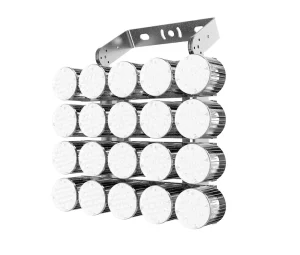
High-Quality Arena LED Stadium Light – Ultra‑Compact Design with Maximum Efficiency Factories, Factory
View Tech Specs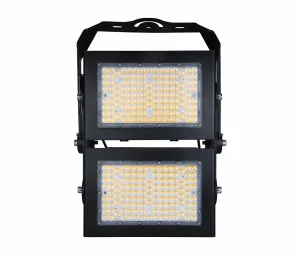
OEM Vega LED Sports Field Light-Robust Design, Adjustable Optics, Competitive Cost Supplier, Manufacturers
View Tech Specs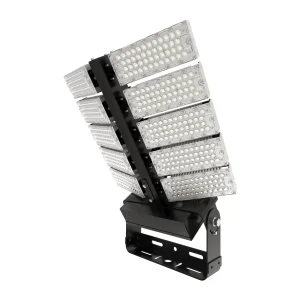
High-Quality Flex LED Flood Light - Independently Articulating Modules for Flawless Field Uniformity Factory, Supplier
View Tech Specs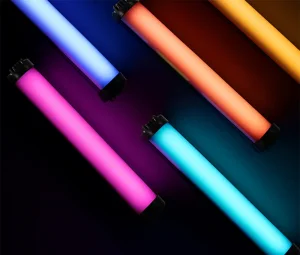
OEM Commercial Underwater Video Lights – 2-Meter Depth, Infinite Creative Effects for Every Shoot Factory, Supplier
View Tech Specs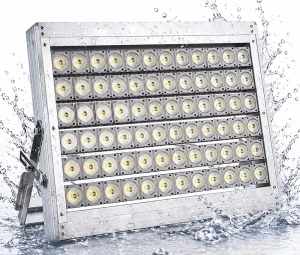
High-Quality LS-FLN Titans Series LED Marine Light for Deep Sea & Offshore Applications Factories, Manufacturers
View Tech SpecsExecutive Summary: Navigating Thermal Frontiers in Heavy Industrial Illumination
In modern industrial facilities such as integrated steel mills, non-ferrous foundries, glass annealing plants, and petro-chemical processing towers, operational environments subject electrical infrastructure to ambient heat levels vastly exceeding ambient commercial limits. Standard industrial LED luminaires—typically engineered for ambient thresholds between 40°C and 60°C—experience catastrophic, non-linear degradation when exposed to severe heat zones reaching 200°C (392°F).
This technical whitepaper outlines the structural physics, thermal dynamics, materials science, and driver isolation paradigms engineered by premier B2B manufacturing partners. By resolving critical failure modes—such as PN junction thermal runaway, phosphor quenching, wire-bond fatigue, and driver electrolytic fluid evaporation—our high-ambient LED systems deliver uncompromised photometric performance, structural integrity, and multi-year operational continuity.
The Heat Sink Bottleneck
Traditional passive extrusion aluminum heat sinks fail when the ambient air temperature ($T_a$) approaches or exceeds the LED semiconductor junction temperature ($T_j$), eliminating convective thermal dissipation pathways.
Phosphor Quenching
At temperatures exceeding 150°C, yellow YAG:Ce phosphors undergo thermal quenching, shifting chromaticity toward harsh blue spectrums and reducing luminous flux output by up to 60%.
Driver Component Decay
Integrated SMPS drivers contain liquid electrolyte capacitors that dry out exponentially under ambient conditions above 85°C, making remote driver placement a structural requirement.
Advanced Engineering Paradigms for 200°C Ambient Operation
Overcoming the 200°C (392°F) thermal barrier requires a fundamental departure from conventional luminaire design. Rather than relying solely on surface convection, our engineering frameworks integrate multi-phase thermal management, advanced ceramic substrates, and split-system electrical topologies.
1. Remote Galvanic Driver Isolation Topology (RGDI)
To ensure absolute electrical reliability, power electronics are detached from the high-temperature optical head. The driver assembly is stationed in a climate-controlled control room or an ambient zone up to 100 meters away. Power transmission occurs over specialized high-temperature Teflon-insulated (PTFE) or glass-fiber braided cabling rated for continuous operation at 250°C+.
2. Active Phase-Change Thermal Conductive Loops
Inside the optical engine, heat generated by the LED dies is rapidly absorbed by a closed-loop Vapor Chamber or Superconducting Phase-Change Heat Pipe array. Utilizing high-purity working fluids under sub-atmospheric pressure, phase-change loops exhibit thermal conductivity ratings exceeding 10,000 W/m·K (compared to copper's 400 W/m·K), dissipating heat instantly to specialized peripheral radiators.
3. Aluminum Nitride (AlN) Ceramic Substrates & Gold Wire Bonding
Conventional MCPCBs (Metal Core Printed Circuit Boards) rely on epoxy dielectrics that carbonize under extreme thermal stress. Our 200°C ambient luminaires utilize pure Ceramic Aluminum Nitride (AlN) substrates providing 170–200 W/m·K direct thermal conductivity. Die interconnections feature 99.99% pure gold wire-bonding, resisting thermal coefficient mismatches and mechanical shear stresses during heating and cooling cycles.
| Specification Parameter | Standard Industrial LED High Bay | 200°C (392°F) Extreme Thermal LED System |
|---|---|---|
| Operating Ambient Temp Range | -20°C to +45°C (-4°F to 113°F) | -40°C to +200°C (-40°F to 392°F) |
| Substrate Architecture | 1.5mm Aluminum MCPCB (1.5–3.0 W/m·K) | Direct Bonded Copper on Ceramic AlN (170–200 W/m·K) |
| Driver Location & Lifetime | Integrated; 50,000 hrs @ 45°C Ambient | Remote Isolated Cabinet; 100,000 hrs @ 200°C Ambient Zone |
| Optical Encapsulation | Polycarbonate (PC) or Acrylic (PMMA) Lenses | Borosilicate Optical Glass Lens + High-Temp Silicone Seals |
| Ingress & Corrosion Protection | IP65 Powder-Coated Die-Cast Aluminum | IP68 / IP69K Marine Grade Electro-Passivated 316 Stainless Steel |
Technical Roadmap & Future Outlook: Next-Gen Industrial Solid-State Lighting
As heavy manufacturing industries transition toward automated digital plants and decarbonized processing, the demands placed on thermal lighting infrastructure are escalating. Below is our engineering roadmap for thermal lighting technology over the next five years:
Monolithic Silicon Carbide (SiC) Drivers (2025–2026)
Transitioning driver componentry from Silicon to Wide Bandgap Silicon Carbide (SiC) semiconductors, allowing remote driver enclosures to operate natively at ambient environments up to 125°C without auxiliary liquid cooling.
Quantum Dot Thermal Stabilization (2026–2027)
Deployment of inorganic matrix Quantum Dot phosphors, completely eliminates thermal chromaticity drift at 200°C while maintaining Color Rendering Index (CRI) standards above Ra 90 across all color temperatures.
AI-Predictive Thermal Diagnostics (2027–2030)
Integration of real-time fiber-optic embedded thermal sensors within luminaire housings, transmitting continuous heat flux data directly to plant SCADA systems for predictive maintenance alerts.
Global Commercial & Heavy Industrial Environment Landscape
Operating a manufacturing facility under harsh thermal conditions requires lighting equipment built specifically for heavy industry. Standard LED commercial off-the-shelf fixtures degrade rapidly in ambient heat, causing unscheduled downtime, increased maintenance costs, and severe safety compliance risks.
1. Integrated Steel Mills & Continuous Casting Bays
In hot-strip rolling mills, blast furnaces, and tundish preheating zones, ceiling ambient temperatures routinely hover between 120°C and 180°C, with radiant heat spikes reaching 200°C during molten metal pours. Standard lighting fixtures melt or short-circuit within weeks. Our high-temperature LED lights provide intense, focused illumination, allowing operators and machine-vision cameras to monitor steel slabs safely without maintenance disruptions.
2. Glass Manufacturing & Float Line Annealing Lehrs
Glass production requires continuous operation of furnaces at temperatures exceeding 1,500°C. Above float glass lines and annealing lehrs, ambient temperatures remain constant at 150°C to 200°C. High-performance, heat-resistant luminaires are critical to maintaining clear visibility across the production line and preventing defects in hot glass sheets.
3. Petrochemical Cracking & High-Temperature Process Towers
Distillation columns, catalytic cracking units, and steam reformers present a double threat: high ambient temperatures combined with explosive gas atmospheres (Class I, Div 1 / ATEX Zone 1). Our heavy-duty luminaires feature heavy-walled cast stainless steel enclosures that deliver explosion-proof performance while dissipating extreme heat effectively.
4. Chemical Recovery Boilers & Heavy Paper Mills
Chemical recovery boilers in pulp mills generate steam under high temperatures while handling corrosive chemicals like black liquor. Overhead luminaires must withstand continuous high temperatures along with severe chemical vapor exposure. Ultra-durable fluorosilicone gaskets and high-grade metal coatings protect internal optics from chemical attack and thermal degradation.
Localized Application Scenarios & Installation Field Notes
To successfully deploy high-temperature LED lighting systems, engineering teams must evaluate local environmental factors beyond ambient air temperature. Below are documented real-world installation case scenarios and installation guidelines:
Scenario A: Steel Foundry Overhead Crane Lighting
Challenge: Fixtures mounted directly underneath crane girders experience high ambient temperatures (160°C) and heavy mechanical vibration during molten ladle transport.
Solution: Installation of 300W 200°C rated high-bay fixtures equipped with remote driver enclosures mounted in the electrical bridge bay. Stainless steel shock-absorbing mounting brackets reduce vibration-induced stress on optical lenses.
Scenario B: Kiln Hood Inspection in Cement Plants
Challenge: Kiln hoods experience extreme radiant heat output along with thick abrasive dust layers, leading to thermal buildup and reduced optical transmission.
Solution: Smooth, non-stick powder-coated heat sinks featuring toughened borosilicate glass lenses resist dust accumulation. Integrated compressed-air blast ports keep lens surfaces clean while providing auxiliary cooling.
Scenario C: Marine Engine Exhaust & Boiler Rooms
Challenge: Confined marine engine spaces experience high ambient heat (90°C–120°C) alongside salt fog corrosion and constant vibration.
Solution: IP68 marine-grade 316 stainless steel LED floodlights provide complete protection against salt spray corrosion while maintaining stable lumen output under heavy engine room thermal loads.
China Supply Chain Resilience & Shenzhen Precision Efficiency Advantage
As a global hub for advanced hardware engineering, Shenzhen offers an ideal ecosystem for producing specialized high-temperature industrial lighting. Our local integration advantage combines rapid prototyping, precision component manufacturing, and thorough quality assurance to deliver superior value for enterprise B2B customers globally.
Vertical Supply Chain Integration
From die-casting high-grade metals and SMT placement on ceramic substrates to custom optical glass molding, our complete supply chain ecosystem accelerates development cycles from months to days.
Custom OEM/ODM Engineering Velocity
Every industrial facility has unique mounting heights, beam angle requirements, and power supply limits. Our dedicated engineering team provides photometric Dialux simulations, CAD drawings, and custom prototypes within 72 hours.
Rigorously Validated Reliability
Every high-temperature fixture undergoes rigorous burn-in testing inside automated thermal environmental chambers at 200°C for 48 consecutive hours prior to shipment, ensuring zero-defect deployments worldwide.
Localization Support, Quality Compliance & Regulatory Guarantees
Deploying critical industrial lighting requires complete compliance with local safety standards and international quality certifications. Our complete lineup of high-temperature LED luminaires is fully certified to meet major regional regulations across North America, Europe, Asia-Pacific, and the Middle East.
- International Safety & Electrical Standards: UL1598 (Luminaires), UL8750 (LED Equipment), CE-LVD, EN 60598-1, and CSA C22.2.
- Hazardous Location & Explosion-Proof Directives: ATEX Zone 1/2, Zone 21/22, IECEx, and Class I Division 2 certified options for combined high-heat and explosive gas/dust environments.
- Ingress & Structural Ratings: IP68 submersion depth verified, IP69K high-pressure thermal washdown resistant, and IK10 impact protection enclosures.
- Global Engineering & After-Sales Network: Comprehensive 5-year to 10-year factory warranties supported by global logistics partners, ensuring prompt replacement delivery and on-site engineering assistance.
Heavy Industrial, Mobile & Coastal LED Solutions
Explore our complete range of high-efficiency, harsh-environment luminaires, stadium lights, and mobile towers.
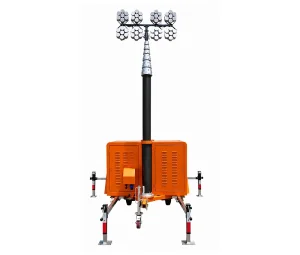
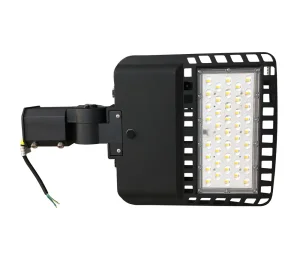
OEM LS-L Series Shoebox Street Light for Urban & Area Lighting Factories, Manufacturer
View Tech Specs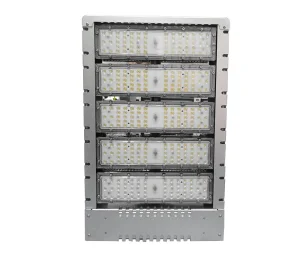
Best Artemis LED Stadium Light - IP67 Durability and Ultra-Light Design for Harsh Coastal Environments Factories, Manufacturer
View Tech Specs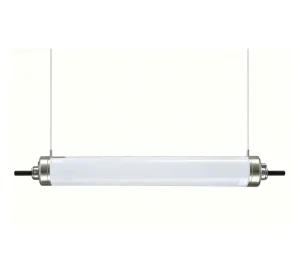
Best IP69K Tri-proof Light for Harsh Environments – High Efficacy & Reliable Performance Manufacturers, Manufacturer
View Tech Specs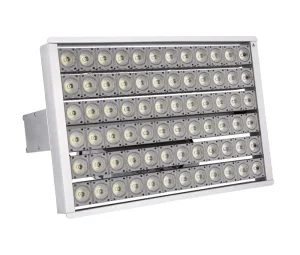
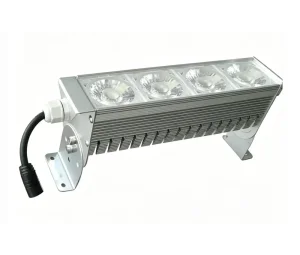
High-Quality LED Linear Strip Light for Industrial, Commercial & Architectural Applications Factories, Factory
View Tech Specs
Frequently Asked Questions (FAQ)
Expert engineering answers addressing procurement, installation, thermal dynamics, and customization parameters.