
Flagship Industrial High Mast & High-Output Luminaires
Explore heavy-duty luminaires designed and verified for extreme wind-loads, high thermal environments, marine salt fog, and large-format field illumination.
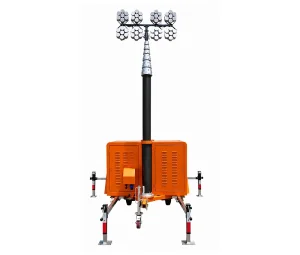
High-Quality High Brightness 12m Mobile Light Tower Factory, Suppliers
Explore Specifications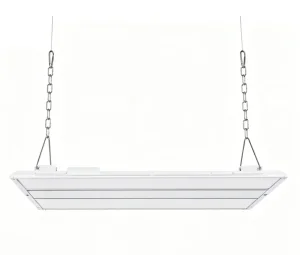
High-Quality Linear High Bay LED – Bright, Reliable, and Smart-Controlled Factory, Suppliers
Explore Specifications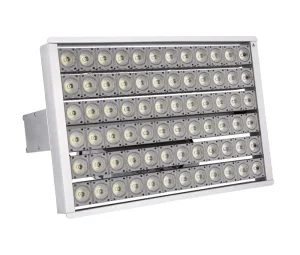
High-Quality High Temperature LED Light Rated 90°C(194°F) Suppliers, Manufacturers
Explore Specifications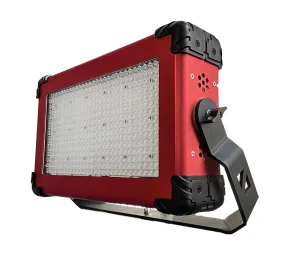
Best Revolutionary Underwater LED Film Light - 30-Meter Depth, Zero Housing Required Suppliers, Manufacturers
Explore Specifications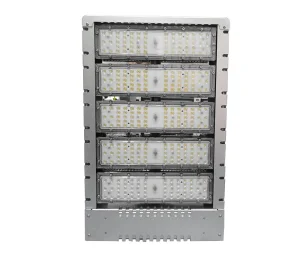
Best Artemis LED Stadium Light - IP67 Durability and Ultra-Light Design for Harsh Coastal Environments Factories, Manufacturer
Explore Specifications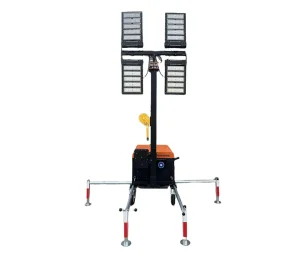
High-Quality Wholesale 6m Mobile Light Tower Factories, Factory
Explore Specifications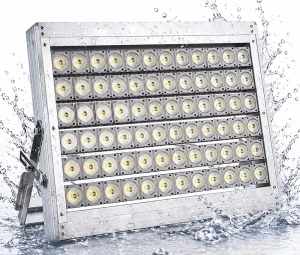
High-Quality LS-FLN Titans Series LED Marine Light for Deep Sea & Offshore Applications Factories, Manufacturers
Explore Specifications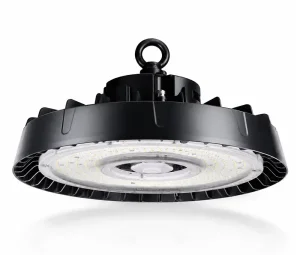
High-Quality Durable UFO High Bay LED Light – Long Lifespan & High Lumen Output Factories, Manufacturer
Explore SpecificationsMacro Industry Solutions: Modernizing Global Aprons, Yards & Mines
From deep-sea marine container hubs to 24/7 continuous surface mining, high mast infrastructure is experiencing a paradigm shift driven by luminous efficacy, decarbonization ESG targets, and IoT smart grid integration.
The Global Commercial Reality: Transitioning Beyond Legacy 1000W-2000W HID
Across the international industrial landscape, high mast lighting towers (typically ranging from 15 meters to over 50 meters in height) have traditionally consumed immense power reserves using Metal Halide (MH) and High-Pressure Sodium (HPS) fixtures. In high-throughput environments such as maritime container terminals, intermodal freight rail yards, open-pit iron and copper mining benches, and commercial airport aprons, legacy luminaires present systemic operational risks. High re-strike delays (often 10–15 minutes after power dips), low spectral color fidelity (Ra < 25 in HPS), and rapid lumen depreciation demand intensive crane-based servicing that disrupts round-the-clock logistics.
As direct-source manufacturers, our high mast LED engineering solves these macro-level bottlenecks. Delivering true system efficacies exceeding 160–180 lumens per watt (lm/W), modern solid-state high mast luminaires provide instantaneous 65% to 75% energy curtailment. Crucially, when paired with precision asymmetric secondary optical lenses, they achieve razor-sharp cutoff angles, eliminating photopic spill and upward skyglow in compliance with strict international Dark-Sky standards and ICAO aerodrome safety regulations.
Intermodal Port Terminals
Overcoming heavy marine salinity, diesel particulate film, and structural crane vibrations with IP68 seals, 316 stainless steel brackets, and targeted optics that eliminate shadows between 8-high stacked container bays.
Open-Pit Mining Terraces
Continuous heavy blast resistance and mobile mast stability. Engineered with high-CRI illumination enabling haul truck drivers and excavator operators to accurately identify geological strata shifts and haul-road hazards at night.
Broadcast Stadium Arenas
Delivering flicker-free high mast operation compliant with FIFA, UEFA, and Olympic 4K/8K ultra-slow-motion HDTV broadcasting specifications (TLCI > 90, TLMF < 1%) with specialized anti-glare visors.
High Mast Technical Architecture: Thermal, Optical & Structural Design
How rigorous mechanical engineering mitigates thermal degradation, aerodynamic vibration resonance, and harsh environmental ingress across 25–40 year mast lifecycle investments.
1. Phase-Change Thermodynamics & Junction Temperature (Tj) Control
The operational longevity of a high mast luminaire is governed strictly by junction temperature. Operating high-wattage arrays (600W to 3000W) at high mast elevations involves severe wind solar thermal loading. Our factory employs pure aluminum cold-forged fins or phase-change copper heat pipe assemblies with an exceptionally low thermal resistance (< 0.05°C/W). By keeping LED chip junction temperatures below 65°C under nominal conditions (and below 85°C in extreme 50°C desert environments), phosphor degradation is prevented, maintaining zero chromaticity shift across 100,000 operational hours.
2. Advanced Asymmetric Secondary Optics: Eliminating Disability Glare
In high mast installations, illuminating vast areas uniformly while controlling cutoff angles requires precision optical engineering. We utilize optical-grade PMMA/PC lenses with 96% light transmittance featuring asymmetric batwing and forward-throw distributions. Instead of tilting the fixture head upward at extreme angles—which creates debilitating glare for crane operators, pilots, and neighboring civilian districts—our optical profiles cast light downward and forward, maximizing target surface utilization ratio (CoU) up to 88% while keeping the luminaire face parallel or semi-parallel to the ground.
| Engineering Attribute | Standard Commercial Floodlight | Lsledsus Heavy Industrial High Mast Spec |
|---|---|---|
| Luminous Efficacy | 120 - 135 lm/W | 160 - 185 lm/W (Standard) / Up to 200 lm/W (Custom) |
| Effective Projected Area (EPA) | High drag flat plate (0.35 - 0.55 m²) | Low-drag aerodynamic slotted matrix (< 0.18 m²) |
| Vibration Rating | 1.5G (Basic ANSI C136.31) | 3.0G Bridge & High-Vibration Certified (ANSI C136.31) |
| Surge Suppression | 4kV - 6kV line-to-earth | 10kV / 20kV SPD with Integrated Dual Stage Protection |
| Corrosion Resistance | Standard powder coat (< 500h salt spray) | AkzoNobel Marine Grade C5-M > 2500h ASTM B117 Tested |
Localized Engineering Support & Global Compliance Framework
Ensuring frictionless municipal permitting, utility rebate qualification, electrical code conformity, and turn-key structural safety across North America, Europe, the Middle East, and Asia-Pacific.
North American Standards
UL 1598 wet locations, UL 8750 Class 2 power supply certification, and DLC Premium 5.1 listing enabling tier-one utility energy efficiency rebates and rebates up to $150 per pole point.
European Union Directives
CE-LVD electrical isolation, CE-EMC Class B electromagnetic immunity preventing radar interference, RoHS compliance, and EN 12193 sports lighting metric guarantees.
Dark-Sky IDA Compliance
International Dark-Sky Association approved zero uplight optics (U0 rating in BUG classification). Safeguards migratory flyways and conforms to strict environmental protection statutes.
Localized Photometrics
Custom AGi32 and DIALux evo photometric calculations delivered within 24 hours. Validated point-by-point ground lux grids, wind-drag structural calcs, and isolux field contours.
Hyper-Localized Application Scenarios: Engineered for Hostile Physics
Real-world environmental friction points demand tailor-made high mast fixtures. Here is how our custom manufacturing directly resolves critical field challenges.
Coastal Shipyards & Offshore Cranes
Friction: Airborne salt aerosol forms conductive electrolytes on luminaire faces while continuous crane hoist acceleration causes mechanical fastener loosening.
Engineered Solution: All-die-cast ADC12 housings treated with chromate conversion under AkzoNobel powder coating, paired with 316 stainless-steel vibration-locking hardware and IP68 hermetic breathers that prevent internal negative-pressure moisture drawing.
Metallurgical Smelting & Steel Works
Friction: Ambient ceiling temperatures often exceed 70°C–90°C near ladles, accompanied by dense magnetic conductive iron dust that short-circuits standard electronics.
Engineered Solution: Specialized high-temp architecture rated up to 90°C–150°C (with tailor-made options up to 300°C), utilizing remote drive power enclosures placed away from heat lines, alongside non-stick silicon-coated heat sink fins that repel iron dust agglomeration.
International Airport Aprons
Friction: Stringent restrictions against pilot and control tower glare; severe RF interference hazards with critical aircraft radar, navigational, and ILS beacons.
Engineered Solution: FAA and ICAO Annex 14 compliant optical profiles featuring absolute horizontal cutoffs, paired with ultra-low EMI drivers certified to CISPR 15 / EN 55015 standards, ensuring zero radio-frequency noise floor disruption.
Technical Roadmap & Future Outlook: The Next Era of High Mast Lighting
A look at the transformative technologies driving luminous physics, driver miniaturization, and intelligent edge control over the next product generation cycle.
Next-Generation High Mast Architecture Roadmap (2025 - 2030)
Industrial large-area lighting is advancing beyond basic lumens-per-dollar metrics toward smart, adaptive infrastructure. Our R&D engineering roadmap focuses on three core pillars:
| Timeline / Phase | Core Technological Leap | Operational Impact & Practical Value |
|---|---|---|
| Phase 1: GaN Solid-State Power Conversion | Transition from traditional silicon MOSFETs to Gallium Nitride (GaN) high-power industrial drivers. | Driver efficiency climbs from 94% to > 97.5%. Driver size and weight reduce by 40%, drastically reducing the structural mechanical load at the mast head. |
| Phase 2: AIoT Adaptive Machine Vision Dimming | Integration of radar and edge-AI visual detection cameras on mast ring assemblies. | Dynamic zone dimming: inactive container bays or empty apron pads automatically dim to 20% output, instantly ramping to 100% within 50ms upon vehicle detection. Yields an additional 30% power savings. |
| Phase 3: 220+ lm/W Micro-Reflector Silicon Optic | Direct micro-faceted silicone lenses resistant to yellowing, micro-cracking, and extreme solar UV degradation. | Ultra-low light absorption with elevated thermal resilience, enabling high mast systems to run continuously in 65°C ambient temperatures without lumen attenuation. |
| Phase 4: Circular Lifecycle Modular Replacement | Tool-less push-lock sub-module replacement designed for quick field servicing. | Eliminates the need to dismount whole 40kg luminaires. Maintenance teams can replace light engines or power supplies on the high mast lowering ring in under 3 minutes. |
Procurement & Technical Engineering Inquiries
In-depth technical answers addressing optical uniformity, electrical safety, structural lowering rings, and extreme site compatibility.
How do you calculate the required EPA (Effective Projected Area) for high mast retrofits?
When retrofitting legacy 1000W–2000W HID fixtures with high-power LEDs, wind loading calculations are critical to prevent pole shear failure. EPA is calculated by multiplying the luminaire’s frontal projected area by its drag coefficient (Cd), derived from wind-tunnel modeling. Our luminaires incorporate slotted aerodynamic vents, bringing the Cd down from a typical 1.2 to 0.75, ensuring the total retrofitted EPA matches or is less than the original design capacity of existing 20m–45m mast lowering systems.
What surge protection architecture is implemented against lightning strikes on tall towers?
High mast poles act as natural lightning attractors. Standard 4kV drivers fail rapidly during nearby dissipation strikes. We engineer a dual-stage suppression architecture: an external industrial Class I + II 20kV/10kA Metal Oxide Varistor (MOV) and Gas Discharge Tube (GDT) protection block situated at the base electrical panel, paired with a secondary 10kV SPD integrated inside each fixture head, guaranteeing clamping response within 25 nanoseconds.
How do you guarantee photopic uniformity across vast 50,000 m² open areas?
Uniformity ratios (Emin/Eavg > 0.5 and Emin/Emax > 0.3) are maintained by customizing optic matrices across the mast ring. Rather than using identical beam angles, a mixed array (e.g., 15° narrow beam modules for long-throw perimeters blended with 60°x120° forward-throw lenses for central yard infill) eliminates bright pooling directly beneath the pole and dark bands in intermediate zones.
Can your factory customize high mast fixtures for high ambient temperature industrial zones?
Yes. Our high-temperature LED product line is built for environments where standard lights fail. While standard industrial models operate between -40°C and +50°C, our specialized high-temperature fixtures feature split-body remote driver housing architectures and high-Tg circuit boards rated for 80°C, 100°C, 150°C, and custom engineering reaching up to 300°C for extreme metallurgical applications.
Specialized Heavy-Duty & Extreme Environment Systems
Complete your site specifications with explosion-proof, deep-submersible, high-heat, and ultra-flexible mobile tower lighting systems manufactured to stringent international quality controls.
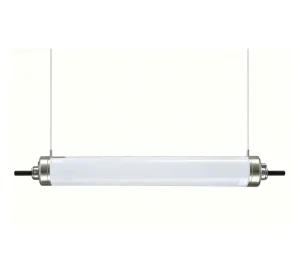
Best IP69K Tri-proof Light for Harsh Environments – High Efficacy & Reliable Performance Manufacturers, Manufacturer
Explore Specifications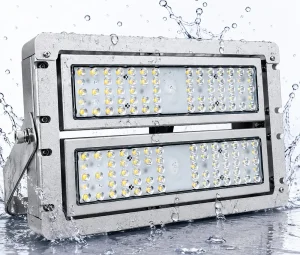
OEM LS-ARE Ocean Series LED Marine Light for Boats, Docks, Harbors & Underwater Applications Factories, Manufacturers
Explore Specifications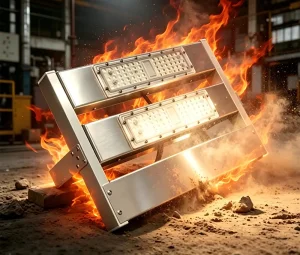
Best Tailored High Temperature LED Light with Highly Dustproof Configuration Factory, Manufacturers
Explore Specifications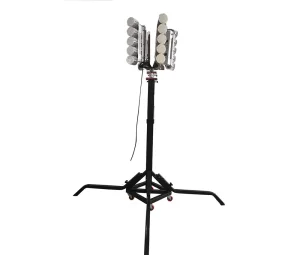
OEM Economic 4m Mobile Light Tower Factory, Manufacturer
Explore Specifications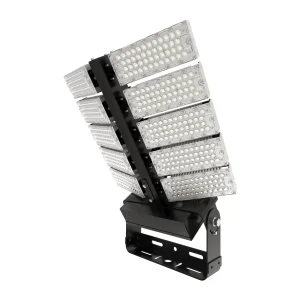
High-Quality Flex LED Flood Light - Independently Articulating Modules for Flawless Field Uniformity Factory, Supplier
Explore Specifications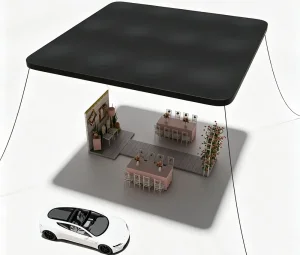
OEM Easy-Setup Helium Balloon Sun Shade - Truss-Free Overhead Diffusion with Minimal Helium Use Factories, Suppliers
Explore Specifications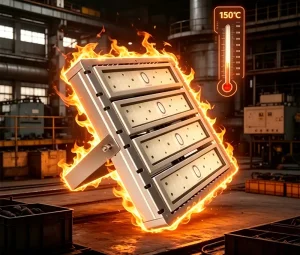
High-Quality Extreme High Temperature LED Light - Rated 150°C (302°F) with IP68 Waterproof Protection Factories, Factory
Explore Specifications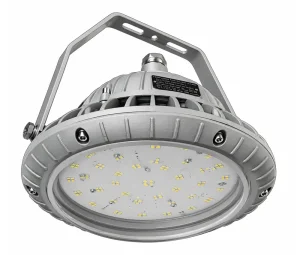
Best Explosion proof LED Light – Safe, Durable, Industrial Illumination Suppliers, Supplier
Explore SpecificationsRequest a Custom DIALux Photometric Simulation & Engineering Quotation
Connect directly with our senior industrial lighting design engineers. Provide your pole mounting heights, target lux levels, and regional environmental parameters to receive complete photometric IES files, structural wind load reports, and factory-direct pricing within 24 hours.