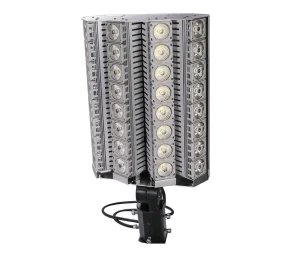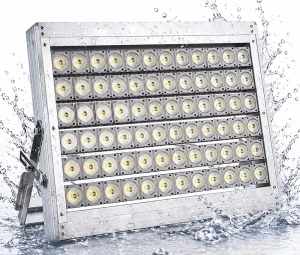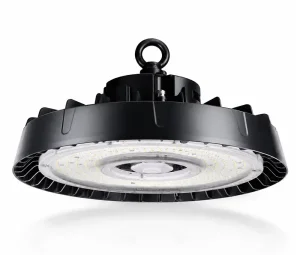
Featured High-Temperature & Industrial LED Systems
Field-proven deployments verified across metallurgical plants, marine ports, mining sites, and high-ambient fabrication centers globally.
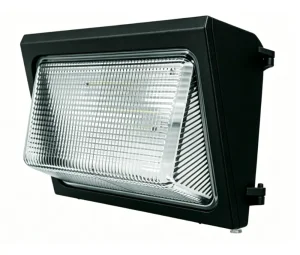
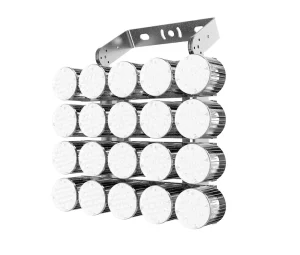
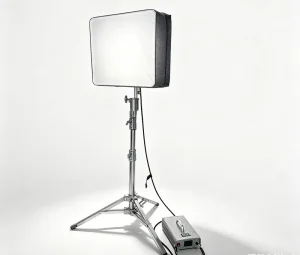
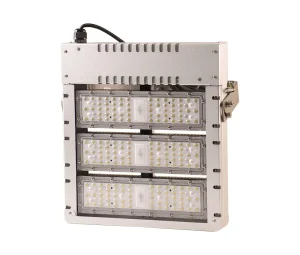
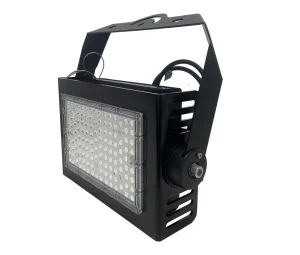
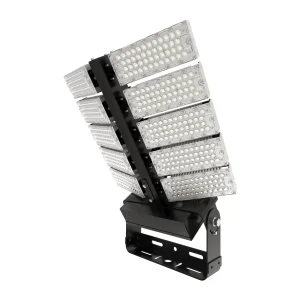
High-Quality Arena LED Stadium Light – Ultra‑Compact Design with Maximum Efficiency
View Specifications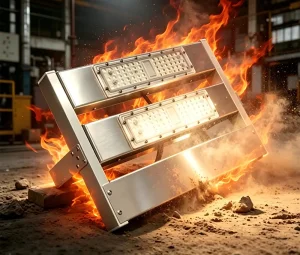
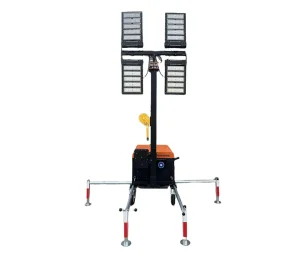
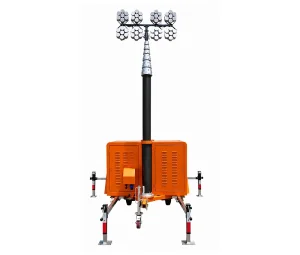
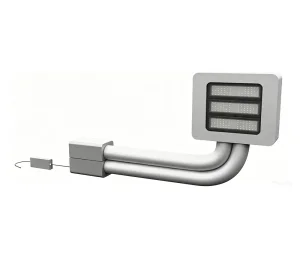
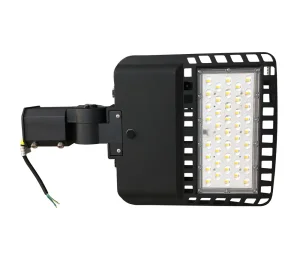
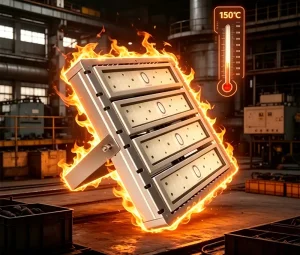
High-Quality Tailored LED Light with Active Thermal Management - Rated 300°C (572°F)
View SpecificationsThe Evolution of Extreme Ambient High-Temperature Solid-State Lighting
Standard commercial and light industrial fixtures inevitably undergo junction overheating, phosphor breakdown, and capacitor desiccation when subjected to persistent temperatures above 50°C. Operating at continuous 100°C (212°F) demands a total paradigm shift in mechanical design, metallurgy, and driver topology.
Phosphor Degradation Mitigation
Under conventional environments, junction temperatures ($T_j$) are kept below 85°C. At an ambient ceiling of 100°C (212°F), traditional silicone resin encapsulants cloud, yellow, and crack, triggering chromatic shifts and severe lumen loss. Our 100°C-class luminaires implement high-grade ceramic-packaged emitters paired with direct-attached crystalline optics to resist photothermal oxidation over 70,000 continuous hours.
Phase-Change Heat Sink Dynamics
Convective dissipation slows dramatically as the delta between heat sink surface and ambient air narrows. We deploy 6063-T6 extruded aluminum modules bonded to vacuum-sealed sintered copper micro-heat pipes. This multi-phase vaporization and condensation loop moves heat flux across the heat dissipation fins at four times the speed of passive solid aluminum castings.
Galvanic & Remote Driver Decoupling
Electrolytic capacitors are historically the weakest link under severe thermal exposure. Our factory isolates the internal driver enclosures using custom heat shields, high-temp solid capacitors rated up to 130°C, or completely decouples the control modules via industrial umbilical quick-connect cabling, placing drivers in lower-temperature utility zones.
Addressing the Total Cost of Ownership (TCO) in Severe Industrial Facilities
Industrial facilities operate under rigorous KPIs where unexpected shutdown hours cost tens of thousands of dollars. Specifying lighting fixtures by wattage instead of the actual thermal mounting plane is the primary cause of industrial retrofitting failure.
The True Economics of High-Temp Lighting
Traditional metal halide or high-pressure sodium bulbs radiate vast infrared heat and suffer from rapid bulb burnout in 100°C ambient heat. Maintaining luminaires over hot rolling mills, boiler vaults, or blast furnaces requires planned facility halts, hydraulic staging lifts, and heavy safety precautions. Transitioning to certified 212°F/100°C continuous LED arrays lowers premature replacement cycles by up to 88%, amortizing procurement investments in less than 14 operating months.
Harsh Atmosphere Synergies (Dust & Corrosives)
Extreme thermal environments rarely exist in isolation; they are regularly compounded by airborne particulate matter, iron dust, acidic vapors, or chemical flue gases. Fixtures engineered for 100°C ambient performance must incorporate IP66/IP68 hermetic sealing, fluorosilicone perimeter gaskets resilient against thermal contraction, and multi-layer anti-static powder coatings to avoid surface insulation buildup and electrical arcing.
Operational Specification Matrix: Thermal Rating Classes
Engineering reference guide for specifiers, EPC contractors, and plant engineers determining thermal safety margins across heavy industrial applications.
| Rating Class | Maximum Sustained Ambient | Driver Topology | Optical Architecture | Target Industrial Environments |
|---|---|---|---|---|
| Class I - High Heat | 80°C / 176°F | Internal / Thermal Isolated | UV-Stabilized Polycarbonate | Forging workshops, tire curing lines, industrial bakeries, pulp dryers. |
| Class II - Extreme | 100°C / 212°F | Decoupled or Remote Heavy-Duty | Tempered Borosilicate Glass | Steel mill casting decks, glass fabrication plants, lime kilns, boiler rooms. |
| Class III - Severe | 150°C / 302°F | Fully Remote IP67/IP68 Rack | Pure Silica / Ceramic Core | Coke ovens, furnace crowns, smelter hoods, chemical cracking towers. |
| Class IV - Ultra Project | Up to 300°C / 572°F | Centralized Utility Integration | Shielded Vacuum Optical Tubes | Direct metallurgical heat sources, refractory observation docks. |
International Certifications & Manufacturing Rigor
With over 20 years of dedicated high-output and extreme-environment lighting manufacturing, our products meet stringent safety and photometric standards across the globe.
Certified Safety Standards
Our 100°C+ luminaires pass rigorous laboratory endurance trials adhering to UL 1598, UL 844 (Hazardous Locations), CE-LVD, ATEX/IECEx explosion-proof directives, and strict RoHS material requirements, ensuring smooth regional permitting.
Photometric Ray Tracing
Every project is verified before metal cutting. We provide DIALux photometric studies, accounting for lumen depreciation coefficients ($L_{70}B_{10}$) under elevated junction temperatures, so you meet OSHA, EN 12464-1, or marine compliance without over-purchasing.
Local Warehousing & Support
Supplying EPCs, mechanical contractors, and multi-national corporations with rapid custom prototyping, sea-freight project packaging, full engineering datasheets, and responsive technical support across North America, Europe, and Asia-Pacific.
Technological Trajectory: Beyond Silicon & Pure Passive Cooling
Anticipating the next decade of metallurgical furnace retrofits, hydrogen processing plants, and deeper heavy automation.
Gallium Nitride (GaN) Drivers
Transitioning from silicon-based MOSFET switches to GaN wide-bandgap semiconductors enables power conversion modules to operate efficiently at up to 150°C internal casing temperatures with 98% efficiency, shrinking driver footprint by 40%.
IoT Edge-Sensing Telemetry
Embedding localized thermistors, vibration monitors, and bus communications directly onto high-temperature engine boards. Real-time temperature alerts allow facilities to perform proactive condition monitoring before junction failure occurs.
Graphene Thermal Interface Coatings
Employing nanostructured graphene TIM (Thermal Interface Materials) between MCPCB boards and chassis to slash interface thermal impedance down to under 0.05 K-in²/W, accelerating heat evacuation under suffocating ambient temperatures.
Frequently Asked Technical Questions
Everything engineering leads and procurement specialists need to know about high-ambient solid-state illumination.
Why do standard commercial LED fixtures fail in environments exceeding 50°C?
How does Lsledsus guarantee long fixture lifespan at 100°C (212°F)?
Can these high-temperature luminaires also endure high vibration and corrosive gases?
What is the maximum mounting distance allowed for remote driver configurations?
Do you assist with OEM manufacturing and bespoke industrial bracket adaptations?
Heavy-Duty Architectural, Industrial & Extreme-Grade Systems
Explore the rest of our specialty lighting catalog, ranging from linear industrial strips and extreme 150°C fixtures to marine-grade floodlights.
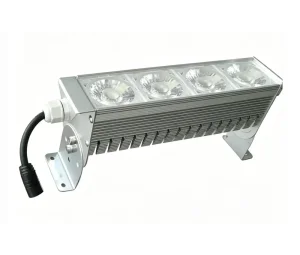
High-Quality LED Linear Strip Light for Industrial, Commercial & Architectural Applications
View Specifications