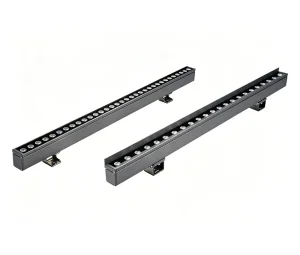
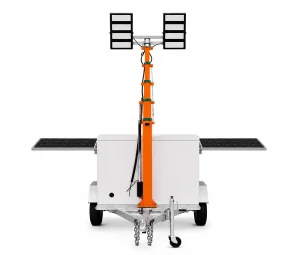
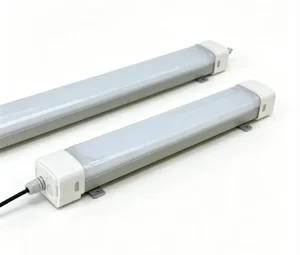
Featured Industrial & Commercial Lighting Solutions
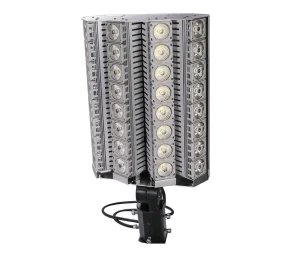
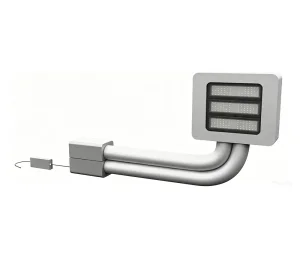
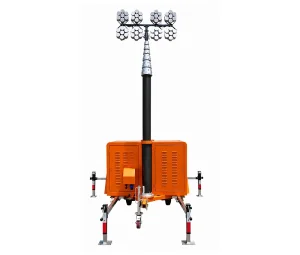
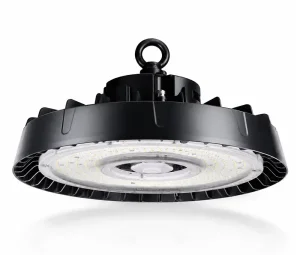
Explore our core OEM & ODM industrial lighting hardware line-up. Every fixture engineered below represents field-tested reliability across global infrastructure projects.
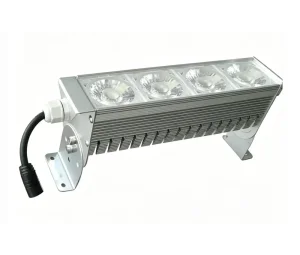
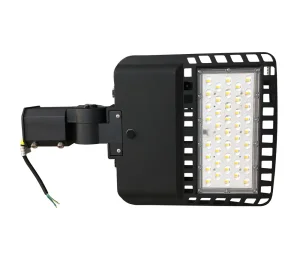
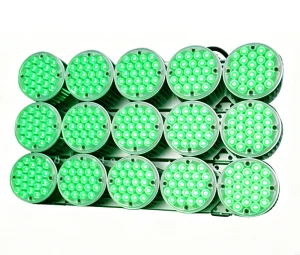
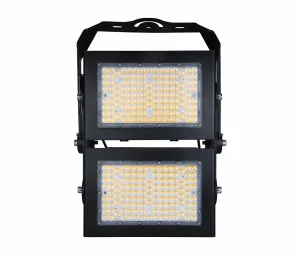
Global Commercial & Industrial Landscape of RGB LED Facade Lighting
Architectural exterior lighting has undergone a fundamental shift from static, monochrome illumination to dynamic, addressable RGB/RGBW facade ecosystems. As cities worldwide transition toward smart city infrastructure and experiential commercial destinations, the role of premium LED facade manufacturing has become paramount.
Modern architectural lighting extends far beyond mere aesthetic enhancement; it is an integrated engineering discipline combining structural mechanics, advanced optics, thermal dissipation, microelectronics, and network protocols. High-rise commercial towers, municipal bridges, hospitality landmarks, and cultural venues utilize exterior facade lighting to establish night-time identity, dynamic media messaging, and urban prestige.
From a manufacturing standpoint, delivering top-tier RGB facade systems demands precise LED binning, marine-grade anti-corrosion treatments, and custom optic configurations. Leading international OEMs and EPC (Engineering, Procurement, and Construction) contractors require specialized factory partners capable of producing high-performance linear wall washers, pixel dots, high-wattage floodlights, and direct-view media mesh systems that maintain optical consistency over decades of environmental stress.
Macro Industry Trends Shaping Facade Lighting Manufacturing
The global RGB LED facade market is moving rapidly toward sustainable, intelligent, and highly customized hardware solutions. Factories and manufacturers who dominate this sector are investing heavily in advanced optical engineering, energy-efficient LED drivers, and unified control ecosystems.
1. Shift to RGBW & High-CRI White Integration
Traditional RGB systems often produce uneven, muddy white light when all channels operate simultaneously. Leading factories are standardizing 4-in-1 RGBW (with dedicated 3000K, 4000K, or 6500K chips) and 5-in-1 RGBCW chips. This allows buildings to transition seamlessly between dynamic color shows and elegant, energy-efficient architectural white lighting.
2. Narrow Beam Precision Optics
Skyscrapers exceeding 100 meters require ultra-narrow beam angles (down to 2.5° or 4°) to project light to the crown without causing spill light or light pollution. Custom optical-grade PMMA/glass lenses ensure high center-beam candlepower (CBCP) with minimal lateral glare, adhering to Dark-Sky Association principles.
3. Decentralized Control & RDM Feedback
Modern architectural lighting relies on DMX512-A and Remote Device Management (RDM). RDM enables real-time bidirectional diagnostic communication. Maintenance teams can monitor voltage, operating temperature, LED channel status, and operating hours directly from a remote network operations center (NOC).
4. Sustainable & Structural Facade Integration
Direct integration into curtain walls, aluminum profiles, and double-skin glass facades requires ultra-slim profiles, light-shielded wiring, and flame-retardant structural potting. OEM manufacturers are designing custom extrusion channels that blend invisibly into the building's daytime architectural aesthetic.
Deep-Dive Engineering & Manufacturing Blueprint
Top-tier RGB LED facade manufacturing relies on strict component selection, thermal engineering, and optical calibration. The matrix below outlines the industrial benchmarks required for high-reliability facade lighting installations.
| Engineering Domain | Standard Commercial Grade | Industrial Tier-1 Manufacturer Benchmark | Impact on Facade Performance |
|---|---|---|---|
| LED Emitter Technology | Standard SMD 3528 / 5050 RGB | High-Power Cree / Lumileds / Osram RGBW 4-in-1, MacAdam 3-Step Binning | Eliminates color shift across long linear runs; ensures uniform color mix at short distances. |
| Thermal Dissipation | Stamped Aluminum / Basic Heatsink | Extruded AL6063-T5 Anodized Aluminum with Copper Substrate & Thermal Interface Pads | Prevents junction over-temperature; guarantees L70 lifespan > 80,000 hours at +50°C ambient. |
| Control Protocol | Basic PWM / Standard DMX | DMX512-A, RDM, Art-Net/sACN, 16-Bit Smooth Dimming Curve, Gamma Correction | Flicker-free performance for broadcast TV/cinematic capture; micro-stepping dimming down to 0.1%. |
| Ingress Protection | IP65 (Gasket Sealed) | IP67 / IP68 Full Structural Silicone Potting with GORE® Breathable Vent Valve | Eliminates internal condensation caused by atmospheric pressure variations during rain/sun cycles. |
| Housing & Finish | Powder Coated Steel / Standard Plastic | Marine-Grade Fluorocarbon (PVDF) Coating / 20µm Anodized Coating (Passes 1500h Salt Spray Test) | Zero peeling, chalking, or corrosion under coastal ocean conditions or high chemical exposure. |
Optical Precision & Photometric Distribution
Achieving flawless visual uniformities across building envelopes requires tailored light distribution curves. Professional factories provide IES files for dialux simulation, employing specialized optics:
- Asymmetric Wall Washing (e.g., 15° x 45°): Projects light upward along vertical glass surfaces without wasting lumens toward the sky or causing light spill into window interiors.
- Circular Pencil Beams (e.g., 3°, 5°, 8°): Used for long-throw column highlighting, structural spires, and cable-stayed bridge towers reaching hundreds of meters.
- Direct-View Diffused Optics: Employs milky opal UV-stabilized polycarbonate covers for dynamic low-glare media screens visible from wide viewing angles (120° x 120°).
Localized Application Scenarios & Industrial Solutions
Different architectural typologies mandate unique physical, optical, and electrical engineering setups. Below are five macro industry solutions implemented by top RGB LED facade manufacturing teams worldwide.
Commercial Skyscraper Media Facades
Challenge: High wind loads, extreme height, window washing equipment impact, high power requirements.
Solution: Custom-designed slim RGBW linear wall washers integrated into mullions. Powered by decentralized IP67 sub-controllers with integrated mean-time-between-failure (MTBF) power supplies. Utilizing 48V DC input to eliminate voltage drop over 15-meter continuous vertical runs.
Infrastructure & Cable-Stayed Bridges
Challenge: Heavy vehicular vibration, constant moisture, salt-air exposure, extreme ambient shifts.
Solution: Heavy-duty high-wattage (500W–1000W) RGB floodlights featuring IK10 impact protection, 316 stainless steel mounting brackets, vibration-isolated internal circuit boards, and C5-M marine-grade anti-corrosion coatings.
Cultural & Heritage Building Restoration
Challenge: Strict non-invasive mounting constraints, historical architectural preservation, glare reduction.
Solution: Compact, low-profile RGBW micro-spotlights and linear bars with optical barn doors and honeycomb louvers. Wireless DMX/CRMX control eliminates the need to run invasive control cabling through historical masonry.
Hospitality Resorts & Entertainment Districts
Challenge: High ambient light competition, demand for complex scene changes, public interaction.
Solution: Direct-view addressable RGB pixel dots and flexible linear neon-flex systems linked to audio-reactive DMX/Art-Net servers, creating immersive interactive light shows tailored to events and holidays.
Technology Roadmap & Future Outlook (2025–2030)
As solid-state lighting technology matures, RGB LED facade manufacturing is converging with smart building management systems (BMS), artificial intelligence, and advanced material science. Future-focused factories are actively developing technologies across four key horizons:
AI-Driven Autonomous Lighting Controls
Integrating generative AI algorithms into DMX video servers allows facade displays to render dynamic light shows autonomously based on local weather conditions, foot traffic density, soundscapes, and special civic events without human programming intervention.
BIPV & Kinetic Energy Harnessing
Combining Building-Integrated Photovoltaics (BIPV) directly with dynamic facade lighting elements. Next-generation linear washers harvest solar energy during daylight hours to offset up to 40% of their operational energy footprint during nighttime display cycles.
LiFi & Optical Data Transmission
Utilizing exterior RGB/RGBW LED facade arrays as optical broadband transmitters (LiFi). In addition to aesthetic lighting, building facades can securely transmit high-speed data to municipal smart city sensors, traffic management networks, and autonomous drones.
MicroLED High-Density Mesh
Transitioning from traditional SMD packages to ultra-fine pitch exterior MicroLED arrays. This drastically reduces power consumption per lumen while enabling ultra-high-definition, transparent video media facades directly on building glass curtain walls.
B2B Procurement Matrix: Auditing an RGB LED Facade Manufacturer
When selecting a tier-1 Chinese or international OEM manufacturer for large-scale facade lighting projects, engineering consultants and B2B buyers must evaluate factory capability through rigorous technical verification. Use the following framework to assess factory authority and quality assurance standards.
| Evaluation Pillar | Critical Factory Verification Checkpoint | Minimum Acceptable Standard |
|---|---|---|
| Testing Infrastructure | In-house CNAS Accredited Photometric & Environmental Lab | Integrating Spheres, Goniophotometer, Salt Spray Chambers, Thermal Shock Chambers (-40°C to +100°C), Waterproof IPX6/IPX7/IPX8 Pressure Test Tanks. |
| Quality Certifications | International Regulatory & Safety Compliance | CE, RoHS, FCC, UL1598 / UL8750, ETL, CB, ISO9001 (Quality Management), ISO14001 (Environmental Management). |
| Optical Binning | Color Consistency Control (SDCM / MacAdam Ellipse) | Strict single-binning policy per project; SDCM < 3 for white channels; automated SMT placement with inline 3D SPI (Solder Paste Inspection). |
| Potting & Sealing Tech | Structural Potting Machine Calibration | Automated dual-component polyurethane or silicone vacuum potting machines to guarantee zero micro-bubbles inside IP67/IP68 sealed optical engines. |
| Burn-in & QA Protocol | Factory Aging Test Duration & Thermal Stress Loading | 100% full-load aging test for a minimum of 48 to 72 hours, including dynamic color cycling, high-voltage spike stress testing, and thermal cycling before packaging. |
Frequently Asked Questions (Technical & Procurement Q&A)
Answers to crucial engineering questions asked by project managers, architectural lighting designers, and global distributors when sourcing high-quality RGB LED facade fixtures.
The maximum run length depends on the operating voltage and power consumption per meter. Standard 24V DC systems typically support continuous runs of 3 to 5 meters before experiencing voltage drop (which causes color shifting and brightness loss at the far end). Advanced industrial manufacturers utilize 48V DC circuitry or constant-current driver chips embedded within the LED PCB, allowing continuous end-to-end runs of 12 to 15 meters from a single power feed.
Lens yellowing is caused by UV radiation degrading low-grade plastics. Quality manufacturers use optical-grade, UV-stabilized Polycarbonate (such as Bayer Macrolon or Sabic Lexan) infused with UV-blocking additives, or ultra-clear tempered glass lenses. Tempered glass provides 94%+ light transmission, absolute UV resistance, high scratch resistance, and zero risk of yellowing over 20+ years of exposure.
DMX512 (with RDM) is an international standard EIA-485 differential signal protocol engineered for long-distance data transmission, robust noise immunity, and real-time device diagnostics over long cable runs. SPI (Serial Peripheral Interface) is a TTL-level protocol typically used over short internal distances. For commercial skyscraper facades and heavy industrial applications, DMX512/RDM is strongly recommended due to its reliability against electromagnetic interference (EMI).
An IP rating (such as IP67) measures water ingress protection under static laboratory testing. However, real-world building facades experience drastic thermal expansion and contraction (thermal cycling). When fixtures heat up, internal air expands; as temperatures drop during rainstorms, internal vacuums suck moisture in through rubber gaskets over time. Premium facade fixtures incorporate GORE® pressure-equalizing breathers to equalize internal pressure, alongside full vacuum silicone potting to prevent internal moisture accumulation entirely.
Yes. As an OEM/ODM direct manufacturer, tailored engineering is standard practice. We manufacture custom aluminum extrusion profiles matched to specific curtain wall mullion dimensions, powder-coat housings to match RAL architectural colors, and design custom secondary optics (from 3° narrow pencils to asymmetric 15x60° beams) tailored to dialux photometric simulation reports.
Specialized Industrial, Roadway & High-Temperature Line-Up
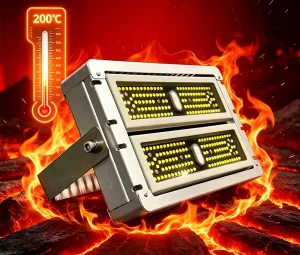
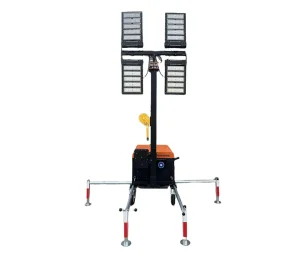
Discover our specialized heavy-industrial lighting line, built to withstand extreme temperatures, marine salt spray, and massive area coverage requirements.