
Enterprise-Grade Lighting Deployments: Series Group I
Explore high-lumen, thermally-stabilized luminaires and engineered fixtures manufactured for extreme ambient parameters, marine yards, stadiums, and off-grid configurations.
Strategic Imperatives for Industrial Off-Grid Solar Floodlighting
In the transition toward zero-carbon operations and perimeter safety, global enterprises face severe infrastructural bottlenecks with traditional trench-and-wire electrical distribution.
Capital Expenditure Decoupling
Trenching, conduit routing, copper wiring, and step-down substations represent up to 72% of total exterior lighting installation costs in expansive industrial facilities. Deploying self-sustaining solar LED floodlighting eradicates trenching requirements and mitigates complex utility approvals.
- Zero copper cabling line-loss
- Rapid 1-day pole installation
- Immediate ROI within 18–24 months
Scope 1 & 2 ESG Mandates
Multinational industrial conglomerates and infrastructure contractors are bound by strict decarbonization protocols. High-performance solar floodlighting offers measurable, auditable carbon offset credits while providing resilient exterior security lighting that remains immune to grid blackouts.
- 100% off-grid operational independence
- Verifiable carbon avoidance data logs
- LEED & BREEAM compliance credits
Severe-Climate Resiliency
Standard commercial-grade fixtures fail under coastal salt mist, desert temperature swings (-30°C to +65°C), and high humidity. Our industrial units feature die-cast ADC12 aluminum housings, fluorocarbon electrophoretic coatings, and sealed battery thermal enclosures for uncompromised longevity.
- ASTM B117 1000-hr salt spray verified
- IP67/IP68 hermetic ingress sealing
- Dynamic LiFePO4 thermal balancing
Engineering Anatomy of Industrial Solar LED Floodlights
A breakdown of the sub-assemblies and patented electronic controls engineered within our Tier-1 solar floodlight manufacturing process.
N-Type TOPCon PV Panels
Utilizing high-purity monocrystalline silicon cells delivering 22.8% to 24.1% conversion efficiency. Bifacial light harvesting options capture reflected albedo radiation from gravel and concrete substrates to boost daily amp-hour yield by up to 25%.
LiFePO4 Storage Matrix
Grade-A prismatic lithium iron phosphate cells assembled with internal ceramic insulation and aerosol fire suppression barriers. Operates seamlessly from -20°C to +65°C, supported by active self-heating resistive films for arctic applications.
AI MPPT Energy Controller
Integrated maximum power point tracking with ultra-fast sub-second sweeping algorithms. Features automated dusk-to-dawn astronomical clock sequencing, microwave radar presence sensing, and multi-stage programmable dimming profiles.
Precision Batwing Optics
UV-stabilized optical-grade PMMA/PC lenses delivering asymmetric Type II, Type III, and polarized forward-throw beam distributions. Directs peak luminous lux onto target operational corridors while keeping upward spill light and glare below BUG rating thresholds.
| Engineering Parameter | Standard Commercial Grade | Lsledsus Industrial OEM Grade | Operational Impact |
|---|---|---|---|
| Photovoltaic Module | Polycrystalline / Low-grade Mono (16-18%) | N-Type Monocrystalline TOPCon (23.2%+) | +35% Higher Charge Velocity |
| Battery Chemistry | Ternary Li-ion / Recycled LiFePO4 (800 cycles) | Automotive Prismatic LiFePO4 (4,000–6,000 cycles) | 10+ Year Maintenance-Free Life |
| Thermal Range | 0°C to 45°C (Rapid winter degradation) | -30°C to +70°C with Active Heating Film | Zero Winter Blackouts |
| Optics & Efficacy | 100–120 lm/W, Raw Symmetrical 120° | 190–210 lm/W, Custom Batwing / Asymmetrical | 4x Ground Lux Uniformity |
| Enclosure & Ingress | ABS Plastic or Stamped Aluminum, IP65 | Die-Cast ADC12 Aluminum, AkzoNobel Powder, IP68 | Marine / Chemical Immunity |
Enterprise-Scale Field Application Matrix
Engineered for mission-critical deployments where utility infrastructure is economically unviable, geographically remote, or physically compromised.
Intermodal Shipping Ports & Harbors
Salt spray and corrosive sea winds destroy standard luminaires. Our marine-grade solar floodlighting incorporates 316 stainless-steel hardware, anodized chromate conversion layers, and specialized silicone gaskets, ensuring sustained illumination across container yards, barge docks, and breakwaters.
Critical Perimeter & Border Security
Long perimeters spanning miles make trenching millions of dollars in cabling redundant. Solar LED floodlights equipped with high-precision PIR/Microwave sensors and LoRaWAN wireless telemetry communicate breach alerts to central VMS systems while surging to 100% illumination.
Mining Pits & Mobile Light Towers
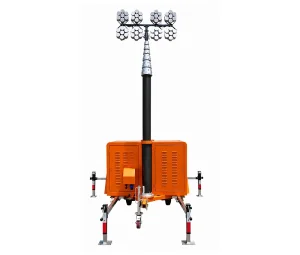
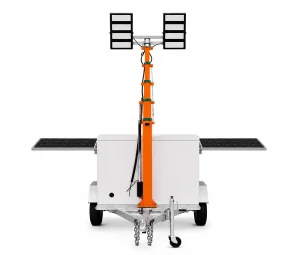
Open-pit excavation demands continuous relocatable illumination under violent ground vibration and excessive dust. Ruggedized solar flood fixtures withstand IK10 impact levels and incorporate quick-release brackets compatible with our mobile hydraulic light towers.
Global Certifications, Localized Compliance & Testing Rigor
Procuring from Lsledsus ensures absolute regulatory adherence across North American, European, and Australasian industrial jurisdictions.
UL 8801 & IEC 60598-2-5
Full compliance with the international standard for photovoltaic-powered luminaire systems. Covers comprehensive dielectric voltage withstand, insulation resistance, and abnormal thermal fault testing.
UN38.3 & MSDS Hazardous Transport
Certified packaging and thermal protection for lithium iron phosphate modules, ensuring frictionless air and sea freight logistics directly to project job sites globally without port quarantine delays.
IP68 & IK10 Testing Lab
Every housing design undergoes 2-meter underwater submersion validation, continuous dust chamber blast exposure, and pendulum 20-joule impact testing to ensure physical invulnerability in heavy industrial facilities.
LM-79, LM-80 & TM-21 Reports
Photometric IES and LDT files validated through third-party certified goniophotometer laboratories, showing L70 calculated lifetimes exceeding 100,000 hours under sustained junction temperatures.
Frequently Asked Questions: Industrial Solar Lighting Procurement
Detailed technical specifications and design considerations addressed directly by our senior R&D engineering division.
How does your engineering team calculate battery capacity and solar panel sizing for regional insolation variations?
Can your solar LED flood lights withstand sub-zero arctic temperatures (-30°C to -40°C)?
Do you provide DIALux photometric simulations for complex industrial or stadium layouts?
What anti-corrosion protections are applied for marine vessel and shipyard deployments?
How does the AI smart controller manage illumination during prolonged stormy weather?
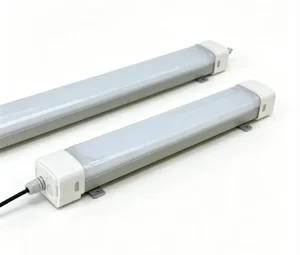
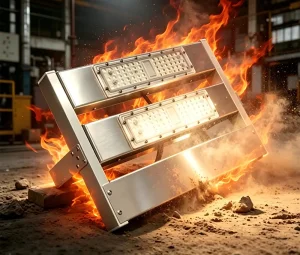
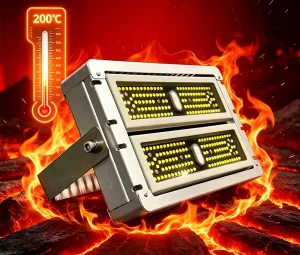
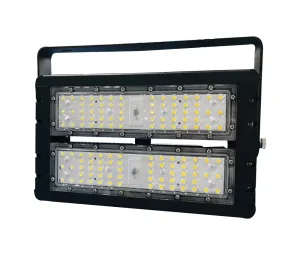
Enterprise-Grade Lighting Deployments: Series Group II
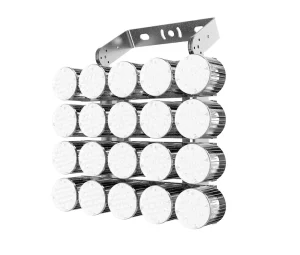
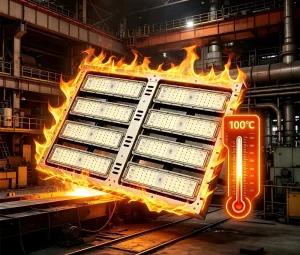
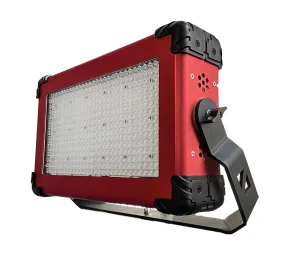
Explore high-temperature foundry fixtures, deep-submersible film lighting, specialized low-voltage DC solar-direct units, and portable mining towers.
Initiate Your Custom Photometric & Solar Engineering Plan
Provide our R&D engineering department with your project DWG drawings, target lux values, or geographic installation site coordinates. Receive complete photometric simulations and quote-ready specifications within 24 hours.