
Featured Industrial & Sports Field Luminaires
Engineered for extreme structural durability, minimal windage drag, non-glare visual comfort, and verified compliance across municipal, industrial, and athletic infrastructure.
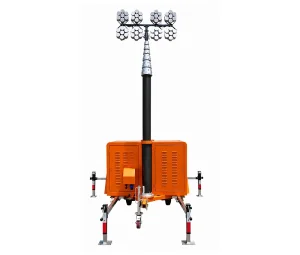
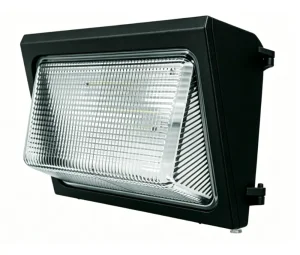
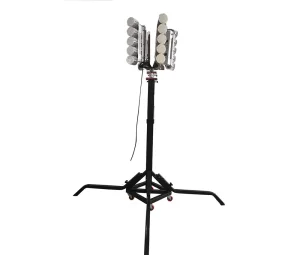
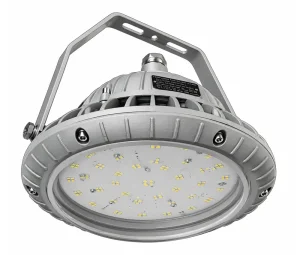
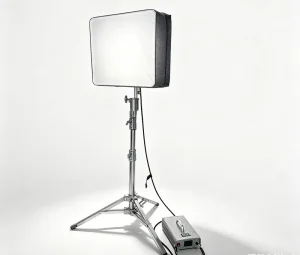
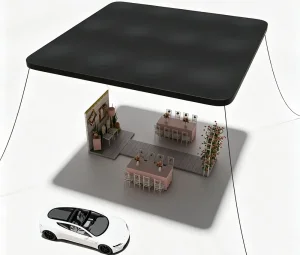
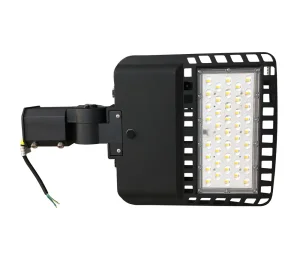
Engineering Principles of Modern Sports Lighting
Sports lighting has shifted from traditional metal halide floodlights to intelligent, digitally synchronized solid-state optical arrays that satisfy stringent international broadcast benchmarks.
Secondary Free-Form Optical Lenses
Precision polymethyl methacrylate (PMMA) and optical grade PC TIR (Total Internal Reflection) lenses shape beam profiles down to narrow 10° up to asymmetric 60°x120° distributions. This eliminates light trespass into residential surroundings and concentrates candlepower directly on playing zones.
Thermodynamic Heat Pipe Dissipation
A6063 aerospace forged cold aluminum fins coupled with sintered vacuum vapor chambers maintain junction temperatures (Tj) below 65°C even in 50°C high-humidity ambient arenas. Lower thermal resistance mitigates lumen depreciation and guarantees L70 lifetimes exceeding 100,000 operational hours.
4K / 8K Broadcast Synchronization
High-speed sports broadcasting demands ripple-free power supplies with ripple ratios under 0.8%. Our specialized constant-current driver engines ensure flicker-free slow-motion camera playback at 1,000 to 2,000 frames per second, ensuring smooth, artifact-free viewing on global networks.
China Factory Advantage: Shenzhen & Pearl River Delta
How our integrated supply chain ecosystem, precision die-casting clusters, and agile custom OEM/ODM engineering deliver higher ROI for international tier-one sports contractors.
Clustered Supply Ecosystem
Located in Shenzhen's manufacturing corridor, our facility leverages immediate access to Tier-1 semiconductor packagers, robotic powder coating lines, and precision mold fabricators, compressing prototype turnaround to under 72 hours.
Rigorous QA & Environmental Testing
Every fixture undergoes full goniophotometer measurement, IP68 submersion checks, 1,000-hour ASTM B117 salt spray exposure, and 5G 3-axis vibration sweeps to guarantee integrity under Category 15 typhoons and saline coastal environments.
Modular Low-Weight Architectures
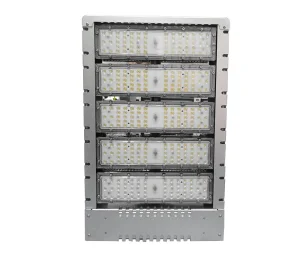
By adopting high-pressure cold-forged aluminum alloys instead of bulky sand-castings, our engineers reduce fixture head weights by up to 35%, cutting mast structural retrofit costs on existing sports facilities.
Global Regulatory Compliance
Our products meet CE, RoHS, UL1598, DLC Premium, CB, and TÜV safety certifications, ensuring turn-key customs clearance and immediate project commissioning in North America, Europe, Australia, and the Middle East.
Technological Frontiers & Stadium Modernization
The global shift from legacy 2000W metal halide HID systems to solid-state LED fixtures delivers up to 70% energy reduction, zero warm-up restrike delays, and integrated entertainment light shows.
Connected IoT & DMX512 Dynamic Light Shows
Modern arenas are multi-purpose assets requiring rapid transitions between competitive events, concerts, and ceremonies. Integrating DMX512 and DALI-2 protocols enables real-time pixel mapping, per-luminaire dimming down to 0.1%, and pre-programmed team celebration sequences synchronized with arena sound systems.
- Zero Latency: Instantaneous on/off without the 15-minute cool-down restrike delays of legacy HIDs.
- Zoned Scheduling: Automatic lux adjustment based on ambient light sensors and pitch utilization patterns.
Spill Light & Dark-Sky Environmental Mitigation
Urban sports complexes increasingly face stringent boundary spill-light ordinances (such as CIE 150:2017). Advanced asymmetric cut-off visors, external louvers, and calibrated micro-optics direct over 92% of generated lumens strictly within the boundary line, preserving natural dark-sky corridors for adjacent residential neighborhoods.
- Zero Upward Waste: ULR (Upward Light Ratio) kept below 0.5% across all mounting angles.
- Surrounding Protection: Boundary light spill held below 5 Lux at site perimeter fence lines.
| Facility Level / Scenario | Horizontal Lux (Eh) | Uniformity (U1 / U2) | Glare Rating (GR) | Flicker Factor (FF) | Typical Luminaire Selection |
|---|---|---|---|---|---|
| Class I: FIFA World Cup / UEFA Elite | ≥ 2000 - 2500 Lux | U1 ≥ 0.70, U2 ≥ 0.80 | ≤ 40 | ≤ 1% (4K Ultra-HD) | 1200W - 1800W Artemis LED Stadium |
| Class II: National League & Regional Arenas | ≥ 1000 - 1400 Lux | U1 ≥ 0.60, U2 ≥ 0.70 | ≤ 45 | ≤ 3% (Standard TV) | 800W - 1200W High Mast Flood |
| Class III: Community Sports & Training Fields | ≥ 300 - 500 Lux | U1 ≥ 0.50, U2 ≥ 0.60 | ≤ 50 | N/A | 400W - 600W Asymmetric Flood |
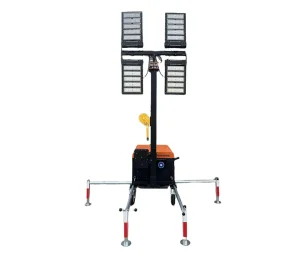
| Semi-Permanent & Construction Arenas | ≥ 150 - 300 Lux | U1 ≥ 0.40, U2 ≥ 0.50 | ≤ 50 | N/A | 6m - 12m Mobile Light Towers |
Application Scenarios & Tailored Configurations
Tailoring optical packages, salt-fog metallurgy, and mounting aerodynamics to specific operational microclimates.
Coastal Marine Arenas & Tennis Clubs
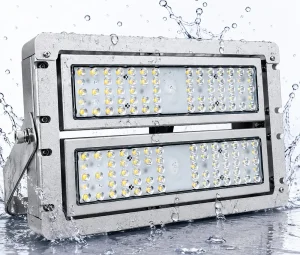
High-humidity salt air causes rapid galvanic degradation in conventional aluminum. Our Artemis coastal stadium luminaires utilize electrophoretic Dacromet surface coatings, C5-M marine anti-corrosion rated hardware, and 316 stainless steel yokes, preventing rust across seaside courts.
High-Altitude & Extreme Temperature Sites
From desert stadiums experiencing ambient temperatures above 50°C to winter sports complexes enduring sub-zero drops to -40°C, our isolated driver topologies and intelligent NTC thermal throttling safeguard driver circuit longevity without catastrophic shutdowns.
Multi-Sport Municipal Fields
Community complexes often support combined football, rugby, and track & field within a single footprint. We engineer multi-tier switching setups allowing municipal managers to toggle between 200 Lux (training), 500 Lux (amateur league), and 800 Lux (championship) via cloud mobile apps.
Global Procurement Checklist: Key B2B Specifications
Critical engineering metrics procurement directors must evaluate before issuing tenders for high-mast and stadium luminaires.
1. DIALux & Relux Photometrics
Never procure fixtures solely on rated wattage. Require full .IES / .LDT photometric simulation files modeled on your specific mast locations, tilt angles, and field elevations. Ensure calculated uniformity ratios (U1 and U2) fulfill your sport governing federation's explicit guidelines.
2. Windage & Mast Load Calculations
Calculate Effective Projected Area (EPA in m² or ft²) alongside dead-weight. Replacing bulky 25kg legacy floodlights with aerodynamically contoured, low-drag fixtures avoids the massive capital expenditures associated with reinforcing foundation pilings or replacing structural masts.
3. Surge Immunity & Remote Drivers
Outdoor high-mast poles are prime lightning attractors. Insist on dual-stage 10kV/20kV surge protection devices (SPD) compliant with IEEE C62.41.2. For masts taller than 25 meters, demand remote driver boxes mounted at pole base for rapid ground-level maintenance without bucket trucks.
Engineering & Sourcing Q&A
Detailed responses to common inquiries from lighting specifiers, electrical engineers, and stadium general contractors.
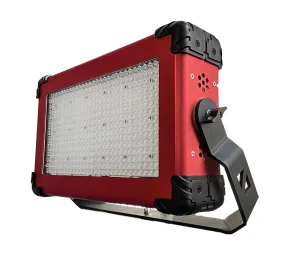
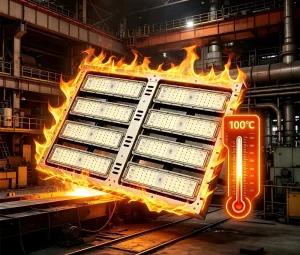
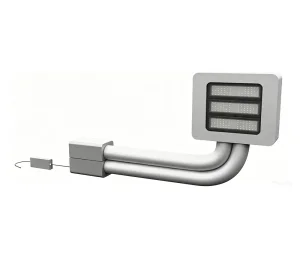
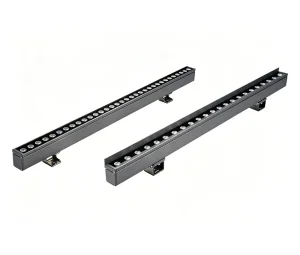
Industrial, Architectural & Extreme Environment Solutions
Engineered for extreme operating environments: high-temperature foundries, marine vessels, cinematic studios, and sports infrastructure.
Plan Your Arena Lighting Specification With Factory Engineers
Share your stadium CAD layouts, pole coordinates, target lux requirements, or extreme environment parameters. Our application engineering department delivers complete photometric simulations, structural load reviews, and tender-ready specifications within 48 hours.